The washer hits the drain part of the cycle and a few seconds later there is gray water on the laundry room floor.
Maybe it comes up out of the pipe behind the machine, maybe out of the laundry tub next to it, maybe out of the floor drain. Most of the time the fix is a lot smaller than the mess.
To unclog a washing machine drain, pull the washer out, lift the drain hose out of the standpipe, and run a hand drain snake down that pipe until it passes the trap, then flush it with hot water. About two out of three of these calls we see clear at that branch line. The rest go deeper.
How Do You Unclog a Washing Machine Drain?
The short version: the clog is almost never inside the washer. It is in the pipe the washer pumps into, and it is almost always lint, soap scum and fabric softener that built up over years until the opening got too small for the washer to keep up with.
A washer does not drain the way a sink does. A sink lets water fall into the drain by gravity, a little at a time.
A washer has a pump that shoves a whole tub of water into the drain in about a minute.
So a drain that handles a sink just fine can still overflow the second the washer kicks into its drain cycle. That is why the first sign is usually water coming out of the top of the pipe behind the machine, not a slow drain you noticed weeks ago.
Here is the order we work in, and the order we would use in your house:
- Make sure it is the drain and not the washer (the bucket test below).
- Pull the drain hose and look at the standpipe, the open pipe the hose hangs in.
- Snake the standpipe past its trap.
- Flush with hot water and run an empty load to prove it.
- If water shows up anywhere else in the basement while you test, stop. That is a main line problem, not a washer problem.
Steps one through four are a do it yourself job with a hand drain snake from any hardware store. Step five is where you call us. The rest of this guide walks through each step with photos from real laundry drain jobs.
What Is a Washer Standpipe, and What Parts Are You Working With?
Before you start, it helps to know what you are looking at behind the machine. None of these parts need special tools to reach.
- Drain hose. The ribbed gray or black hose coming off the back of the washer. It hooks over the top of the standpipe and carries the water out.
- Standpipe. The open 2 inch pipe sticking up from the floor or out of the wall box. The hose hangs inside it with air around it, so dirty water can never get pulled back into the washer.
- P trap. The U shaped bend at the bottom of the standpipe. It holds a little water to block sewer gas, and it is the number one place lint settles.
- Cleanout. A capped fitting that lets a plumber into your drain without cutting pipe. Not every laundry drain has one. If yours does, it makes this job much easier.
- Branch line. The drain pipe that runs from the laundry trap to your home's main drain. Clogs past the trap usually sit here.
- Main line. The big pipe that carries everything in the house out to the city sewer or septic. A clog here backs up the lowest drain first, which is often the laundry area.
The Michigan Plumbing Code sets the rules for that standpipe. Section 802.4.3 says it has to have its own trap, has to rise 18 to 42 inches above that trap, and has to have access for a snake. Section 406.2 says the trap and drain serving a washer must be at least 2 inches across.
Here is what a correctly built standpipe looks like when you can see all of it.
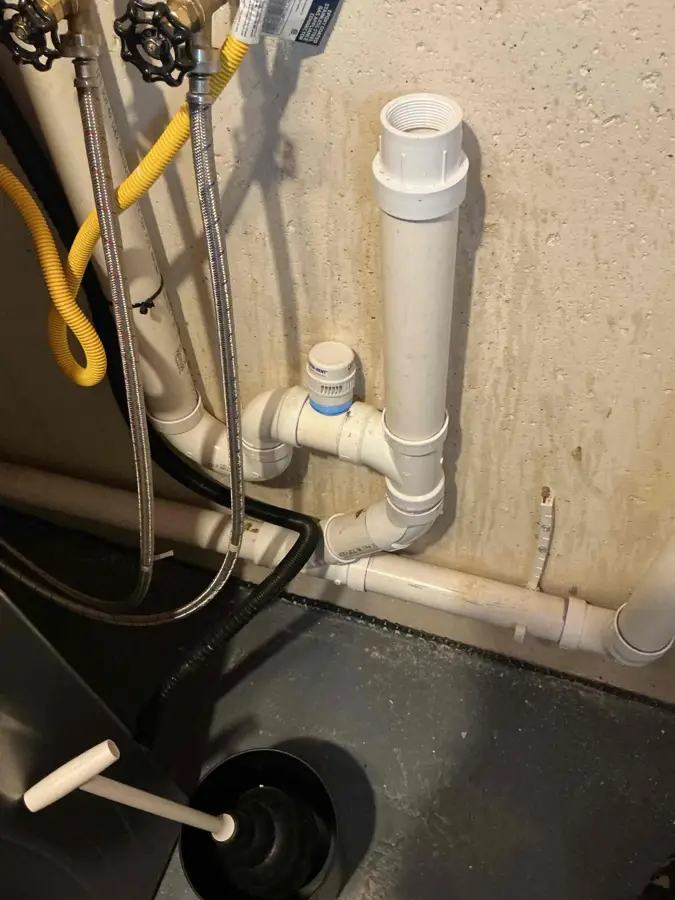
A standpipe built the right way: tall open pipe, trap below it, and a cleanout you can open. This one was rebuilt in 2 inch PVC after a washer kept backing up into a utility room. The cleanout on the side means the next clog gets snaked in minutes without taking anything apart.
Is It the Washer or the Drain?
Spend two minutes on this before you buy a snake. Sometimes the washer will not drain because the washer itself has a problem, usually a clogged pump filter or a kinked hose. That is an appliance repair, and no amount of snaking the pipe will fix it.
If the washer stops with water still in the tub and nothing comes out of the standpipe, suspect the washer. Check the hose for a kink behind the machine, then check your manual for the pump filter. Many front loaders have a small door at the bottom front for it.
If the washer drains and water comes up out of the standpipe or the laundry tub, it is the drain. The washer did its job. The pipe could not take the water fast enough.
To be sure, do the bucket test. Pull the drain hose out of the standpipe and put the end in a 5 gallon bucket. Run a drain or spin cycle.
If the bucket fills fast and strong, the washer pump is fine. Now slowly pour that bucket of water into the standpipe. If it backs up before the bucket is empty, the clog is in the drain.
Here is the hose you are pulling, and where it usually hides.
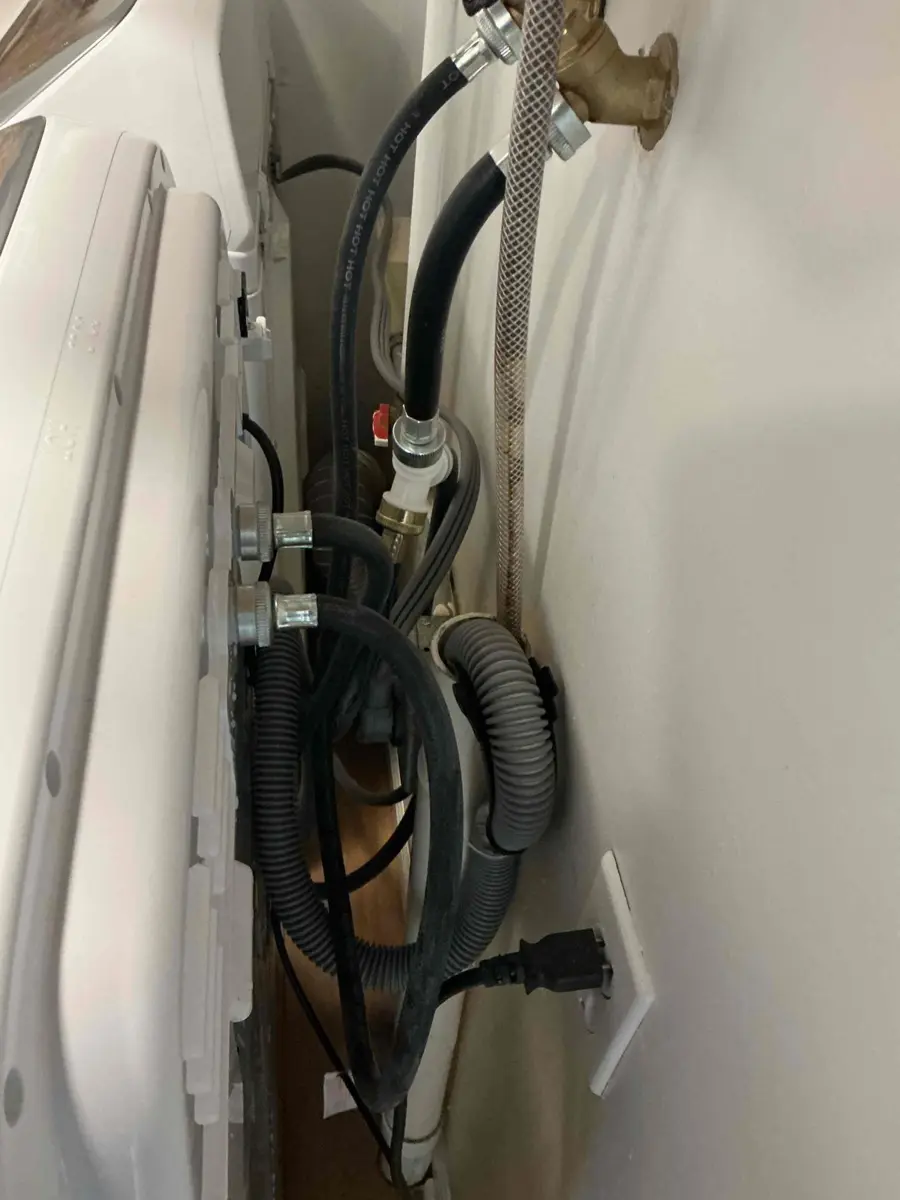
This is where the test starts: the drain hose behind the machine, hooked into the wall. You need room to lift it straight out, so slide the washer forward a foot or two first. Shut off the two supply valves before you move it so you do not stress the fill hoses.
Step by Step: How Do You Snake a Washing Machine Drain?
You need a hand drain snake (a coiled steel cable in a drum, about 25 feet is plenty), a bucket, old towels, and gloves. Skip chemical drain cleaner on a washer line.
It rarely gets through a lint plug, and it leaves you snaking a pipe full of caustic water. Our guide on whether Drano is bad for pipes explains why, and Poison Control explains what those products do to skin and eyes.
Step 1: Unplug the washer, shut the supply valves, and pull it out. Lay towels down. Lift the drain hose out of the standpipe and set the end in your bucket. There will be some dirty water in the hose, so keep the end low.
Step 2: Look down the standpipe and open the cleanout if you have one. Shine a flashlight in. Standing water a few inches down means the trap is full and the clog is at or past it. If there is a cleanout, put the bucket under it before you loosen the plug, because the water above it will come out.
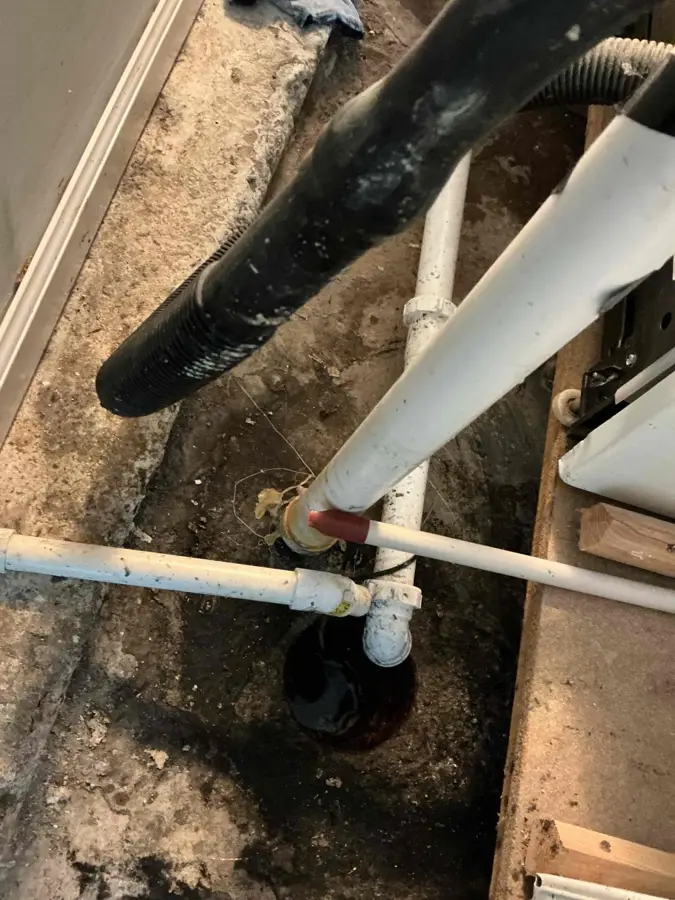
Snaking straight down the standpipe behind the washer: this is where most laundry clogs get cleared. On this job the tech snaked the line behind the washer, then ran a camera to confirm it was clear, and reglued a loose standpipe joint that had been leaking onto the floor.
Step 3: Feed the snake down the standpipe and through the trap. Push the cable in until it stops at the bend, then turn the drum handle clockwise while you push. You will feel it bite and then give as it rounds the trap. Keep feeding until you feel resistance again, which is the clog. Crank through it, pull back a little, and push forward again a few times.
Step 4: Pull the cable out slowly and clean it as it comes. Expect gray, felt like lint wrapped around the tip. That is your clog.
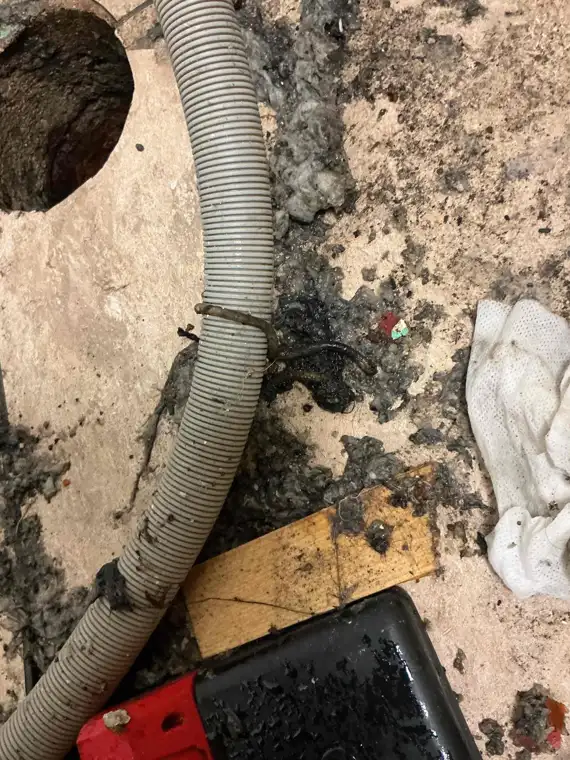
This gray sludge is what a washer clog actually is: lint, soap and softener packed together. It came out of a basement laundry drain that had flooded the room. Once it is out, the line drains like new. Leaving it in means the next big load floods again.
Step 5: Flush with hot water. Pour a few gallons of hot tap water down the standpipe, as fast as you can pour. A fast pour mimics the washer pump and shows you whether it is really open.
Step 6: Put the hose back and run an empty cycle. Watch the standpipe through the whole drain and spin. Then walk to the basement floor drain and any laundry tub and look there too. If water appears anywhere it should not, go to the main line section below.
What If the Washer Drains Into a Laundry Tub or a Floor Drain?
A lot of older basements around Grand Rapids do not have a standpipe at all. The washer hose hangs over a laundry tub, or it drops into a hole in the floor that leads to a floor drain. The idea is the same, but the clog sits in a different place.
If the washer drains into a laundry tub, the tub drain and its trap carry all the washer water. When the tub fills up during the drain cycle, the clog is in the tub drain or the line past it. Pull the strainer, plunge it with the overflow side blocked, then snake it through the drain opening the same way as a standpipe.
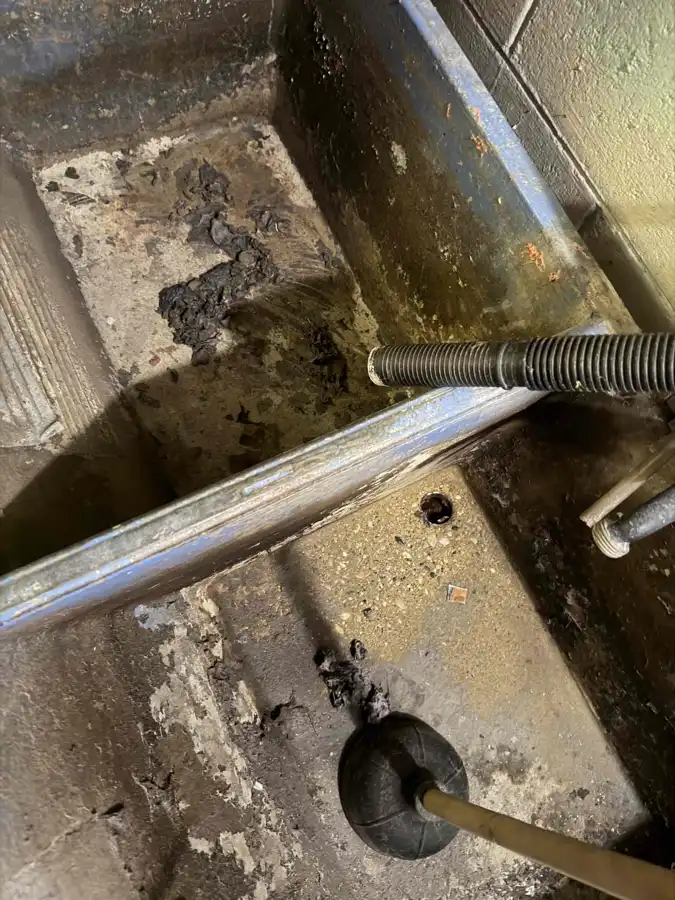
When the tub fills while the washer drains, the clog is in the tub drain or the pipe below it. On this job the homeowner had poured drain cleaner in before calling, so the tech was working in caustic water. The line was cleared at the branch, and the main line never needed work.
If the washer drains into a floor drain, the floor drain is now doing two jobs: catching basement water and taking a full washer load at once. Lint settles in the floor drain trap, and you need a bigger machine to get through it than a hand snake can manage.
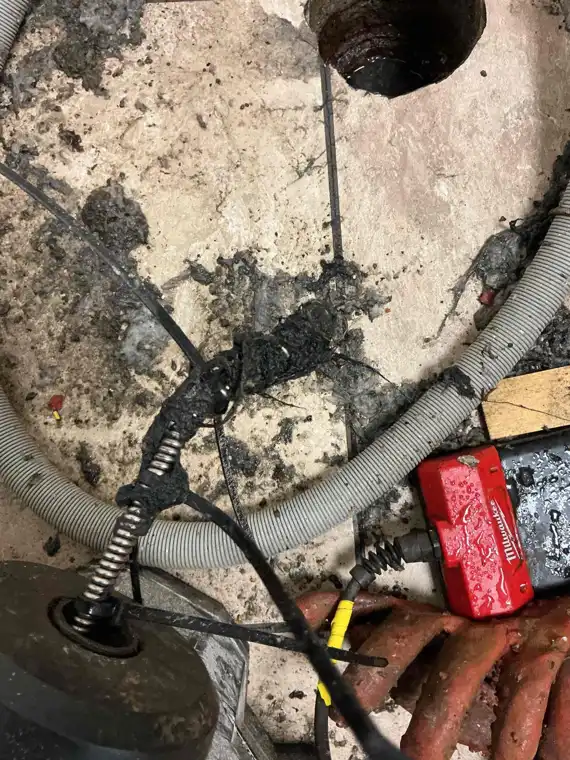
A floor drain that takes washer water needs a drain machine, not a hand snake. This laundry room had flooded. The opening was packed with lint and sludge, and the tech ran a powered cable down the floor drain to open it back up.
For any laundry tub or kitchen sink that shares the same drain, our kitchen sink unclogging guide covers the plunger and trap steps in more detail.
When Is a Washer Backup Really a Main Line Clog?
This is the most important section in this guide, because it is the one that tells you to stop snaking.
On roughly one out of three laundry drain calls in our data, the clog was not in the washer drain at all. It was in the main line, and the washer just happened to be the first drain to show it.
The washer is often the first to show a main clog for a simple reason.
It is usually in the basement, close to the lowest drain in the house, and it dumps more water at once than anything else you own. A main line that is partly blocked can handle a shower and still overflow when a full washer load hits it all at once.
Watch for these signs while you test:
- Water comes up out of the basement floor drain while the washer drains.
- A toilet or tub gurgles, or the water level in the toilet bowl moves, during the drain cycle.
- A basement shower or sink backs up after laundry or after someone upstairs showers.
- You snaked the standpipe, it felt clear, and it backed up again the next load.
- The water smells like sewage, not just dirty laundry. Our post on why a bathroom smells like sewage covers the odor side.
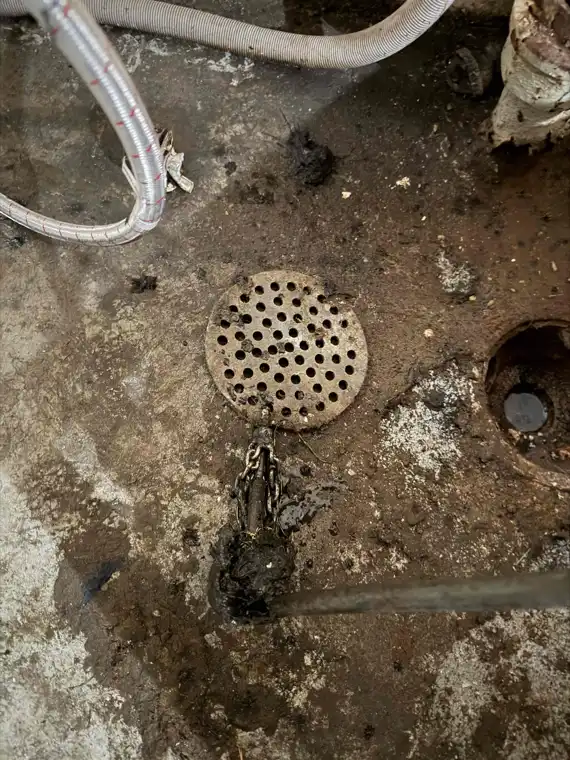
Water at the floor drain when the washer runs means the problem is past your laundry line. This basement flooded mainly on laundry days. The cause turned out to be tree roots in the drain, which a hand snake will never fix. That is a job for a professional drain cleaning with a root cutting head, followed by a camera.
If you see any of these, stop running water and call.
A sewer camera inspection shows whether you are dealing with roots, a broken section, or a buildup that needs hydro jetting, which is high pressure water that scrubs the pipe walls clean. If water is already coming up in the basement, our guide to a sewer backup in the basement covers what to do first.
Why Does My Washer Drain Keep Clogging?
If you clear the line and it clogs again within a year, something about the setup is causing it. These are the repeat causes we find most often.
Lint with nowhere else to go. Your dryer has a lint screen. Most washers do not, so every fiber that comes off your clothes goes down the drain. Towels, new fleece and pet hair are the worst. A mesh lint trap on the end of the drain hose catches a surprising amount. Empty it after every few loads.
Powder detergent and too much soap. Powder that does not fully dissolve, especially in cold water, settles in the trap and glues lint together. Too much liquid detergent and softener does the same thing as a film. Use the amount the washer manual says, not the cap line.
A standpipe that is too short or too small. Older laundry drains were often 1.5 inch pipe, and some standpipes are cut too short. Code now calls for a 2 inch trap and a standpipe 18 to 42 inches tall. A small or short pipe overflows even when it is only partly clogged.
Less water per load. ENERGY STAR says certified washers use about 30 percent less water than regular ones. That saves money, but in our experience it also means less water pushing lint through an older drain. It is one reason a line that was fine for years starts backing up after a new washer goes in.
Shared drains. When a basement sink, dishwasher and washer all tie into one old line, grease from the kitchen side and lint from the laundry side build on each other. Those lines clog faster and are worth a camera look.
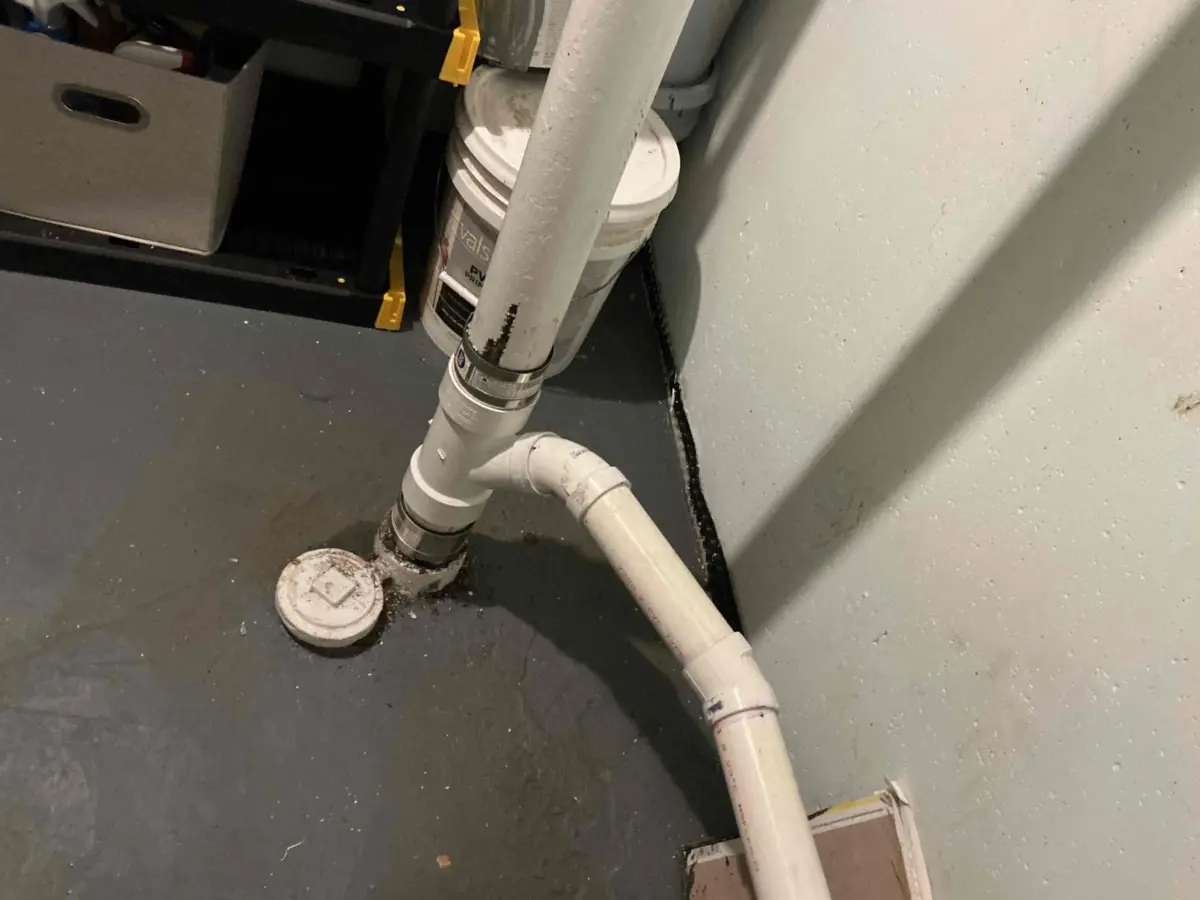
A cleanout at the base of the standpipe turns the next clog into a quick fix. If your laundry drain clogs more than once and has no cleanout, adding one is usually a small job and saves you from pulling the washer out every time.
When Should You Call a Plumber Instead?
You can handle a standpipe clog with a hand snake. Call us when any of these are true, because they mean the problem is bigger than a lint plug, or the fix will make it worse.
- The snake hits something hard and will not pass. That can be a broken pipe or a buildup a hand snake cannot cut.
- The clog comes back within weeks. A drain that keeps clogging usually has a setup issue or a main line problem underneath it.
- Water shows up at a floor drain, tub or toilet during the washer drain cycle.
- The standpipe or trap is leaking at a joint. Water on the floor after every load is not always a clog.
- There is no way into the drain, no cleanout and no room to snake. We can add a cleanout or rebuild the laundry drain so the next one is easy.
When we come out for a laundry drain, we start where you would, at the standpipe.
If the line clears and stays clear on a test load, that is the end of the job. If it does not, or if we see signs it is the main, we will tell you that before doing more work, and show you the camera footage so you can see it for yourself.
Can I use Drano on a washing machine drain?
We do not recommend it. Chemical drain cleaner rarely dissolves a lint and soap plug, and it leaves caustic water sitting in the pipe and on your floor if the drain backs up. A hand drain snake down the standpipe clears most washer clogs faster and safer.
Why does my washer drain overflow but my sinks drain fine?
A washer pumps a whole tub of water into the drain in about a minute, far faster than any sink. A drain that is partly narrowed with lint can handle a sink but not that rush. That is why the standpipe overflows first.
How do I know if the clog is in the washer or the pipe?
Put the drain hose in a 5 gallon bucket and run a spin cycle. If the bucket fills fast, the washer pump works and the clog is in the drain. If little or nothing comes out, the problem is in the washer, usually its pump filter or a kinked hose.
Why is water coming up from my basement floor drain when the washer runs?
That usually means the clog is past the laundry line, in the main drain that carries everything out to the street. Stop running water and call a plumber. Snaking the standpipe will not reach it, and a camera inspection shows what is causing it.
How tall should a washing machine standpipe be?
The Michigan Plumbing Code says the standpipe must rise 18 to 42 inches above its trap, have its own trap, and be at least 2 inches across at the trap. A standpipe that is too short or too narrow overflows easily.
How do I keep my washer drain from clogging again?
Put a mesh lint trap on the end of the drain hose and empty it often. Use the detergent amount your washer manual calls for, skip powder in cold washes, and go light on fabric softener. If it clogs again within a year, have the line checked.
Do I need a plumber to unclog a washer drain?
Not always. Most clogs in the standpipe or its trap clear with a hand snake. Call a plumber if the snake will not pass, the clog keeps coming back, or water shows up at a floor drain, tub or toilet while the washer drains.
Laundry Drain Cleaning From NSP Plumbing in West Michigan
NSP Plumbing is a licensed Michigan plumbing contractor (license #8004990) based in Wyoming, Michigan. We clear laundry drains, standpipes, floor drains and main sewer lines every week across Grand Rapids, Wyoming, Kentwood, Grandville, Jenison, Byron Center, Caledonia, Walker, Rockford, Hudsonville and the rest of the area.
When a washer drain will not clear, we snake it from the standpipe first, and only move to the main line, a camera or hydro jetting if the test load says we need to. You will know what we found before we do anything more. Have questions first? Contact us and a real person will answer.
Washer backing up into the laundry room?
Book a visit online. A licensed NSP plumber clears the laundry line, runs a test load to prove it, and tells you if the main line needs a look before any extra work.