
A clogged kitchen sink always seems to pick the worst moment: right after a big dinner, with a full pan in one hand and grey water sitting in both bowls.
The good news is that most kitchen clogs sit within a couple of feet of the drain opening, where you can reach them yourself.
To unclog a kitchen sink, check the garbage disposal first, then plunge with the other bowl sealed, then pull and clean the curved pipe under the sink. If water still will not go down after those three steps, the clog is in the pipe inside the wall, and that is a snake or plumber job.
How do you unclog a kitchen sink?
Work from the easiest fix to the hardest, and stop as soon as the water drains. Most people skip straight to a bottle of drain cleaner or a rented snake. In our experience that is backwards. The cheap, clean steps clear most kitchen clogs, and they do not risk damaging your pipes or burning your hands.
Here is the order we recommend:
- Check the garbage disposal. A jammed or tripped disposal looks exactly like a clog on the disposal side of the sink.
- Bail out the standing water. You cannot plunge or open pipes with a sink full of dirty water.
- Plunge the right way. On a double sink, that means sealing the other drain first.
- Pull and clean the trap. The curved pipe under the sink catches most food and grease.
- Snake the pipe going into the wall. This is where grease clogs that survive the first four steps usually live.
- Call for help if both bowls stay full, the dishwasher backs up, or other drains in the house gurgle.
Before you start, gather a bucket, an old towel, a cup or small container for bailing, rubber gloves, a flat cup plunger (the kind for sinks, not the flanged toilet kind), and a flashlight. Clear everything out of the cabinet under the sink so you can see the pipes and catch drips.
What you do not need: a bottle of drain cleaner. We cover why further down, but the short version is that caustic chemicals sitting in a full sink make every later step more dangerous and rarely reach a grease clog in the wall anyway.
What are the parts under a kitchen sink?
It helps to know what you are looking at before you grab a wrench. Open the cabinet and you will usually see the same handful of pieces. Here is a typical setup from a kitchen NSP serviced, with a disposal on one side and a plain drain on the other.
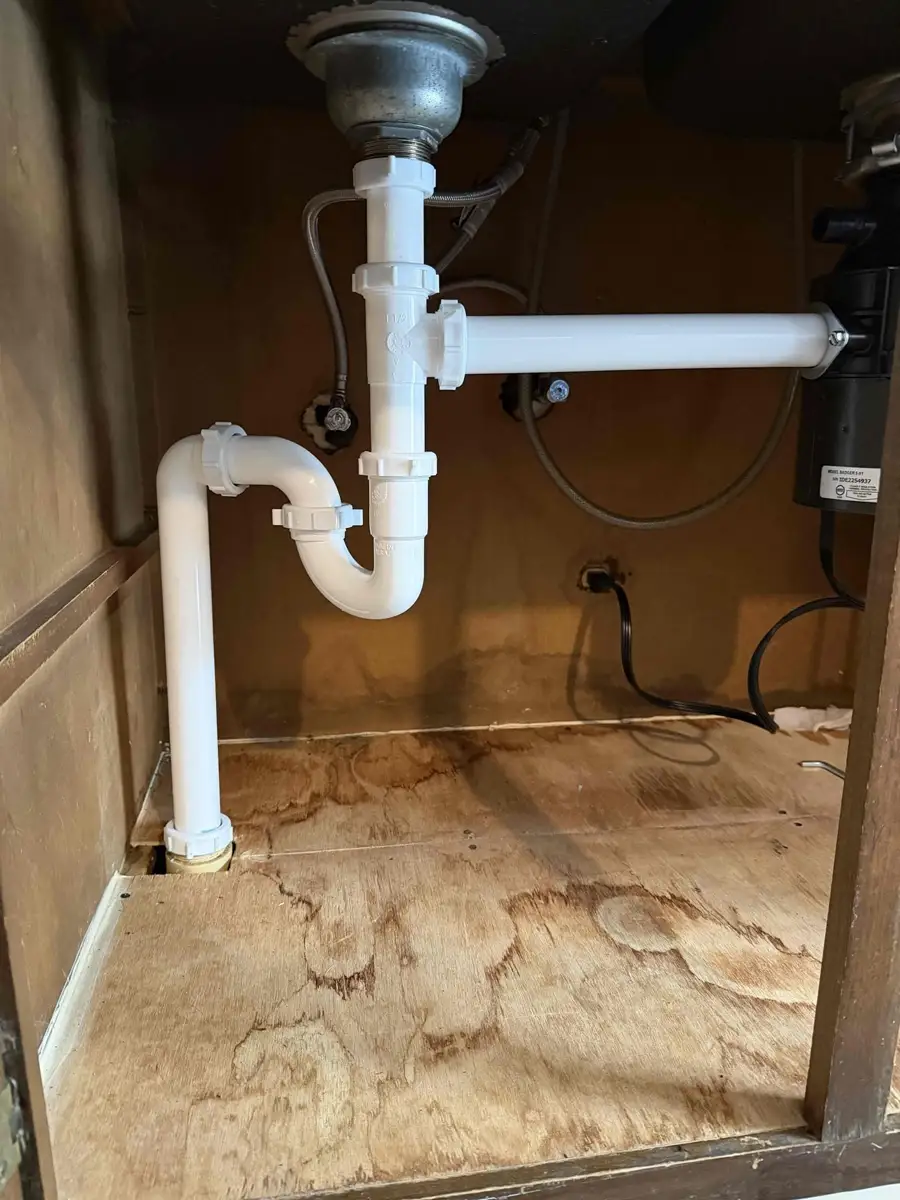
This is the layout you are working with: two drains join, drop into a U shaped trap, and run sideways into the wall. If your clog is anywhere in this picture, you can clear it yourself.
Here is what each part does, in plain words:
Strainer basket. The metal cup in the bottom of the sink without a disposal. It has a removable basket to catch food.
Tailpiece. The short straight pipe that drops down from each drain opening.
Continuous waste pipe. On a double sink, the sideways pipe that connects the two drains so they share one trap. Food from the disposal side can back up into the other bowl through this pipe.
P trap. The U shaped curve of pipe at the bottom. It always holds a little water, which blocks sewer gas from coming into your kitchen. It also catches anything heavy, which is why it clogs. The Michigan plumbing code requires a trap on every fixture, and it is held on with slip nuts you can loosen by hand.
Trap arm. The sideways pipe running from the top of the trap into the wall. Grease often settles here.
Drain line. The pipe inside the wall, which runs down to your basement or crawl space and joins the main drain for the house.
Dishwasher hose. A ribbed hose running from the dishwasher, usually into the disposal or a fitting on the tailpiece. If the sink drain is clogged, the dishwasher has nowhere to empty either.
Is the garbage disposal causing the clog?
If water is only standing on the disposal side, start here. A disposal that is jammed or has tripped its internal breaker will not spin, and food sitting in the grinding chamber blocks the drain like a cork.
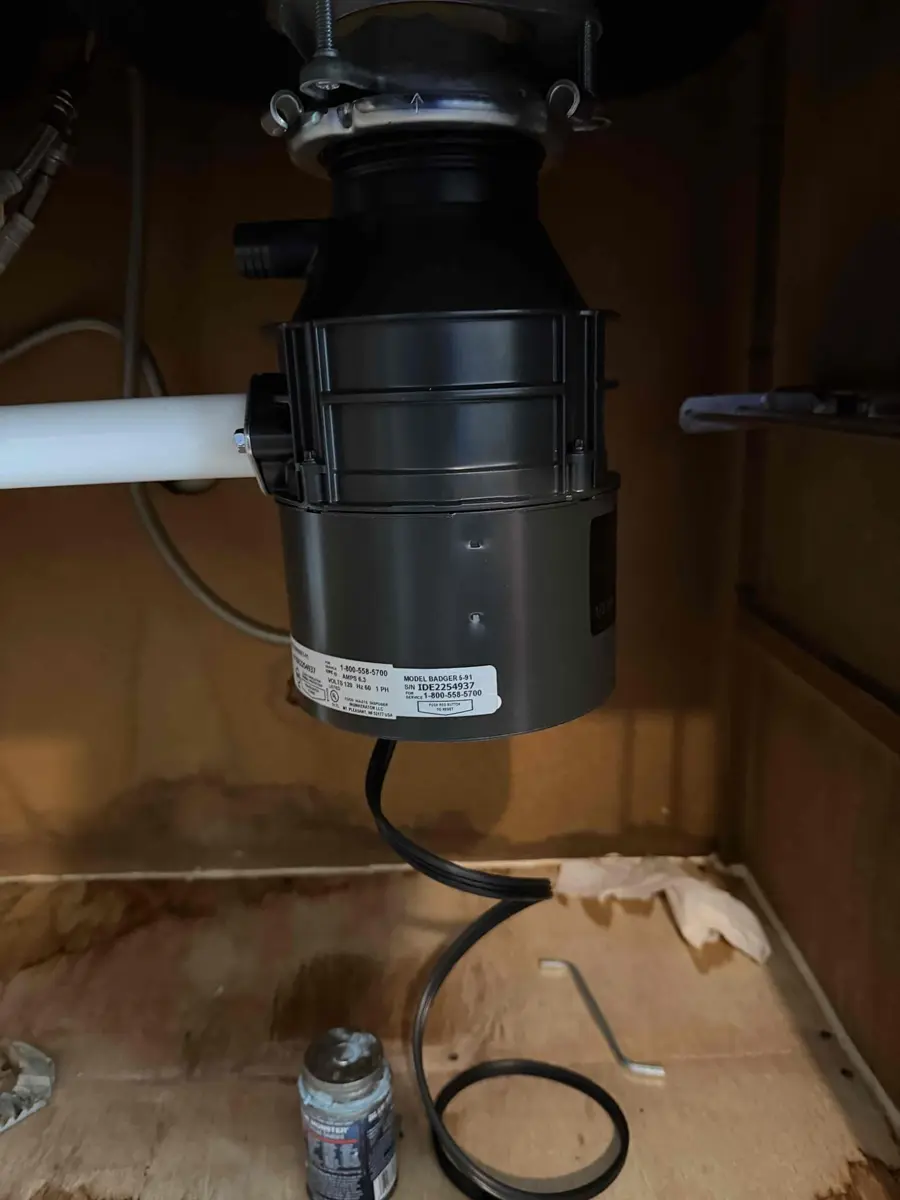
If yours is humming but not spinning, or silent, the disposal is the problem, not the drain. Fix that before you plunge.
Step 1: Turn off power to the disposal. Flip the wall switch off, and if the unit is plugged in under the sink, unplug it. Never put your hand in the disposal, even with the power off. Use tongs to pull out anything you can see.
Step 2: Press the reset button. Look on the bottom of the unit for a small red or black button. If the motor overheated, the button will be popped out. Press it in firmly until it clicks.
Step 3: Free the jam. Most disposals have a small hex shaped socket in the center of the bottom.
Fit the hex wrench that came with the unit (a standard quarter inch hex key usually fits) and work it back and forth until it turns a full circle. That frees whatever is wedged between the spinning plate and the wall of the chamber.
Step 4: Test with cold water. Restore power, run cold water, and turn the disposal on. If it spins and the water drains, you are done. If it spins but water still stands, the clog is past the disposal, so keep going.
The most common things we find stopping a disposal are the same every time: potato peels, rice and pasta (they swell into paste), coffee grounds, eggshells, and fibrous stuff like celery and corn husks.
The garbage disposal cleaning guide covers keeping one running clean. If the unit hums but will not turn even after the hex wrench trick, it may be done; that is a disposal replacement, not a drain cleaning.
How do you unclog a kitchen sink with standing water?
Standing water is the reason most people panic, but it is also a clue. If both bowls are full, the clog is below the point where the two drains join, so it is in the trap or further down. If only one bowl is full, the clog is above that point, in that side's drain or disposal.
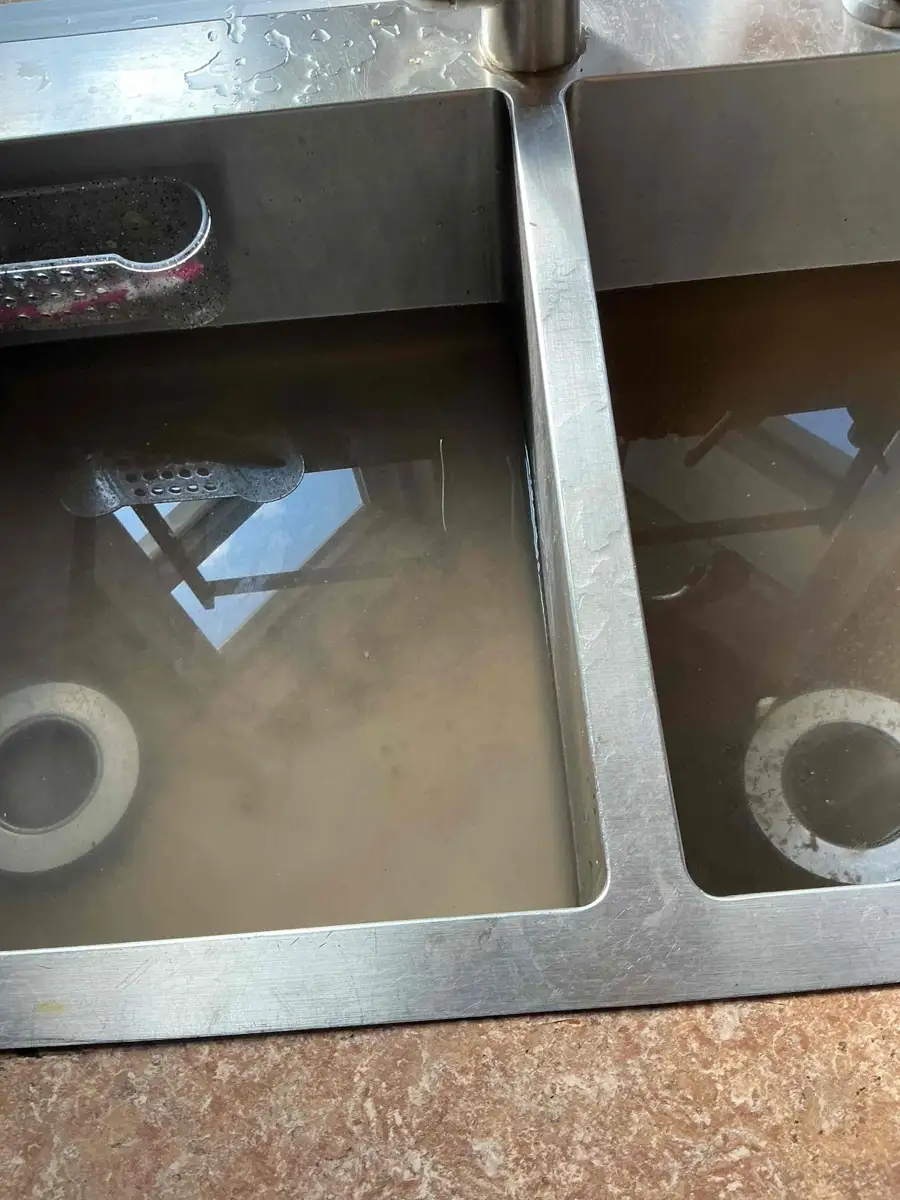
Both bowls full, like this kitchen that had been backed up for a few days, means the blockage is at or past the shared trap. Plunging the right way still has a good chance of moving it.
Step 5: Bail the sink down. Use a cup to scoop the water into a bucket until only an inch or two is left. You want enough water to cover the cup of the plunger, and no more. Less water means less mess if a pipe comes apart.
Step 6: Seal the other drain. On a double sink, push a wet rag hard into the second drain, or set its strainer basket in and have someone hold it down.
If you skip this, your plunger just pushes water up and out of the other bowl instead of pushing on the clog. If you have a dishwasher, clamp its hose with a small spring clamp or have a helper pinch it so the pressure does not blow back into the dishwasher.
Step 7: Plunge with short, firm strokes. Set the plunger flat over the drain so the rubber seals completely.
Push down gently the first time to push out the air, then pump hard and fast about 15 to 20 times, keeping the seal. Pull it off sharply on the last stroke. That pull is often what breaks a grease plug loose.
If the water drops fast with a gulp, run hot tap water for a full minute to flush the line. If it drops slowly or not at all after three rounds, stop plunging.
Pushing harder will not help and can loosen the slip nuts under the sink. The clog is either packed in the trap or past it, and the next step is to open the pipe.
A quick word on boiling water: it is fine on metal drains, but pouring a full kettle into a sink with plastic pipes or a porcelain sink sitting full of water is a bad idea. It can soften plastic joints and crack porcelain. Hot tap water does the same job safely.
How do you remove and clean the P trap?
This is where most kitchen clogs actually live. It sounds intimidating but on most modern sinks the trap is plastic and comes off by hand in a couple of minutes.
Step 8: Get ready for the water. Set the bucket directly under the trap and lay the towel around it. Whatever is in the sink is about to come out of this pipe, so bail it down as low as you can first.
Step 9: Loosen the two slip nuts. These are the large plastic rings at each end of the U shaped section. Turn them counterclockwise by hand.
If they are stuck, wrap them in a rag and use channel lock pliers gently; plastic nuts crack if you crank on them. Older homes may have metal traps, which are heavier and often corroded. Go slow on those.
Step 10: Pull the trap and clean it. Drop the curve into the bucket and look inside. Grease, food, and a grey paste that smells terrible are all normal.
Scrape it out with a bottle brush or an old toothbrush and rinse the pipe in a different sink or outside with a hose. Do not rinse it in the sink you just took apart.
Step 11: Look into the trap arm. With the trap off, shine a flashlight into the sideways pipe going into the wall. If you can see a wall of grease or food, that is your clog, and you will need the snake in the next section.
Step 12: Reassemble and test. Make sure the rubber washers inside each nut are seated, then hand tighten both nuts plus about a quarter turn. Run the water and watch the joints for a full minute. A slow drip usually means a washer slipped; loosen, reseat, and tighten again.
If you would rather not take pipes apart at all, the sink drain cleaning guide covers gentler cleaning for sinks that are sluggish but not fully stopped.
How do you snake a kitchen sink drain past the trap?
If the trap was clean, or you cleaned it and the sink still backs up, the clog is in the pipe inside the wall. In kitchens, it is almost always grease.
Hot greasy water cools as it moves down the pipe, the fat hardens on the walls, and food and soap stick to it until the opening is the size of a pencil.
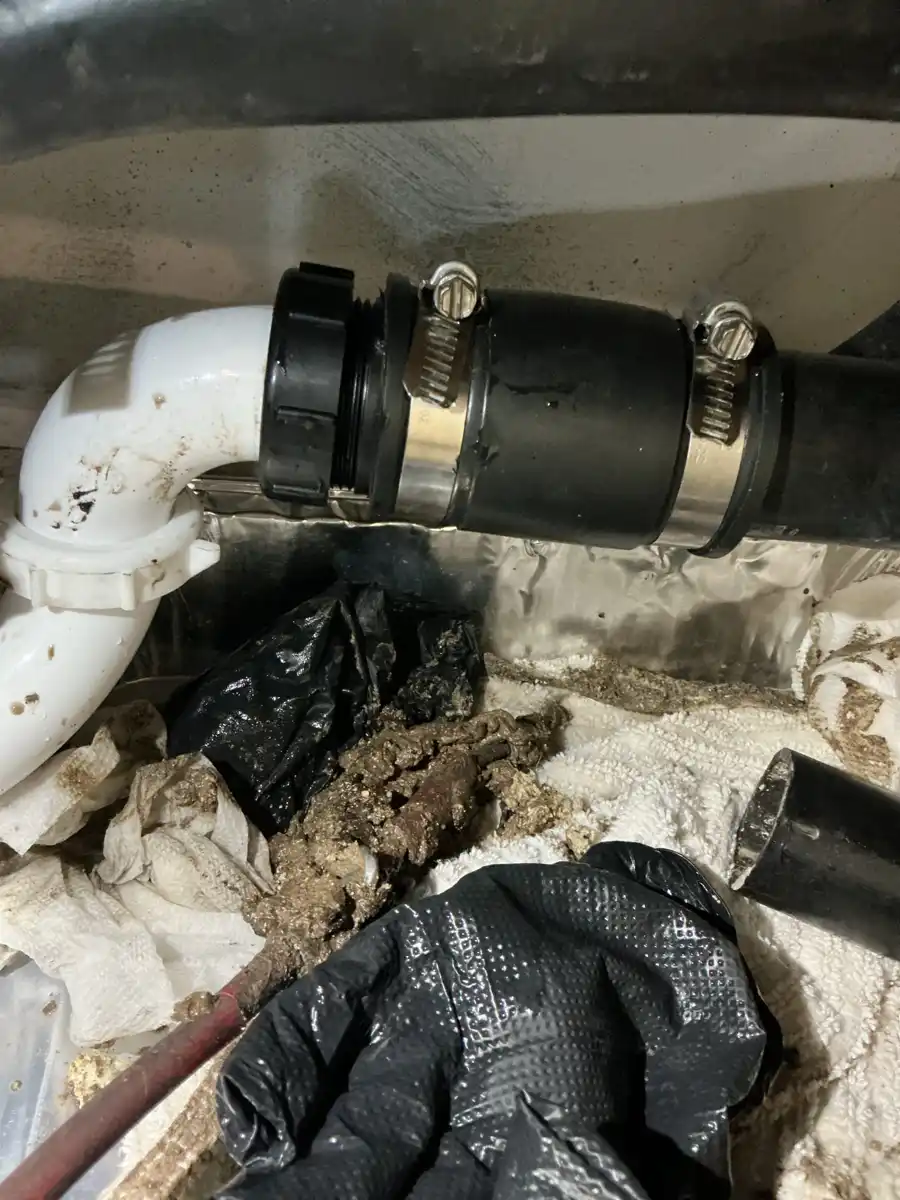
This is what was waiting past the trap for a homeowner who had already replaced every pipe under the sink: a thick grease and food plug further down the line. New parts under the sink cannot fix a clog in the wall.
Step 13: Feed a hand snake into the trap arm. With the trap still off, push the cable of a hand drain snake (sometimes called an auger) into the pipe going into the wall.
Tighten the lock screw and turn the drum clockwise as you push. When it gets hard to push, you have hit either a bend or the clog. Keep turning; a bend lets the cable through, a clog feels soft and spongy.
Step 14: Work the clog, then pull back. Push and pull a few inches at a time while turning. Grease does not break like a hair clog does. You are poking a hole through it so water can flow, and the cable will come back coated. Have the bucket and gloves ready.
Step 15: Flush with hot water. Put the trap back on and run hot tap water for two or three minutes. If it drains fast, you are done. If it drains well for a minute and then slows, the snake punched a hole but the pipe walls are still lined with grease, and it will close up again.
Our drain cleaning page explains what a plumber's machine does differently. A small hand snake opens a hole; a powered machine or water jetting cleans the pipe wall itself.
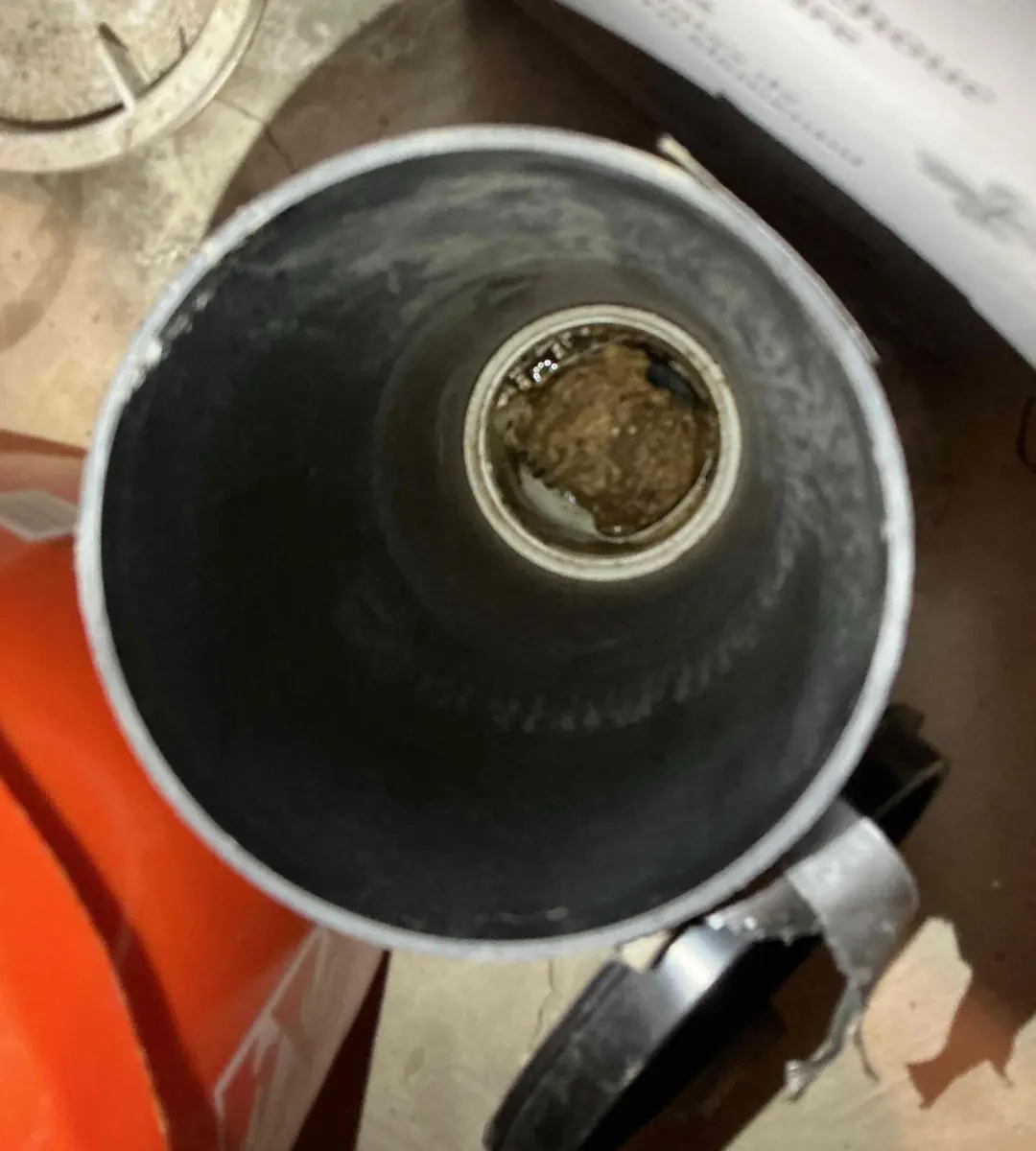
A pipe lined like this will keep clogging no matter how often you plunge. This homeowner's sink had been plunged months earlier and never drained well again. When we see buildup like this, scrubbing the pipe walls with hydro jetting is what stops the repeat calls.
Should you use drain cleaner on a clogged kitchen sink?
We do not recommend it, and especially not when the sink is full of standing water. Most store bought clog removers are either strong bases like lye or strong acids.
According to Poison Control, these ingredients can cause serious burns to skin and eyes, and the National Library of Medicine lists drain cleaner as a common source of chemical burn injuries.
Here is the practical problem in a kitchen:
It sits on top of the clog. A grease plug in the wall is several feet away. The chemical settles into the standing water and the trap, not onto the grease.
It makes the next step dangerous. If the chemical does not work, you now have to plunge, open the trap, or snake a pipe full of caustic water. That is how people get splashed in the face.
It can damage older pipes. Repeated use is hard on the old metal drain lines common in older Grand Rapids area homes. Our Drano guide goes deeper on what these products do to different pipe types.
If you already poured some in and it did not work, tell your plumber before they start so they can protect themselves. Do not add a second product on top of the first; mixing chemicals can create heat and fumes.
Enzyme or bacteria based drain products are a different story. They are slow and gentle, and they can help keep a drain clear as monthly maintenance. They will not open a fully stopped sink.
How do you tell if it is the drain line and not the sink?
Sometimes the kitchen sink is just the first place a bigger clog shows up. These are the signs it is not a sink problem:
The dishwasher backs up into the sink, or the sink fills when the dishwasher drains. That means the shared drain line is restricted past where they meet.
Water comes up in a basement floor drain, laundry sink, or another fixture when you run the kitchen sink. Several of the backups we see start with "the kitchen sink is slow" and end with water in the basement.
Other drains gurgle when the kitchen sink drains.
It keeps coming back within weeks even after a good cleaning.
In older homes, the kitchen line often runs through the basement in cast iron or galvanized steel, and those pipes rust and scale on the inside. Add grease, and the opening shrinks year by year.
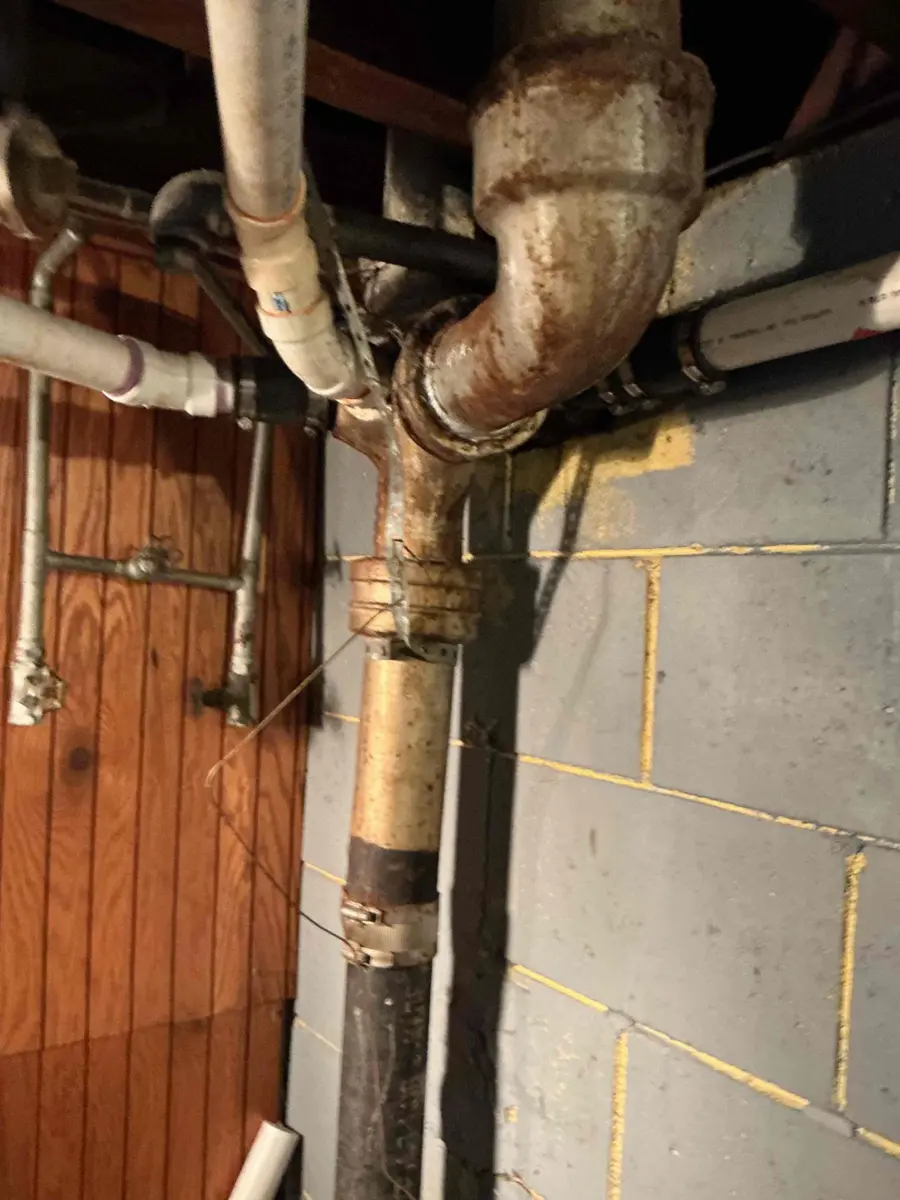
Old metal drain lines like this one, which had started leaking where the kitchen line met the main stack, are where grease clogs get stubborn. At this point a hand snake is the wrong tool, and a section of pipe may need replacing rather than cleaning.
If you see these signs, stop working on the sink. A camera inspection shows exactly where the clog is and what shape the pipe is in, so you pay for the fix you need, not a guess.
A blocked roof vent can also make a kitchen sink drain slowly and gurgle; the Michigan code on vents explains why every drain needs one to flow properly.
How do you keep a kitchen sink from clogging again?
Once it drains, a few habits keep it that way.
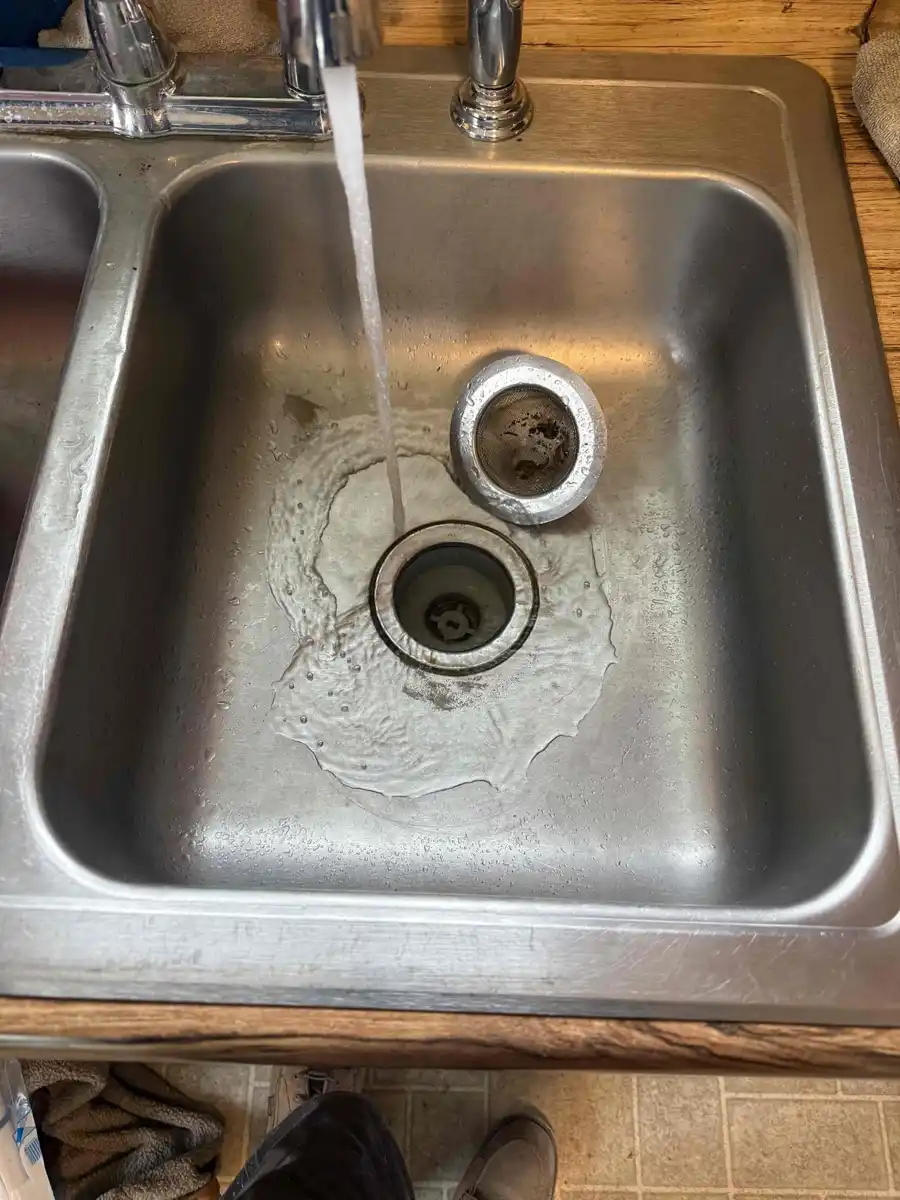
This is the goal: water going straight down with no pooling. These habits keep it there.
Never pour grease down the drain. Not bacon fat, not pan drippings, not oil from the fryer. Let it cool in a can and throw it in the trash. Hot water and dish soap only move grease a few feet further before it hardens.
Scrape plates into the trash, not the sink. Even with a disposal, rice, pasta, potato peels, coffee grounds and eggshells are the top things we pull out of kitchen lines.
Run cold water with the disposal, and keep it running for 15 seconds after grinding to push food all the way through.
Use a strainer basket on the side without a disposal.
Run hot water for a minute after doing dishes once a week to help move soap scum.
Watch for early signs. Slow draining, a gurgle, or a sour smell from the drain usually show up weeks before a full clog. Dealing with it then is easier than dealing with it at 8 PM with a full sink.
Holiday cooking season is when kitchen drains get pushed hardest. If your sink has been slow all fall, getting it cleaned before Thanksgiving is cheaper and calmer than an emergency call the night of.
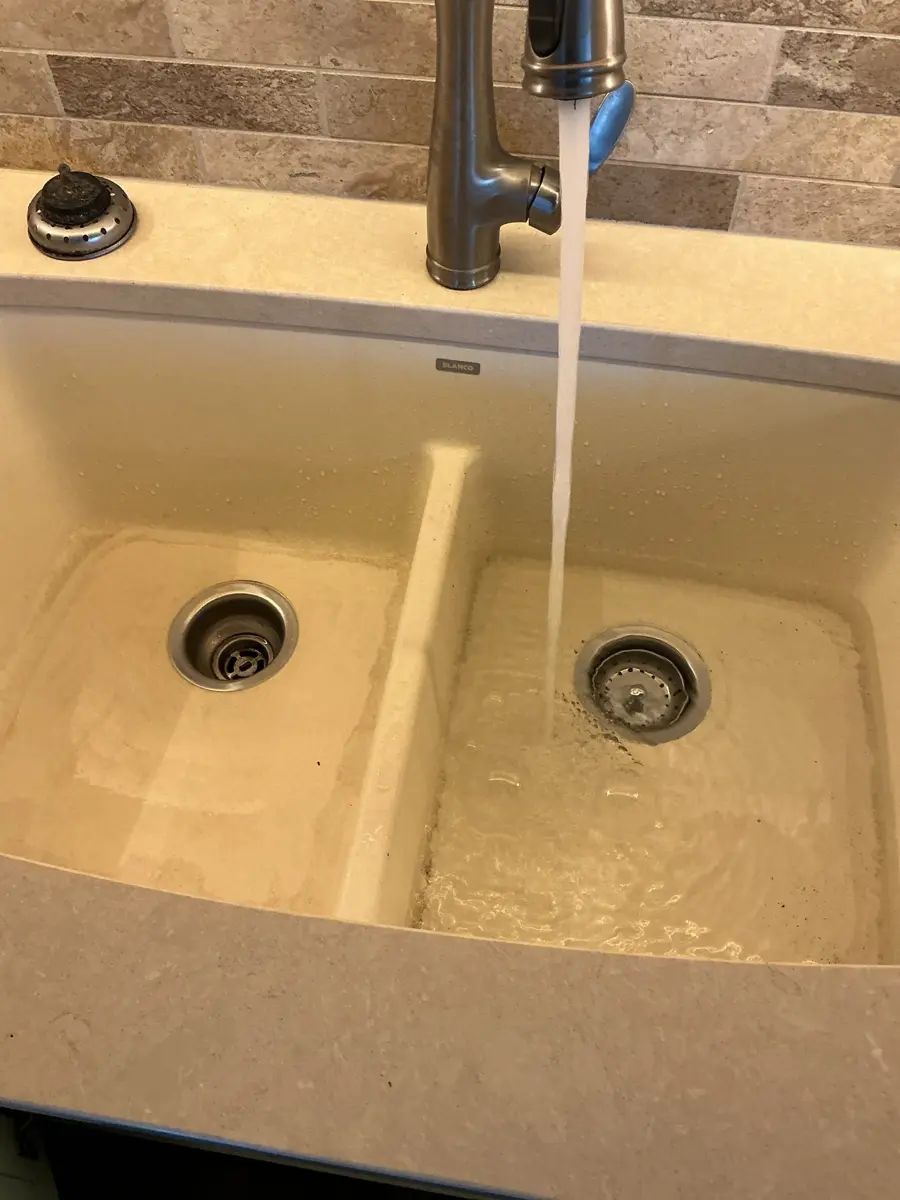
A double sink that drains both sides evenly means the shared trap and the line past it are clear. If one side lags, revisit the disposal side first.
Why is only one side of my double kitchen sink clogged?
If one bowl is full and the other drains, the clog is above the point where the two drains join, usually in that side's tailpiece or the disposal. Check the disposal reset button first, then plunge that side with the other drain sealed.
Can I plunge a kitchen sink with a garbage disposal?
Yes. Turn the disposal off and unplug it, seal the other drain on a double sink, and clamp the dishwasher hose if you have one. Use a flat sink plunger, not a flanged toilet plunger, and keep an inch or two of water over the drain.
Why does my kitchen sink keep clogging after I clean the trap?
The clog is past the trap, in the pipe inside the wall. Grease builds up on the pipe walls there, so a hand snake opens a hole but the pipe narrows again. A professional drain cleaning or hydro jetting cleans the walls so it stays open.
Is it safe to pour boiling water down a clogged kitchen sink?
It is risky. Boiling water can soften plastic drain joints and crack a porcelain sink, and if the sink is already full, it just sits there. Hot tap water is safer and does most of the same job on a light grease clog.
Why does my dishwasher drain into my kitchen sink?
The dishwasher empties into the same drain line as the sink. When that line is clogged past the point they join, the dishwasher water has nowhere to go and comes up in the sink. Clearing the sink drain usually fixes both.
When should I call a plumber for a clogged kitchen sink?
Call when plunging and cleaning the trap do not work, when both bowls stay full, when water shows up in a basement drain or another fixture, or when the same sink clogs again within a few weeks. Those all point to a clog in the drain line rather than under the sink.
Will baking soda and vinegar unclog a kitchen sink?
Not a real clog. The fizzing is mostly at the surface and does not break up a grease plug in the wall. It is fine as a light freshener, but plunging and cleaning the trap will do far more.
Need help with a clogged kitchen sink in Grand Rapids?
NSP Plumbing is a licensed Michigan plumbing contractor (license #8004990) based in Wyoming, Michigan. We clear kitchen sinks, disposals, and the drain lines behind them across Grand Rapids, Wyoming, Kentwood, Grandville, Jenison, Byron Center, Caledonia, Walker, Rockford and the rest of the area.
When a kitchen sink will not clear, our plumber finds where the clog actually is, tells you what it will take before any work starts, and cleans the line so it stays open. If the pipe needs more than cleaning, we show you why. See our full drain cleaning service or contact us with questions.
Kitchen sink still backed up?
A licensed NSP plumber will come out, find the clog, and tell you the price before any work starts.