A sink that drains slower every day, a bottle under the cabinet, and a question before you pour. We hear the same story on clog calls all over West Michigan. Drano is not bad for most pipes when you use it once, as directed, on a slow drain. The real damage happens when it sits in a fully blocked line, goes into old metal pipe, or gets followed by a plunger.
Is Drano bad for pipes?
Short version: usually no, sometimes yes, and the "sometimes" is predictable.
The manufacturer says every Drano product is safe for plastic and metal pipes when you follow the label, and that its products are septic safe (Drano FAQ). We are not going to tell you that is false. Modern PVC, the white plastic drain pipe under most sinks built in the last few decades, handles a normal dose fine.
What the label assumes is a drain that is slow, not stopped, and pipe that is in decent shape. That is where real homes split off. Here is how we think about it by pipe type:
- White or black plastic (PVC or ABS). Fine with a normal dose on a slow drain. The risk is heat building up when the gel sits on a full blockage for hours.
- Old cast iron (heavy black metal pipe, common in Grand Rapids homes built before the 1970s). The pipe itself tolerates it, but these lines are often already thin and rusted from the inside. A strong chemical sitting in a low spot finds the weak point.
- Galvanized steel (gray threaded pipe). Usually rusted shut on the inside by now. Chemical cannot fix a pipe that is closing up from rust.
- Chrome or brass traps and tub drains. Thin metal that can pit and leak at the seams when chemical sits in it.
Drain openers like Drano are built on strong alkaline chemicals. MedlinePlus lists sodium hydroxide, also called lye, as the main poison in drain cleaners (MedlinePlus). Lye works by reacting with grease and hair, and that reaction gives off heat. One dose on a slow drain is a small reaction. A bottle, then a second bottle, sitting on top of a stopped drain is a much bigger one.
So the honest answer is that Drano is rarely what ruins a pipe on its own. It speeds up what an old pipe or a full blockage was already going to do.
Does Drano actually work?
It does on some clogs, and it is close to useless on others. The difference comes down to what the clog is made of and where it sits.
Drano works best on soft, organic buildup close to the drain opening:
- Hair and soap scum in a bathroom sink or shower
- A thin coat of grease in a kitchen sink trap (the curved pipe under the sink that holds water)
- Slow drains where water still moves, just badly
It struggles or fails on:
- A fully stopped drain where nothing moves, because the chemical cannot reach the clog through standing water
- Solid objects like toothpaste caps, toys, cotton swabs or a dropped ring
- Heavy grease packed deep in the line toward the main sewer
- Tree roots, a collapsed pipe, or a low spot that holds water
- Anything past the first few feet of pipe
Our own call records show the pattern clearly. When someone tried Drano before calling us, the fix our plumber actually did was almost always mechanical: snaking out the branch line (the pipe that runs from one fixture to the bigger drain), pulling and cleaning the trap, or clearing the main line. Chemical rarely touched the real problem.
Here is a typical result from a tub where two bottles had already gone down with no change.
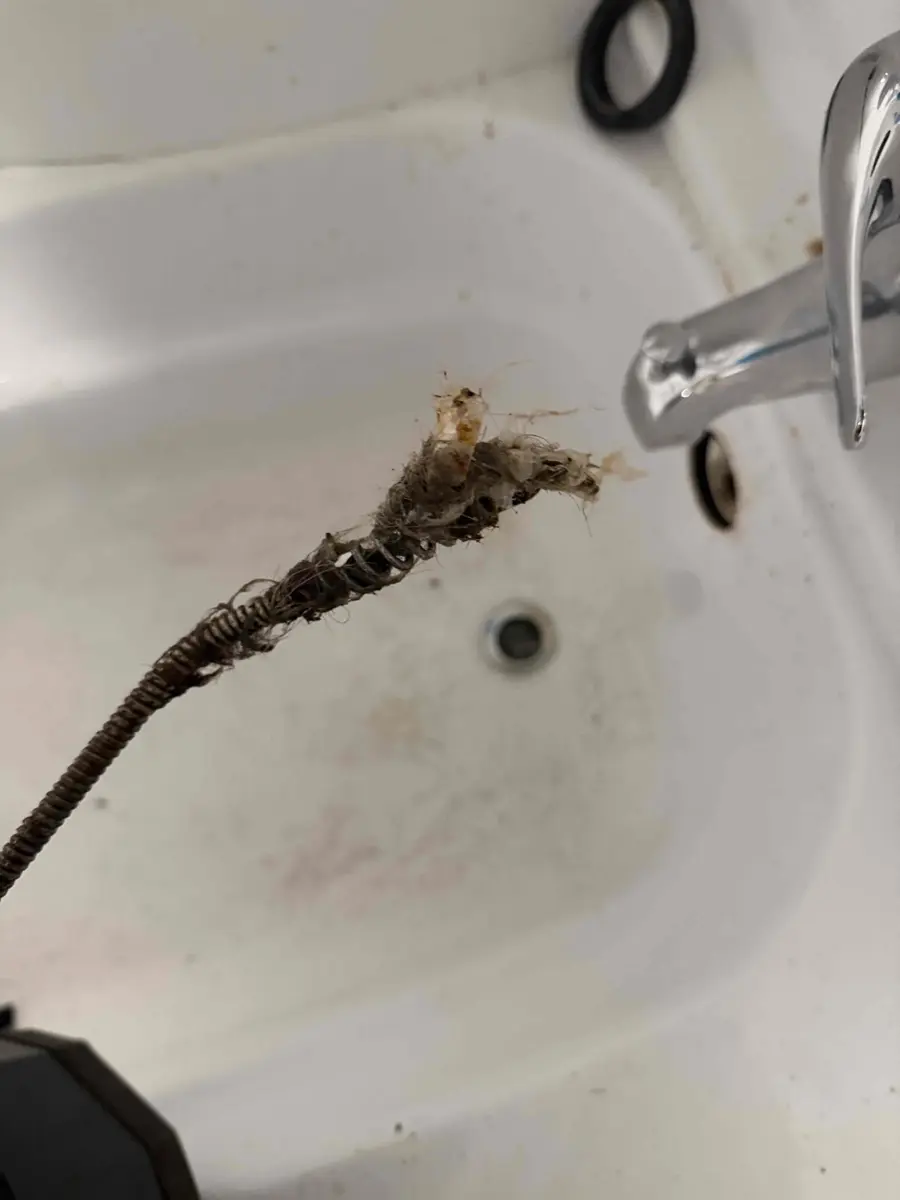
Two bottles of drain cleaner did not move this hair clog, a snake pulled it out in one pass. The tub had been slow since the tenant moved in. The clog was a mat of hair wrapped around the drain parts, exactly what chemical is sold for, and it still did not dissolve. A matted clog that dense is a job for a tool, not a bottle.
When can Drano hurt your pipes?
These are the situations where we see chemical drain openers cause real trouble, ranked by how often they come up.
1. Pouring it on a drain that is fully stopped. The gel sinks through standing water and sits on the clog. With nowhere to go, the heat and chemical stay in one spot of pipe for hours. On PVC that can soften glued joints. On old metal it attacks the thinnest wall.
2. Repeating the dose. If the first bottle did not work, the second one almost never will. You just doubled the chemical sitting in your pipe and in the water your plumber is about to open.
3. Using it on old pipe that was already failing. In older Grand Rapids neighborhoods, the drain under a tub or sink is often cast iron or brass that is 60 to 100 years old. Chemical does not cause the rust, but it can turn a slow leak into a fast one.
4. Mixing products. Some drain openers are lye based, some are bleach based, and some sold in hardware stores are acid based. Mixing them in the same drain can create heat, splatter or toxic fumes. Poison Control warns that drain cleaners are corrosive and must be used with great caution (Poison Control).
5. Following it with a plunger or snake. This is the one that hurts people, not pipes. Plunging a drain full of chemical can splash it straight into your face and eyes.
The photo below is from an older home where the tub had not drained for days.
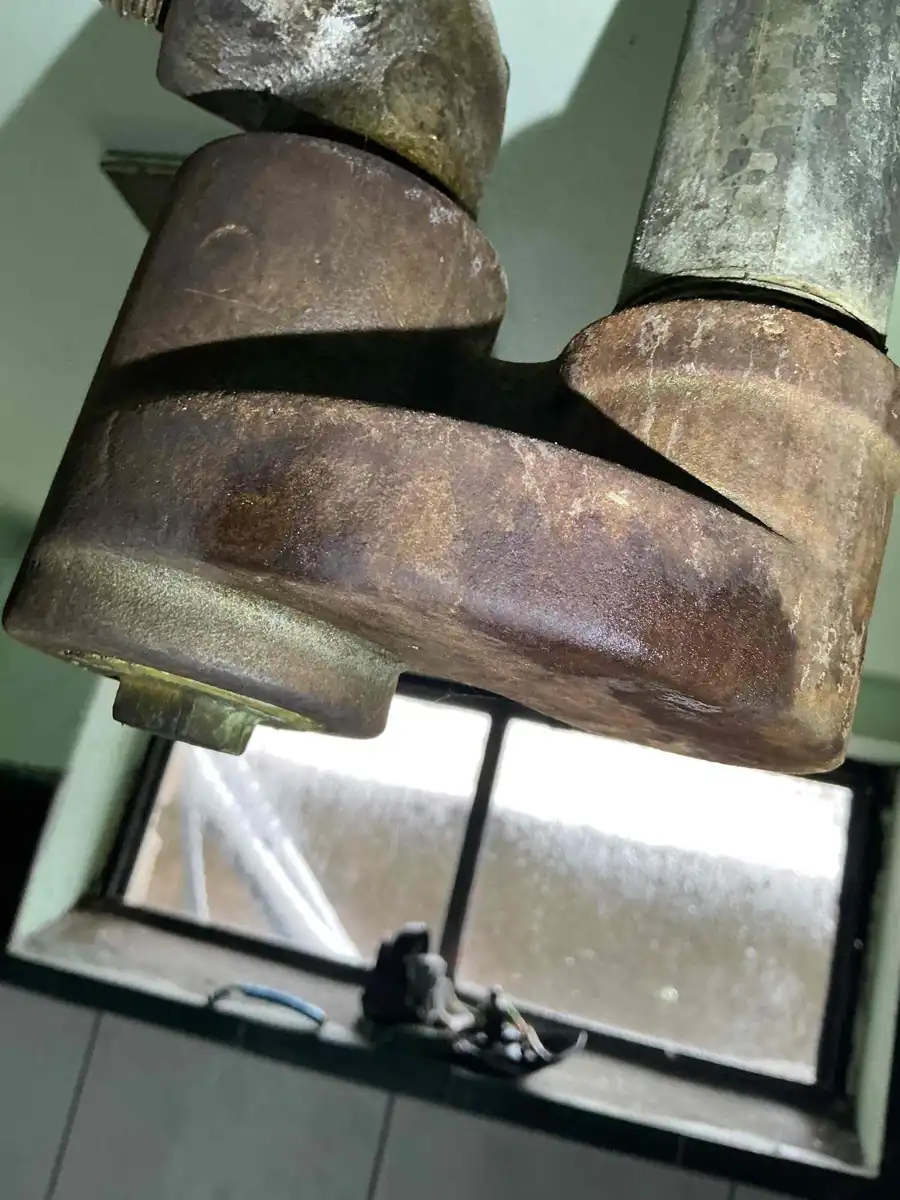
This rusted tub drain fitting is the kind of old metal that chemical can push over the edge. The homeowner had already snaked it, vacuumed it and poured Drano with no luck. Pipe in this shape needs to be looked at and often replaced, not dosed again. If your drains look like this from below, skip the bottle entirely.
Is Drano safe for toilets, septic systems and garbage disposals?
These three come up on almost every call, so here is a straight answer for each.
Toilets
Most standard Drano liquids and gels are labeled do not use in toilets (Drano Liquid Drain Cleaner). A toilet holds a lot of water, so the chemical gets diluted before it reaches the clog, and the clog in a toilet is usually something solid stuck in the curve of the bowl. You also cannot see the reaction happening in the bowl, which makes the plunging that follows risky. Toilets clear with a flange plunger (the kind with a soft sleeve on the bottom) or a toilet auger. If neither works, the clog is past the toilet and needs a plumber. Our toilet repair service handles both.
Septic systems
The manufacturer says its products will not upset the bacteria in a septic tank when used as directed (Drano FAQ). The EPA's own septic care guidance still tells homeowners to avoid pouring harsh chemicals down drains and to keep the system's bacteria healthy (EPA septic care). Our take: an occasional dose is unlikely to hurt, a habit of it is a bad idea for a septic home.
Garbage disposals
Drano Liquid is labeled safe for disposals. The bigger issue is that a disposal clog is usually food packed in the grinding chamber or the trap below it, which chemical rarely clears. If your disposal hums but will not drain, our disposal cleaning guide walks through the reset button and the hex key trick before you reach for anything stronger.
What should I try before using a chemical drain cleaner?
Most clogs we see could have been cleared at home with a cheap hand tool and ten minutes. Try these in order, and stop when one works.
- Boil a kettle, but use hot tap water on plastic pipe. Very hot tap water helps loosen grease in a kitchen sink. Skip boiling water on PVC, because repeated boiling water can soften joints, and never pour it into a toilet bowl.
- Pull the stopper. Bathroom sink and tub stoppers catch most of the hair. Many lift straight out or unscrew. Clean it, put it back, and test.
- Use a plastic zip tool. A thin plastic strip with barbs on it, sold at any hardware store. Push it down the drain, pull it out, and the hair comes with it. This clears more bathroom sinks than anything else.
- Plunge with the right plunger. A flat cup plunger for sinks and tubs, a flange plunger for toilets. Plug the overflow hole with a wet rag so the pressure goes down, not out.
- Clean the trap under the sink. Put a bucket underneath, unscrew the two slip nuts on the curved pipe by hand, and empty it. Wear gloves. Grease, food and small objects end up here.
- Run a small hand snake. A 15 or 25 foot drum snake reaches past the trap into the wall.
Here is what step 5 looks like in a kitchen where plunging and Drano had both failed.
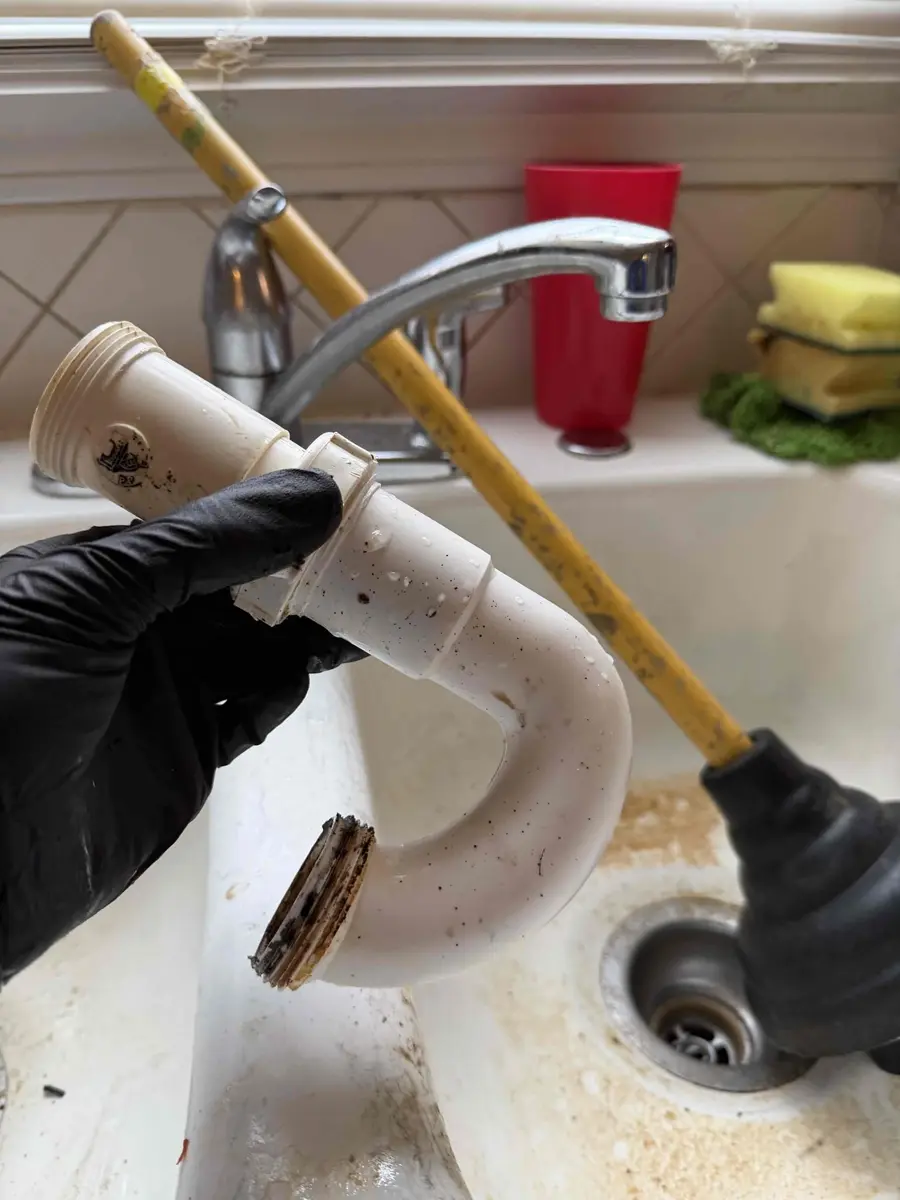
Taking the trap off shows you whether the clog is under the sink or farther down the line. In this kitchen the trap was not the problem, so the clog was deeper and needed the main line cleared. That is useful news. It tells you exactly where to stop doing it yourself.
What do I do if Drano did not work?
First, stop pouring. If one dose did not clear it, the clog is not the kind chemical can reach, and more bottles will not change that. Then do these things before anyone opens the drain.
Do not plunge or snake a drain full of chemical. Bail out the standing water with a cup into a bucket, wearing rubber gloves and eye protection, or wait and flush with cold water if any of it drains at all.
Tell your plumber exactly what you used and when. This is a safety step, not a judgment. Our dispatchers ask every caller, and our plumbers adjust how they open the line when chemical is in it. Bring the bottle or snap a photo of the label so we know if it was lye, bleach or acid.
Look for clues that it is bigger than one drain. If two fixtures back up together, if the washing machine pushes water into a sink, or if a drain gurgles when another fixture runs, the clog is likely in a shared line. No bottle reaches that.
Here is a basement laundry sink where that is exactly what happened.
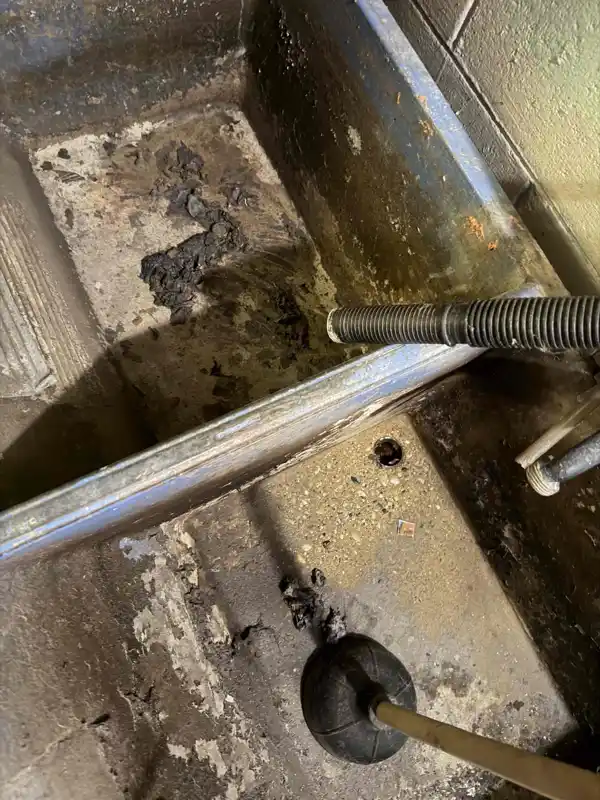
Drano opened this laundry sink for a day, then the washer backed it up again: the clog was in the shared line, not the sink. The tenant poured it after the sink overflowed into the washer. It cleared, then flooded the floor the next time the washer ran. Our plumber cleaned the branch line, which solved it for good.
A short fix that comes back is the most common chemical story we hear. If your drain cleared and then clogged again within a few weeks, professional drain cleaning is the next step, and a camera inspection tells you why it keeps happening.
When should I call a plumber instead of buying another bottle?
The rule we give customers is simple: one try with a plunger, a zip tool or a single dose of drain cleaner, then call. Past that point you are spending money and adding risk without getting closer to the cause.
Call sooner if any of these are true:
- More than one drain is slow or backing up. That points to the main line, the large pipe that carries everything out of the house to the street.
- You hear gurgling. Air bubbling up through a sink or toilet when something else drains is a sign the line is partly blocked downstream.
- The drain smells like sewage. Our guide on why a bathroom smells like sewage covers the causes.
- Water is coming up through a basement floor drain. Read what to do about a sewer backup in the basement and call right away.
- The same drain clogs every few weeks. That is a pipe problem, not a buildup problem.
- Your house is older and the pipe under the fixture is metal. Old drains deserve a look before more chemical goes in.
Here is a kitchen where the symptoms said call, not pour.
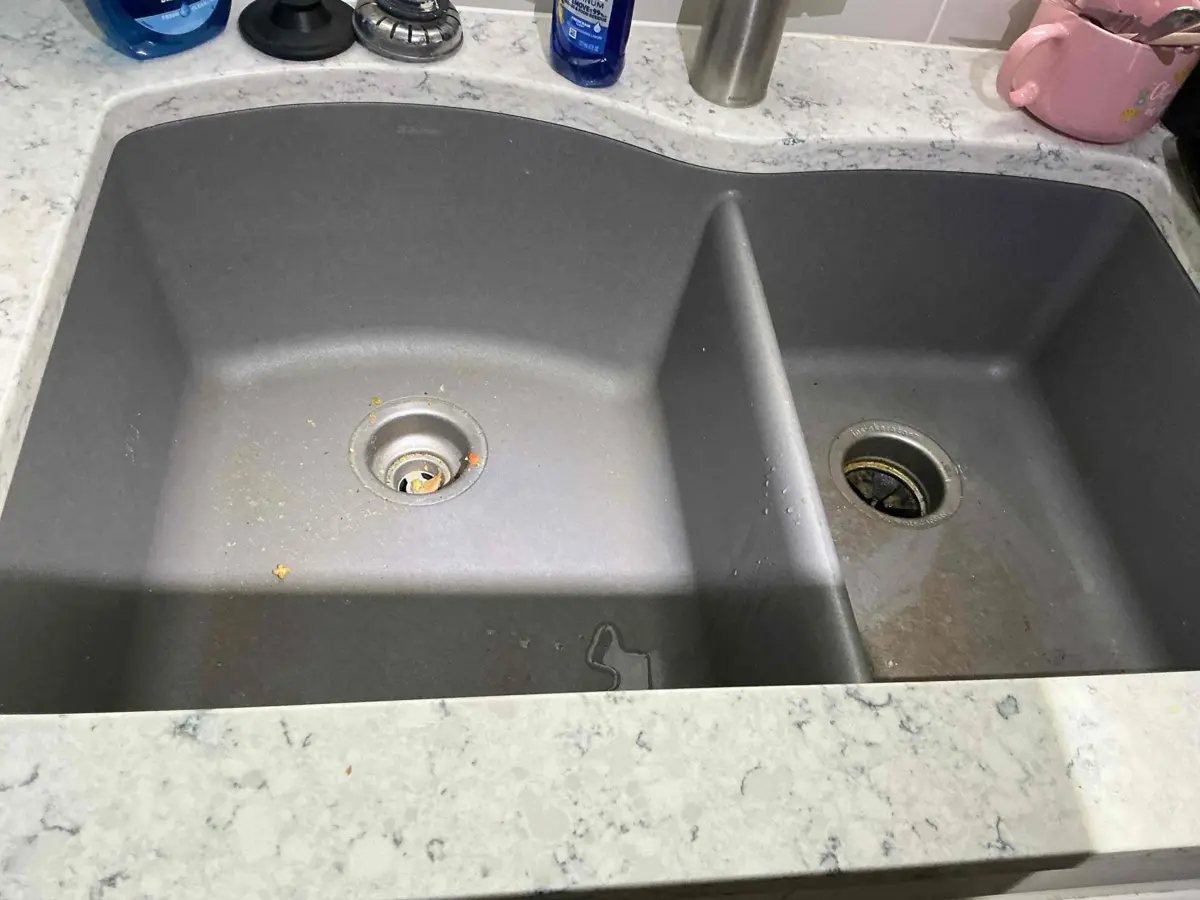
A sink that backs up when the dishwasher runs and gurgles underneath has a clog past the trap. The homeowner had plunged and used Drano with no change. Both appliances share one drain, so the blockage sits where they meet. That spot is out of reach for chemical and easy for a snake.
For heavy grease or roots in the main line, a snake may only punch a hole. That is where hydro jetting comes in, using high pressure water to scour the pipe wall clean. Our hydro jetting guide explains when it is worth it.
What does a plumber do differently?
The main difference is that we remove the clog instead of trying to dissolve it, and we find out why it formed.
On a typical clogged drain call, our plumber will:
- Ask what has already gone down the drain. If it was chemical, we wear eye protection and gloves and open the line slowly so nothing splashes.
- Test the other fixtures. Running water in nearby sinks, tubs and toilets tells us whether it is one drain or a shared line.
- Snake the line from the right spot. Often that means pulling the trap or using a cleanout, a capped piece of pipe that lets a plumber into your line without digging, instead of forcing a cable through the drain opening.
- Pull the clog out and show it to you. Hair, grease, wipes or roots. Seeing it tells you what to change.
- Run a camera if it keeps coming back. A small waterproof camera on a cable shows breaks, low spots and roots that no chemical can fix.
The Michigan Plumbing Code requires every fixture to have its own trap that holds a water seal (Section 1002.1). That seal blocks sewer gas, and it is also where most clogs settle. Keeping that trap clean is the single best thing you can do to avoid ever needing a chemical.
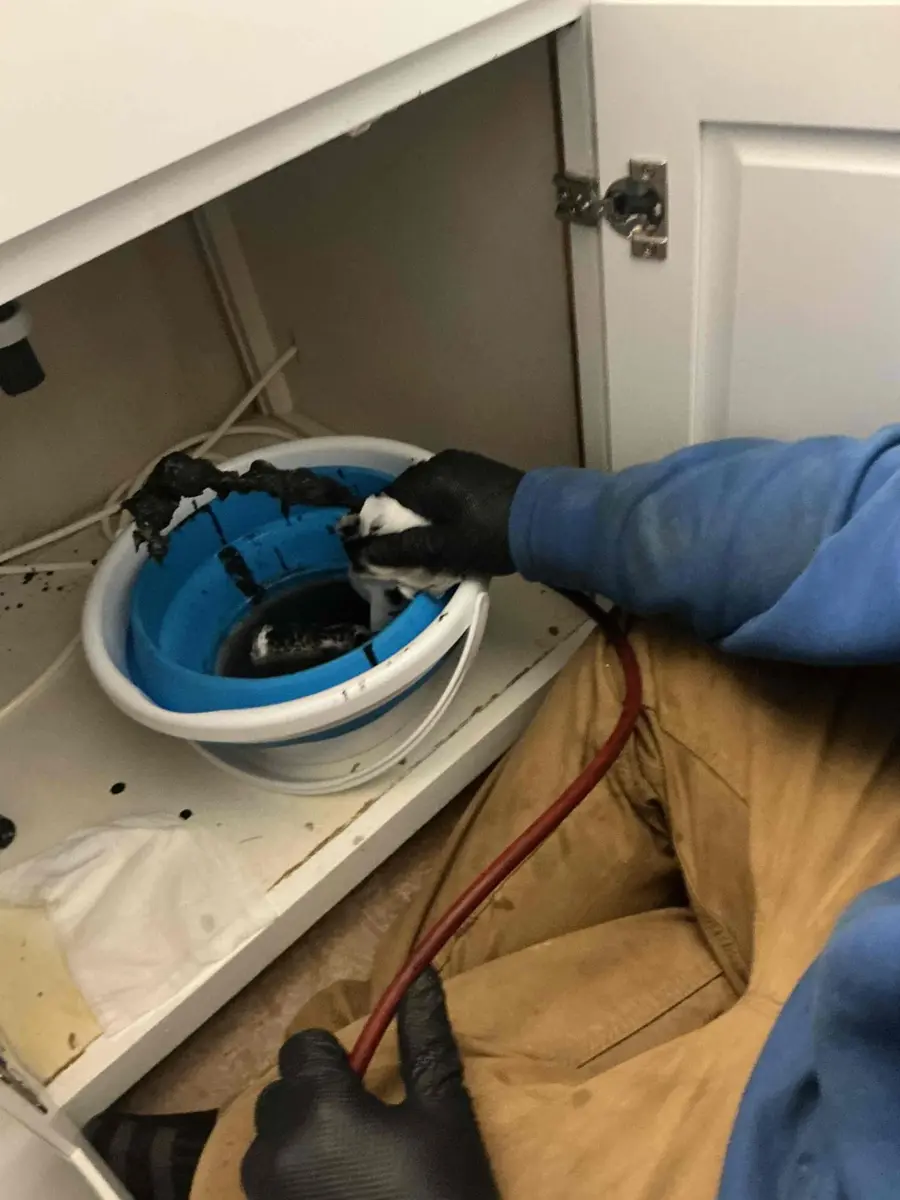
A gloved snake into a bucket is the safe way to open a drain that already has Drano in it. This bathroom sink had been slow for weeks and the Drano did nothing. The cable reached the clog in the wall, pulled it free, and the bucket caught the water and chemical before it hit the cabinet.
Prevention beats both. Use a hair catcher in showers, wipe greasy pans into the trash before washing, and never flush wipes, even the ones labeled flushable.
Is Drano bad for PVC pipes?
Not when you use one dose, as directed, on a slow drain. The manufacturer says its products are safe for plastic pipe. The risk comes when the gel sits on a fully stopped drain for hours, where the heat from the reaction can stress glued joints. If water is not moving at all, skip the chemical.
Can Drano damage old cast iron pipes?
It does not create the damage, but it can speed it up. Old cast iron in Grand Rapids homes is often rusted thin from the inside. Strong chemical sitting in a low spot of that pipe can turn a weak spot into a leak. On older homes, have the line snaked or looked at instead.
Does Drano dissolve hair?
It can loosen light hair and soap buildup in a slow drain. A thick mat of hair wrapped around the stopper or drain parts usually does not dissolve. A plastic zip tool or a small snake pulls that kind of clog out faster and without chemical.
Can I use Drano in a toilet?
Most Drano liquids and gels are labeled not for toilets. The toilet bowl dilutes the chemical and most toilet clogs are solid objects. Use a flange plunger or a toilet auger instead, and call a plumber if neither clears it.
Is Drano safe for septic systems?
The manufacturer says yes when used as directed. The EPA still advises septic owners to avoid pouring harsh chemicals down drains. An occasional dose is unlikely to hurt, but regular use is not a good habit for a septic home.
What happens if Drano does not unclog the drain?
Stop adding more. The clog is either solid, too deep, or in a shared line. Do not plunge or snake a drain with chemical in it. Bail out the water wearing gloves and eye protection, and tell your plumber exactly what you used.
Is it safe to mix Drano with other drain cleaners?
No. Drain openers can be lye based, bleach based or acid based. Mixing them can create heat, splatter and dangerous fumes. Use one product at most, and if it fails, call a plumber rather than trying a second one.
Get a stubborn drain cleared by a licensed Grand Rapids plumber
NSP Plumbing is a licensed Michigan plumbing contractor, license #8004990, based in Wyoming and serving the greater Grand Rapids area. Our plumbers clear clogged sinks, tubs, showers, toilets and main lines every day, and many of those calls start with a bottle of drain cleaner that did not work. We will never judge you for trying it first. We just want to know what went down the drain so we can open it safely.
When you call, here is what to expect. A dispatcher asks what is clogged, what you have tried, and whether other drains are acting up. A plumber arrives, tests the nearby fixtures, and clears the line with the right tool for the clog. If it is a repeat problem, we can run a camera so you see the cause for yourself instead of guessing.
We serve homeowners and property managers in Grand Rapids, Wyoming, Kentwood, Grandville, Jenison, Walker, Byron Center, Caledonia, Ada, Rockford, Hudsonville and East Grand Rapids. Learn more about our drain cleaning service, see what customers say on our reviews page, or contact us to get on the schedule.
If your pipes are old and the same drains keep giving you trouble, ask about a repipe assessment. Replacing a failing section of drain once often costs less over time than clearing it again and again. And if a clog turns into water on the floor at night or on a weekend, we answer emergency calls around the clock.
Drain still clogged after the Drano?
Tell us what you poured and what is backing up. A licensed NSP plumber will clear the line safely, show you what caused it, and tell you plainly if it needs anything more.