
You walk into the bathroom and it smells like a sewer. The rest of the house is fine, the toilet flushes, and the drains seem to work. That smell is sewer gas getting past a seal that is supposed to stop it. In most bathrooms the cause is a dried out drain trap, a failed toilet wax ring, or a dirty drain, and two of those three are quick fixes.
Why does my bathroom smell like sewage?
Every drain in your home connects to the same set of pipes that carries waste out to the city sewer or your septic tank. Those pipes are full of gas from waste breaking down. Your plumbing has two defenses that keep that gas out of the room.
The first is the trap. That is the curved section of pipe under every sink, tub, shower and floor drain. It holds a small pool of water that blocks the gas. Toilets have a trap built into the porcelain. The Michigan Plumbing Code requires every fixture to have one, with a water seal between 2 and 4 inches deep (Section 1002.4).
The second defense is the vent. Vent pipes run up through your roof and let air in and out of the drain system. Without them, water rushing down a drain would suck the water out of the traps behind it, and the gas would walk right in.
So a sewer smell in a bathroom almost always means one of these things:
- A trap lost its water. It dried out from lack of use, or the vent is not working and water is being pulled out.
- A seal around a pipe failed. The most common one is the wax ring under the toilet.
- The drain itself is dirty. Hair, soap and slime build up inside the pipe and start to smell on their own.
- The vent is blocked or was never there. Gas has nowhere to go but out through the weakest trap.
On our own odor calls, the most common fix was cleaning out the bathroom drain line, followed by replacing the toilet wax ring. Vent repairs came next. The rest were a mix of loose pipe joints, a failed floor drain, and a few problems farther down the line toward the street.
Here is the most common hidden cause. When we pulled this toilet, the wax seal underneath had failed long ago, and the floor under it had rotted from slow leaks.
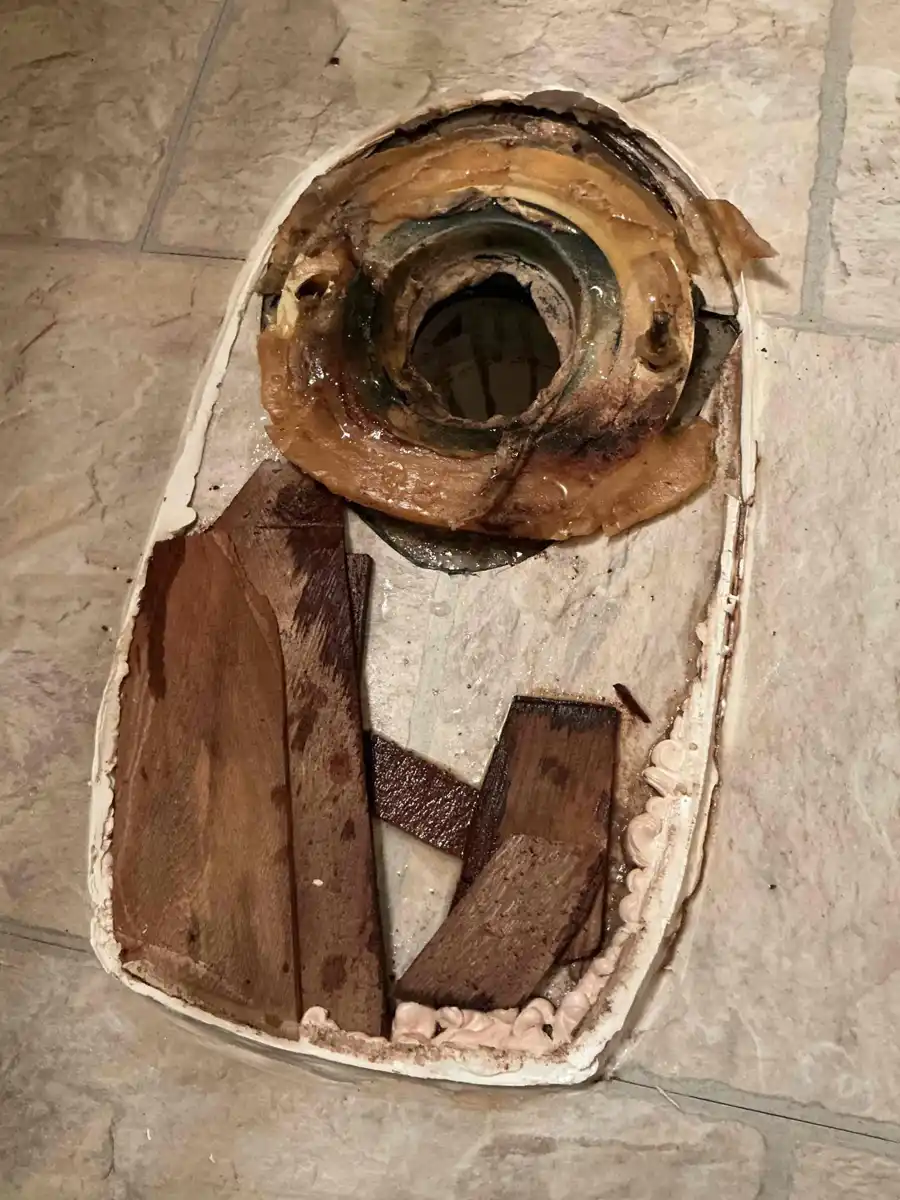
A failed wax seal is a sewer smell and a slow leak at the same time. The dark wood is rotted subfloor, the layer under the tile. This homeowner noticed a smell for months before anyone pulled the toilet. Catching it sooner would have meant a seal swap instead of a floor repair.
How do I check the simple causes first?
Start with the free checks. They take about 10 minutes and they solve a lot of bathroom smells without a plumber.
Run water in every drain. Turn on the sink, the tub and the shower for about 30 seconds each, and flush the toilet. If one of those fixtures sits unused, its trap has probably dried out. This is the single most common fix for a guest bathroom smell.
Check the sink overflow. Most bathroom sinks have a small hole near the top of the bowl. That channel collects soap scum and hair and never gets rinsed. Pour a cup of hot water with a little dish soap into the overflow, then scrub it with a small bottle brush.
Smell the base of the toilet. Get close to the floor where the toilet meets it. If the smell is strongest right there, and especially if the toilet rocks when you push on it, the wax ring is the likely problem. More on that below.
Smell each drain. Put your nose near the sink drain, then the tub drain, then the shower. A smell that is strongest at one drain usually means that drain is dirty or its trap is the problem.
Look under the sink. Open the vanity cabinet and look at the curved pipe. Look for drips, white crust at the joints, or any sign the pipe has slipped apart.
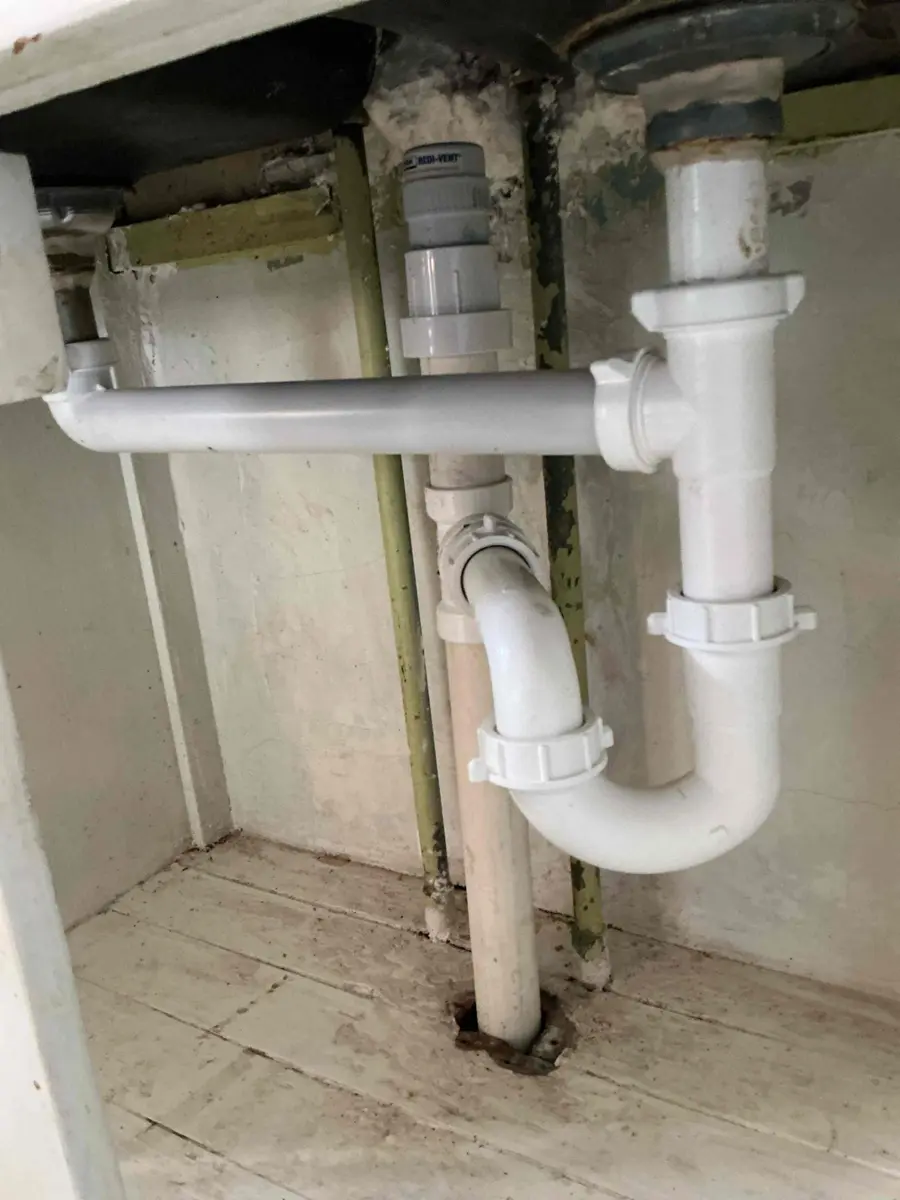
This is a healthy sink trap. The U shaped bend holds water and blocks the gas. If yours looks like this and is not dripping, the trap is doing its job and the smell is coming from somewhere else. If you see a drip at any of the slip nuts, the large plastic rings at each joint, a hand tightening will often stop it.
If the smell goes away after running water and cleaning the overflow, you are done. If it comes back within a day or two, keep reading, because something is pulling the water out or a seal has failed.
Why does only one bathroom smell like sewer?
This is one of the most common things homeowners tell us: the guest bathroom or the basement bathroom smells, and the main bathroom is fine. There are three usual reasons.
The trap dried out. A trap that is not used loses its water to evaporation. In a heated Michigan house in winter, the air is dry and a trap can go dry in a few weeks. Basement shower drains and floor drains are the worst offenders, because almost nobody runs water into them.
The basement fixture has a weak vent. Basement bathrooms are often added years after the house was built. Sometimes the vent was done right, sometimes it was not done at all. When the main floor toilet flushes, the rush of water can pull the water out of a poorly vented basement trap. You may hear a gurgle from the basement drain when someone flushes upstairs. That gurgle is the trap being sucked dry.
The fixture has a different trap than the rest. Some sinks were hooked up with a flexible, ribbed drain pipe that looks like an accordion. Those are sold in hardware stores as an easy fix. The ridges catch hair and slime, they sag over time, and they can lose their water seal.
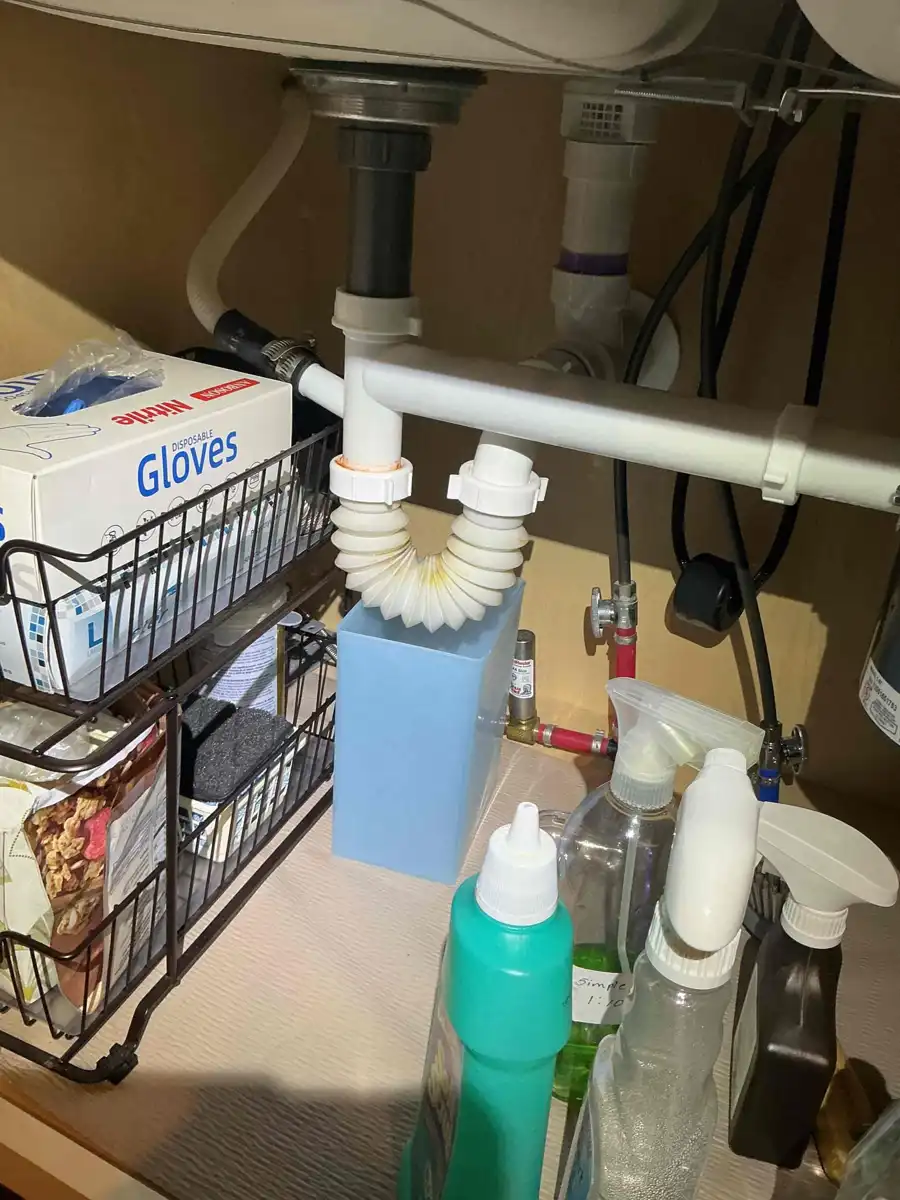
This ribbed flexible trap is a smell problem waiting to happen. The ridges inside hold gunk that rots and smells, and the soft pipe can sag until it no longer holds a proper water seal. We replace these with a smooth rigid trap, which is a short and simple job.
The fix for a rarely used bathroom is easy. Run water in every fixture once a week, including the basement shower and floor drain. If you will be away for a while, pour a little mineral oil or cooking oil into the drain after the water. It floats on top and slows evaporation.
If the gurgle and the smell come back even with regular use, the vent is the more likely cause, and that is a job for a plumber.
Is a toilet wax ring causing the smell?
Every toilet sits on a ring of wax that seals the toilet to the drain pipe in the floor. That drain connection is called the flange. When the wax seal is good, you never think about it. When it fails, sewer gas leaks out at floor level, and often a little water leaks with it every time you flush.
Signs the wax ring has failed:
- The smell is strongest at the base of the toilet.
- The toilet rocks or shifts when you sit on it.
- There is a stain, soft spot or discoloration in the floor around the toilet.
- You see water around the base after a flush.
- There is a water stain on the ceiling below that bathroom.
Wax rings fail for a few reasons. The toilet was set on a loose floor and rocked until the wax broke its seal. The flange in the floor is cracked, rusted, or sits too low under new tile. Or the toilet was pulled for flooring work and set back on the old, already squashed ring.
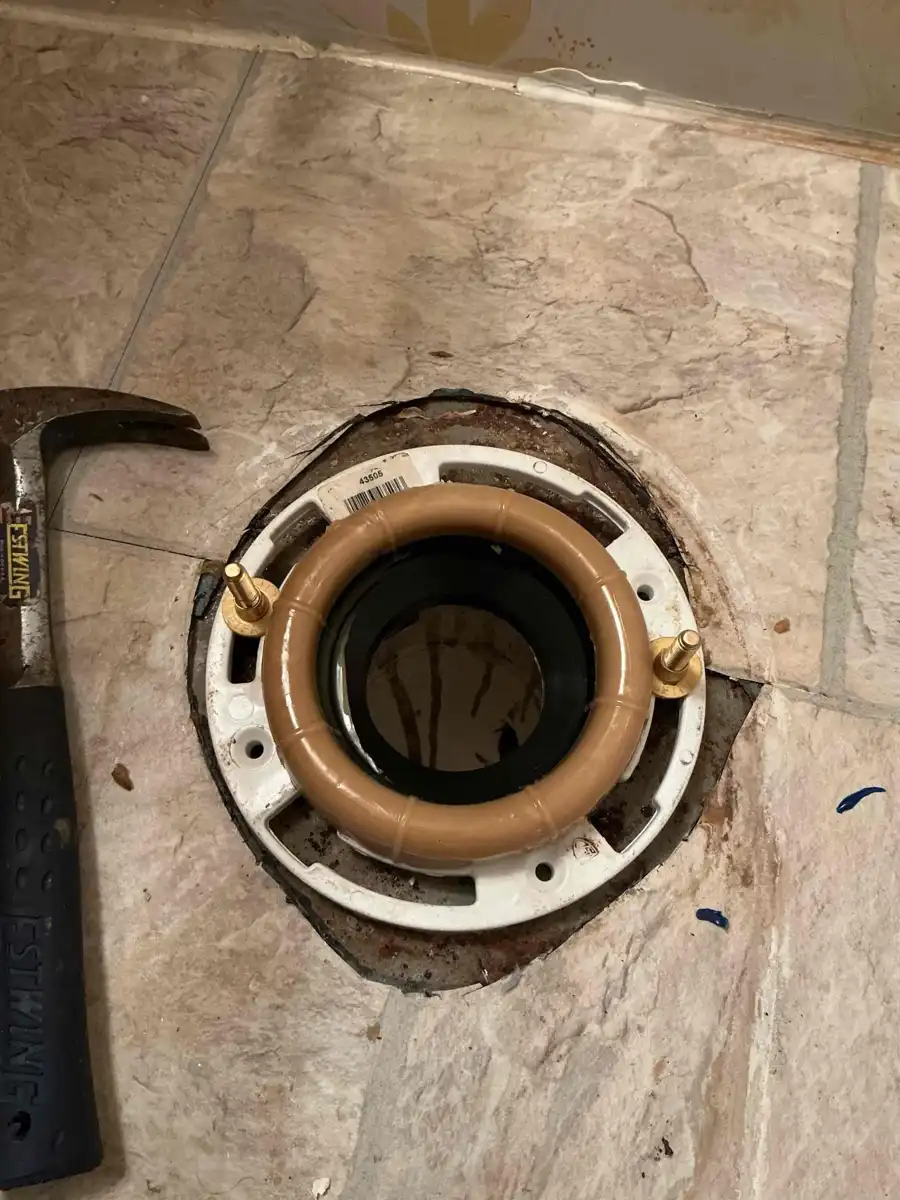
A new flange and a fresh wax ring stop the gas at the source. This is the finished repair before the toilet goes back on. The tan ring is the new wax seal, the white plate under it is the flange screwed to the floor, and the brass bolts hold the toilet tight so it cannot rock and break the seal again.
Replacing a wax ring is a common homeowner project, but it is easy to get wrong. If the toilet rocks after you set it, or the flange is broken, the new ring will fail just like the old one. A plumber will also check whether the floor underneath has been damaged by a slow leak, which is the part that turns a simple repair into a bigger one if it waits.
While the toilet is off, the open drain lets gas pour straight into the room, which is why we always block it right away.
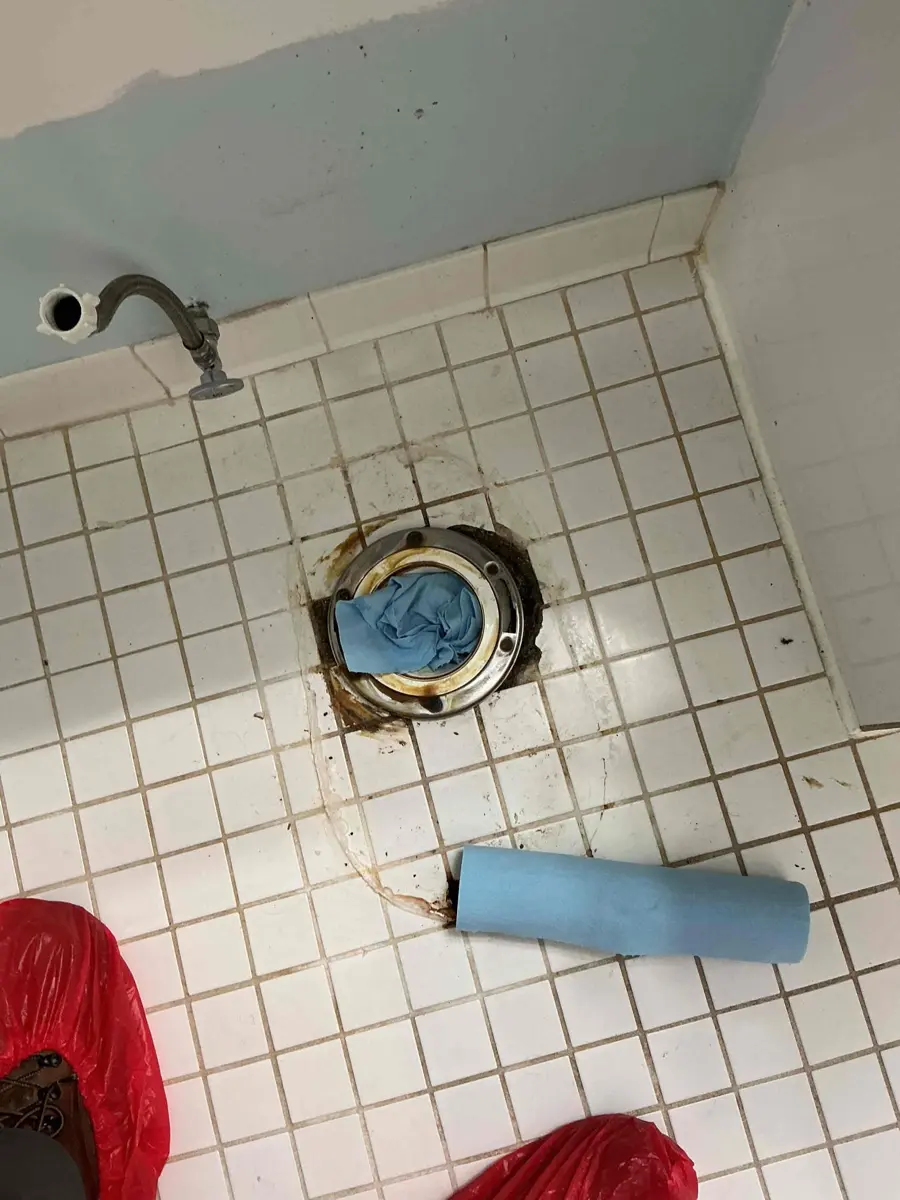
Mid repair: the toilet is off and the drain is plugged to keep sewer gas out. If you ever pull a toilet yourself, stuff a rag in the opening right away. Leave a corner sticking out so it cannot fall into the pipe, and pull it out before the toilet goes back on.
Can a dirty drain make a bathroom smell like sewage?
Yes, and it is the most common cause we fix. A bathroom drain carries hair, soap, toothpaste, skin oils and shaving residue. That mix sticks to the inside of the pipe and becomes a slimy coating called biofilm. Bacteria grow in it and give off gas that smells a lot like sewer gas, even when every trap and seal is perfect.
This kind of smell has a few tells:
- It is strongest right at one sink or tub drain.
- The drain is slow, even a little.
- Pouring hot water down it makes the smell briefly worse.
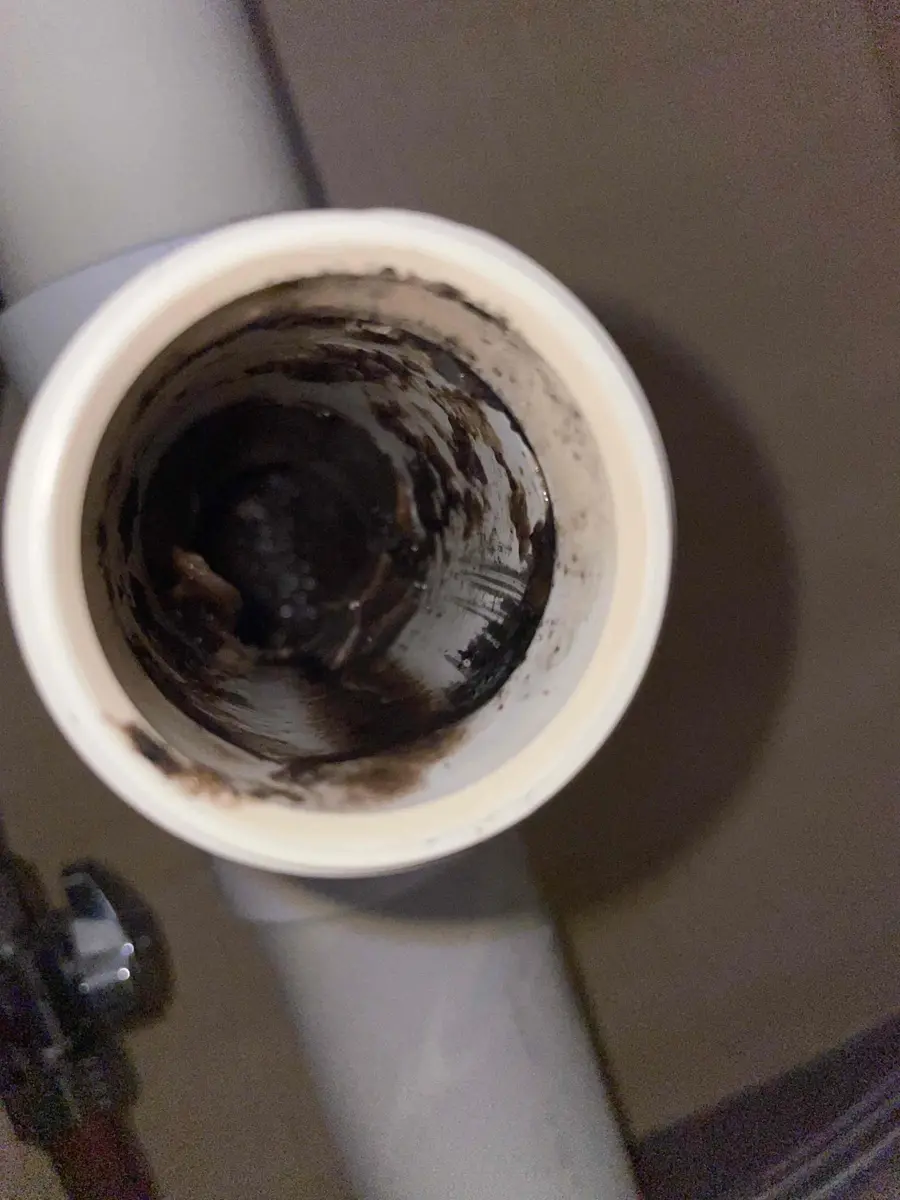
This black coating inside the pipe is what a smelly drain looks like from the inside. It is a mix of soap, hair and bacteria. Cleaning the trap and the line behind it removes the smell. Air fresheners or a cup of bleach only mask it for a day.
What you can try: pull the sink stopper and clean the hair off it, then flush the drain with a few gallons of very hot water. A plastic drain cleaning strip, sold at any hardware store, pulls hair out of a sink drain without tools. Avoid pouring harsh chemical drain openers into a slow bathroom drain. They rarely clear the slime and they are hard on older pipes.
When to call: if the drain is slow or the smell comes back within a week, the buildup is past the trap and in the pipe inside the wall. We clean that with a drain machine, a motor driven cable that is fed into the pipe to scrub and clear it. If several drains are slow at once, the problem may be in the main line under the house, and our drain cleaning service page explains how we clear it.
What if the smell comes from a floor drain?
Many bathrooms in older Grand Rapids homes, and most basements, have a floor drain. It has the same trap as a sink, but it almost never gets water. That makes it the number one source of a basement sewer smell.
Pour a bucket of water into it. If the smell stops, the trap had dried out. Do that every few weeks, or add a little mineral oil on top to slow the evaporation.
For a floor drain that dries out over and over, there are two permanent fixes. The Michigan Plumbing Code lists approved ways to protect a trap that is prone to drying out (Section 1002.4.1). One is a trap primer, a small valve that adds a little water to the trap automatically. The other is a trap seal insert that drops into the drain.
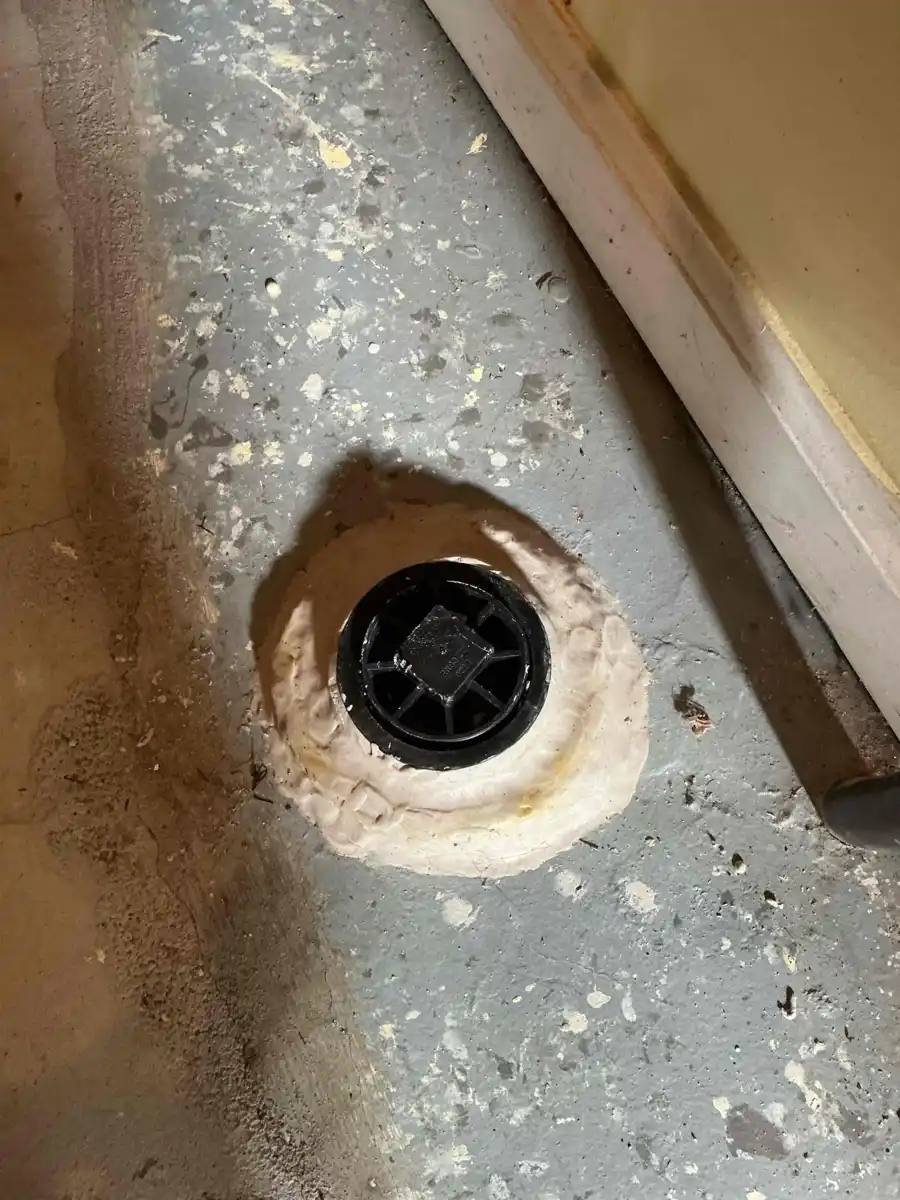
This black insert is a trap seal, and it is a simple way to stop a floor drain smell for good. Water pushes it open on the way down, and it closes again to keep gas out. It is a good fit for a basement floor drain that only sees water a few times a year.
If water comes up out of the floor drain, or the smell shows up after heavy rain, that is a different problem. Our post on a sewer backup in the basement during heavy rain covers what to do.
Could a blocked roof vent cause a sewer smell?
Yes. This is the cause most DIY guides skip, and it is the one that keeps coming back no matter how many times you run water or replace a wax ring.
Your drain system needs air to work. The vent pipe on your roof is how it gets that air. The code requires the vent system to keep the water in your traps from being pushed or pulled by more than about 1 inch of pressure (Section 901.2). When the vent is blocked, that protection is gone.
Signs of a vent problem:
- Drains gurgle, especially a nearby drain when a toilet flushes.
- The toilet bowl water level drops or bounces after a flush somewhere else in the house.
- The smell comes back within a day even after you refill the traps.
- Drains run slow even after they are cleaned.
What blocks a vent? Leaves, a bird nest, or a dead animal at the top of the pipe. In Michigan winters, frost can build up inside a narrow vent until it closes off. That is why the code requires roof vents to be at least 3 inches across where they pass through the roof (Section 903.2). Older homes and some remodels have smaller ones.
Many newer bathrooms use an air admittance valve instead of a vent through the roof. That is a small one way valve, usually under the sink, that lets air into the drain but keeps gas from coming out. They are allowed by code (Section 918) and they work well, but they wear out. When one sticks open, it lets sewer gas straight into the vanity cabinet. If the smell is strongest when you open the cabinet under the sink, look for a small plastic cap on a short pipe, often gray or white.
We do not recommend climbing on the roof to look at a vent. It is a common way homeowners get hurt. A plumber can test the vent from inside or clear it with a drain machine from the roof safely.
If a vent has to be added or rerouted, that is new drain piping, and in Michigan it usually needs a plumbing permit pulled by a licensed contractor or the homeowner (Michigan LARA plumbing permit information). When we do that work, we pull the permit, meet the inspector, and it is part of the written quote.
Is sewer gas in my bathroom dangerous?
In the amounts that leak from a dry trap or a bad wax ring, sewer gas is mostly an unpleasant smell, not an emergency. It can cause headaches, mild nausea or a scratchy throat if it lingers, which is a good reason to fix it rather than live with it. The EPA's guide to indoor air quality notes that good ventilation and removing the source are the main ways to keep indoor air healthy, and that is true here too.
Open a window and run the bathroom fan while you work through the checks above.
One important exception: know the difference between a sewer smell and a gas smell. Sewer gas smells earthy and musty, like a dirty bathroom or a sewer grate on a hot day. Natural gas has a sharp rotten egg or sulfur odor added to it on purpose so leaks are easy to notice. If the smell is near a furnace, water heater, dryer or stove, or you hear a hiss, leave the house and call your gas utility from outside. Our gas line services page explains what we do after the utility has checked it.
And if the rotten egg smell only shows up when you run the water, especially the hot water, the problem is in the water, not the drains. That is a different fix, and our guide to why your water smells like rotten eggs walks through it.
What does a plumber check, and in what order?
When you call us about a bathroom sewer smell, the visit follows the same order every time. We start with the cheapest and most common causes and only move to bigger ones if those check out.
- Refill and inspect every trap in the bathroom, including the tub, shower and any floor drain.
- Check the sink overflow, stopper and trap for buildup, leaks or a flexible ribbed trap that should be replaced.
- Check the toilet. We look for rocking, test the bolts, and pull the toilet if the seal is suspect so we can see the flange and the floor underneath.
- Check the vent. We look for a failed air admittance valve and test whether the drains gurgle when other fixtures run.
- Clean the drain line if a drain is slow or the smell is coming from inside the pipe.
- Look farther down the line. If more than one drain is involved, or the smell is in the basement too, a camera inspection shows us what is going on in the pipe. We feed a waterproof camera on a cable through the drain and watch the inside of the pipe on a screen. Our camera inspection service explains what we look for.
In most bathrooms we find the cause in the first three steps. You get a written price before we do any work, and we show you what we found so you can see why the fix makes sense.
If the problem turns out to be in the line from your house to the street, our sewer line repair page explains the options.
Why does my bathroom smell like sewage all of a sudden?
The most common sudden cause is a drain trap that dried out, often in a shower or floor drain that does not get used much. Run water in every drain for 30 seconds and flush the toilet. If the smell returns within a day, check the base of the toilet for a failed wax ring or listen for gurgling drains, which point to a vent problem.
Why does my bathroom smell like sewer only at night?
At night the house is quiet and nobody runs water, so a weak trap has hours to lose water to evaporation or to a slow pull from the vent. Heat and fans running at night can also pull gas up through a weak seal. Running water before bed and fixing the trap or vent usually stops it.
Can a toilet smell like sewer if it is not leaking?
Yes. A wax ring can stop sealing against gas before it ever leaks enough water for you to see. If the smell is strongest at the base of the toilet or the toilet rocks, the seal is the likely cause even with a dry floor. Replacing the wax ring and fixing the rocking stops it.
How do I get rid of sewer smell in my bathroom fast?
Run water in every drain, flush the toilet, clean the sink overflow, and open a window with the fan on. That clears most smells within minutes. If it comes back, the cause is a failed seal, a dirty drain line or a blocked vent, and those need a repair rather than another rinse.
Will bleach get rid of a sewer smell?
Bleach can cover a drain smell for a day, but it does not remove the slime inside the pipe, refill a dry trap, or fix a bad seal. It can also be hard on older pipes. A mechanical cleaning of the drain, a new wax ring or a vent repair actually removes the source.
Can a shower drain smell like sewer?
Yes. Shower drains collect hair and soap that rot inside the trap, and showers in guest or basement bathrooms often dry out. Clean the hair out of the drain cover, flush it with very hot water, and run the shower once a week. A smell that keeps coming back means the line behind it needs cleaning.
Is it safe to stay in the house with a sewer smell?
For the small amounts that come from a dry trap or a bad seal, yes, though it can cause headaches if it lingers. Open windows and run fans while you find the cause. If the smell is near a gas appliance or you hear a hiss, leave the house and call the gas utility, because that may be natural gas.
Get a bathroom sewer smell fixed in Grand Rapids
NSP Plumbing is a licensed Michigan plumbing contractor (license #8004990) serving Grand Rapids, Wyoming, Kentwood, Walker, Grandville, East Grand Rapids and the surrounding West Michigan area.
We track down sewer smells, replace wax rings and flanges through our toilet repair service, clean smelly drain lines with our drain cleaning service, and repair or replace failed vents.
A lot of the homes we work in around Grand Rapids were built before basement bathrooms were common. Many of those basement bathrooms were added later, sometimes without a proper vent, and that is where we find the stubborn smells that keep coming back. Older homes with cast iron drain pipes also tend to build up more slime inside the pipe, because the rough inner surface gives it something to grab.
What helps us fix it on the first visit:
- Which bathroom smells, and whether any other room or the basement smells too.
- When you notice it most: in the morning, after a flush, after a shower, or after rain.
- Whether any drains are slow or gurgle.
- Whether the toilet rocks or there is any stain on the floor or the ceiling below.
- Whether anything changed recently, like new flooring, a new toilet or a remodel.
Those answers usually point us to the right fix before we even open the cabinet, which keeps the visit short and the repair simple. If the smell turns out to be in the line from your house to the street, we show you the camera footage and walk you through the options before anything else happens.
Bathroom smells like sewer? We will find the source.
Tell us which bathroom smells and when you notice it. A licensed NSP plumber checks the traps, the toilet seal, the drains and the vent in order, shows you what is causing it, and gives you a written price before any work starts.