You went downstairs and found it: dirty water around the floor drain, a smell you cannot ignore, maybe toilet paper where it should never be. You have a plumber on the way, and now you are standing at the top of the basement stairs wondering if your family should even be in the house.
Here is the short version. For most basement backups, it is safe to stay upstairs while you wait for the plumber, as long as the sewage stays in the basement, nobody walks through it, and you stop using water. The risk comes from touching sewage, not from being in the same house with it. A few situations change that answer, and we cover each one below.
Is It Safe to Stay in Your House After a Sewage Backup?
Usually, yes. Sewage is dangerous because of what is in it: bacteria, viruses and parasites from human waste. Those germs make people sick when they get on your hands and then into your mouth, or into a cut. They do not float through the house and find you upstairs.
The Connecticut Department of Public Health puts it plainly: the most common illnesses from a sewage backup are stomach illness and skin rashes or infections. Respiratory infections are uncommon, because these germs rarely get into the air while everything is still wet.
So the question is less "is the house safe" and more "can everyone stay out of the mess." Most families can. You are in good shape to stay home if all of this is true:
- The sewage is limited to the basement or one room.
- Nobody needs to walk through it to get to bedrooms, the kitchen or a bathroom.
- Kids and pets can be kept off the basement stairs.
- You can stop running water until the line is cleared.
The answer changes if sewage reached a finished living area and sat there for more than a day, if it got into heating or air ducts, if someone in the home has a weak immune system, or if the house has no working bathroom at all. In those cases, staying with family or in a hotel for a night or two is the safer call.
One thing we see a lot: people who have been living with a backup for days or even weeks without knowing it. The washer seemed to leak, or the basement just smelled off. If that is you, do not panic. Stop the exposure now, get the line cleared, and mention it to your doctor if anyone has been feeling unwell.
Sometimes the backup shows up somewhere other than the basement, which is part of why people miss it.
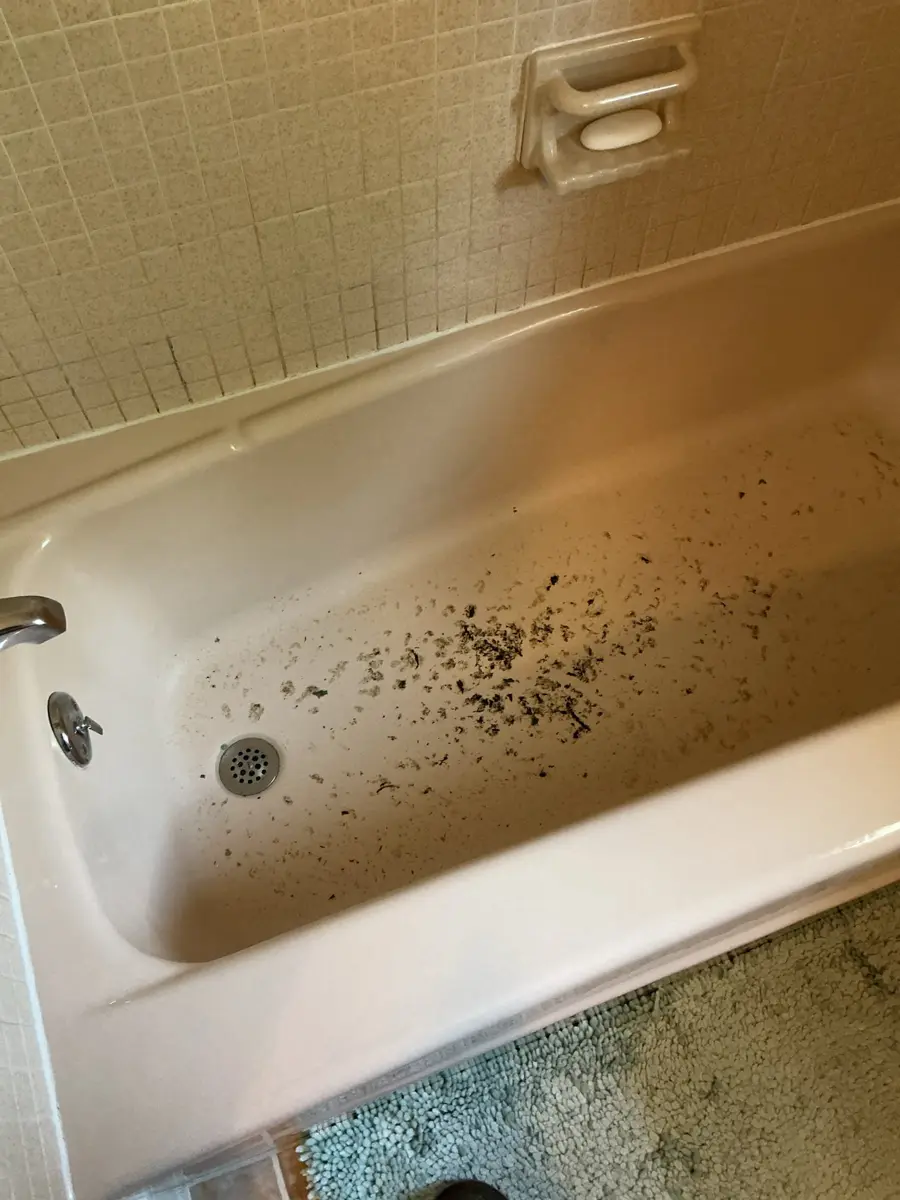
Debris left in a tub after a backup: treat it as sewage, even if the water has drained away. Clean it with gloves and a disinfectant, not a bare hand and a rag, and keep the kids out of that tub until the line is cleared.
Is the Whole House at Risk, or Just the Basement?
This is the question we hear most from people standing upstairs, and the worry is usually the vents. If the furnace sits in the basement next to the mess, does it spread sewage air through the house?
Here is what the public health guidance says. The smell is unpleasant, but the odor itself is generally not what makes people sick. The germs stay in the water and on wet surfaces. The bigger air concern comes later, if the basement is not dried out and mold starts growing on wet drywall, carpet or boxes.
The furnace is the one thing to think about right now. The Connecticut guidance says a forced air furnace or central air should only run if sewage did not get into the ducts. The EPA adds that you should not run a heating or cooling system you suspect is contaminated, because it can spread mold through the building.
Use this as a quick check:
| What you see | What it means for upstairs |
|---|---|
| Sewage on the floor, nowhere near the furnace or return vents | Upstairs is generally fine. Keep the basement door closed. |
| Water reached the bottom of the furnace or a floor level return vent | Turn the system off and have it checked before running it. |
| Sewage sat in a finished room for more than a day | Plan on a cleanup company, not just a mop. |
| Anyone in the home is sick, pregnant, very young or immune compromised | Ask a doctor whether they should stay elsewhere until cleanup. |
If the furnace has to stay off in cold weather, use space heaters upstairs and keep them well away from anything wet. Never run an electric heater, fan or dehumidifier in standing water.
Can a Sewage Backup Make Your Skin Burn or Make You Sick?
Yes, it can. Contact with sewage can cause skin rashes and skin infections, and anything that gets from your hands into your mouth can cause nausea, stomach cramps, vomiting and diarrhea. Those are the two health effects public health agencies list first.
A burning feeling deserves a closer look, because sewage is not always the only thing in that water. If anyone in the house poured a liquid drain cleaner down a sink or tub before the backup got worse, that chemical can come back up with the water. Poison control warns that most drain cleaners contain corrosive chemicals strong enough to cause serious burns.
What to do if your skin touched it:
- Wash the area right away with soap and clean water.
- Clean and cover any cut or scrape. A wound that touched sewage needs extra attention.
- Wash the clothes you were wearing in hot water, separate from everything else.
- Call a doctor or urgent care if a rash, burning, redness or swelling does not settle down, or if anyone gets a fever, vomiting or diarrhea.
Tell your plumber if drain cleaner went down any drain. It changes how they handle the line and what they put on their own skin, and it is one of the most useful things you can share when they walk in.
Drain cleaner bottles next to a backed up floor drain are something we see often.
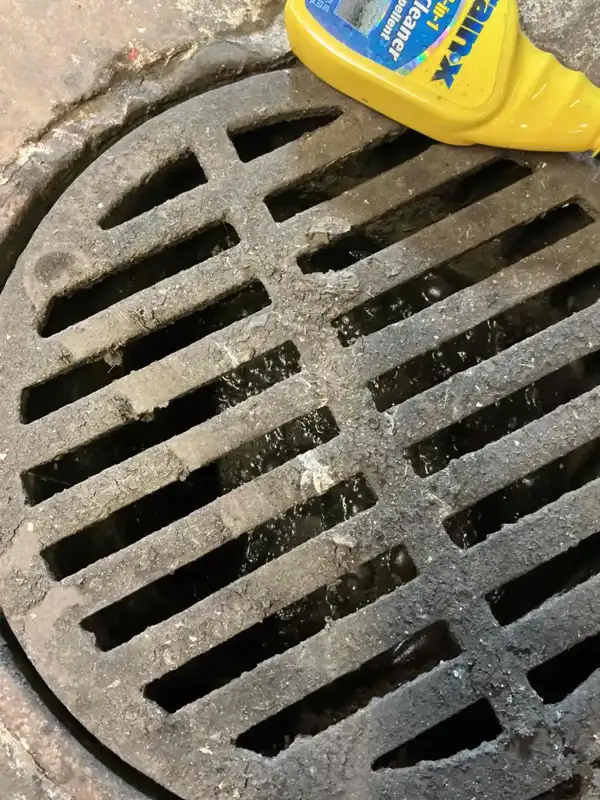
A drain cleaner bottle at a flooded floor drain: if this is your house, assume the water has chemicals in it, not just sewage. Liquid drain cleaner rarely clears a blocked main line, and whatever does not go down comes back up with the backup.
This is where we hand you off to the medical side. A plumber can tell you what is in the pipe and why it came back up. Only a doctor can tell you what it did to you.
What Should You Do While You Wait for the Plumber?
The goal in the meantime is simple: stop adding water to a pipe that cannot drain, and keep people away from the mess. These steps come straight from the public health checklists, put in the order that matters.
Step 1: Stop using water everywhere in the house. No flushing, showers, laundry or dishwasher. When the main line is blocked, every gallon you send down comes out at the lowest drain in the house, which is usually the basement floor drain.
Step 2: Keep kids and pets out. Close the basement door. Pets track sewage into the rest of the house faster than anything else.
Step 3: Shut off power to the wet area if you can do it safely. If the breaker panel is in the flooded area, do not wade in to reach it. Wait.
Step 4: Do not touch sewage bare handed. If you have to go down there, wear rubber gloves, rubber boots and eye protection, and wash up as soon as you come back.
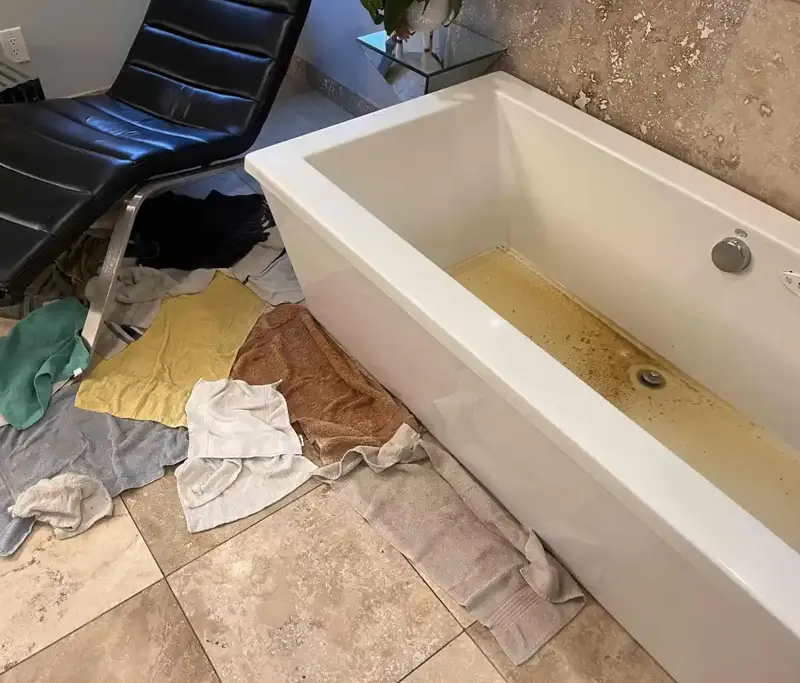
Towels around a backed up tub feel like the right move, but every one of them is now contaminated. Bag them for the trash or wash them separately in hot water, and wear gloves while you do it.
Step 5: Take photos and video before anything is moved. Your landlord, your insurance company or the city may want them later.
Step 6: Write down what happened. When it started, which drains backed up, and whether it got worse when the washer ran or a toilet flushed. That pattern helps the plumber find the problem faster.
It is fine to use a wet vac on standing water to keep it from spreading, as long as you are geared up. Just know that cleaning up the floor does not fix the blockage, and you should still tell the plumber exactly how bad it was before you cleaned.
What Will the Plumber Do When They Get There?
People worry the plumber will look at a mopped floor and say everything is fine. That is not how it works. A plumber is checking the pipe, not the floor.
Look at where the water sits in this basement. It came up next to the washer, on a call where the drains backed up every time the family did laundry or showered.
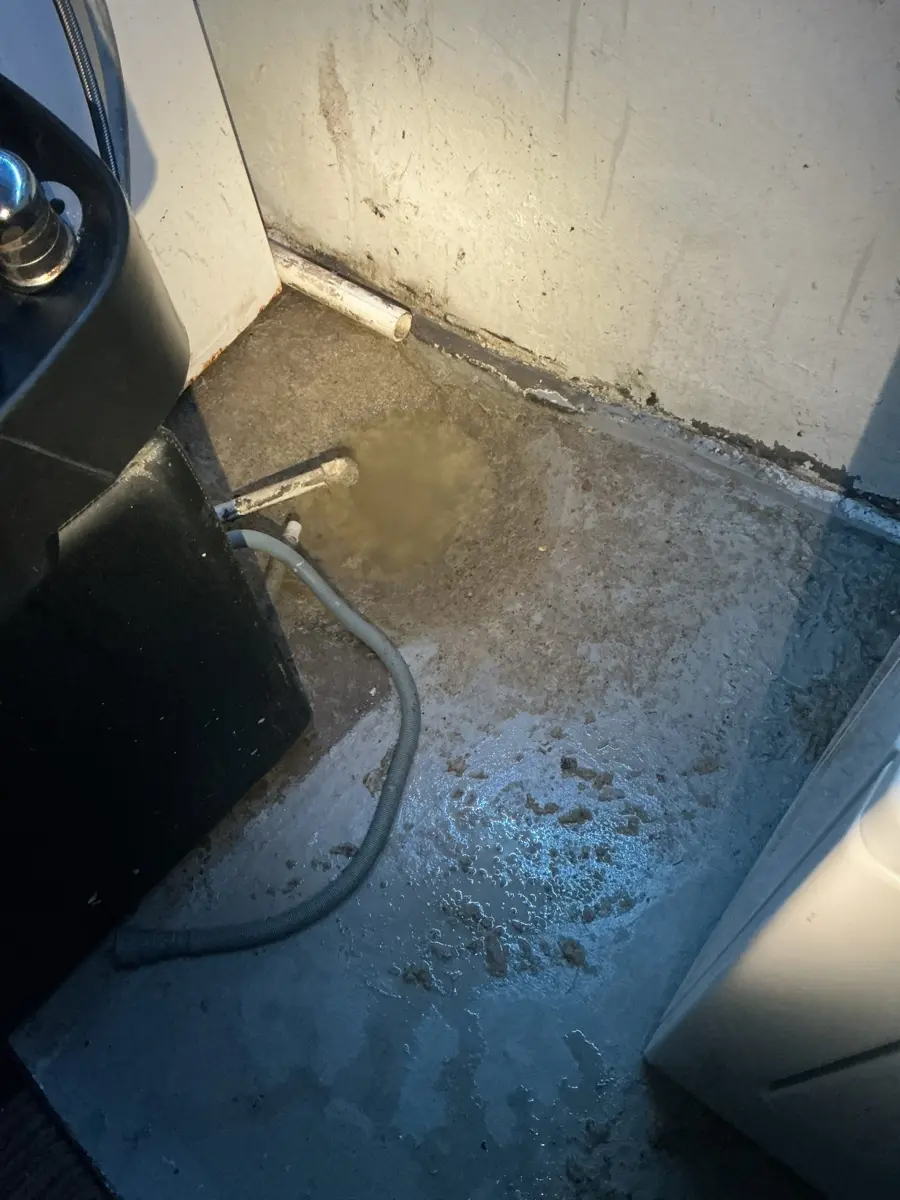
Water coming up by the washer every time it drains means the main line is blocked, not the washer. Mopping this up does not change anything in the pipe. The blockage is still there until someone clears it.
Here is what a typical visit looks like on our sewage backup calls:
They find out where the blockage is. If the washer floods the floor drain, or a toilet bubbles when the shower runs, that points to the main line, the one pipe that carries everything from the house to the city sewer. If only one sink or tub is backing up, it is more likely a smaller branch drain.
They clear the line. Most main line backups are opened with a drain cleaning machine run through a capped access point on the pipe. Heavy grease or tree roots may call for hydro jetting, which scrubs the pipe walls with high pressure water.
They look inside the pipe. A camera inspection shows whether it was a simple clog, roots, a low spot that holds water, or a broken pipe. This is how you find out whether it will happen again.
On that same house, the camera showed what the backups had been telling them.
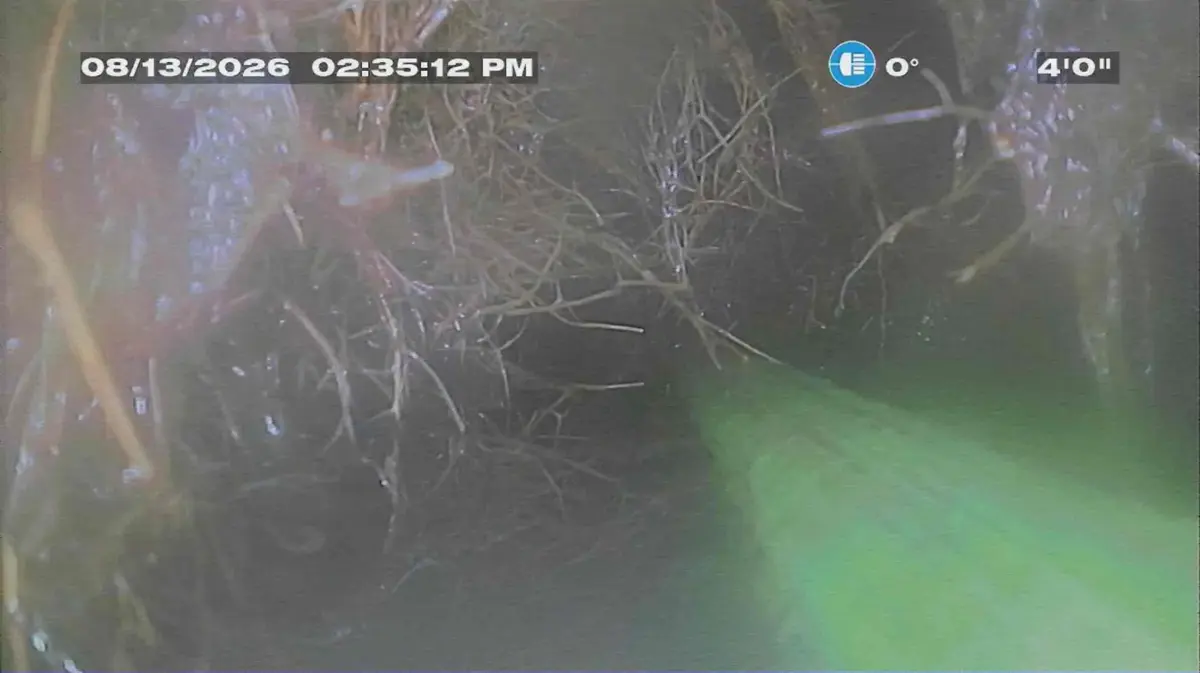
Tree roots four feet into the line: this is why the basement kept flooding, and why clearing it once was not enough. Roots grow back, so a line like this needs either regular cleaning or a repair at the joint where they get in.
They tell you what they found and what it means. You should leave the visit knowing whether the line is clear, what caused the backup, and whether you need a repair.
Before the tech leaves, ask whether what they saw looks like more than a mop can handle. Plumbers see a lot of these, and their read on how far the water went helps you decide whether to call a cleanup company.
How long does it take? A simple clog is often cleared the same visit. A broken or collapsed pipe can take longer, and the plumber should give you a clear plan and a timeline before any of that work starts.
Does the Plumber Clean Up the Sewage?
No, and this surprises a lot of people. NSP Plumbing clears the line and fixes the pipe. We do not do sewage cleanup. That work belongs to a water damage restoration company, and the same is true for most plumbing companies.
The two jobs need different equipment, training and insurance. The plumber stops the source. The restoration company makes the room safe to use again.
| Job | Plumber | Restoration company |
|---|---|---|
| Find and clear the blockage | Yes | No |
| Camera the line and find the cause | Yes | No |
| Repair or replace a broken sewer pipe | Yes | No |
| Remove sewage and soaked materials | No | Yes |
| Tear out wet drywall, carpet and padding | No | Yes |
| Disinfect and dry the space | No | Yes |
| Document damage for insurance | Pipe findings | Damage and contents |
Call the plumber first. There is no point cleaning a basement that will flood again the next time someone does laundry. Once the line is clear and you know the cause, the cleanup crew can work without the problem coming back mid job.
We often work alongside restoration crews, and some of our sewage calls come straight from them. If you need a cleanup company and do not know where to start, your insurance company may already work with one. The IICRC also lists certified water damage contractors by area.
When Do You Need a Sewage Cleanup Company?
Not every backup needs a crew in hazmat suits. A small amount of water on bare concrete that you caught quickly can often be cleaned yourself with gloves, boots, eye protection and a disinfectant. Public health guidance gets more cautious as the backup gets bigger, lasts longer or reaches more of the house.
The Connecticut Department of Public Health lists the cases where hiring a professional makes more sense than doing it yourself:
- Your insurance will pay for it.
- Sewage got into heating or air ducts.
- Sewage sat in a finished living space for more than 24 hours.
- The job is too large or complicated to do safely yourself.
The EPA is even more direct: if water damage was caused by sewage, call in a professional who has experience cleaning buildings damaged by contaminated water.
What about your stuff? This is the hard part. Health agencies advise throwing out porous items that sewage touched, because they soak it up and cannot be truly disinfected. That list includes:
- Carpet and carpet padding
- Mattresses, pillows and upholstered furniture
- Cardboard boxes, books and paper
- Stuffed animals and children's toys
- Food, medicine and cosmetics
Hard items like metal, glass and sealed plastic can usually be cleaned and disinfected. Clothes may be saved if they wash well in hot water. Before you throw anything away, photograph it and make a list. Insurance companies and landlords will ask for it.
One more tip from the cleanup guidance: never mix bleach with ammonia while cleaning. It makes a toxic gas.
I Rent. Who Handles a Sewage Backup?
A lot of the sewage backup calls we take come from tenants, often through a property manager. If you rent, you have more protection than you might think.
Under Michigan law, every residential landlord promises to keep the home fit for living and in reasonable repair, and to follow state and local health and safety laws. The main exception is damage the tenant caused through careless or irresponsible conduct.
What that means for you in practice:
- Tell your landlord right away, in writing. A text or email with photos creates a record.
- Ask who is handling the plumber and the cleanup. Most landlords and property managers have a plumber they call. That is often us.
- Ask about where you will stay if the home is not livable during repairs. Your lease and your landlord will shape that answer.
- Follow up if nothing happens. If a sewage backup is left in a rental and your landlord will not respond, your city's housing or code compliance office is the next call.
- Check your renters insurance for your belongings. Your landlord's policy usually covers the building, not your couch or clothes. Many policies treat sewer backup as a separate add on, so read yours or call your agent.
Billing is between the plumber and whoever ordered the work, which is usually your landlord or property manager. Just make sure someone 18 or older can let them in, and share everything you know about when it started.
What If the City Sewer Caused It?
Sometimes the blockage is not in your pipe at all. If the city sewer main backs up into your house, Michigan has a specific claim process, and it comes with a deadline that catches a lot of people.
Under Michigan law, you must send written notice to the city or sewer agency within 45 days of when you discovered the damage, or should have discovered it. Miss that window and you may lose the right to be paid.
Here is how to protect yourself:
- Call the city's sewer or public works line when the backup happens and ask them to check their main.
- Get your plumber's findings in writing, including where the blockage was. A camera inspection can show whether the problem was in your line or past it at the street.
- Keep every photo, receipt and cleanup invoice.
- Send written notice early, even if you are still sorting out what happened.
In Grand Rapids, the city separated its storm and sanitary sewers years ago. We cover what that means for heavy rain backups in our guide on sewer backups in the basement during heavy rain. If yours happened during a storm, read that next.
Not every backup is the city's fault. Many of the ones we clear are inside the homeowner's own line: roots, grease, wipes, or an old pipe that has sagged or cracked. The camera is how you find out which it is, instead of guessing.
Is it safe to sleep in the house after a sewage backup?
For most basement backups, yes. If the sewage stays in the basement, nobody walks through it, the furnace was not affected and you stop using water, sleeping upstairs is generally fine. If sewage reached bedrooms or living areas, or someone in the home is sick or has a weak immune system, staying elsewhere until cleanup is the safer choice.
Can you get sick from smelling sewage?
The smell is unpleasant, but public health agencies say the odor itself is generally not what makes people sick. Illness usually comes from touching sewage and then touching your mouth, or from sewage getting into a cut. Keep the area closed off and wash your hands well after any contact.
Should I turn off my furnace after a sewage backup?
Turn it off if sewage reached the furnace, its base or a floor level return vent. Public health guidance says a forced air system should only run if sewage did not get into the ducts. If the water stayed away from the furnace and vents, it is generally fine to keep it running.
Does a plumber clean up sewage?
Most plumbers, including NSP Plumbing, clear the blocked line and repair the pipe but do not clean up the sewage. Cleanup, tear out and disinfection are done by a water damage restoration company. Call the plumber first so the backup does not return while the space is being cleaned.
Will the plumber be able to tell if my house is safe?
A plumber can tell you whether the line is clear, what caused the backup and whether the mess looks like more than a simple cleanup. A plumber is not an air quality or health inspector. For health questions call a doctor, and for remediation decisions talk to a restoration company.
Can sewage on my skin cause a rash or burning?
Yes. Contact with sewage can cause skin rashes and infections. If someone poured a chemical drain cleaner before the backup, that can come back up too and burn skin. Wash right away with soap and water, and see a doctor if burning, redness or a rash does not go away.
Who pays for a sewage backup in a rental?
In Michigan, landlords must keep rental homes fit to live in and in reasonable repair, so the plumbing repair is usually the landlord's responsibility unless the tenant caused the damage. Your own belongings are usually covered by renters insurance, if your policy includes sewer backup.
Sewage Backup Help in Grand Rapids and West Michigan
NSP Plumbing is a licensed Michigan plumbing contractor (#8004990) based in Wyoming, Michigan. We clear sewage backups, camera the line to find the cause, and repair or replace sewer pipe when that is what it takes. We serve Grand Rapids, Wyoming, Kentwood and the surrounding West Michigan communities.
If you have a backup right now, start with our emergency plumbing team. For a slow drain that keeps coming back, see drain cleaning or sewer line repair. If you are noticing a smell but no water yet, our guide on why your bathroom smells like sewage is a good place to start.
You can also call or text us at (616) 879-6733 or contact us online. Tell us what backed up, when it started and whether you rent or own, and we will take it from there.
Sewage coming up a drain?
We clear the line, run a free camera inspection with any drain cleaning so you know why it happened, and tell you plainly whether you also need a cleanup company.