By: Nathan Paggeot, Master Plumbing Contractor (MI License #8004990) & CEO of NSP Plumbing
May 20, 2026
You hear gurgling from the basement floor drain. The toilet bubbles when no one flushed it. Then it happens — dirty water pushes up through the lowest drain in your house. A sewer backup in the basement during heavy rain is one of the most common and most expensive plumbing emergencies Grand Rapids homeowners face every spring.
The good news: storm-season sewer backups are predictable, and most are preventable. This guide answers the questions homeowners actually ask — why it happens when it rains, what to do right now, who to call, and how to keep it from happening again.
Why Does My Sewer Back Up When It Rains?
Sanitary sewer lines are designed to handle the wastewater your home produces — sinks, showers, toilets, washing machines. They are not designed to handle the volume of water that comes with a Michigan thunderstorm or a fast spring thaw.
When inches of rain fall in a short window, stormwater finds its way into the sanitary sewer system through cracked pipes, leaking joints, illegal sump pump connections, and footing drains tied into the sanitary line. The system fills up, pressure builds, and the lowest opening in the line — usually the floor drain or basement toilet in your house — becomes the relief valve.
The result is the kind of damage no homeowner wants to deal with: contaminated water in finished basements, ruined drywall, and insurance claims that often exclude sewer backup unless you bought the rider.
Can Heavy Rain Cause a Sewer Backup?
Yes. Heavy rain is the single most common trigger for residential sewer backups in West Michigan. Rain itself does not pump sewage into your home — what happens is the municipal sanitary sewer reaches capacity, and the pressure forces wastewater backward into the lowest point of your private plumbing system. In most homes, that lowest point is the basement floor drain, basement shower, or a basement toilet.
Rain also exposes underlying issues that were already there: a partial root blockage that handled normal flow now bottlenecks during a surge, a cracked sewer lateral that drained slowly now backs up entirely, a sanitary main near capacity now overflows. Rain is the trigger; the underlying defect is the real cause.
Common Causes of a Basement Sewer Backup
Heavy rain is the trigger, but one of these underlying issues is usually the reason your line fails first:
- Overwhelmed municipal sewer mains — the city line is full, and pressure pushes back into your lateral
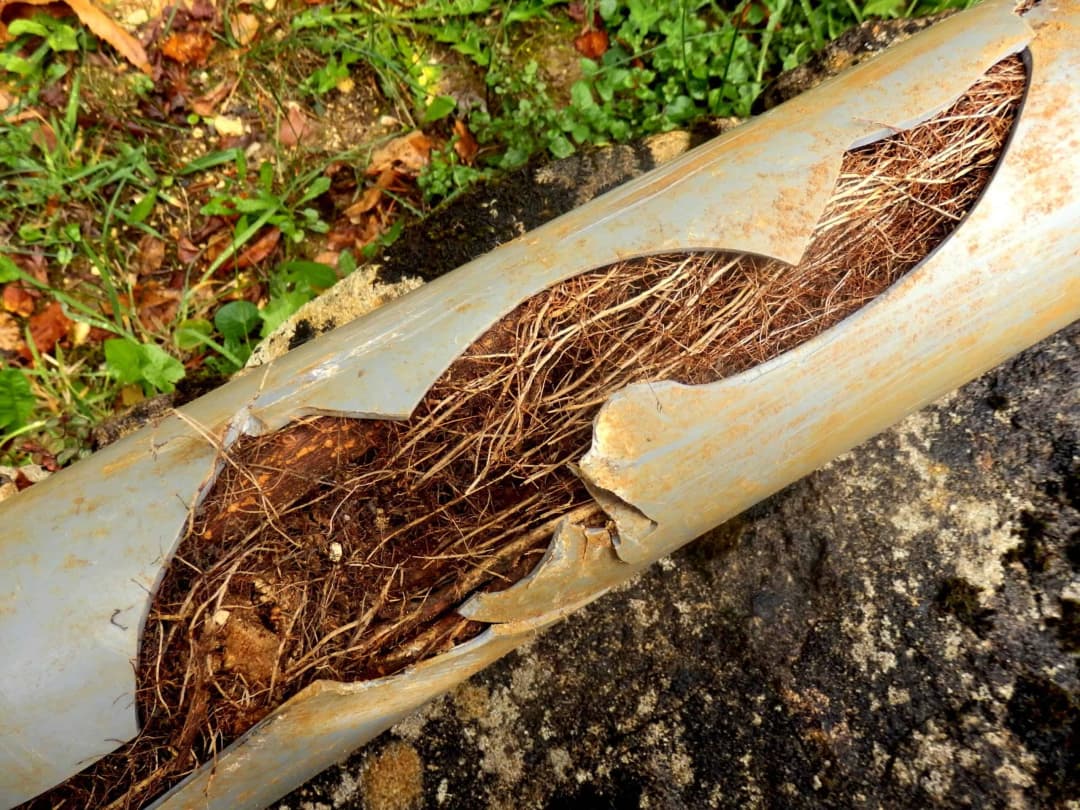
- Tree root intrusion — roots grow into pipe joints seeking moisture and create the perfect catch point for debris
- Inflow and infiltration (I&I) — stormwater and groundwater leaking into the sanitary system through cracked laterals and illegal sump/footing-drain connections
- Cracked, bellied, or collapsed sewer laterals — common in homes 50+ years old with clay or Orangeburg pipe
- Sump pump or downspout illegally tied into the sanitary sewer — multiplies your home's contribution to the overload
Tree Roots: The #1 Culprit in Older Grand Rapids Neighborhoods
If you live in a home built before 1980 in Heritage Hill, Eastown, Creston, or East Grand Rapids, your sewer lateral is almost certainly clay tile or cast iron. Both materials develop hairline cracks at the joints over time, and tree roots can sense the moisture inside.
Roots grow through the joint, expand inside the pipe, and act like a strainer. Toilet paper, grease, and debris collect on the root mass. Under normal flow, the system limps along. Add a heavy rain event, and the partially blocked line cannot move the volume — backup follows within hours.
The only way to know for sure what's in your line is a sewer camera inspection. A camera shows you exactly where the roots are, how bad the intrusion is, and whether the pipe itself is still structurally sound.
Grand Rapids Separated Its Combined Sewers — So Why Do Basements Still Flood?
Unlike many older U.S. cities, Grand Rapids no longer relies on combined sewers. The City spent decades and hundreds of millions of dollars separating storm and sanitary lines, eliminating all 59 of its combined sewer overflow points and laying roughly 119 miles of new pipe — finishing ahead of the state-mandated 2019 deadline. On paper, stormwater and sewage now travel in separate systems.
So why do basements still back up during heavy rain? The culprit is inflow and infiltration — stormwater and groundwater leaking into the sanitary system through cracked private laterals, failing joints, and illegally connected sump pumps and footing drains. When inches of rain fall fast, that extra water surges through the sanitary line, overwhelms its capacity, and pushes back toward the lowest opening it can find: your basement floor drain. The defects that let it in are almost always on the private side of the line — which is exactly why a camera inspection of your lateral matters. The City's Environmental Services department can tell you more about the sewer system serving your property.
Warning Signs Your Sewer Is About to Back Up
A full backup rarely comes out of nowhere. The line usually telegraphs the failure days or weeks in advance. Catch these signs early and you can call a plumber before the storm — not at 2 a.m. while standing in two inches of sewage. The same principle applies to other seasonal plumbing emergencies — like frozen pipes in winter, the cheap fix is always before the failure.
- Gurgling sounds from drains or toilets, especially when another fixture runs
- Multiple slow drains at the same time — not just one clogged sink
- Water rising in the basement floor drain when you flush a toilet or run the washing machine
- Sewer smell in the basement or near floor drains
- Soft, sunken, or unusually green patches in the yard above the sewer line route
Any one of these is worth a phone call. Two or more together and you should be scheduling drain cleaning and a camera inspection before the next storm.
How Much Does a Basement Sewer Backup Cost?
A sewer backup in the basement is one of the most expensive plumbing failures a homeowner can face. Costs break down into three buckets: the plumbing repair, the cleanup, and the insurance gap.
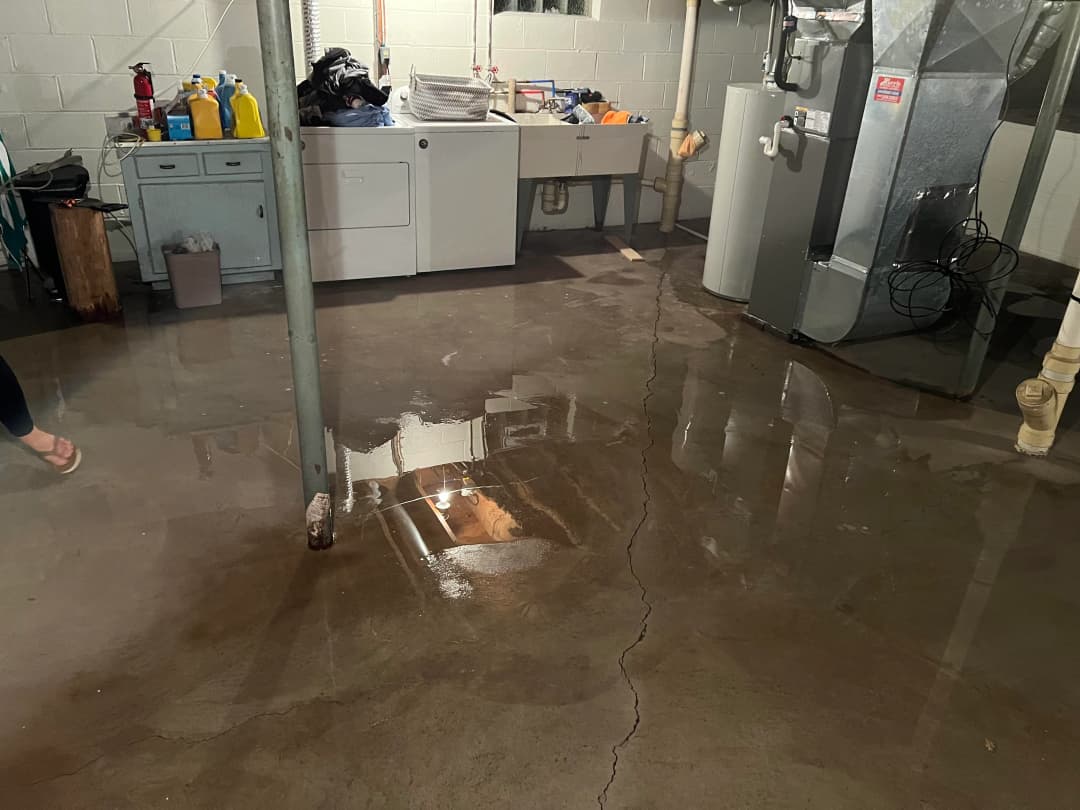
- Plumbing repair — clearing a blockage typically runs $250–$650. Hydro jetting runs $500–$1,500. A full sewer lateral replacement can run $4,000–$15,000+ depending on length, depth, and excavation difficulty.
- Cleanup and restoration — the Insurance Information Institute notes that a backed-up sewer causes thousands of dollars of damage to floors, walls, furniture, and electrical systems. Once you add drywall, flooring, and contents replacement, full restoration commonly lands in the $7,000–$10,000 range.
- The insurance gap — standard homeowners policies usually exclude sewer backup. You need a specific sewer backup endorsement, which typically costs $40–$80/year for $5,000–$20,000 of coverage. If you don't have it, you're paying out of pocket.
Prevention is almost always cheaper than restoration — by an order of magnitude. A camera inspection runs $250–$450 and tells you whether you need to act now or whether your line is in good shape.
Best Way to Prevent a Sewer Backup: Solutions Compared
Three professional services do the heavy lifting when it comes to preventing basement sewer backups. Each addresses a different part of the problem. Here's how they compare:
| Solution | What It Does | Best For | Typical Cost |
|---|---|---|---|
| Sewer Camera Inspection | Diagnoses pipe condition, root intrusion, cracks, and bellies inside the lateral | Homes with prior backups, unknown line condition, or pre-purchase due diligence | $250–$450 |
| Hydro Jetting | Blasts roots, grease, and debris off pipe walls with high-pressure water | Active partial blockages, recurring slow drains, root intrusion | $500–$1,500 |
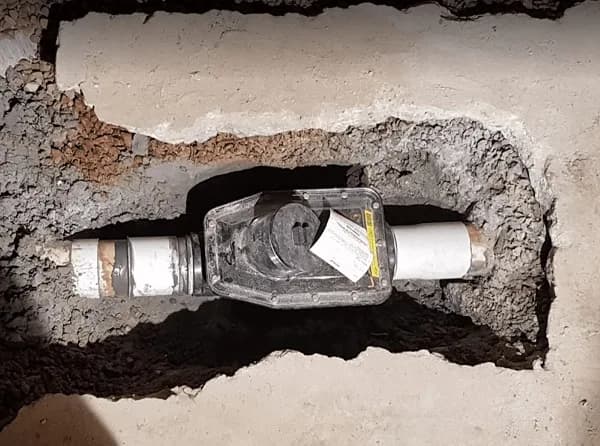
| Backwater Valve Installation | One-way mechanical gate that blocks city main backflow into your lateral | Homes in flood-prone areas, older combined-sewer neighborhoods, repeat backups | $1,500–$4,000 installed |
For most older Grand Rapids homes, the right sequence is: camera inspection first, hydro jetting if the camera finds active root intrusion, then a backwater valve as long-term insurance against the next municipal surge.
How to Prevent a Sewer Backup in Your Basement
Beyond the three professional services above, there are steps every homeowner can take to reduce the risk of a basement sewer backup:
- Disconnect downspouts and sump pumps from the sanitary sewer. If yours are tied in, you're contributing to the problem and may be in violation of city code. Reroute them to the yard or a stormwater system.
- Stop putting wipes, grease, and "flushable" anything down the toilet. Wipes catch on roots. Grease coats pipe walls. Both turn a marginal line into a guaranteed backup.
- Watch the warning signs. Gurgling, slow drains, and floor-drain water are early indicators. Don't wait for the next storm.
- Add the sewer backup rider to your homeowners policy. If you're at risk, the $50/year is the cheapest insurance you can buy.
- Schedule a routine camera inspection every 3–5 years if you have mature trees, clay pipe, or live in an older neighborhood.
Sewer Backup in Basement: What to Do Right Now
If sewage is already coming up through a drain, your priorities shift to damage control. Move fast and avoid making it worse:
- Stop using water immediately. Every flush, every load of laundry, every shower adds to the volume in the line.
- Keep people and pets out of the affected area. Sewage carries bacteria, viruses, and parasites. Do not wade through it in bare feet or street shoes.
- Turn off electricity to the affected area at the breaker if outlets or appliances are near the water line.
- Document everything with photos and video before any cleanup. Your insurance company will need it.
- Call a licensed plumber for 24/7 emergency service. A pro can clear the blockage, identify the cause, and get the line flowing again before more damage occurs.
Who to Call for a Basement Sewer Backup
Surface clogs in a single fixture you can probably handle. Anything that involves the main sewer line — multiple drains affected, water at the floor drain, repeated backups after rain — is plumber territory. The diagnostic tools (sewer cameras, locators, hydro jetters) and the licensing required to legally repair a lateral are not DIY items.
Call a licensed master plumber, not a handyman. Ask whether they carry a sewer camera and whether they're licensed to perform excavation in your municipality. If the issue turns out to be on the city side of the property line, the utility is responsible — but a plumber needs to confirm the cause before that call is made.
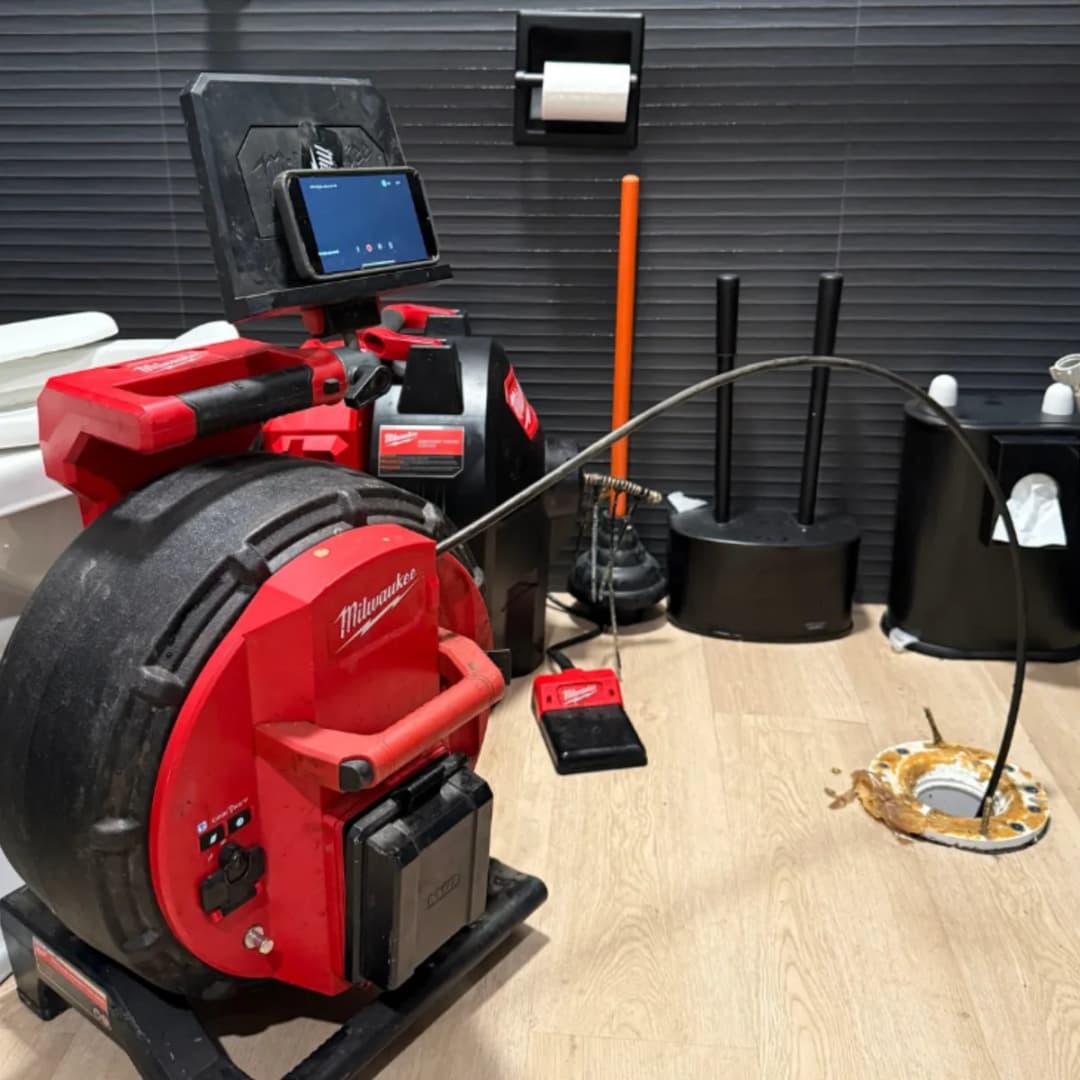
If you live in Grand Rapids, Wyoming, Kentwood, Ada, Jenison, Grandville, or anywhere in West Michigan and you're seeing the warning signs above, get a plumber out before the next round of storms. A camera inspection runs a fraction of what a backup cleanup costs, and you'll know exactly where you stand.
Frequently Asked Questions
Standard homeowners policies typically exclude sewer backup. You need a separate sewer backup endorsement (also called a "water backup rider") on your policy. Coverage usually runs $40–$80 per year for $5,000–$20,000 in protection. If you live in an older neighborhood with aging clay laterals or have a history of backups, this rider is one of the best insurance values you can buy.
Backwater valve installation typically costs $1,500–$4,000 in the Grand Rapids area, depending on whether the valve goes in an existing access point or requires excavation. For homes in flood-prone or combined-sewer neighborhoods, it is the single most effective upgrade you can make. Some Michigan municipalities offer reimbursement programs — check with your local public works department before installing.
Clearing the blockage and getting the line flowing again takes 1–4 hours in most cases. Cleanup and restoration of a finished basement is a separate process and typically takes 3–7 days, including water extraction, drying, removal of contaminated drywall and flooring, sanitization, and reconstruction. Mold can begin growing within 24–48 hours, so fast action matters.
Yes. Raw sewage in a living space is a biohazard and a health risk to anyone exposed. It also continues to cause water damage as long as it sits. Stop using water in the home, keep people and pets out of the affected area, and call a licensed plumber for 24/7 emergency service immediately.
A single slow fixture you can sometimes clear with a plunger or hand auger. A true sewer backup — water at the basement floor drain, multiple fixtures affected, sewage smell — is not a DIY project. The blockage is usually in the main lateral, often 4–6 inches in diameter, and 20–100+ feet from the house. Without a sewer camera and a proper drain machine or hydro jetter, you cannot diagnose or clear it. Worse, using consumer chemical drain cleaners on a sewer line can damage clay or older cast iron pipe and create a far more expensive problem.
The responsibility line is usually at the property line, but the exact division varies by municipality. A licensed plumber with a sewer camera can locate the blockage and identify whether it sits on your private lateral or has moved into the city main. If the issue is on the city side, the utility is responsible for repair — but you need documented evidence (camera footage and a plumber's report) before they will dispatch a crew.
Protect Your Basement Before the Next Storm
NSP Plumbing offers expert drain cleaning, sewer camera inspections, hydro jetting, and 24-hour emergency service throughout Grand Rapids and West Michigan. Whether you want a preventive inspection or you're standing ankle-deep in your basement right now, we're licensed, insured, and on call.
Serving Grand Rapids, Wyoming, Kentwood, Ada, Jenison, Grandville, Hudsonville, Byron Center, Caledonia, Holland & beyond.