A garbage disposal that smells bad almost never needs to be replaced. The fix is a five minute cleaning with ice, coarse salt, and half a lemon, followed by 30 seconds of cold water. Most of the odor comes from food stuck under the rubber splash guard and on the walls of the grind chamber, not from the drain itself.
How Do You Clean a Garbage Disposal in Five Minutes?
You do not need a special product. The best method uses three things already in your kitchen: ice cubes, coarse salt (kosher salt works well), and half a citrus fruit. Here is the full sequence, start to finish.
Step 1: Run cold water for 15 seconds. Turn on the cold tap and let it flow into the disposal side of the sink. Cold water is important because it solidifies any grease sitting in the grind chamber, making it easier for the blades to break it up.
The photo below shows the right setup: cold water running directly into the disposal drain before you add anything.
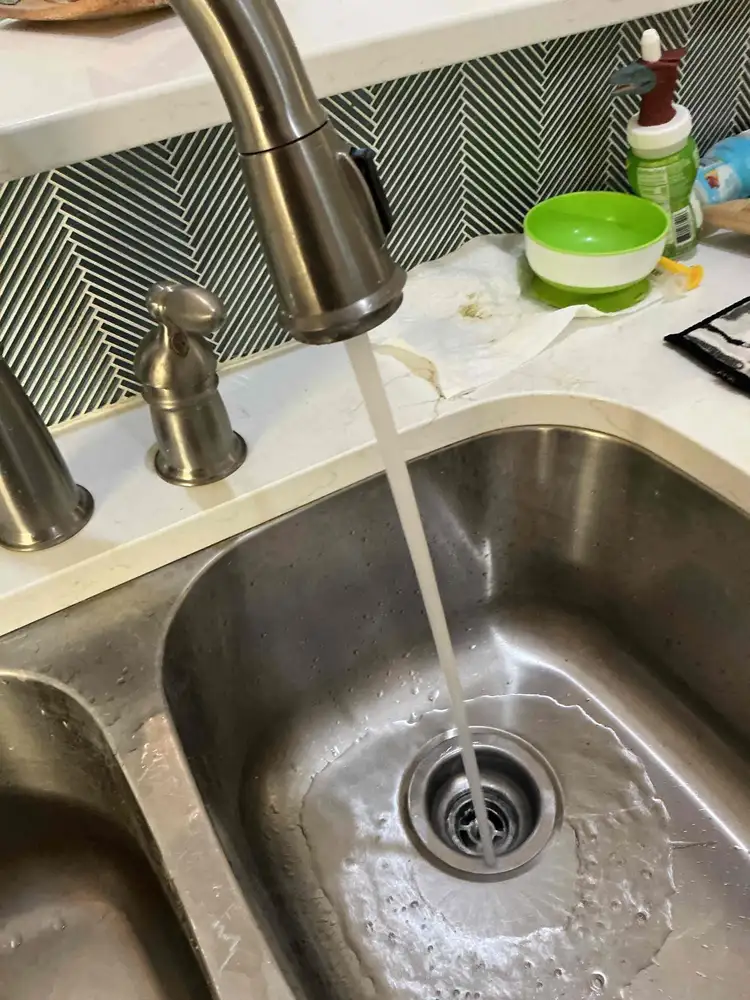
Running cold water before, during, and after grinding is the single most important disposal habit. Hot water melts grease and lets it coat the chamber walls and drain pipe instead of flushing out.
Step 2: Drop in two trays of ice cubes. With the water still running and the disposal OFF, fill the drain opening with ice. The ice does two things: it knocks loose the layer of food residue on the grind chamber walls, and it sharpens the impeller blades slightly as they chew through it.
Step 3: Add a half cup of coarse salt. Pour the salt directly onto the ice. Salt acts as a mild abrasive that scrubs the inside surfaces as the ice tumbles around.
Step 4: Turn on the disposal and let it run for 30 seconds. You will hear a loud crunching sound. That is normal. Keep the cold water running the entire time. Once the grinding sound goes quiet and the water runs clean, turn the disposal off.
Step 5: Cut a lemon or lime in half and drop it in. Turn the disposal on again briefly. The citrus oils cut through residual grease and leave the drain smelling clean. Orange peels work too, but avoid grapefruit (the pith is too thick and fibrous for smaller units).
Step 6: Flush for 30 more seconds with cold water. This pushes everything through the drain line and into the house trap. Turn off the water, then turn off the disposal.
That is the whole process. Do it once every week or two and your disposal will never develop a persistent odor.
Why Does My Garbage Disposal Smell Bad?
The smell is almost never coming from the drain pipe below the disposal. It is coming from two places directly under the sink flange that most people never think to clean: the splash guard (the black rubber flap at the top of the opening) and the grind chamber walls.
The splash guard is a ring of rubber baffles that keeps food from flying out while the disposal runs. Its underside faces down into the chamber, and it collects a film of decomposing food within days of a cleaning. Because it sits above the water line, it never rinses itself.
The grind chamber walls are the cylindrical surfaces between the impeller plate and the drain flange. Food particles stick to these walls, and in areas with hard water the problem compounds. Grand Rapids municipal water measures around 150 parts per million (ppm) of hardness, which is moderate to hard. That mineral content leaves a thin scale layer on the chamber walls that food clings to more easily than it would on a clean stainless surface.
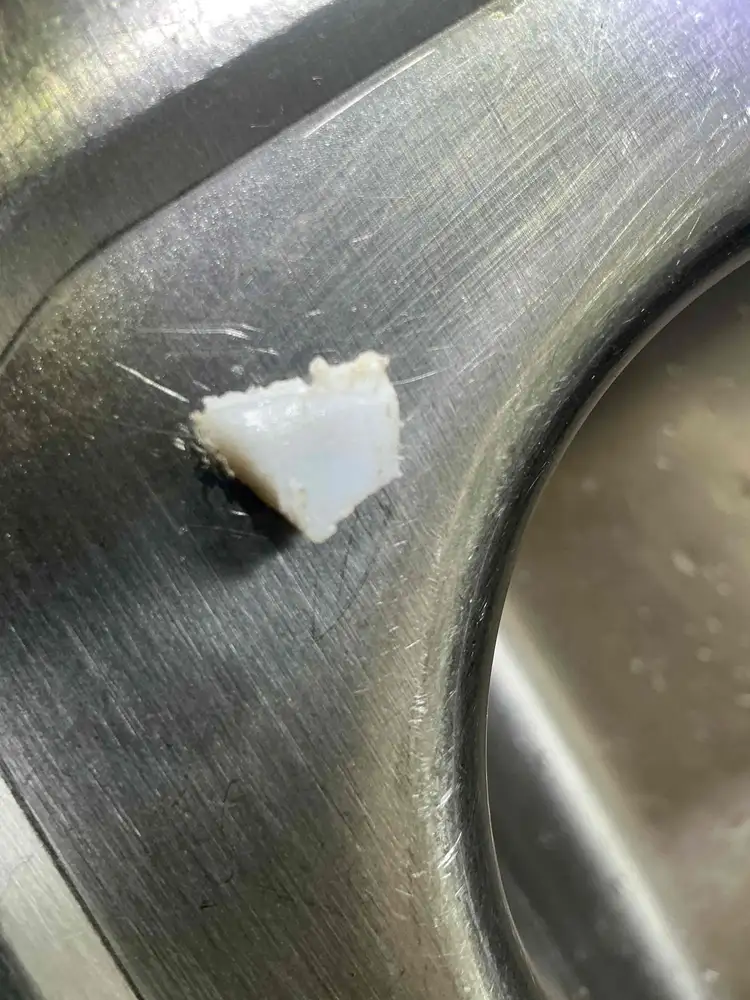
The white residue near this disposal flange is a mix of grease and mineral scale. It builds up gradually and traps food particles that produce the sour smell most homeowners notice.
To clean the splash guard specifically, lift each rubber flap and scrub the underside with a dish brush or old toothbrush dipped in dish soap. This is the single most effective thing you can do if the ice and salt method did not fully eliminate the odor.
Does Baking Soda and Vinegar Actually Clean a Garbage Disposal?
It is the most popular cleaning advice on the internet, and it is mostly theater. Baking soda (sodium bicarbonate) and vinegar (acetic acid) react to produce carbon dioxide gas, water, and sodium acetate. The fizzing looks dramatic, but the chemical reaction neutralizes both ingredients. By the time the bubbling stops, you have slightly salty water with almost no cleaning power.
The reason it seems to work is that pouring anything down the disposal with volume and agitation will flush loose debris. Plain hot water and dish soap do the same job. If you run the baking soda and vinegar routine and the smell comes back within a day or two, the fizz never reached the actual problem: the splash guard underside and the grind chamber walls.
Where baking soda alone (without the vinegar) does help is as a deodorizer. Sprinkle two tablespoons into the disposal, let it sit for 10 minutes, then flush with cold water and run the unit. The baking soda absorbs odor without the theatrical chemical reaction. But for actual cleaning, the ice and salt method above is more effective because it uses physical abrasion to remove the biofilm, not a chemical reaction that cancels itself out.
The same goes for lemon juice poured down the drain on its own. Citric acid is mildly antibacterial and smells good, but without the mechanical action of ice knocking residue off the grind chamber walls, the juice just rinses past the problem areas. Use the whole lemon half (rind and all) with the disposal running so the peel oils coat the chamber surfaces as the impellers grind.
What Should Never Go Down a Garbage Disposal?
Most jammed and failed disposals NSP sees in Grand Rapids homes come from the same handful of items. None of these should ever go into the unit.
Grease, oil, and cooking fat. Grease is the number one cause of disposal drain clogs. It enters as a liquid, solidifies in the drain pipe downstream of the disposal, and builds up until the pipe is nearly closed. The photo below shows what we pull out of kitchen drain lines connected to disposals. The gray mass inside the pipe is solidified grease mixed with food particles and mineral scale.
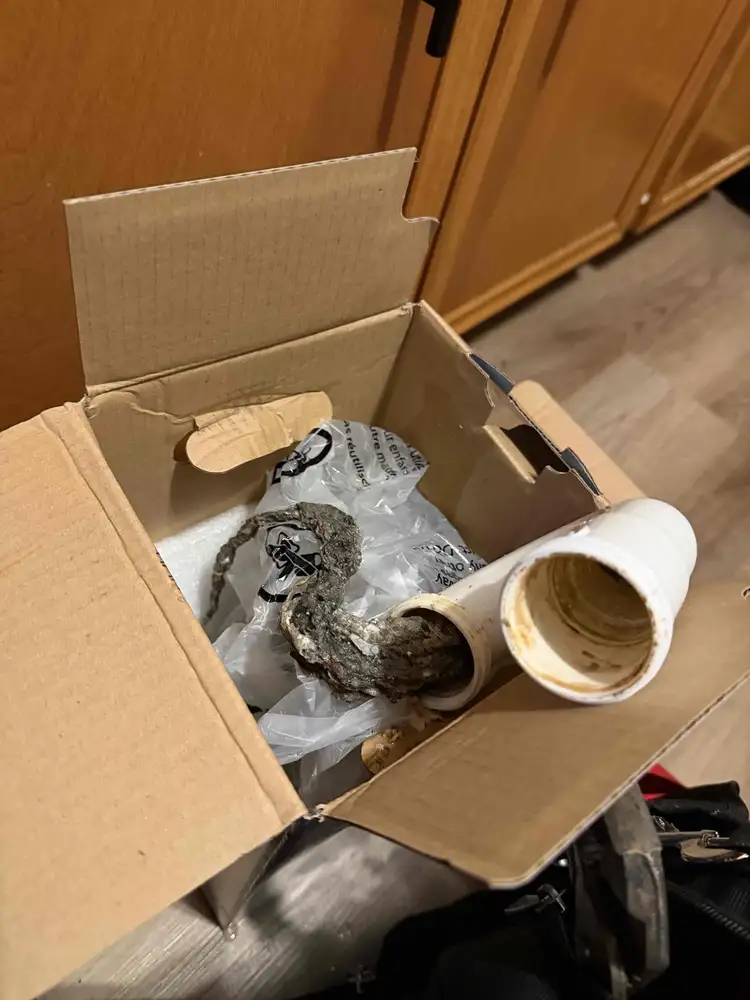
This is what the drain pipe below a disposal looks like after years of grease and food waste. The opening is nearly blocked. No amount of cleaning the disposal itself will fix a pipe in this condition.
Fibrous vegetables. Celery, asparagus, artichoke leaves, corn husks, and onion skins wrap around the impeller plate and jam the motor. If you need to dispose of these, cut them into very short pieces and feed them in slowly with plenty of cold water, or put them in the compost instead. The EPA's composting guide is a good starting point if you have yard space.
Coffee grounds. They look like they go down easily, but coffee grounds are one of the worst things for a disposal drain. They accumulate in the P-trap (the curved pipe section under the sink) and pack into a dense, slow draining sludge. If you make coffee daily, put grounds in the compost bin or trash.
Eggshells. Contrary to a persistent myth, eggshells do not sharpen disposal blades. The membrane inside the shell wraps around the grind ring, and the calcium shell fragments contribute to hard water scale in the drain line. Trash or compost.
Pasta, rice, and bread. Starchy foods expand when wet. A handful of pasta will swell in the P-trap and restrict flow.
Bones and fruit pits. Small chicken bones are technically grindable, but they dull the impellers and accomplish nothing useful. Large bones, peach pits, and avocado pits can jam the unit or damage the motor.
If you want the full list of what a disposal can handle safely, InSinkErator's support page has specific guidance by model and horsepower rating.
How Can You Tell If Your Disposal Is Dirty, Jammed, or Failing?
This matters because the fix for each is completely different. Here is how to tell them apart.
Dirty (needs cleaning). The disposal turns on, grinds food, and drains normally, but it smells bad. No unusual sounds. The ice and salt cleaning above will fix it. If the smell returns within a day, focus on scrubbing the splash guard underside.
Jammed (needs a reset or manual unjam). The disposal hums but does not spin, or it makes no sound at all when you flip the switch. This usually means something is wedged between the impeller plate and the grind ring. Turn the disposal OFF and unplug it (or flip the circuit breaker). Use the hex wrench that came with the unit (or a 1/4 inch Allen key) to manually rotate the impeller from the bottom of the unit. You will find the hex socket on the very bottom center of the disposal body. Once it turns freely, remove the obstruction with tongs (never your hand), plug it back in, and press the red reset button on the bottom of the unit.
The photo below shows where the disposal sits under a typical kitchen sink, along with the mounting hardware and drain connection. The reset button is on the very bottom of the unit.
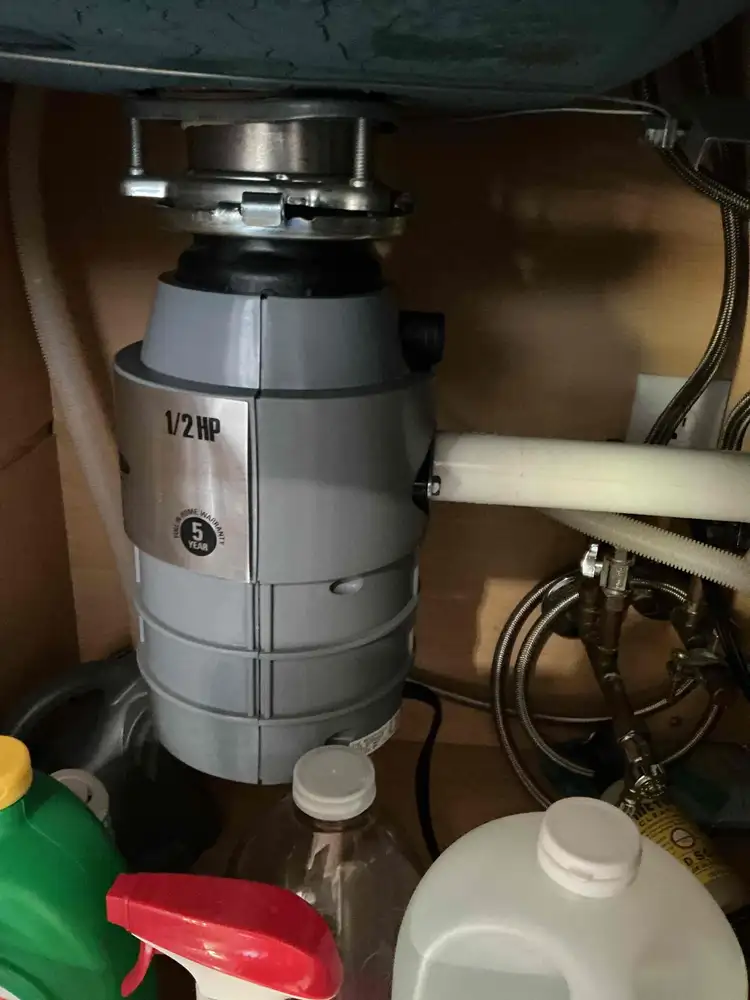
This is the view when you open the cabinet under the sink. The reset button is a small red or black button on the very bottom of the cylindrical unit.
Failing (needs repair or replacement). The disposal leaks from the bottom or side, makes a grinding metal-on-metal sound even when empty, trips the circuit breaker repeatedly, or takes noticeably longer to grind the same amount of food. These are mechanical failures that cleaning will not fix.
A disposal that is more than eight to ten years old and showing any of these signs is generally better replaced than repaired. The motor bearings wear out, the grind components dull, and the internal seals degrade. According to the Michigan plumbing code (IPC 2021, Chapter 7), disposal installations must meet specific drain connection and trap requirements, which is why we recommend a licensed plumber handle the swap rather than a DIY approach.
What Happens If You Never Clean Your Garbage Disposal?
Nothing dramatic, at least not right away. The smell gets worse. Food residue builds up on the chamber walls and splash guard. Biofilm (the slimy coating that harbors bacteria) thickens.
Over months, grease and food particles migrate down into the drain pipe below the disposal. If you are also running hot water when you grind (a common mistake), the grease stays liquid long enough to travel past the P-trap and coat the horizontal drain line inside the wall. Eventually, flow slows. Then it stops.
At that point, cleaning the disposal itself will not help. The clog is in the pipe downstream. That requires a drain cleaning with a cable or hydro jetter, which is a different job with a different cost.
The simpler version: five minutes of preventive cleaning every week or two saves you from a service call later. The grease photo earlier in this post shows what months of neglect looks like inside a drain pipe. That pipe had to be replaced entirely because no amount of snaking or jetting could restore the original diameter.
In homes with hard water, like much of the Grand Rapids area, the buildup happens faster because mineral scale gives grease something to grip. Grand Rapids municipal water sits around 150 ppm of calcium hardness, which is moderate to hard. That mineral content creates a rough texture on the inside of drain pipes that food particles and grease adhere to more stubbornly than they would on smooth PVC.
If your water is hard (you can tell by white scale on your faucet aerator or showerhead), consider a water softener. Softened water keeps the disposal and its drain line cleaner with less effort. You can also explore broader water treatment options if you are dealing with both hard water and taste or odor concerns.
When Should You Call a Plumber Instead of Cleaning Your Disposal?
Cleaning fixes smells. It does not fix mechanical problems. Call a plumber if you see any of these:
Leaking from the bottom of the unit. This means the internal seals have failed. No cleaning product or tightening will fix a seal leak. The unit needs to be replaced.
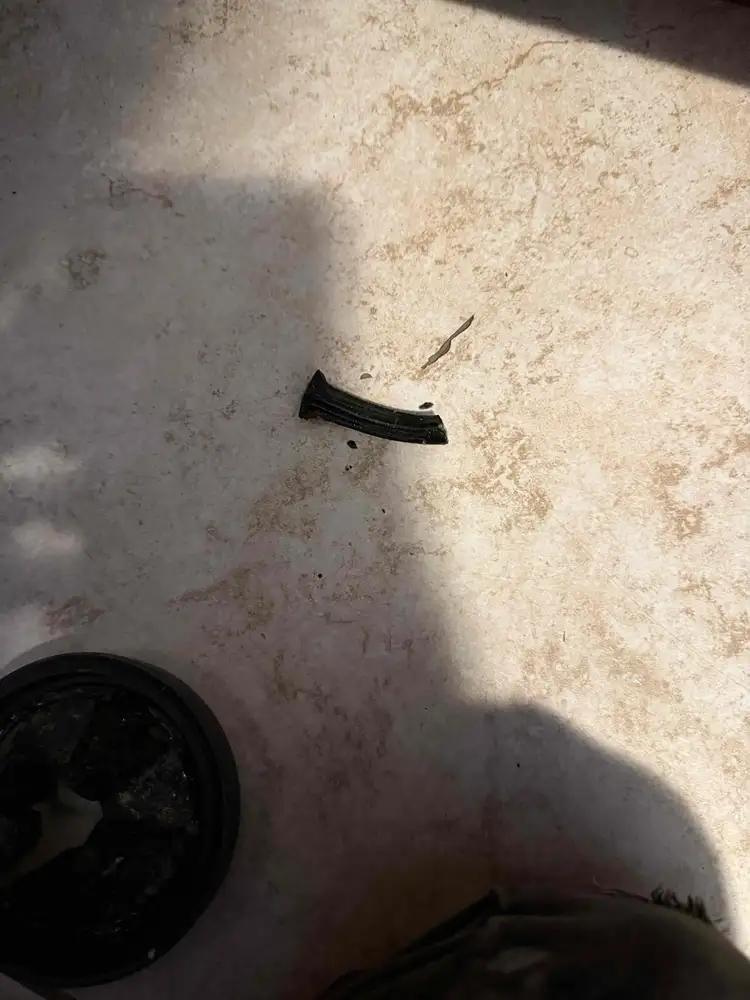
A properly installed disposal unit hangs from a mounting ring sealed to the sink flange. If water drips from the body of the unit itself (not from a pipe connection), the internal seal is gone and the unit needs replacement.
Frequent resets. Pressing the reset button once after a jam is normal. If you are resetting it every week, the motor is overheating because the bearings are worn or the capacitor is failing.
Persistent drain backup even after cleaning. If the sink fills with water when you run the disposal, the clog is downstream, not in the unit. This is a drain cleaning job.
Grinding metal sounds when the disposal is empty. The impeller plate or grind ring has come loose or worn through. Running the unit in this condition can damage the motor housing.
The unit is more than 10 years old and struggles with normal food waste. At that age, the motor and grind components have worn enough that a new unit will work noticeably better and use less electricity. Most replacements take less than an hour if the existing plumbing connections are in good shape.
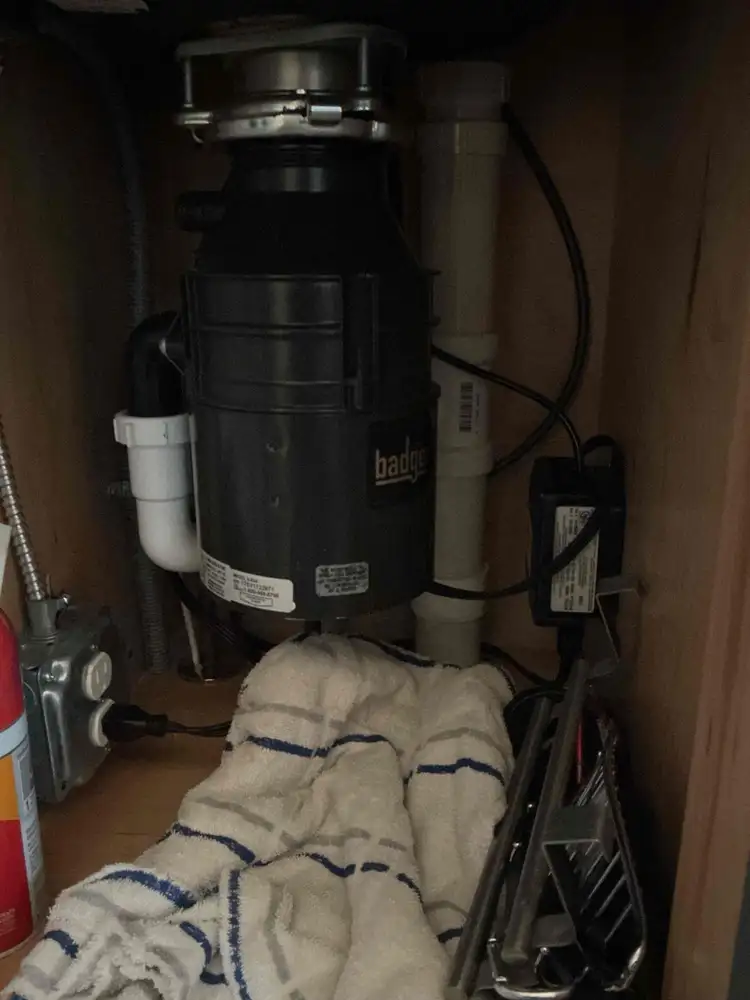
Towels under the disposal are a sign the unit is leaking. If you have been putting a towel or bucket under your disposal, the internal seals have likely failed and the unit needs to be replaced rather than cleaned.
NSP Plumbing diagnoses disposal issues with a $49 service call that includes the diagnosis and a quote for any repair or replacement needed. If the unit just needs a cleaning and unjam, we will show you how to maintain it yourself going forward.
How often should you clean a garbage disposal?
Once every one to two weeks with the ice, salt, and citrus method described above. If you cook frequently with oils or run the dishwasher through the disposal drain, clean it weekly. If you notice a smell returning between cleanings, scrub the underside of the splash guard with a dish brush and soapy water.
Can you use bleach to clean a garbage disposal?
You can, but it is not recommended as a regular practice. A small amount of diluted bleach (one tablespoon in a gallon of water) will kill bacteria and deodorize, but bleach is harsh on rubber gaskets and the splash guard. Over time, regular bleach use degrades these components and shortens the life of the unit. The ice, salt, and citrus method cleans just as effectively without the chemical risk.
Is it safe to put your hand in a garbage disposal?
Only when the unit is unplugged or the circuit breaker is turned off. Never reach into a disposal that is simply switched off, because a faulty switch or an accidental bump can turn it on. If you need to remove something stuck inside, unplug the unit first, then use tongs or pliers, not your fingers.
Why does my garbage disposal smell even after I clean it?
The most common reason is that the splash guard was not cleaned. The rubber baffle at the top of the disposal collects food residue on its underside, and standard cleaning methods (including ice and salt) do not reach it. Lift each flap and scrub the underside with a brush and dish soap.
Does ice sharpen garbage disposal blades?
Partially. Garbage disposals do not have traditional blades; they have impeller lugs (small metal tabs) that fling food against a stationary grind ring. Ice knocks residue off these components and can restore a slight edge, but it will not sharpen a badly worn impeller. If the disposal takes noticeably longer to grind food than it used to, the grind components are worn and the unit likely needs replacement.
Can you use garbage disposal cleaning pods?
Yes, commercial cleaning pods (like the ones sold by Affresh or Glisten) work by releasing a foaming cleaner inside the chamber. They are convenient but not more effective than the ice and salt method. The main advantage is that some pods include enzyme formulas that break down grease in the drain line downstream of the disposal, which ice and salt cannot reach. If you choose pods, use them in addition to (not instead of) periodic manual splash guard cleaning.
What size garbage disposal is best for a typical home?
Most Grand Rapids homes do well with a 1/2 to 3/4 horsepower unit. A 1/3 HP disposal is the builder-grade minimum and struggles with anything beyond soft food scraps. A 1 HP unit handles more volume and is quieter, but costs more and requires more clearance under the sink. If your household cooks frequently and uses the disposal daily, 3/4 HP is the practical sweet spot. See our disposal installation page for more on sizing.
Should you run hot or cold water when using a garbage disposal?
Always cold. Cold water solidifies fats and grease so the disposal can break them up and flush them through. Hot water melts grease into a liquid that coats the drain line and solidifies further downstream, which is exactly how kitchen drain clogs form. The only time to run hot water through the disposal is during a cleaning step with dish soap, and even then, follow it with a 30 second cold water flush. Michigan EGLE recommends composting food waste where possible as an alternative to disposal use, which eliminates the drain loading entirely.
NSP Plumbing: Licensed Disposal Service in Grand Rapids
NSP Plumbing is a licensed Michigan plumbing contractor (#8004990) serving Grand Rapids, Wyoming, Kentwood, and 13 other West Michigan cities. We install, repair, and replace garbage disposals of all brands and sizes, and we are happy to show you how to maintain yours so you do not need us back for the same issue.
If your disposal smells bad, will not turn on, is leaking, or drains slowly, contact us or call to schedule a diagnosis. We will tell you whether it needs a cleaning, a repair, or a replacement, and we will quote the work before we start.
You can also read more about common plumbing repairs, drain cleaning, or water treatment options for hard water that contributes to disposal buildup. For other quick maintenance tips, see our guides on why your toilet keeps running and what to check when you have no hot water.