
A sour or musty smell from a sink rarely means the plumbing is failing. It is usually slime on the parts you can reach. Pull and scrub the stopper, brush out the overflow, clean the trap under the sink, then flush with hot water, and most smelly drains are fresh within the hour.
How do you clean a sink drain?
Cleaning a sink drain means removing the film that builds up on every surface water touches on its way out. That film is a mix of soap, toothpaste, skin oil, hair, and food, and bacteria live in it.
The bacteria are what you smell. You cannot rinse the film away with plain water because it is sticky and it clings to the pipe walls.
So the job is mostly mechanical. You take apart the few pieces that come apart easily, scrub them, and flush what you cannot reach. Here is the order this guide follows:
- Make sure it is the drain that smells and not the water.
- Pull the stopper and scrub it.
- Brush out the overflow hole and the drain opening.
- Flush the drain with hot water.
- Once or twice a year, take off the trap under the sink and clean it.
The tools are cheap: a flashlight, an old toothbrush, a long thin bottle brush, a bucket, a rag, rubber gloves and a pair of pliers. You do not need any harsh chemical, and later we explain why we would rather you skip the drain cleaner aisle entirely.
One quick note on scope. This guide is about routine cleaning and smell. If your sink is draining slowly or not draining at all, the hair or grease has moved past "film" and become a clog, and clearing it takes a different set of steps. Our drain cleaning service page covers what we do when a sink is truly blocked.
Is it the drain or the water that smells?
Before you clean anything, spend 30 seconds on this test, because it saves people from scrubbing a drain that was never the problem. Fill a clean glass at the smelly sink, walk to another room, and smell the water. Then fill a second glass from a different faucet and compare.
If the water in the glass smells, the drain is not your problem. A rotten egg smell that travels with the water usually comes from the water itself or from the water heater.
We have seen this more than once: a homeowner calls about one bathroom sink that smells like eggs, and the smell turns out to be in the water coming out of the faucet, not in the drain below it.
Another common version is a sulfur smell that shows up only when the hot water runs, which points to a reaction inside the water heater. Our guide to why your water smells like rotten eggs walks through that whole problem.
If the glass smells fine but the sink smells bad, it is the drain. Lean in close to the drain opening and then to the small overflow hole near the rim. The smell is usually strongest at one of the two. That tells you where to start scrubbing.
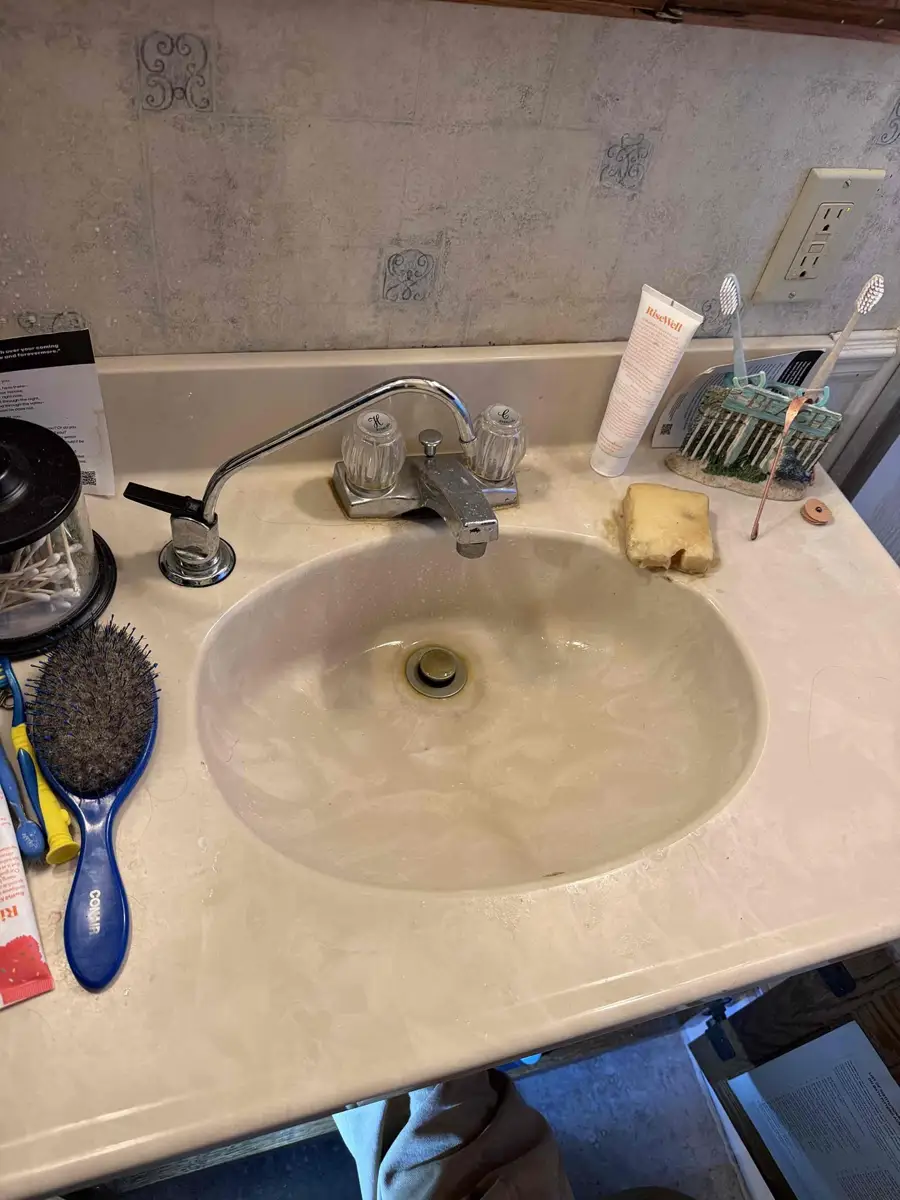
A sink like this one is the classic setup for drain smell: a basin stained from years of use, a stopper that rarely comes out, and a drain that has never been taken apart.
Stains around the drain opening are a good sign the stopper and the pipe below it are coated too, and that a cleaning will fix the smell.
Where does the smell in a sink drain come from?
There are four places a sink smell lives, and it helps to know what each one is before you start pulling parts.
The stopper. This is the plug in the drain opening that you raise and lower. In a bathroom sink it is usually a "pop up" stopper: a metal or plastic plug with a short stem that hooks to a lever under the sink.
Hair wraps around that stem and soap glues it in place. It is the single most common source of sink smell we find.
The overflow. Most bathroom sinks have a small hole or slot near the top of the bowl. It is a backup drain that keeps the sink from spilling over if the faucet is left on. Water and soap splash into it, but it almost never gets a real flush, so slime grows inside it and smells.
The tailpiece. This is the short straight pipe that runs from the bottom of the sink down into the cabinet. Its inside wall is where the dark film builds up, and it is hard to see without taking things apart.
The trap. This is the curved section of pipe under the sink, shaped like a U or a P. It holds a small pool of water on purpose. That water acts like a plug that keeps sewer gas in the drain system from coming up into your room.
Michigan's plumbing code requires a trap on every fixture for exactly this reason (Michigan plumbing code, chapter 10 on traps). When gunk collects in the bottom of that curve, it sits in standing water and rots.
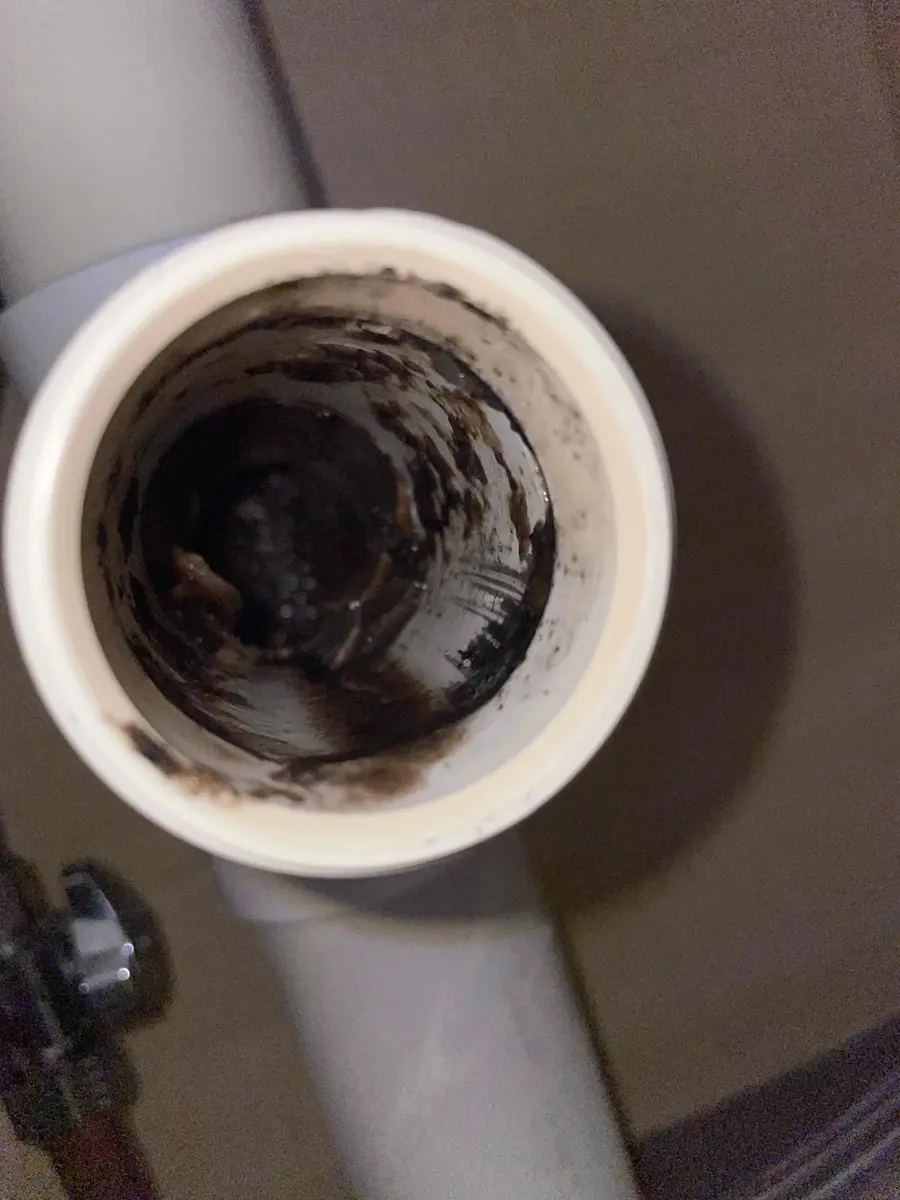
This is what the inside of a smelly kitchen drain pipe looked like on a call where the tenant reported the sink had started to smell bad. That black coating is the smell. It is not a crack or damage, and once it is scrubbed or flushed out the pipe itself is fine.
Step by step: how to clean a smelly bathroom sink drain
Plan on about 20 minutes. Put on gloves, clear out the cabinet under the sink, and set a bucket and rag inside it.
Step 1: Pull the stopper. Some stoppers lift straight out. Many are held in place by a horizontal rod under the sink, called the pivot rod, that runs into the back of the drain pipe and hooks through a loop on the stopper.
Look under the sink for a small nut where that rod enters the pipe. Unscrew the nut by hand, slide the rod back an inch, and the stopper will lift out from above. Keep the nut and the small washer behind it together so they go back in the same order.
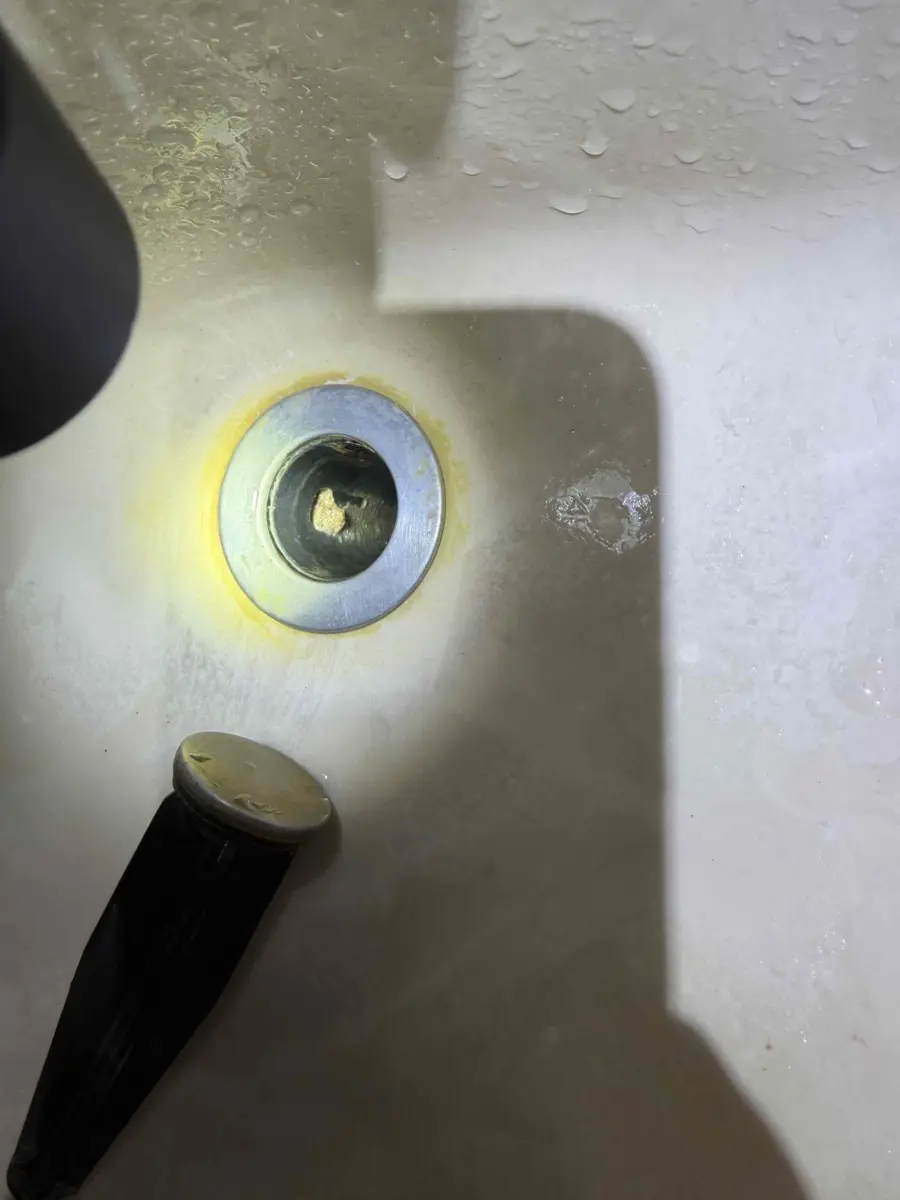
Shine a light straight down the drain before and after you pull the stopper. If you can see gray or black film on the walls of the opening, the smell is right here, and this step alone will make the biggest difference.
Step 2: Scrub the stopper. Pull off any hair by hand, then scrub the stopper and its stem with an old toothbrush and dish soap under warm running water from another faucet. Pay attention to the underside and to the loop where the rod hooks in.
In homes on city water around Grand Rapids, you will often find a hard white crust on the stopper too. That is mineral scale from hard water, and a soak in white vinegar for 15 minutes softens it so it brushes off.
Step 3: Brush the drain opening and tailpiece. With the stopper out, push a long thin bottle brush down the drain opening and twist it as you go. Work it up and down several times and rinse it as it comes back up dirty.
You are scraping film off the walls of the tailpiece, the straight pipe below the sink. Expect the brush to come out black the first time if the drain has never been cleaned.
Step 4: Clean the overflow. Push the same brush, or a pipe cleaner, into the overflow hole near the top of the bowl and scrub in and out. Then pour a cup of warm soapy water slowly into the overflow so it rinses down the inside channel.
We do not have a job photo of this step, but it matters. On plenty of smelly sinks the drain itself is clean and the overflow is the whole problem.
Step 5: Reinstall the stopper. Drop the stopper back in, line its loop up with the pivot rod, slide the rod in, and snug the nut by hand plus a quarter turn with pliers.
Check the stopper opens and closes with the lever. A loose nut here causes a drip into the cabinet, so look for water after the next step.
Step 6: Flush with hot water. Run the hottest tap water you have for two or three full minutes. If you want, add a capful of dish soap to the bowl first so it rides down with the flush. Hot water and soap lift the loosened film you just scrubbed and carry it out of the trap.
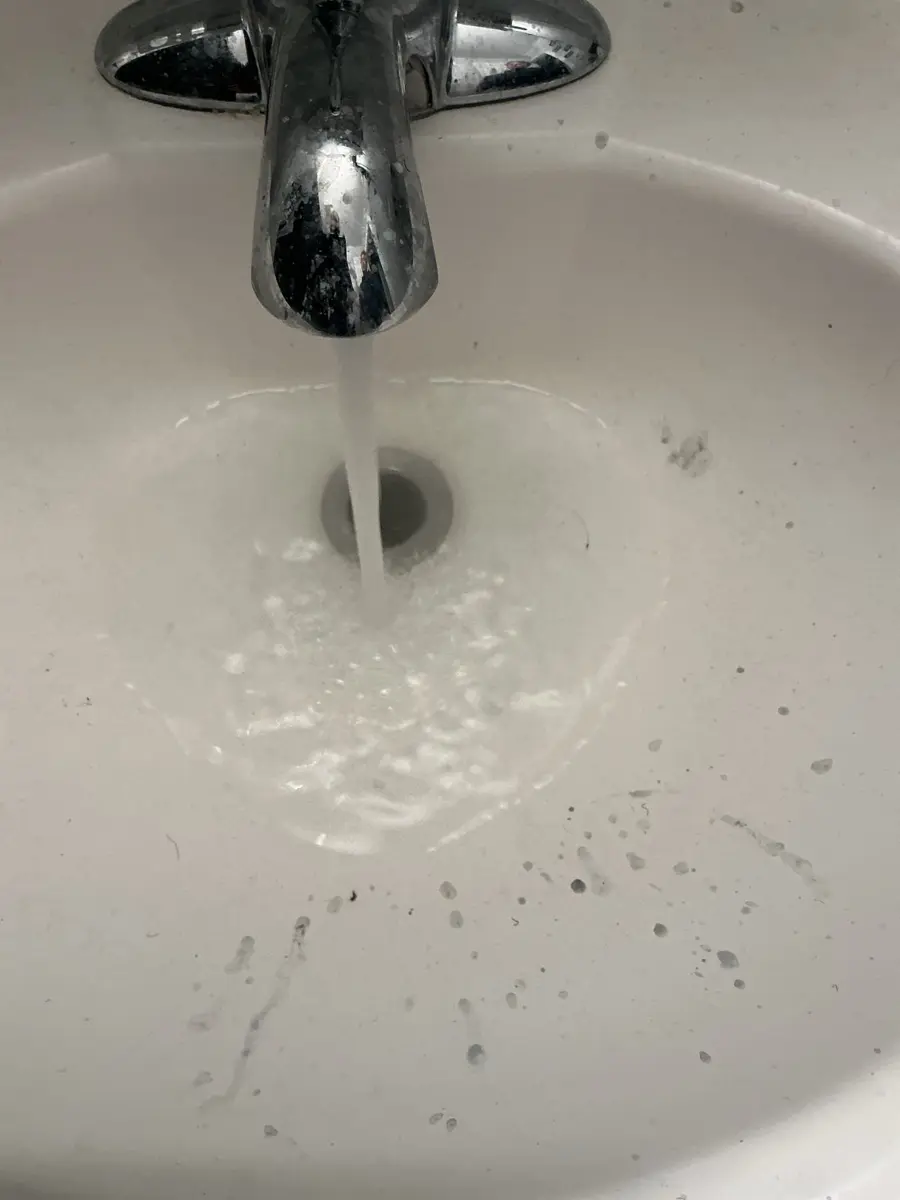
A clean drain should take full faucet flow without water pooling in the bowl. If it swirls straight down like this and the smell is gone, you are done. If water backs up in the bowl, the problem has moved past cleaning and into clog territory.
How do you clean the trap under the sink?
If the smell is still there after cleaning the stopper and overflow, it is coming from the trap, the curved pipe under the sink. Cleaning it once or twice a year is a good habit even when nothing smells.
Step 1: Set up. Put a bucket directly under the curved pipe and lay a towel around it. The trap is full of water, and it will dump as soon as you loosen it.
Step 2: Loosen the two nuts. Most modern traps are plastic and held on by two large plastic nuts called slip nuts, one at each end of the curve. Turn them counterclockwise by hand. If they are stuck, wrap a rag around the nut and use pliers gently. Plastic cracks if you squeeze too hard.
Step 3: Drop the trap and clean it. Pull the curved piece off and empty it into the bucket. Scrub the inside with your bottle brush and dish soap in a utility sink or outside with a hose. Do not wash it in the same sink you just took apart.
Step 4: Check the washers. Each slip nut has a thin plastic or rubber ring inside it that makes the seal. If one is flattened, cracked, or missing, replace it. A trap that drips after reassembly almost always has a bad washer.
Step 5: Reassemble and test. Push the trap back into place, hand tighten both nuts, then run water for a minute and feel every joint with a dry tissue. Snug any joint that shows moisture.
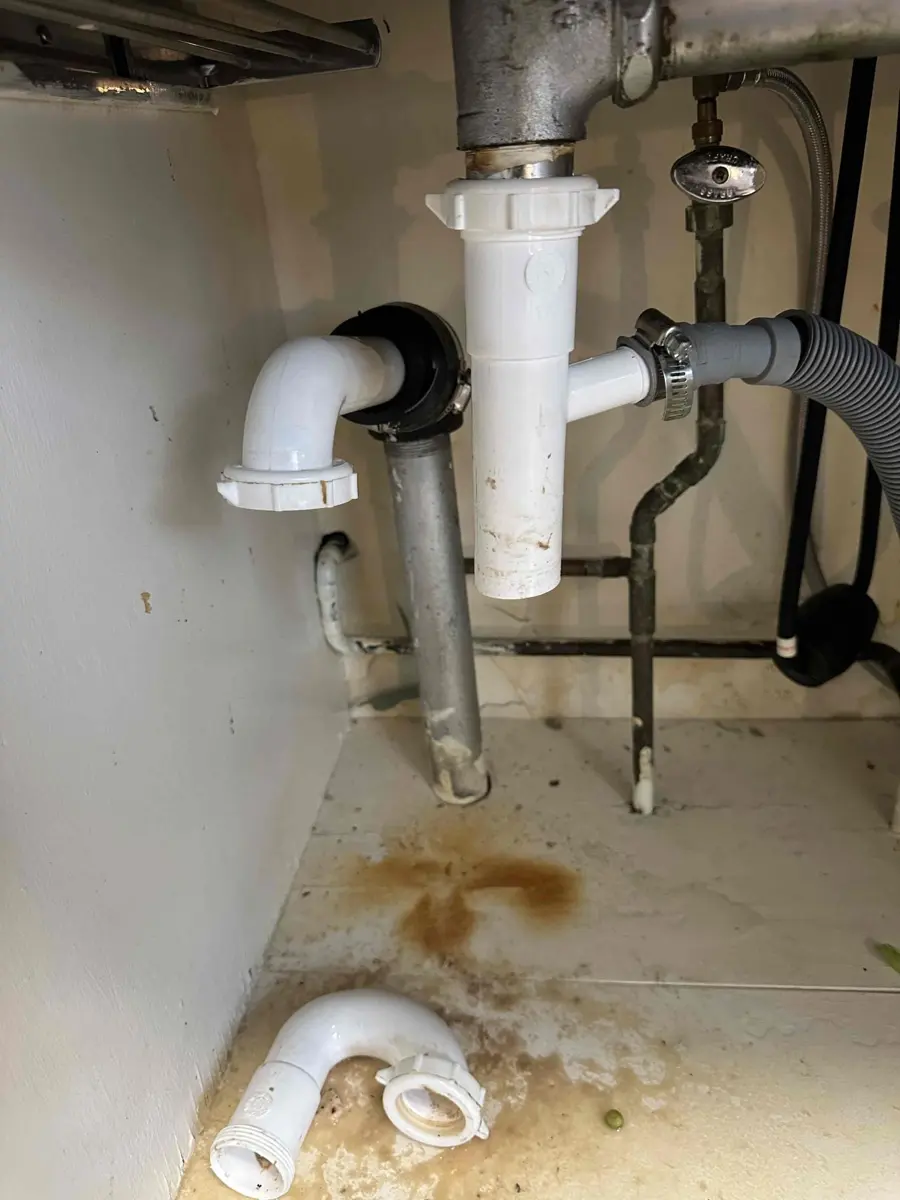
This is a kitchen trap our tech pulled apart on a call for a leaking sink and a lingering sewage smell. You can see the stain on the cabinet floor from water that had been dripping for weeks, which is a reminder to check for leaks after you put a trap back together.
When to stop and call instead: if your trap is metal, if it is fastened with old crusty nuts that will not budge, or if the pipe going into the wall wiggles when you touch it, leave it.
Older metal drain parts can crack or tear when forced, and a sink that smells is far easier to deal with than one that leaks into the floor.
How do you clean a smelly kitchen sink drain?
Kitchen sinks smell for a different reason than bathroom sinks. The film is grease and food instead of soap and hair, and if you have a garbage disposal, most of the smell is usually living inside it.
Start with the rubber splash guard, the flexible flaps in the drain opening. Lift the flaps with a gloved finger and look underneath. The underside of that guard collects a ring of food that never gets rinsed. Scrub it with a toothbrush and dish soap. Many guards pop out entirely for a proper wash.
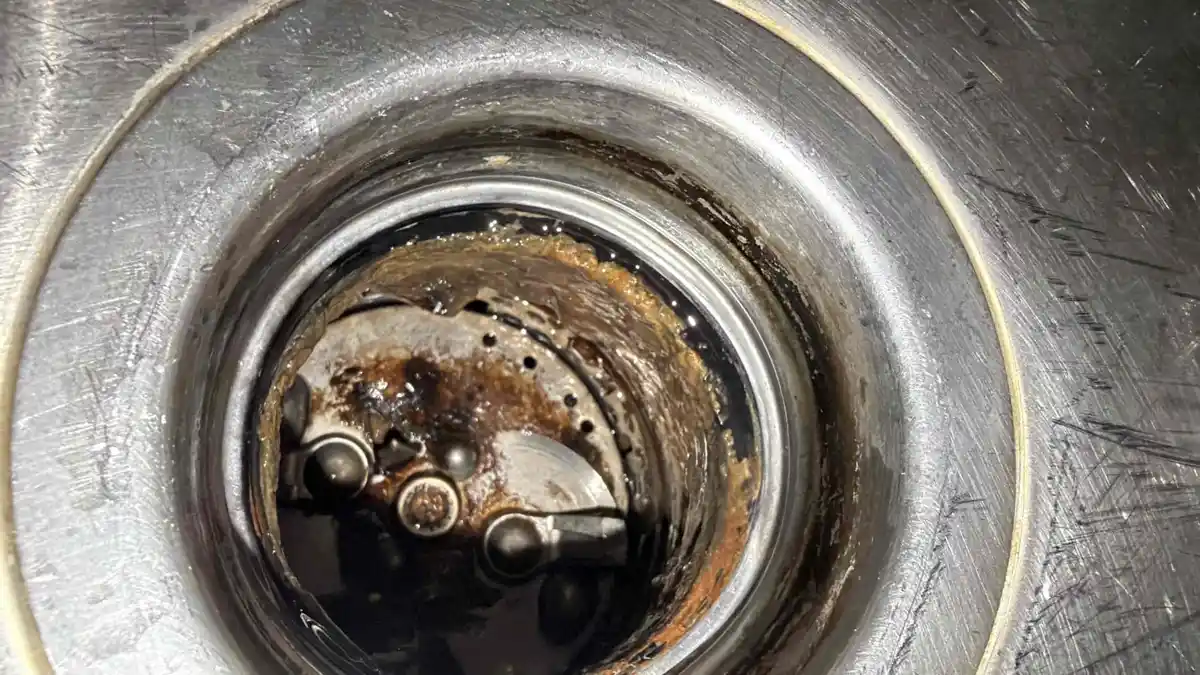
This is the view straight down a kitchen drain on a call where the sink was gurgling. The dark ring around the opening is old food and grease. It smells, but it is surface buildup, and a good scrub plus the cleaning steps in our disposal guide clear it.
Then clean the disposal itself. Our full guide to cleaning a garbage disposal covers the safe way to do it, including turning off the power before your hand goes anywhere near it. The short version is ice and coarse salt, then cold water, then a scrub of the splash guard.
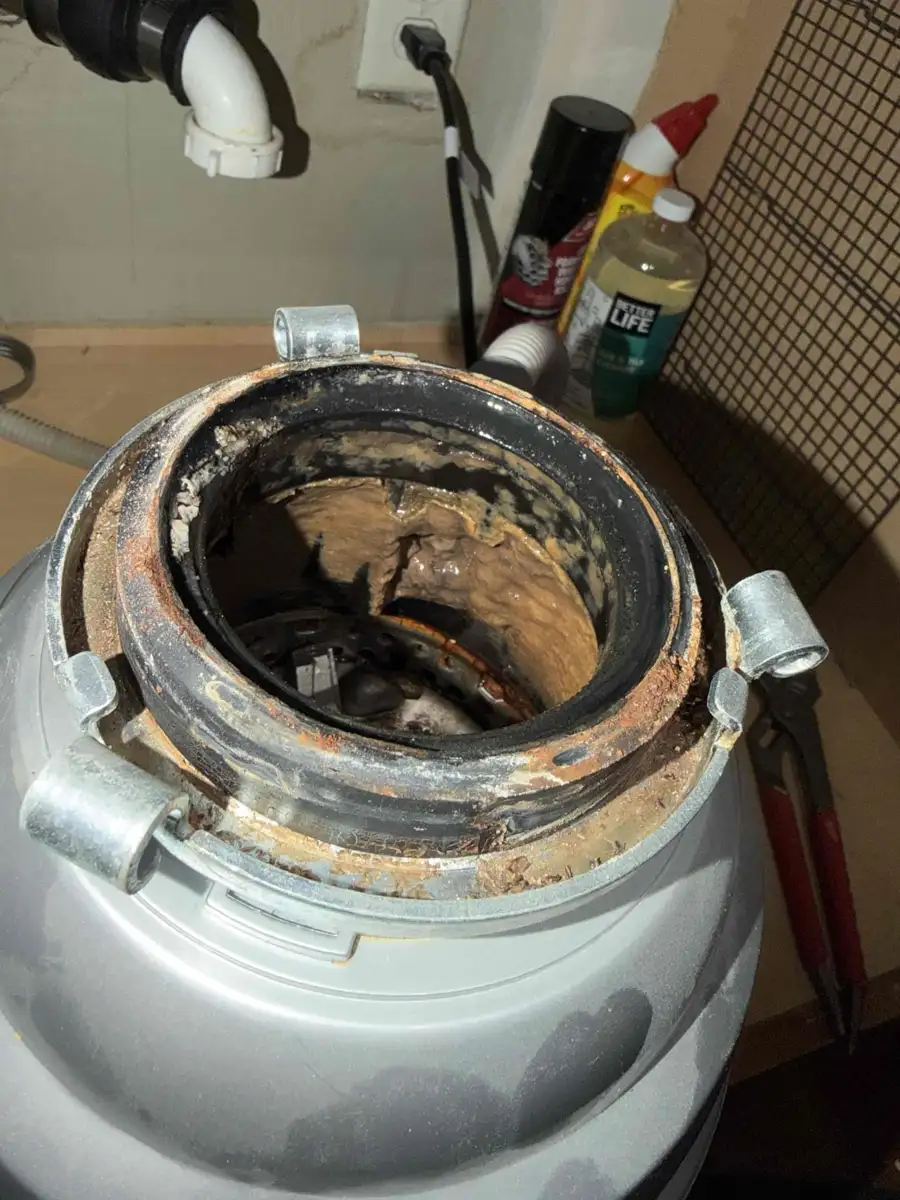
When a disposal comes out of the sink, this is often what the top ring looks like. Buildup this heavy means routine cleaning has been skipped for a long time. It is still cleanable, but if the unit is also loud, leaking or weak, it may be worth replacing instead. Our garbage disposal installation page explains that call.
Finally, change what goes down. Grease is the big one. It goes down warm and liquid, cools in the pipe, and hardens into a coating that food sticks to.
Wipe greasy pans with a paper towel before washing them, and put cooking fat in a can or jar for the trash. Coffee grounds, rice, and pasta also settle in the trap and add to the smell.
Do baking soda and vinegar or drain cleaners work?
Baking soda and vinegar are fine as a freshener on a drain you have already scrubbed. The fizz loosens a little surface film, and the vinegar helps with mineral scale.
But they do not remove the thick layer of slime in a neglected drain on their own, and they do nothing for a smell coming from the overflow or a dry trap. Think of them as maintenance, not a fix.
Enzyme drain cleaners are a better monthly habit. They use bacteria and enzymes that slowly eat the organic film. Pour a dose in at night when the sink will not be used for several hours, and repeat monthly to slow the buildup.
We do not recommend the harsh chemical drain cleaners for a smelly sink. They are made to dissolve clogs, not to clean, and the strongest ones are lye or acid based. They can burn skin and eyes, and they give off dangerous fumes when mixed with other cleaners (Poison Control on what is in drain cleaner, MedlinePlus on drain cleaner poisoning).
A chemical that sits in a trap is also the last thing you want if a plumber has to take it apart later. Our post on whether Drano is bad for pipes covers that in more detail.
Never mix bleach with vinegar or with any drain cleaner. It is the single most common mistake we hear about from homeowners trying to kill a drain smell, and the fumes are hazardous.
Why does my sink still smell after cleaning it?
If you scrubbed the stopper, the overflow and the trap and the smell came back within a day or two, the cause is not dirt. These are the usual suspects, roughly in the order we find them.
A dry trap. A sink that is rarely used, like a basement bar sink or a guest bathroom, can lose the water in its trap to evaporation. With no water seal, sewer gas comes straight up. The fix is simple: run the faucet for a minute. If it is a sink you hardly use, run it every week or two.
A failed vent. Every drain needs air behind it to flow, which is why drain systems connect to a vent pipe that runs up through the roof (Michigan plumbing code, chapter 9 on vents).
Some sinks, especially island sinks and remodeled vanities, use a one way valve under the sink instead, called an air admittance valve. It lets air in when water drains and closes to keep gas out.
When it sticks open, gas leaks into the cabinet. When it sticks closed, draining water can suck the trap dry.
We have seen both on real calls: one bathroom smell turned out to be a failed vent valve under the sink, and on another the smell was worst when the faucet ran at a trickle and vanished at full blast, a pattern that points at venting rather than dirt.
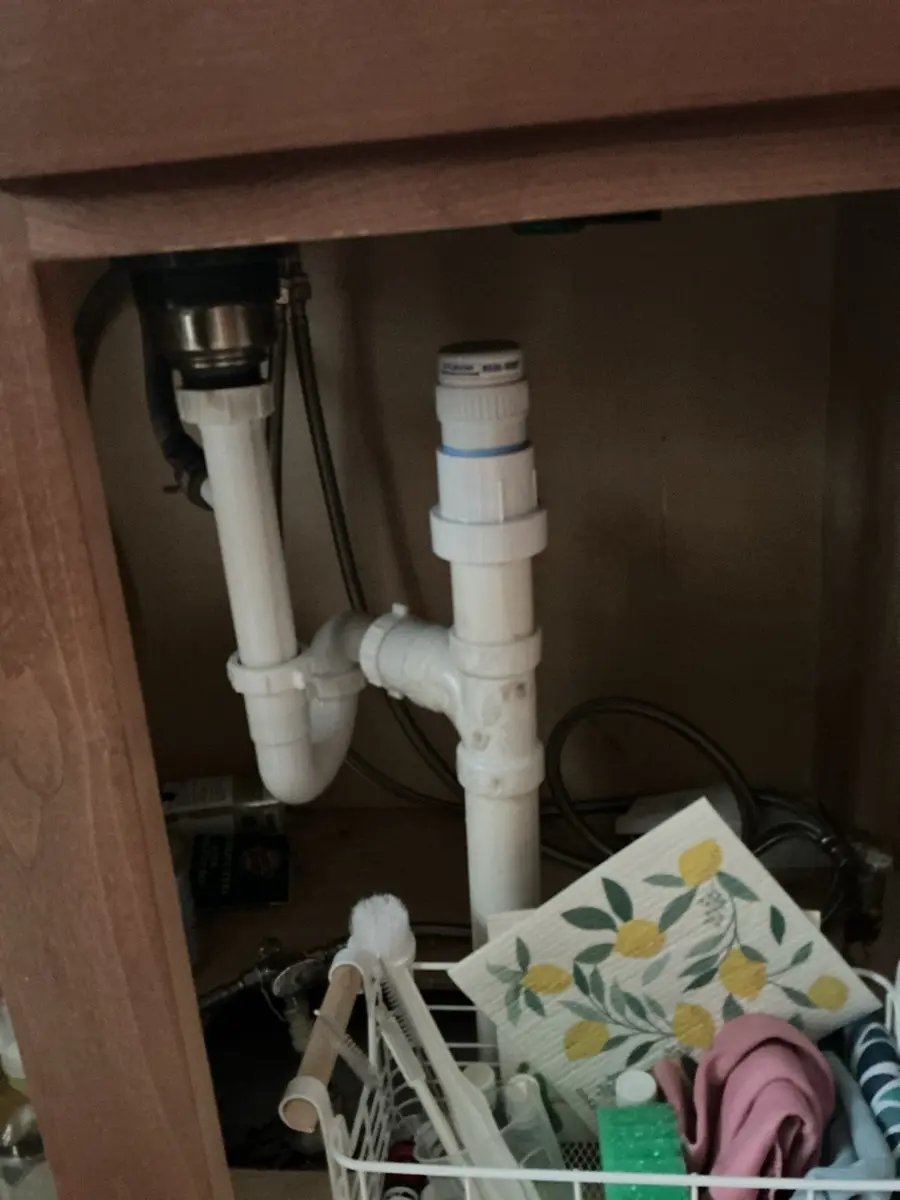
The tall white capped piece rising above the trap in this cabinet is the kind of vent valve we mean. If your sink has one and smells like sewer gas even after a full cleaning, that valve is a likely culprit, and it is a quick part swap for a plumber.
Gunk past the trap. Sometimes the buildup is in the pipe inside the wall, where no brush from the sink can reach. That usually shows up as a smell plus slow draining or gurgling.
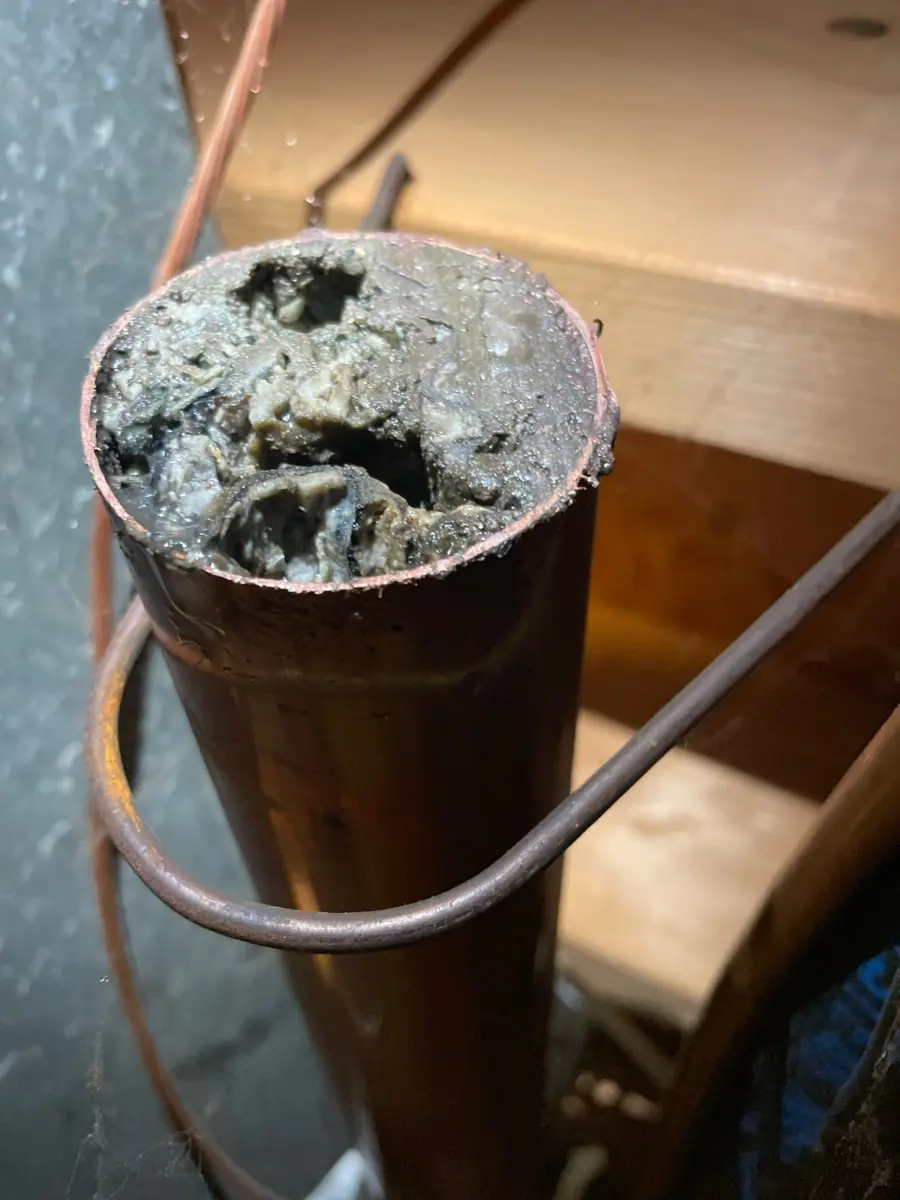
This is a section of old drain line our tech cut out on a call where a kitchen sink and laundry drain were backing up. Pipe packed this tight is past cleaning from the sink. It takes a drain machine or replacing the section, which is a job for a plumber, not a weekend project.
A sewer gas problem. If the smell is strong, smells like a sewer rather than sour or musty, and shows up in more than one room, it is probably not the sink at all. Our guide to why a bathroom smells like sewage covers toilet seals, floor drains and the other places that smell comes from.
How often should you clean a sink drain?
For most homes a simple schedule keeps the smell from coming back.
| How often | What to do | Why it helps |
|---|---|---|
| Weekly | Run hot water for a minute after the last use of the day | Moves fresh film out before it sticks |
| Monthly | Pull and scrub the stopper, brush the overflow, enzyme cleaner overnight | Stops the slime layer before it smells |
| Twice a year | Remove and clean the trap under the sink | Clears what settles in the bottom of the curve |
| Every week or two for unused sinks | Run the faucet for a minute | Keeps water in the trap so sewer gas stays out |
Kitchen sinks with a disposal benefit from a quick splash guard scrub every week. Bathroom sinks with long hair users need the stopper pulled more often than once a month.
How do I get rid of a smell in my bathroom sink drain?
Pull the pop up stopper and scrub it, brush out the drain opening and the overflow hole near the rim, then flush with hot water and a little dish soap. If the smell comes back, clean the trap under the sink. Most bathroom sink smells are slime on those parts.
Why does my sink drain smell like rotten eggs?
First check whether the water itself smells by filling a glass and smelling it away from the sink. If the water smells, the source is the water supply or the water heater, not the drain. If only the drain smells, it is bacteria in the film on the stopper, overflow or trap.
Can I use bleach to clean a smelly sink drain?
A small amount of diluted bleach can kill surface bacteria, but it does not remove the slime layer, so the smell returns. Never mix bleach with vinegar, ammonia or any drain cleaner, because the fumes are dangerous. Scrubbing and an enzyme cleaner work better.
Does baking soda and vinegar clean a sink drain?
It freshens a drain that is already clean and softens hard water scale, but it will not remove thick buildup on its own. Use it after scrubbing the stopper and overflow, not instead of scrubbing.
Why does my kitchen sink smell even though it drains fine?
The usual source is the underside of the garbage disposal splash guard and the inside of the disposal, where food and grease collect. Scrub the splash guard, clean the disposal with ice and salt, and stop pouring grease down the drain.
Why does my sink smell like sewage only sometimes?
An on and off sewer smell usually means the trap is losing its water seal, either from evaporation in a rarely used sink or from a venting problem that pulls the water out as other drains run. Run the faucet first. If it keeps happening, have a plumber check the vent.
How do I clean a sink overflow hole?
Push a thin bottle brush or pipe cleaner into the overflow and scrub in and out, then pour warm soapy water slowly into the hole to rinse the channel behind it. Do this monthly, since the overflow almost never gets flushed by normal use.
Sink smell help from NSP Plumbing
NSP Plumbing is a licensed Michigan plumbing contractor (license #8004990) based in Wyoming, Michigan. Our technicians track down sink and drain smells every week across Grand Rapids, Wyoming, Kentwood, Grandville, Jenison, Byron Center, Hudsonville, Caledonia and the rest of West Michigan.
If you have cleaned everything in this guide and the smell keeps coming back, our drain cleaning team can find whether it is a dry trap, a failed vent, or buildup in the wall, and fix it on the same visit.
For leaks or worn parts under the sink, see our plumbing repair service, and you can read what customers say about us on our reviews page.
Sink still smells after a good cleaning?
A licensed NSP plumber will find where the smell is coming from, fix it, and show you what caused it. Pick a time that works for you and we will confirm by text.