
You notice it first as water around your ankles halfway through a shower. A week later the water is still sitting in the pan after you step out, and a gray ring is forming where it dries. That is almost always the same thing: hair, held together by soap film, caught a few inches below the drain cover.
Most shower drain clogs can be cleared in 15 to 30 minutes with a screwdriver, a plastic drain strip and a hand snake, no chemicals needed. The trick is knowing where the hair sits and when the problem is not the shower at all.
Is it just the shower, or is the whole house backing up?
Before you touch the shower, spend two minutes ruling out the bigger problem. A clog in the shower drain only affects the shower. A clog in the main line, the large pipe that carries everything from your house out to the street or septic tank, shows up in several places at once.
Here is the quick check:
- Flush the nearest toilet and watch the shower pan. If water bubbles up into the shower, or the toilet drains slowly too, stop.
- Run the bathroom sink for a full minute and watch the shower again.
- If you have a basement, look at the floor drain while someone runs the shower upstairs.
If water rises anywhere other than the shower, plunging and snaking the shower will not help. The blockage is farther down the line, and pushing more water at it only makes the overflow worse.
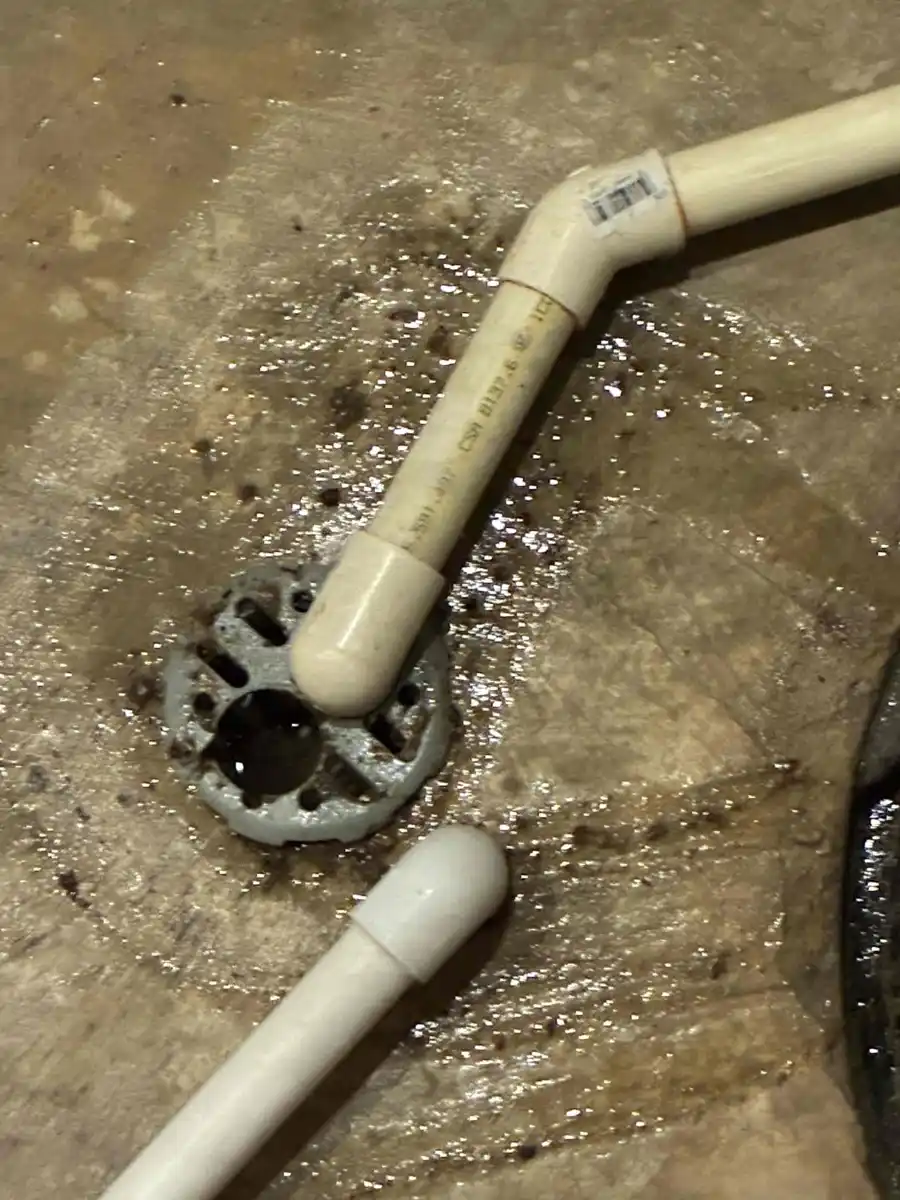
Water pooling around a basement floor drain while the shower runs means the clog is in the main line, not the shower. This homeowner called us in May because his shower was draining very slowly and he suspected the main line. Checking the lowest drain in the house first is exactly the right instinct.
This matters more than most people expect.
On the shower and tub clog calls we booked over the last year, a large share of customers also mentioned a toilet, sink or basement drain acting up during the same call.
Some of those were separate small clogs.
Others were one main line problem showing up at several drains. If you are seeing more than one slow drain, read our guide to why a bathroom smells like sewage, since gurgling and odor often travel with a main line clog, and plan on calling a plumber rather than buying tools.
If only the shower is slow, you are in the right place. Keep going.
What is under a shower drain cover?
Knowing the parts makes the job less mysterious and keeps you from breaking anything. A typical shower drain has three pieces you care about:
The drain cover (also called a strainer). The flat round or square grate you see in the floor of the shower. It either snaps in, or it is held by one or two small screws in the middle or at the edges.
The drain body. The short pipe fitting the cover sits in. It is sealed to the shower pan and has cross bars a short way down on many models. Those cross bars are where hair catches first.
The trap. A U shaped bend in the pipe below the floor. It always holds a little water, which blocks sewer gas from coming up into the bathroom. Michigan's plumbing code requires every shower to have one (Michigan plumbing code, traps). Hair that makes it past the cross bars usually stops in the trap.
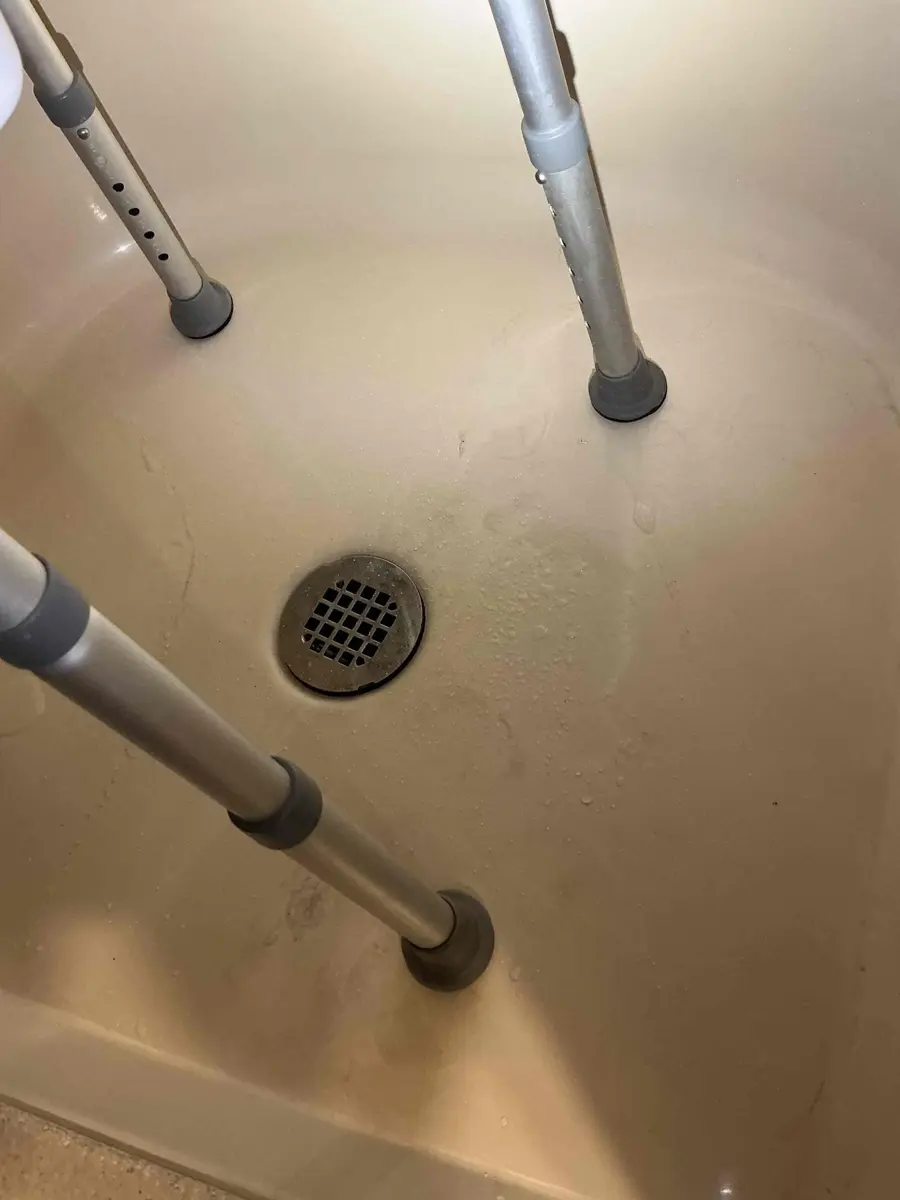
This is a screw in drain cover: one center screw holds it down. Remove the screw and the cover lifts off, giving you direct access to the hair caught just below.
Tub and shower combos work a little differently.
Instead of a flat grate, the tub has a stopper that opens and closes, usually controlled by a lever on the round plate under the faucet (called the overflow plate). That lever moves a linkage inside the overflow pipe, and the linkage is a hair magnet. We cover that setup in its own section below.
If your drain cover will not come off, or it is the old style that threads in and you are not sure which way it turns, our guide on how to remove a shower drain walks through every common type. Come back here once the cover is off.
What do you need to unclog a shower drain?
You do not need a garage full of tools. For almost every hair clog, this list covers it:
- A screwdriver that fits the screws on your drain cover (usually a Phillips).
- Rubber gloves. What comes out is not pleasant.
- A flashlight to see down into the drain body.
- A plastic drain strip (sold as a drain zip tool or hair snake). It is a thin plastic strip with small barbs along both edges, around five dollars at any hardware store.
- A cup plunger, the flat bottomed kind, not the bell shaped toilet plunger.
- A hand snake (also called a drum auger), a coiled steel cable in a small drum with a crank. A 25 foot model is plenty for a shower.
- An old towel and a bucket or trash bag for what comes out.
Skip the chemical drain openers. We explain why in detail below, but the short version is that they rarely get through a hair mat, and they make every next step more dangerous.
If you have standing water in the shower, scoop it into a bucket first with a cup or small container. You want to see the drain, and you do not want caustic or dirty water splashing on you while you work.
How do you get hair out of a shower drain step by step?
This is the method our technicians start with on almost every slow shower. It removes the clog instead of pushing it farther down, which is why it works better than pouring something in.
Step 1: Take off the drain cover. Remove the screw or screws and lift the cover. On a snap in cover, slide a flat screwdriver under the edge and pry gently. Set the screws somewhere they cannot roll into the drain. A small piece of tape over the open drain while you clean the cover is cheap insurance.
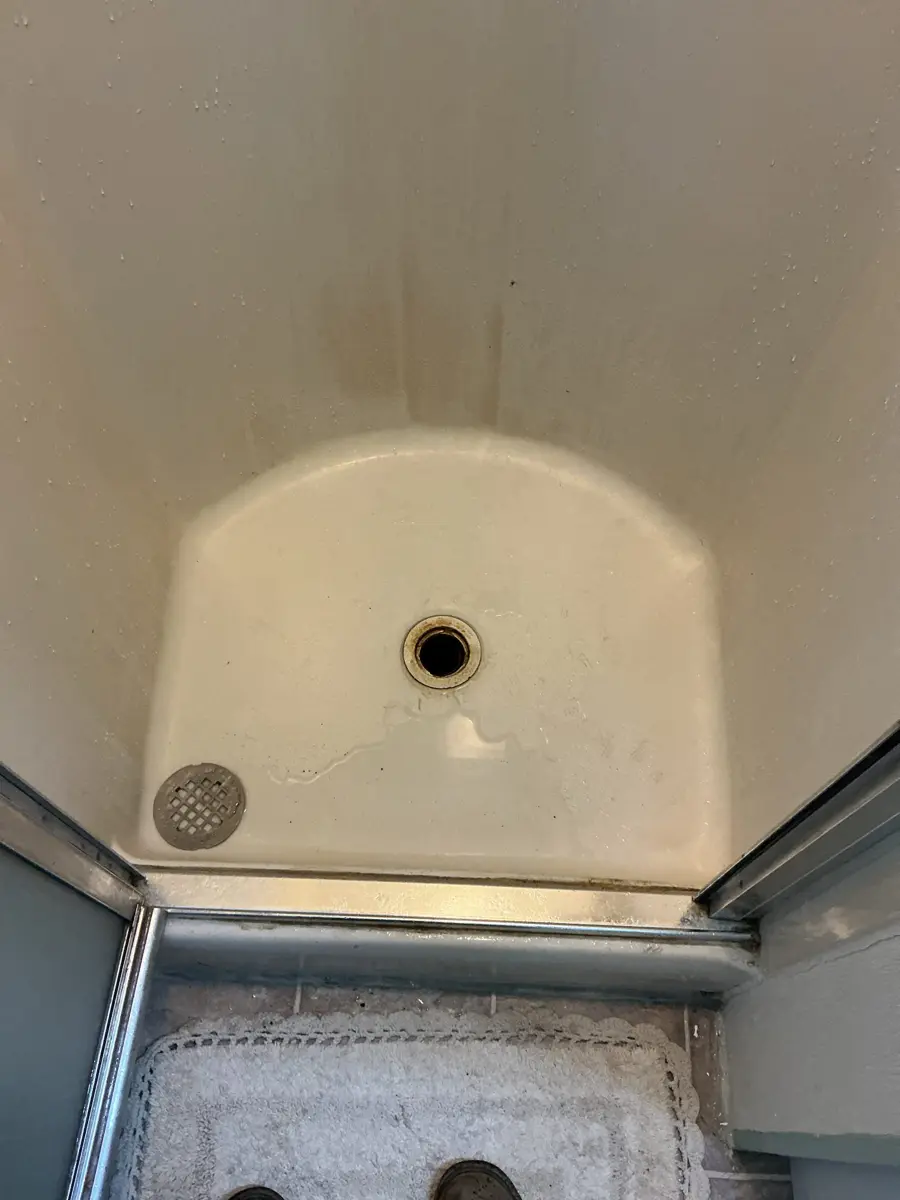
With the cover off, you can see straight into the drain body, where most hair clogs start. This tenant had been standing in water during every shower for weeks before the landlord called us in January.
Step 2: Pull what you can reach. Shine the flashlight into the opening. If you see hair on the cross bars, pull it out with a gloved hand or needle nose pliers. Often a surprising clump comes out right here, and the drain is fixed.
Step 3: Run a plastic drain strip. Push the strip straight down as far as it goes, then twist it a few times and pull it up slowly. The barbs grab hair the way a comb does. Clean it off and repeat until it comes up clean. Expect three to six passes on a bad clog.
Step 4: Flush and test. Run hot water from the shower for two to three minutes. If it drains as fast as it fills, you are done. Put the cover back on, snug the screws, and stop. If it is still slow, the rest of the clog is in the trap, and you need the plunger or the snake.
There is no NSP job photo of a plastic drain strip in use yet, because our technicians go straight to a powered machine. The strip is still the right first tool for a homeowner: it is cheap, cannot scratch the finish, and handles the most common clog completely.
When should you use a plunger or a drain snake?
Use them when the drain strip comes back clean but the water still drains slowly. That tells you the clog is lower, in the trap or just past it.
Plunging a shower drain. Leave about an inch of water in the pan so the plunger can seal. Set a flat bottomed cup plunger directly over the open drain and push down gently first to push out the air.
Then pump firmly ten to fifteen times and pull up sharply. If you have a tub, stuff a wet rag into the overflow opening under the faucet first, or the pressure escapes there instead of hitting the clog.
Snaking a shower drain. Feed the cable from the hand snake into the drain until you feel resistance. Lock the cable, turn the crank clockwise, and push forward slowly. When the resistance gives, keep turning and pull the cable back out. The hair comes up wrapped around the tip.
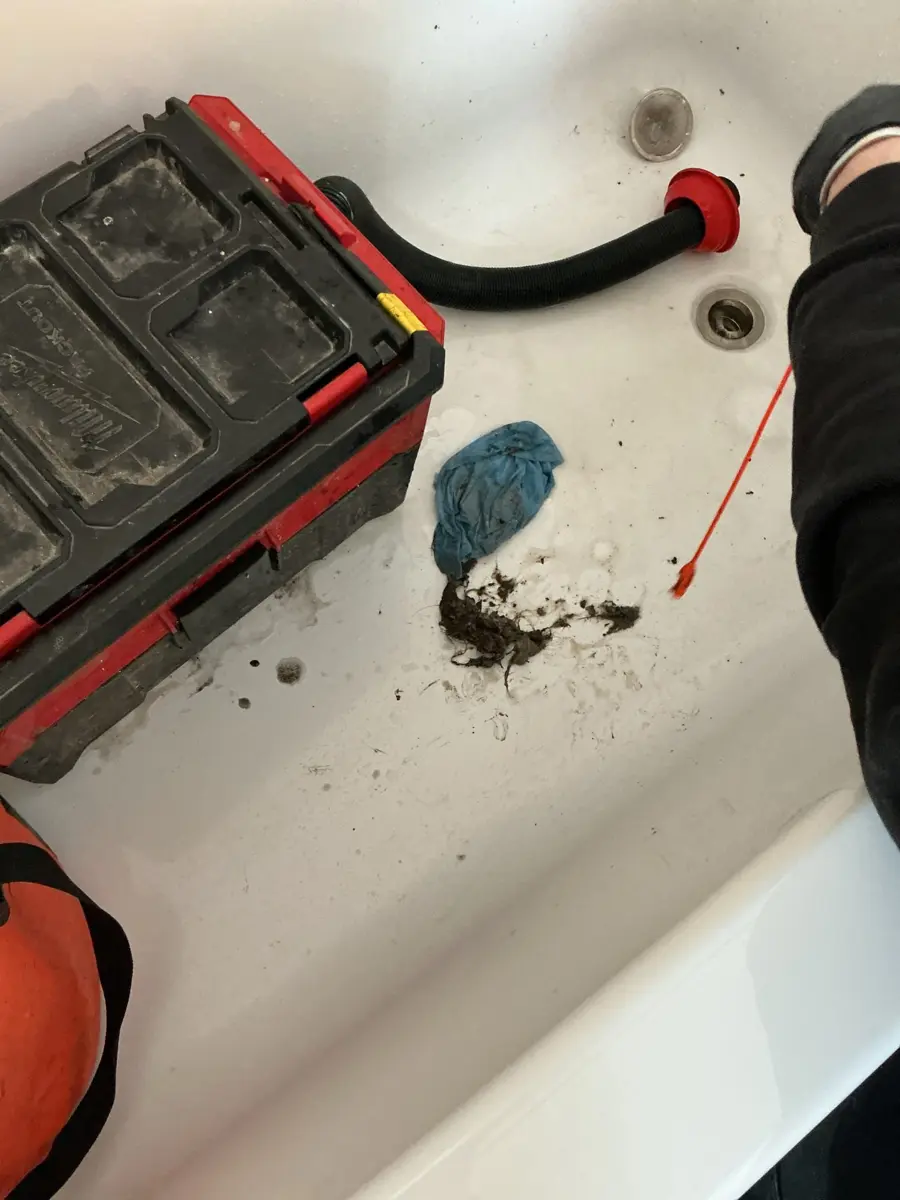
This pile of hair and sludge came out with a drain snake: this is what a slow shower is usually hiding. The customer had called in February because the shower drained slowly, and this was the whole problem.
A few cautions keep the job from getting expensive:
- Run the cable slowly where it enters the drain. A spinning steel cable will scratch an acrylic or fiberglass pan and chip porcelain.
- Do not force the cable if it will not turn the corner in the trap. Back it out a few inches and try again with less push.
- Wipe the cable down and coil it back into the drum as you pull, or you will spray what is on it around the bathroom.
If a hand snake goes in its full length and the water still sits, the clog is past where a homeowner tool reaches. That is the point to call for help.
Do baking soda, boiling water or Drano unclog a shower drain?
Baking soda and vinegar make a satisfying fizz, but the reaction is mild. It can loosen a thin film of soap, and that is about all. It does not dissolve hair, and hair is the clog in nearly every shower.
Boiling water is a bad idea in a shower. It will not touch a hair mat, and it can soften the plastic drain pipe and trap under most modern showers and loosen the seal on an acrylic or fiberglass pan. Hot tap water is as far as you should go.
Chemical drain openers like Drano are the option we see backfire most. They tend to burn a narrow channel through the middle of a hair clog, so the drain runs better for a week and then slows again.
When they do not work, they leave a pool of caustic liquid sitting in the trap. The National Capital Poison Center notes that drain cleaners contain strong alkalis or acids that can cause serious burns (what is in drain cleaner), and MedlinePlus covers what happens with skin and eye exposure (drain cleaner poisoning).
This tub would not drain at all after baking soda, vinegar, a chemical opener and plunging: the hair was still sitting in the line. The tenant had tried every home remedy before the call in April.
That tub is a good example of why we push mechanical removal first. Every remedy that tried to dissolve or push the clog failed. What fixed it was pulling it out, which you will see in the next section.
For the full picture, our post on whether Drano is bad for pipes goes through what these chemicals do to old metal and plastic drains.
If you already poured a chemical opener down and the water is still standing, tell whoever clears the drain before they start. Wear gloves and eye protection, and do not plunge, because plunging can splash it back at you.
How do you unclog a tub and shower combo drain?
A combined bathtub and shower has two places hair collects instead of one: the stopper at the bottom of the tub, and the linkage behind the overflow plate. Clearing only one of them is the most common reason a tub stays slow after a homeowner cleans it.
Step 1: Pull the stopper. Most tub stoppers lift out with a twist, or after loosening one small screw on top. Some lift and turn models unscrew counterclockwise. Clean every strand of hair off the stopper and the crossbars beneath it.
Step 2: Remove the overflow plate. Take out the two screws on the round plate below the faucet and pull the plate straight out. On a trip lever tub, a metal rod and a weighted plug or spring come with it.
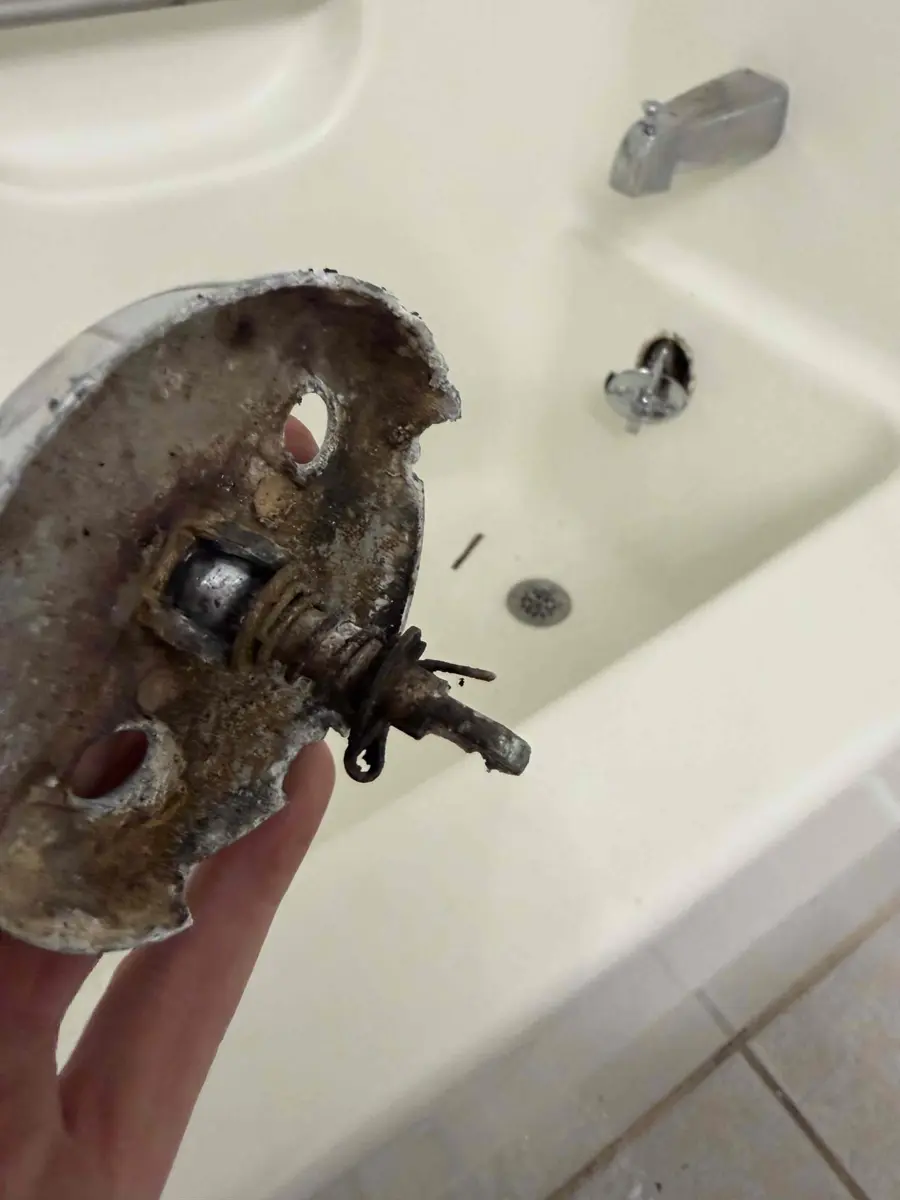
This overflow plate and lever were crusted with buildup, which is why the drain had to be held open to work. The landlord called in April because the tub only drained while someone held the switch down.
Step 3: Clean the linkage. Pull all the hair and slime off the rod and plug. If the lever has stopped holding its position, or the plug does not rise when you flip it, the linkage may be bent or worn and is worth replacing. Kits are inexpensive.
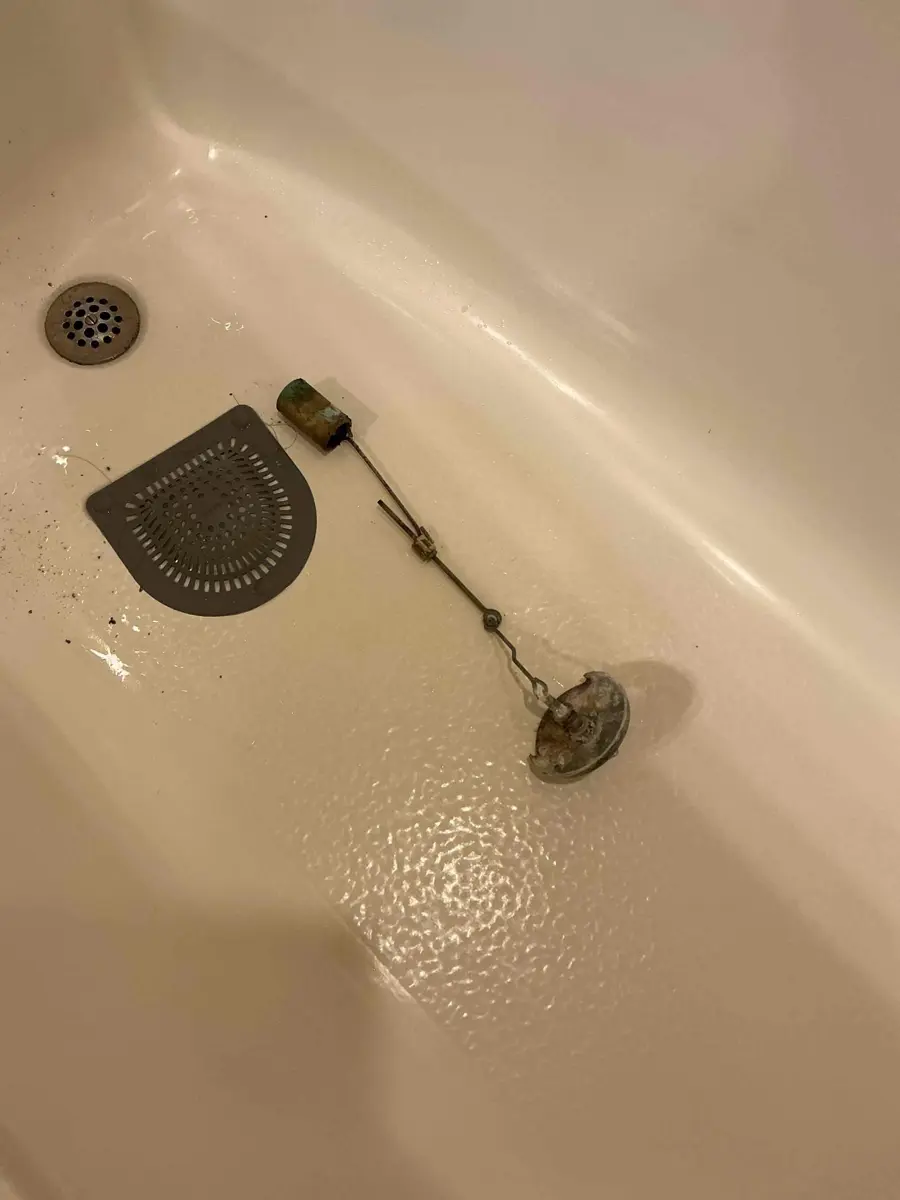
Everything that lives inside a trip lever tub drain, pulled out: the lever, the rod, the plug and the strainer. In January we were called to this tub because the lever would not hold and the drain stayed sluggish.
Step 4: Snake through the overflow if needed. With the plate off, the overflow opening gives a straighter shot at the trap than the drain in the tub floor. Feed the hand snake in there and work it just like a shower drain.
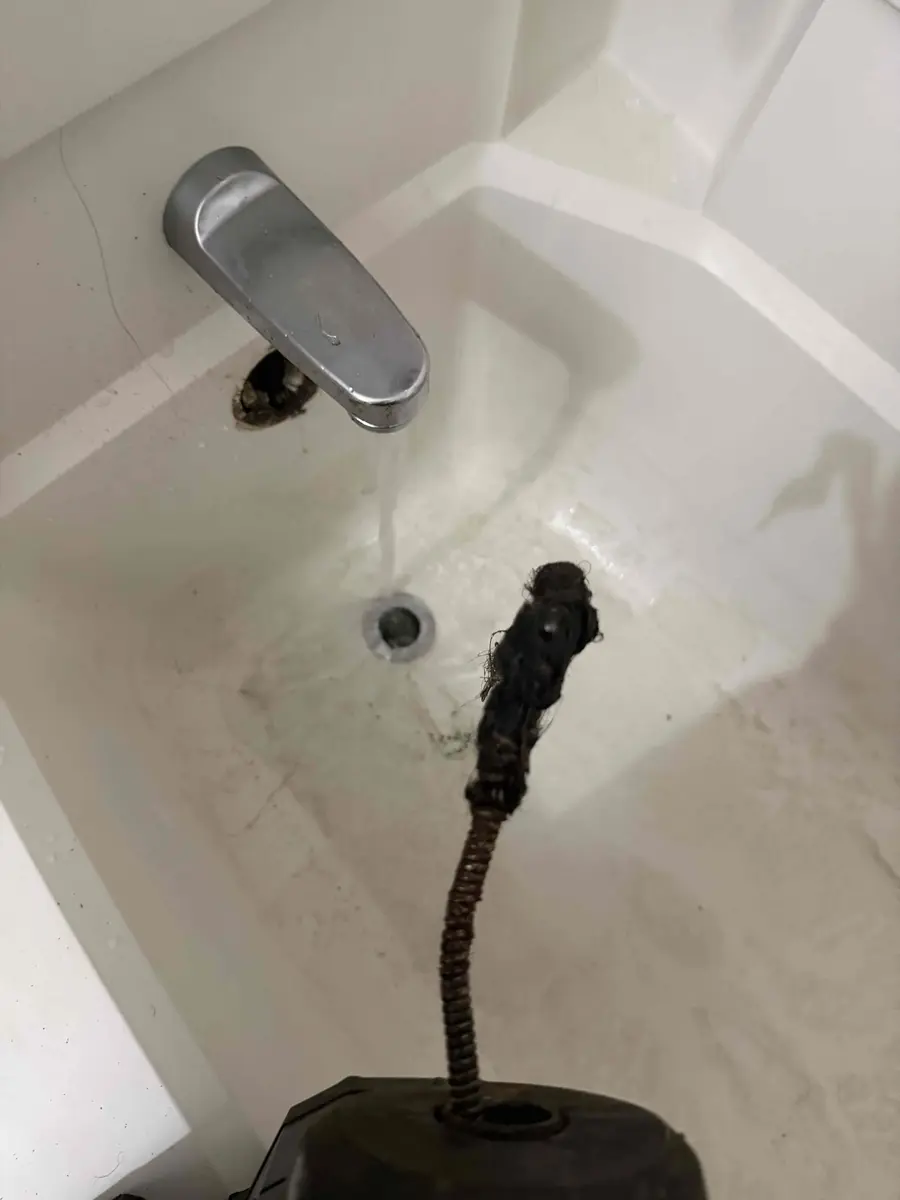
A rope of hair this long is what the baking soda, chemicals and plunger could not move. This is the same April tub from the section above, and the snake brought the clog up in one piece.
Step 5: Reassemble and test. Put the linkage back, screw on the overflow plate, reset the stopper and run the tub for a few minutes with the drain open.
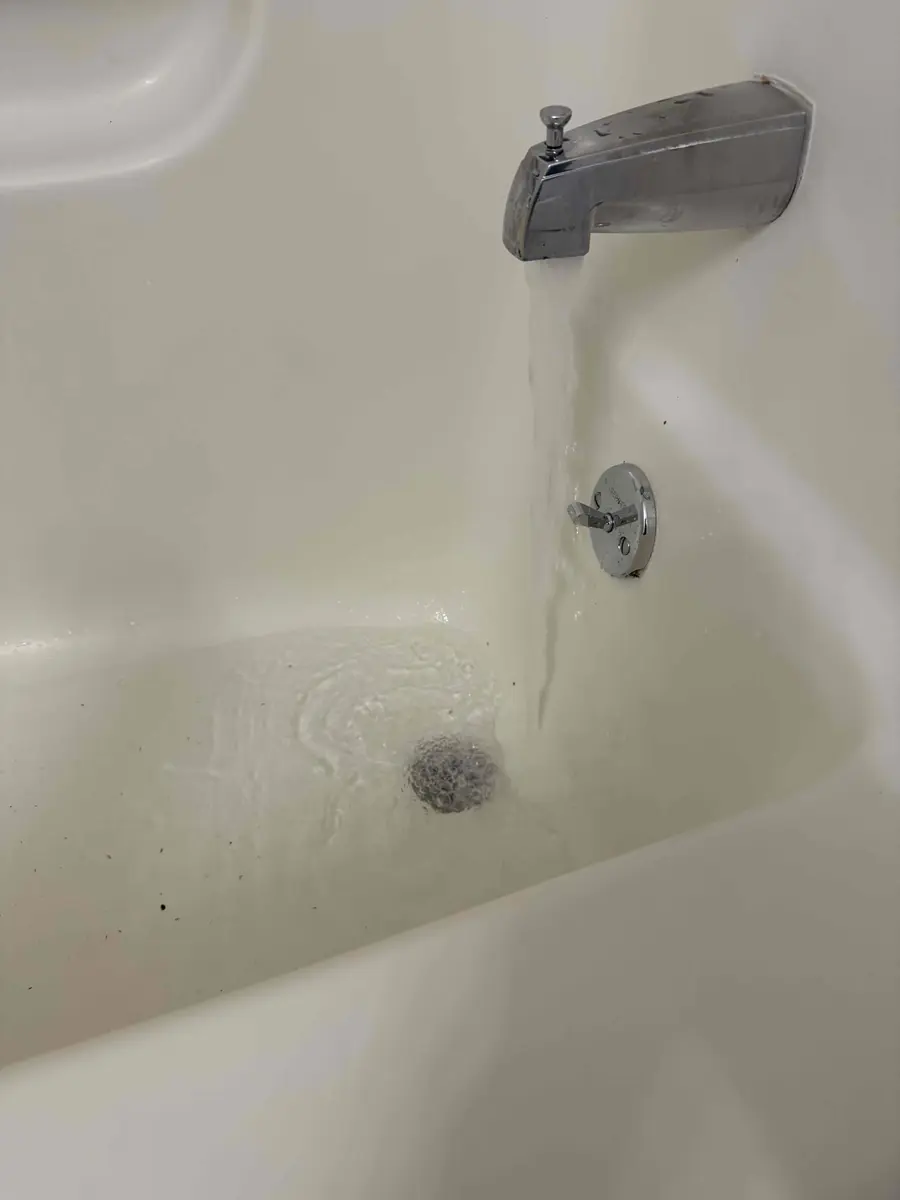
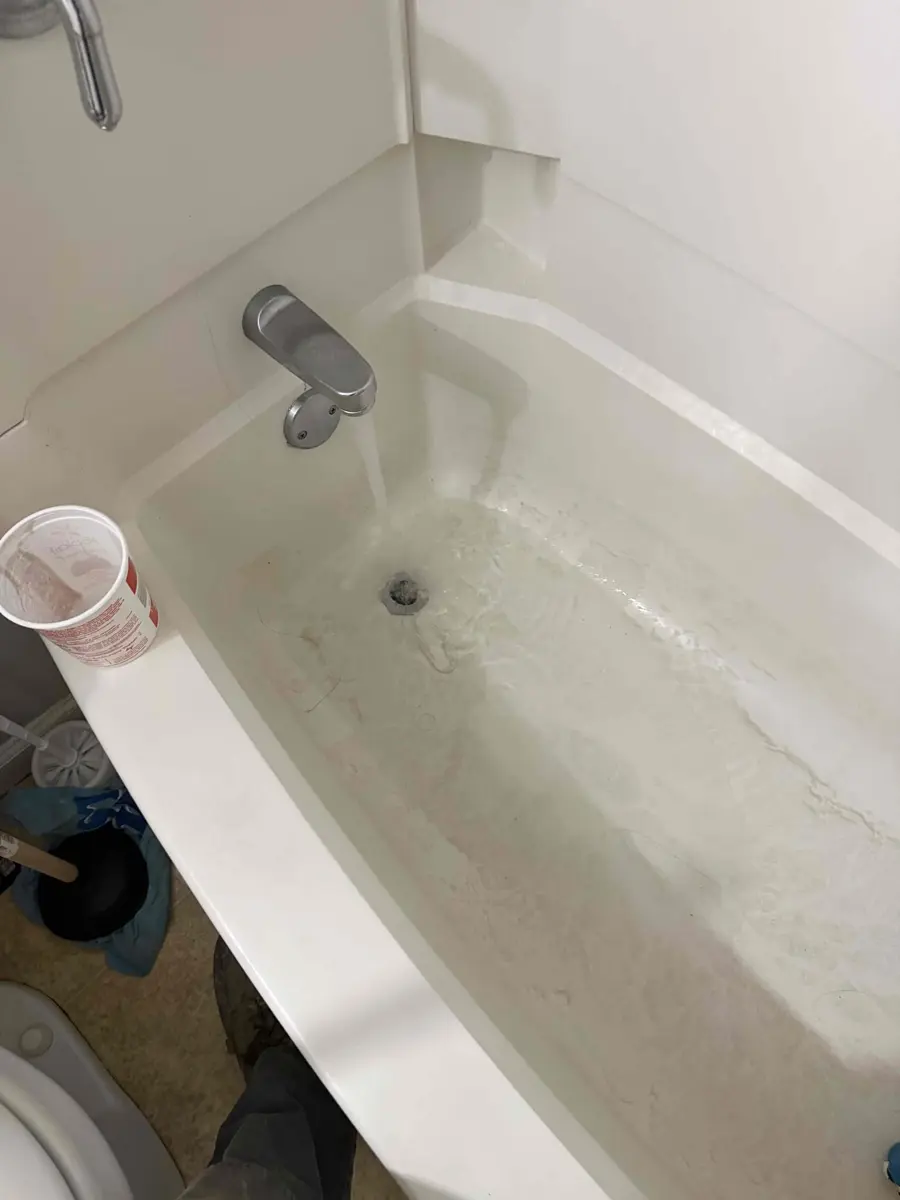
Open drain, running faucet, no water standing: this is what a cleared tub should look like. The drain switch tub from Step 2 after the linkage was cleaned and the line was cleared.
How do you keep a shower drain from clogging again?
Once the drain is clear, a few small habits keep you from repeating the job every few months.
- Use a hair catcher. A cheap mesh or silicone cover over the drain stops most hair before it gets in. Empty it after every few showers.
- Clean the cover monthly. Lift it, pull the hair off the cross bars, put it back. Two minutes once a month prevents most clogs.
- Brush long hair before you shower. Loose hair that would have gone down the drain ends up in the brush instead.
- Run hot water for a minute after the last shower of the day. It helps carry soap film down before it hardens.
- Use enzyme drain cleaner only on a drain that is already clear. Enzyme products digest the soap and organic film that hair sticks to. They are gentle and fine for maintenance, but they will not open a clog.
Summer is the busiest stretch of the year for our shower and tub clog calls. July ran several times higher than November or December over the last year, which lines up with more showers, more guests and more people rinsing off after the lake. If your shower is borderline now, clean it before the busy months.
If your water pressure in the shower is weak rather than the drain being slow, that is a different problem with its own fixes, covered in our guide to increasing water pressure in a shower.
When should you call a plumber for a clogged shower drain?
Most single shower clogs are a do it yourself job. Call a plumber when you see any of these:
- The clog comes back within a few weeks. A real share of the shower and tub clog calls we booked this past year were repeat problems. That usually means buildup farther down the line, a drain pipe with too little slope, or a partial main line clog that a hand snake cannot reach.
- More than one drain is slow. Shower plus toilet, or shower plus basement floor drain, points at the main line.
- The drain gurgles or smells like sewer gas. That can be a vent problem or a dry or damaged trap.
- Water is leaking below the shower. A stain on the ceiling under an upstairs bathroom means the drain connection or trap is leaking, which is a repair, not a clog.
- You poured in a chemical opener and the water is still standing. Let a pro clear it with the right protective gear.
- A full length hand snake did not fix it. Our technicians carry powered drain machines that reach well past where a homeowner tool stops.
If the shower valve itself is leaking or the handle is hard to turn while you have the bathroom torn apart, our guide on how to replace a shower valve explains what that job involves.
How do you unclog a shower drain fast?
Remove the drain cover, pull out the hair you can see, then run a plastic drain strip down the drain a few times to grab the rest. Flush with hot tap water for a couple of minutes. That clears most shower clogs in under half an hour with no chemicals.
How do you unclog a shower drain with standing water?
Scoop the standing water into a bucket first so you can see the drain. Then remove the cover and pull the hair, use a drain strip, and plunge with about an inch of water left in the pan. If the water still will not move after a hand snake, call a plumber.
How do you unclog a shower drain without a snake?
Pull the cover and remove visible hair by hand, then use a plastic drain strip, which costs about five dollars. If that fails, plunge with a flat bottomed cup plunger. Many clogs never need a snake, because the hair sits just under the cover.
Does baking soda and vinegar unclog a shower drain?
Rarely. The fizz is a mild reaction that can loosen light soap film but does not dissolve hair, which causes nearly every shower clog. Pulling the hair out with a drain strip or hand snake works far better and takes about the same amount of time.
Is Drano safe to use in a shower drain?
We do not recommend it. Chemical openers often burn a narrow path through hair without clearing it, so the drain slows again soon. If they fail, caustic liquid sits in the trap and can burn skin and eyes when anyone plunges or opens the drain.
Why does my shower drain keep clogging?
Usually because hair keeps reaching the cross bars under the cover. A hair catcher and a monthly cover cleaning fix that. If it clogs again within weeks even after a full cleaning, the problem is farther down the pipe and needs a plumber with a powered drain machine.
Why do my shower and toilet both drain slowly?
When a shower and toilet slow down together, the clog is usually in the main line that carries all the drains out of the house, not in either fixture. Plunging the shower will not reach it. Stop running water and call a plumber to clear the main line.
Shower drain help from NSP Plumbing
NSP Plumbing is a licensed Michigan plumbing contractor (license #8004990) based in Wyoming, Michigan. Our technicians clear shower and tub drains every week across Grand Rapids, Wyoming, Kentwood, Grandville, Jenison, Byron Center, Hudsonville, Caledonia and the rest of West Michigan.
If you have worked through the steps above and the shower is still slow, or several drains are acting up at once, our drain cleaning team can find the clog and clear it.
If the problem turns out to be the main line, our sewer line repair page explains what comes next, and you can read what customers say about us on our reviews page.
Shower still slow after pulling the hair?
A licensed NSP plumber will find where the clog is, clear it, and show you what came out. Pick a time that works for you and we will confirm by text.