You flush, and something seems off. The bowl looks half empty, or the tank keeps filling right up to the brim, or the flush feels weak no matter how hard you push the handle. Most of the time it is a five minute fix.
Toilet water level is set by the fill valve: raise or lower the float so the tank stops about one inch below the top of the overflow tube, or at the water line printed inside the tank. The bowl level is set separately, by the refill tube and the shape of the bowl.
How do you adjust the water level in a toilet bowl?
Here is the part most guides skip: you do not adjust the bowl directly. A toilet has two separate water levels, and only one of them has an adjustment.
The tank level is the water stored in the back of the toilet. A part called the fill valve lets water in after every flush, and a float riding on that valve tells it when to stop.
Move the float up, the tank fills higher. Move it down, the tank fills lower. This is the adjustment you can make with your hands or a screwdriver.
The bowl level is the pool of water sitting in the bowl between flushes. It is set by the shape of the bowl itself, because the curved passage inside the porcelain only holds so much before it spills down the drain. A small hose called the refill tube tops the bowl off after each flush.
So when someone says "the water in my toilet bowl is low", the real question is which of these three things is wrong:
- The tank is set too low, so the flush is weak and the bowl does not refill fully.
- The refill tube has slipped off, so the bowl never gets topped off.
- Something is pulling water out of the bowl: a partial clog, a blocked vent on the roof, or a crack in the porcelain.
The first two you can fix today with no tools beyond a screwdriver. The third usually needs a plumber, and we explain how to tell the difference below.
If your toilet runs constantly instead, that is a different problem with its own guide: why your toilet keeps running. And if you want to know what every part inside the tank does before you start, read how a toilet works first. It takes five minutes.
What sets the water level inside a toilet tank?
Lift the tank lid and set it on a towel. It is heavy porcelain and cracks if it hits tile. You are looking for three parts.
The fill valve. The tall plastic tower, usually on the left side of the tank. Water from your house comes up through the bottom of it. When the water level drops after a flush, the valve opens. When the level rises back up, it closes.
The float. The part that rises with the water and shuts the fill valve off. On most toilets installed in the last twenty years, it is a plastic cup that slides up and down the fill valve body. On older toilets, it is a ball on the end of a long arm.
The overflow tube. The open pipe standing up in the middle of the tank, next to the rubber flap at the bottom. It is a safety drain. If the water ever rises too high, it spills into this tube and runs into the bowl instead of onto your floor.
The Michigan plumbing code requires every flush tank to have both an overflow and a fill valve that cannot pull tank water back into your drinking water. That is why the level matters. Set it too high and water slips into the overflow and runs all day. Set it too low and you get a weak flush.
Here is a modern tank from a job on the southeast side of Grand Rapids. The red capped fill valve is on the left, and the thin black refill tube runs over to the overflow.
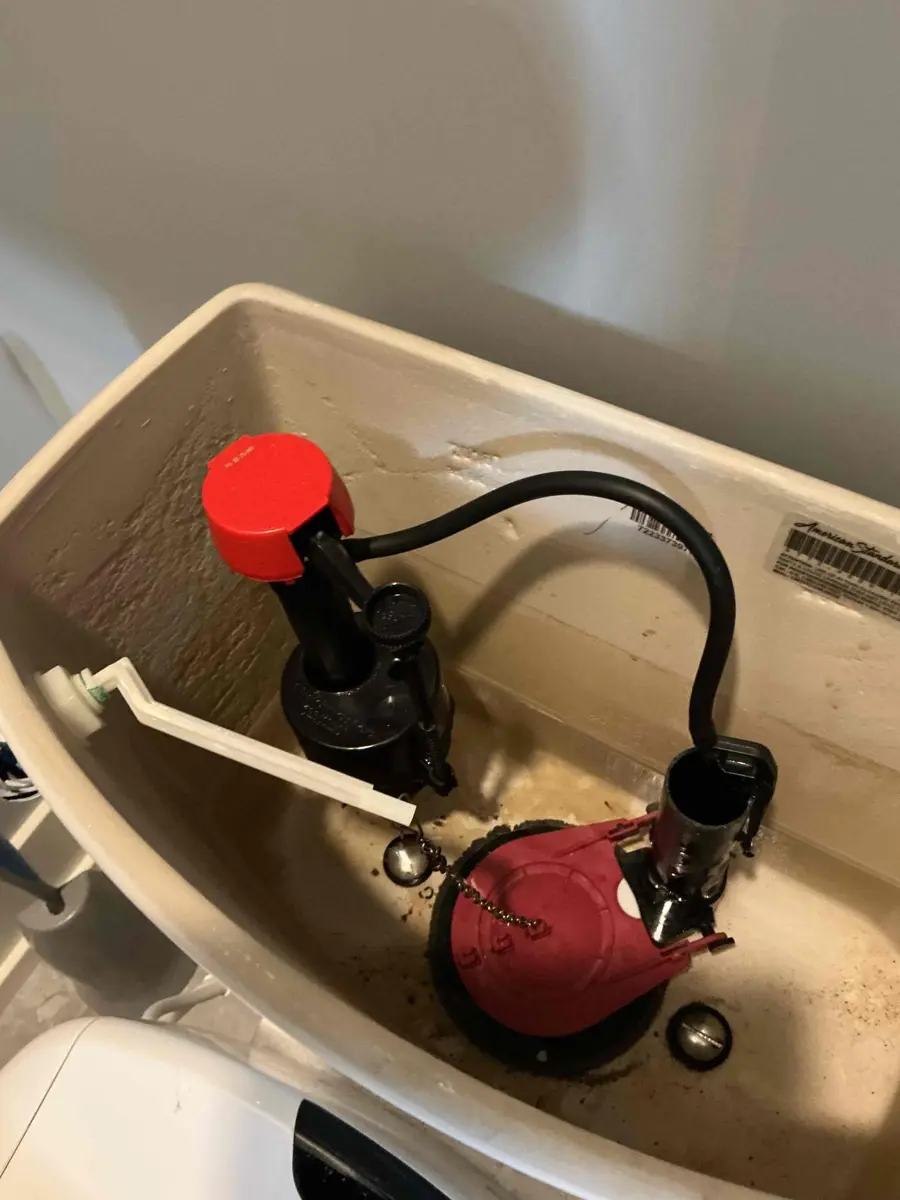
This is what a healthy setup looks like: the float cup is part of the fill valve body, and the refill tube is clipped to the overflow so the bowl gets topped off. If yours looks like this, the adjustment is a single screw or clip.
The thing to remember is that the tank level and the overflow height work together. The water should always stop below the top of the overflow tube, with a little room to spare.
Where should the water level be in a toilet tank?
Before you touch anything, look at the back wall of the tank. Many manufacturers print or mold a water line right into the porcelain. If your tank has one, follow it. It beats any generic number, because the maker sized the flush around that exact volume.
Here is one we found on a toilet repair in August 2026. The molded text reads "SET W/L 1 inch below overflow top".
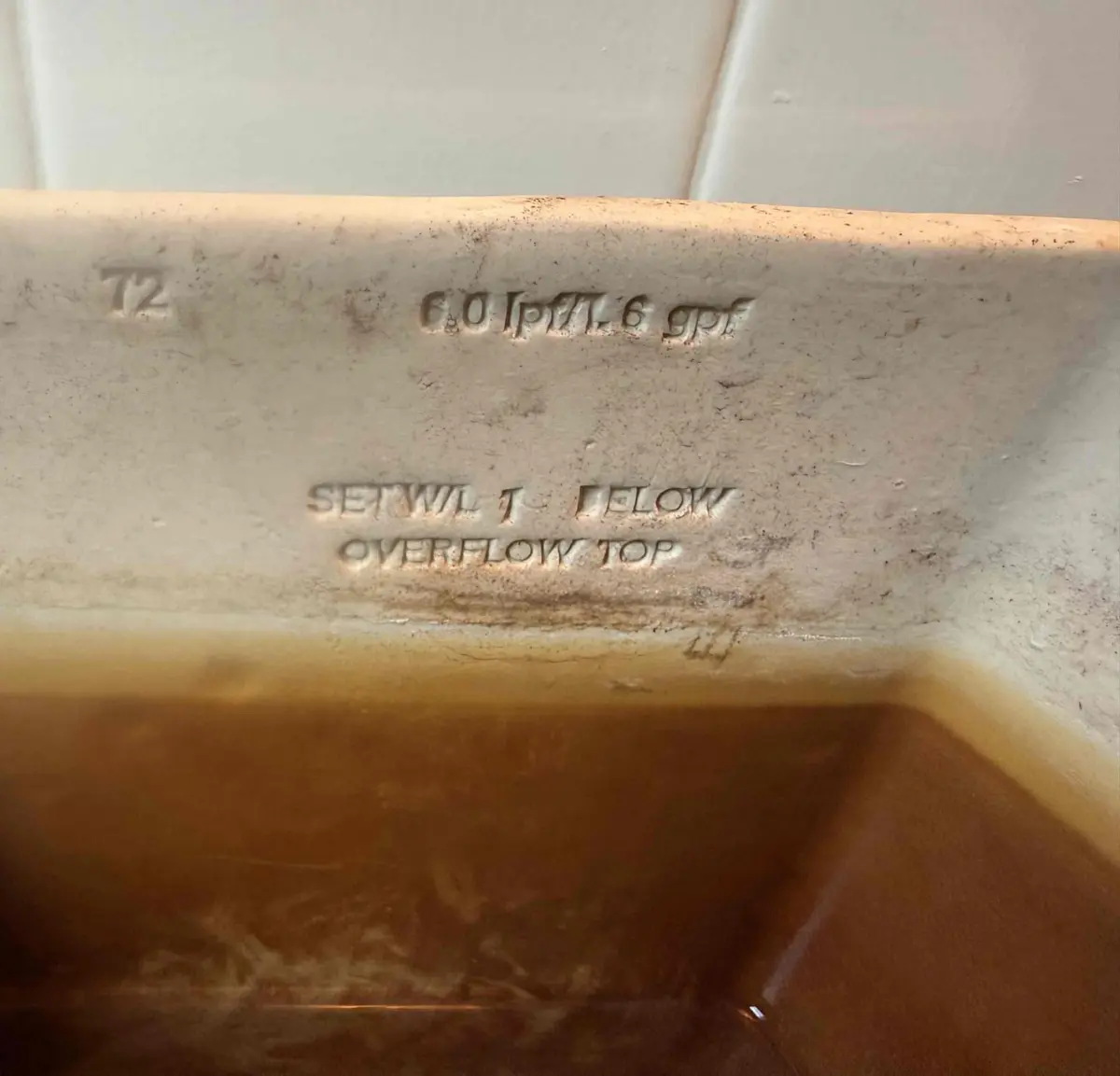
That molded line is the answer for this toilet: the water should stop one inch under the top of the overflow tube, not higher and not lower. Some tanks mark the line with a small stamped arrow or the letters "WL" instead of full words.
If your tank has no mark, use this rule of thumb:
- The water should stop about one inch below the top of the overflow tube.
- It should never reach the top of the overflow tube. If it does, water is draining into the bowl all the time and you are paying for it on your water bill.
- It should not sit more than two or three inches below the overflow either. That usually means a weak flush.
Why does an inch matter so much? Modern toilets are built to flush with very little water. The federal standard caps new toilets at 1.6 gallons per flush, and toilets with the EPA WaterSense label use 1.28 gallons or less.
When the tank is designed around that small volume, losing an inch of water can be the difference between a clean flush and a second flush.
How do you raise or lower the water level in a toilet tank?
This works on almost every float cup fill valve. Ball float steps follow in the next section.
Step 1: Find the water line or measure from the overflow.
Look for a printed or molded line on the back wall of the tank. If there is none, note where the water stops now compared to the top of the overflow tube. A ruler or the end of a tape measure works fine.
Step 2: Turn the water off at the valve behind the toilet.
You do not strictly need to, but it keeps the tank from refilling while your hands are in it. The shutoff is the small oval handle on the wall or floor behind the toilet. Turn it clockwise until it stops.
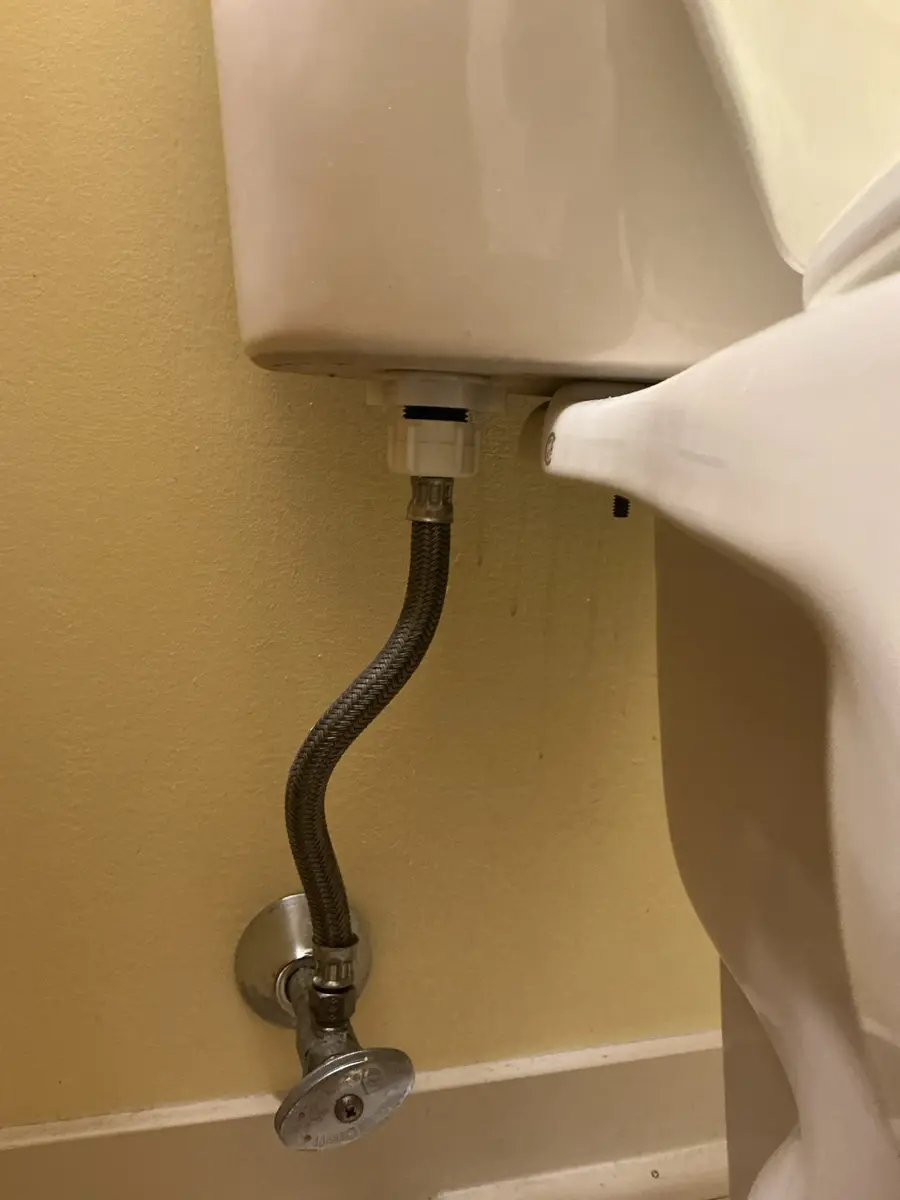
This small valve is the only shutoff you need for this job: turn the handle clockwise and the tank stops filling. If it will not turn or it drips once you move it, stop there and turn the water off at the main instead. Here is how to find your main water shutoff valve.
Step 3: Find the adjustment on the fill valve.
On most float cup valves, a thin plastic rod or a screw runs from the top of the valve down to the float cup. Turning it moves the cup up or down. Some brands use a clip on the side of the cup instead: squeeze it and slide the cup.
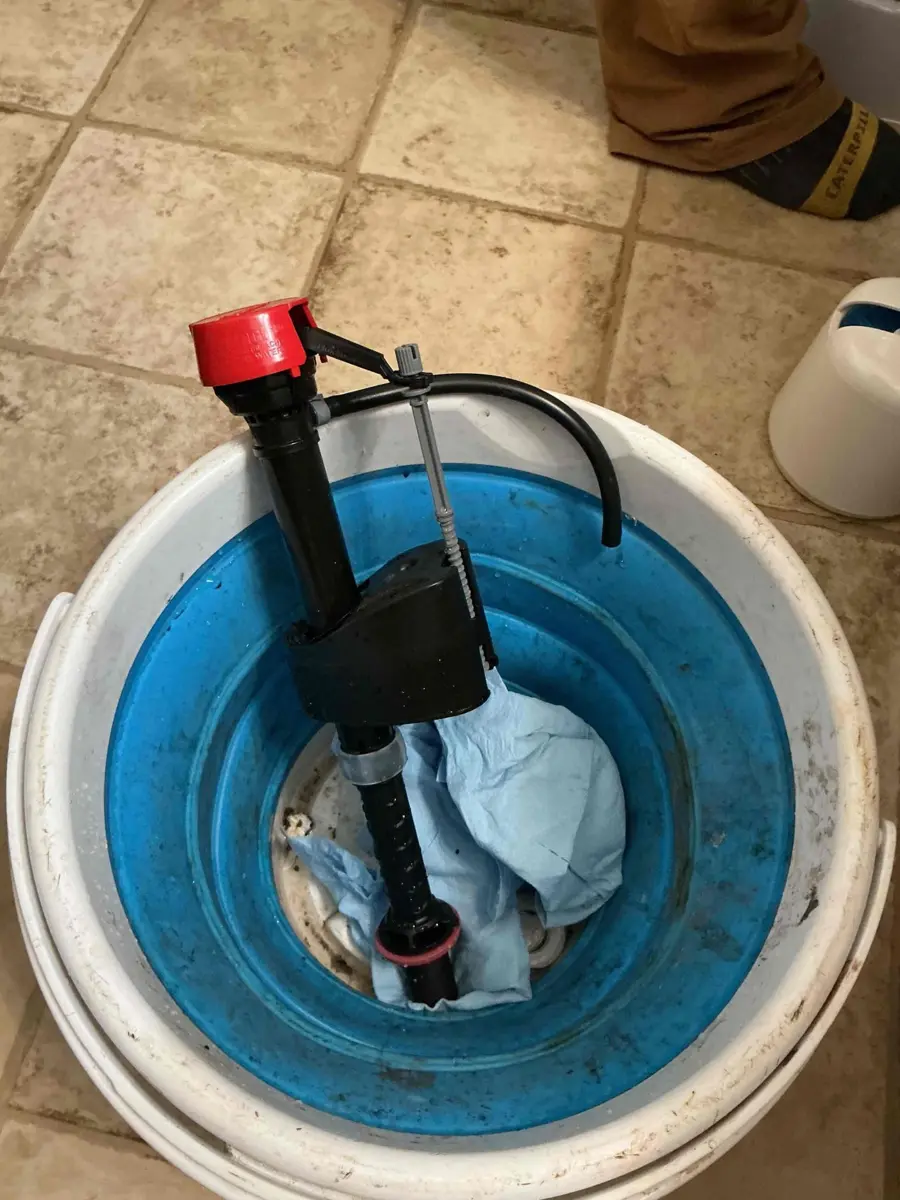
The thin rod running down the side of this fill valve is what you turn: it is the whole adjustment. This valve was pulled out on a toilet repair in December 2025, so you can see the full length of it.
Step 4: Turn it, a little at a time.
Turn the rod or screw clockwise to raise the water level and counterclockwise to lower it. Most brands follow that pattern, but check the arrows molded into the cap. Go a few turns, not a dozen.
Step 5: Turn the water back on and flush.
Let the tank refill all the way and watch where it stops. Compare it to your water line or to the one inch mark. If it is still off, repeat steps 4 and 5. It often takes two or three rounds.
Step 6: Listen for a minute.
When the tank is full, it should go quiet. If you still hear a hiss or trickle, look at the top of the overflow tube. Water spilling into it means the level is still too high.
What if your toilet has an old ball float?
Older toilets use a different design: a round float ball on the end of a long arm, attached to the top of the fill valve. Raising or lowering the water level means changing the angle of that arm.
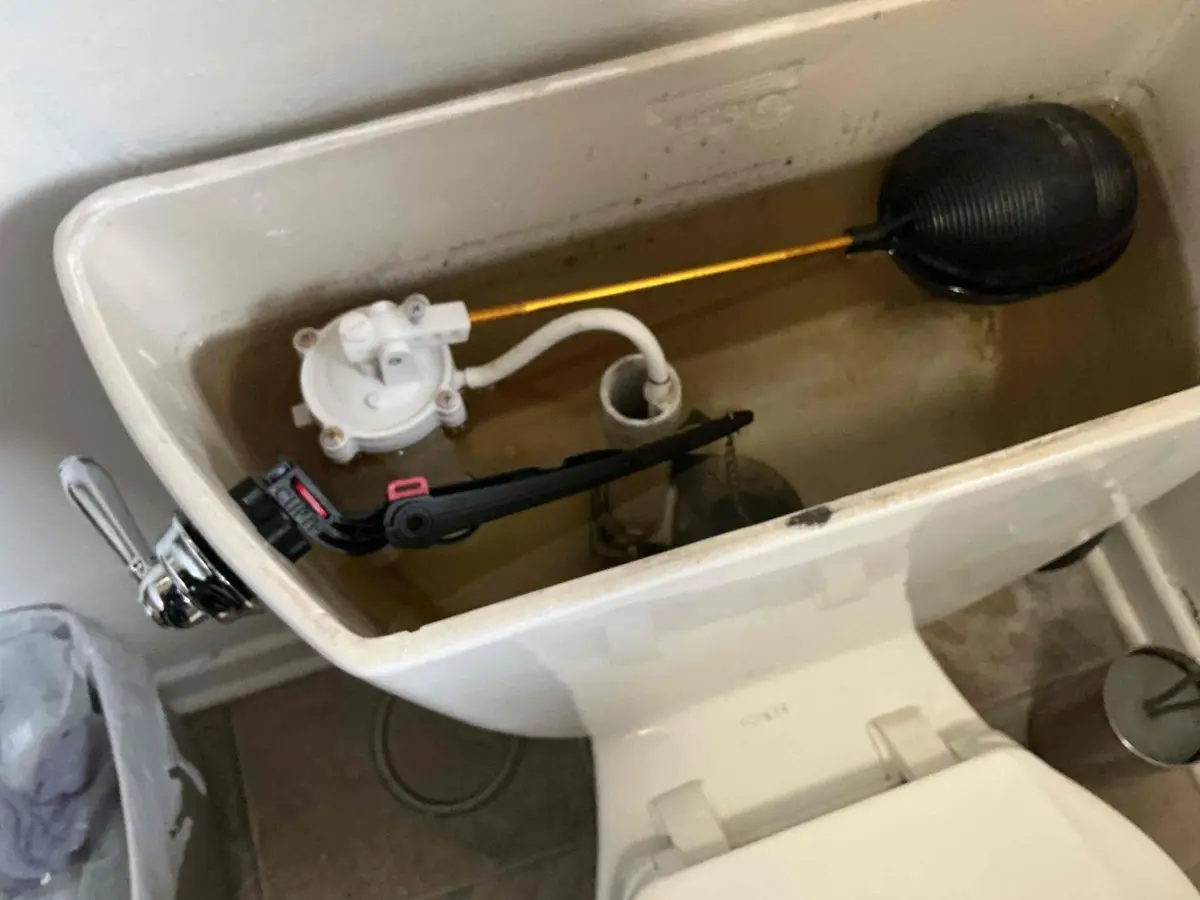
A long arm with a ball on the end means you have the older style of fill valve: you change the water level by adjusting the arm, and if the valve keeps acting up, replacing it with a modern float cup valve is the real fix.
This one came from a toilet repair in March 2026 where the fill valve had failed.
There are two ways the arm is adjusted:
- Adjustment screw. Many ball float valves have a screw on top where the arm meets the valve. Turn it to tilt the arm up (higher water) or down (lower water).
- Bending the arm. On older all brass versions, there is no screw. You hold the arm with both hands and bend it gently in the middle. Bend the ball end up to raise the water, down to lower it.
Also check the ball itself. Unscrew it and shake it. If you hear water inside, the ball has a leak, sits too low in the tank, and lets the valve run. Replacing just the ball is possible, but on a valve this old it rarely solves the problem for long.
Ball float valves are a common source of "I adjusted it and it still won't stop" problems. The valve seals wear out, mineral buildup from hard water makes the parts stick, and the arm loses its adjustment.
If yours keeps drifting, a modern float cup fill valve is a quicker, cleaner fix than fighting the old one. West Michigan's hard water is a big part of why these parts age early; here is more on what hard water does to your plumbing.
Why is the water in my toilet bowl low?
If the tank fills to the right level but the bowl still looks low, the problem is in the bowl or the drain. Here are the causes, from most common to least.
The refill tube came off. This is the first thing to check, because it costs nothing. The refill tube is the thin flexible hose running from the fill valve to the overflow tube.
During every refill, it sends a stream of water down the overflow to top off the bowl. If it has slipped off the clip, that water falls back into the tank and the bowl stays low.
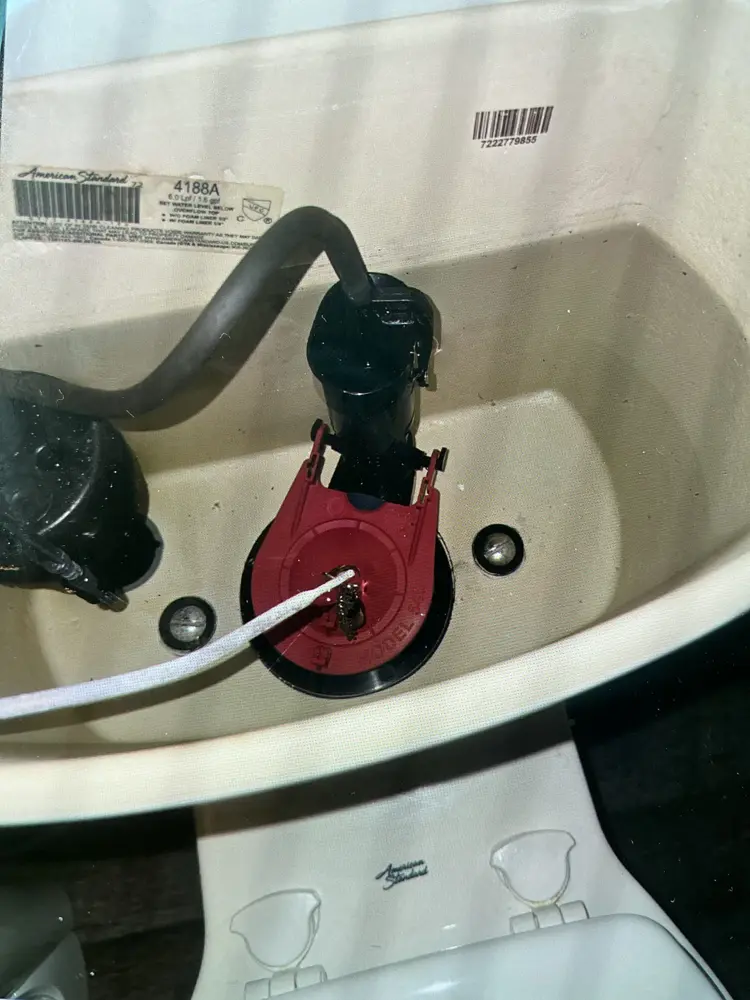
The refill tube should be clipped so it points into the overflow tube, just above the water: if it is loose, clip it back on and flush. This photo comes from a July 2026 repair where the tank would not stay full.
One detail matters here: the end of the refill tube should sit above the waterline, not under it. If the tube is pushed down into the overflow below the water, it can siphon tank water out and keep the toilet running.
A partial clog. A wad of toilet paper or a small object stuck partway down the bowl acts like a wick and slowly pulls water out. You will often see the bowl level drop over a few hours after a flush. A plunger usually fixes it.
A blocked vent. Every drain in your house connects to a vent pipe that runs through the roof. If that vent gets blocked by leaves, ice or a bird nest, flushing another fixture can suck water out of the toilet bowl.
Signs: the bowl gurgles or drops when you run the tub or a sink nearby. The Michigan plumbing code requires those vents for exactly this reason.
A crack in the bowl. A hairline crack in the porcelain below the waterline lets water seep out. Look for dampness on the floor around the base or a water level that drops slowly with no other cause. A cracked bowl cannot be patched reliably. It gets replaced.
What does a normal toilet bowl water level look like?
Once the tank is set right and the refill tube is in place, the bowl should refill to the same level every time.
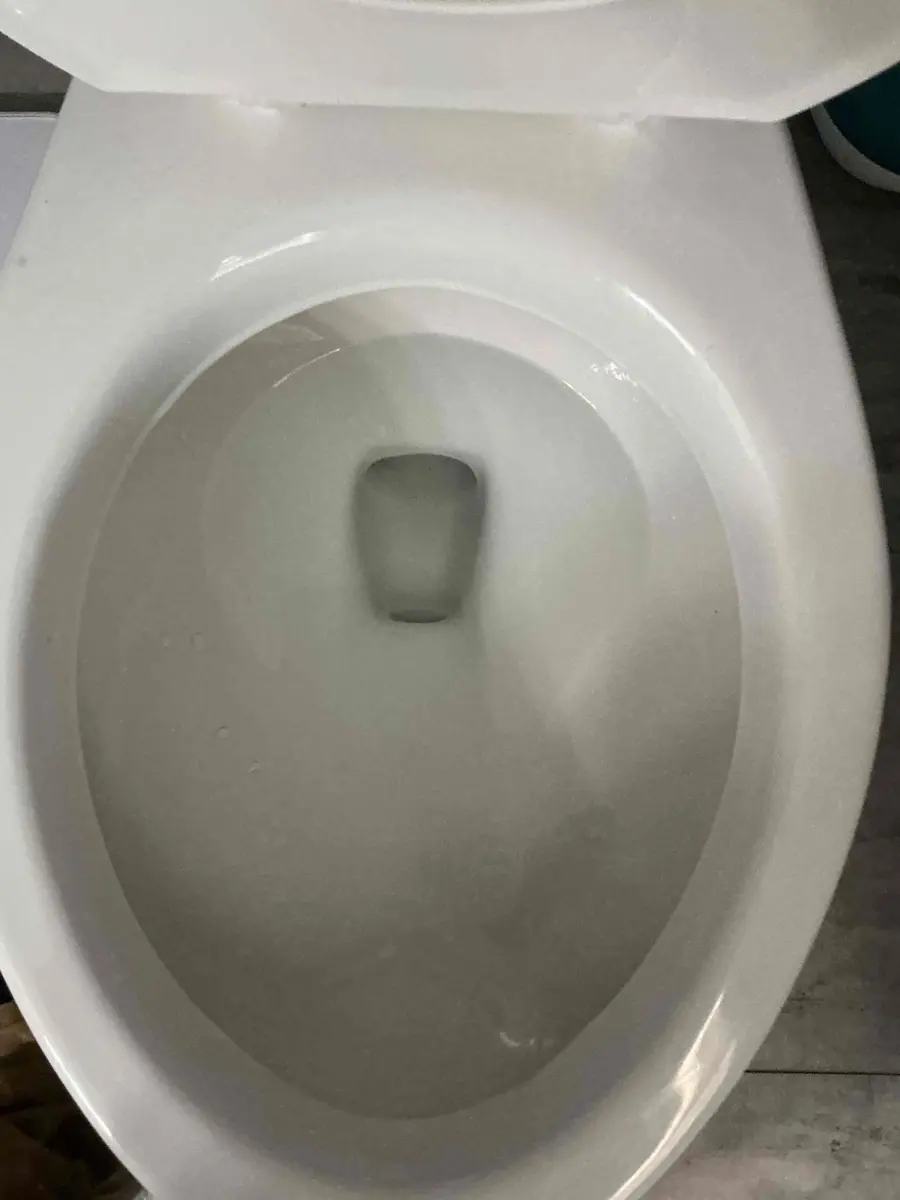
This is a normal bowl: the water covers the drain opening fully and sits a few inches up the sides, which keeps sewer gas out of the room. It was taken on a toilet repair in September 2025.
A few things to know about the bowl level:
- You cannot raise it much. The height is set by the curved passage molded into the porcelain. Once the water reaches the top of that curve, any extra simply spills down the drain. Pouring in more water just runs it off.
- Different toilets sit at different heights. Some modern bowls hold less standing water by design. If yours always looked like this, it is normal for that model.
- A sudden change is the warning sign. If the bowl used to sit higher and now sits lower, something changed: the refill tube, a clog, the vent or a crack.
If the bowl is too high instead, or the water rises and drains slowly after a flush, you are looking at a partial clog, not a water level issue. Plunge it first.
If that does not clear it, or if other drains in the house are slow at the same time, the problem may be further down the line. Our drain cleaning service page explains how we find out.
When should you call a plumber about toilet water level?
Most water level problems are fixed with the adjustment screw and the refill tube clip. Call a plumber when one of these is true:
- You adjusted the float and the tank still fills too high or too low. The fill valve itself has worn out. Replacing a fill valve is a common repair, but getting the right size, sealing the bottom nut and setting the height takes some feel. Over tightening can crack the tank.
- The tank fills very slowly or only trickles. The valve may be clogged with sediment or the supply line may be kinked.
- The bowl drops on its own with no clog. That points to a cracked bowl or a vent problem, and neither is a plunger job.
- There is water on the floor. A leak at the base, the supply line or the bolts between tank and bowl can damage the subfloor fast. Turn the shutoff off and call.
- You hear the toilet refilling on its own every so often. That is water leaking from the tank into the bowl. It is a running toilet problem; here is our guide to a running toilet, and the EPA has a simple dye test you can try.
A silent leak in a toilet can waste a surprising amount of water. If your bill jumped and you are not sure why, read why your water bill is so high before you call anyone.
How do I raise the water level in my toilet bowl?
Raise the tank level first by turning the adjustment screw or rod on the fill valve clockwise, then check that the refill tube is clipped to the overflow tube. The bowl level itself is set by the shape of the porcelain, so a correct tank level and a working refill tube are what bring it back.
How far below the overflow tube should toilet water be?
About one inch below the top of the overflow tube, unless your tank has a printed or molded water line. If it does, follow that line, because the manufacturer sized the flush around it.
Why does my toilet bowl water level drop after a few hours?
A slow drop usually means a partial clog wicking water out, a blocked roof vent, or a hairline crack in the bowl. Try a plunger first. If the level still drops, or the bowl gurgles when other drains run, have a plumber check the vent and the porcelain.
Can I lower the water level to save water?
Only a little. Modern toilets are designed to flush with a set volume, so dropping the level far below the mark usually leads to double flushing, which uses more water. If you want to save water, a WaterSense labeled toilet is the better route.
Why won't my toilet tank fill all the way?
The float may be set too low, the fill valve may be clogged with sediment, or the shutoff valve behind the toilet may be partly closed. Open the shutoff fully, then raise the float. If the tank still only trickles, the fill valve needs cleaning or replacement.
What if the water goes into the overflow tube?
Then the level is set too high or the fill valve is not shutting off. Lower the float a few turns and flush. If water still spills into the overflow with the float at its lowest setting, the fill valve is worn out and should be replaced.
Need help with a toilet in West Michigan?
NSP Plumbing is a licensed Michigan plumbing contractor (license #8004990) based in Wyoming, Michigan. We fix running toilets, slow tanks, weak flushes and leaking bases regularly, and we replace fill valves and full toilets when a repair no longer makes sense. See our toilet repair and installation service and our broader plumbing repair service.
We serve Grand Rapids, Wyoming, Kentwood and the surrounding towns. Have a question first? Contact us and a real person will answer.
Toilet still not filling right?
Tell us what the toilet is doing. A licensed NSP plumber will come out, find out whether it is the fill valve, the refill tube or something in the bowl, and give you the repair price before any work starts.