
A water bill that suddenly jumps is one of the most common reasons people call us without knowing what is actually wrong. Nothing looks wet, nobody changed their habits, and the number still went up.
When a water bill is suddenly high, the cause is almost always a leak you cannot see, and the most common one is a running toilet. You can confirm it yourself in about 15 minutes with your water meter and a few drops of food coloring, before you pay anyone to look.
Why is my water bill so high?
There are really only three explanations for a bill that jumps, and it pays to rule them out in order.
1. You used more water. A new person in the house, a pool fill, a new lawn, a sprinkler timer that got bumped, or a long run of laundry for a new baby can all add up. Think back over the billing period before you assume a leak.
2. The bill itself changed. Utilities sometimes estimate a reading instead of reading the meter, then catch up the next time someone reads it for real. Rates also change. Look at the gallons or units used on the bill, not the dollar amount, and compare it to the same month last year.
3. Water is leaving the house without you using it. This is the one that keeps going month after month until someone finds it.
The EPA's WaterSense program estimates the average household loses more than 9,300 gallons a year to leaks, and that nine percent of homes have leaks wasting 50 gallons or more every day (EPA Fix a Leak Week).
The fastest way to sort the third case from the first two is the meter test in the next section. If the meter moves while nothing in the house is running, you have a leak, full stop.
If it sits still, the problem is usage or billing, and a plumber cannot fix either one. That is worth knowing before you book anyone, us included.
How do I check my water meter for a leak?
Your water meter is the one honest witness in the house. It records every gallon that comes in from the street, whether you used it or it dripped away.
In most Grand Rapids area homes the meter sits in the basement where the water line comes through the foundation wall, usually near the front of the house. In some newer homes or crawl space homes it is in a pit in the yard under a small round lid.
If you cannot find yours, our guide to finding your main water shutoff valve walks through the usual spots, because the meter and the main shutoff are almost always side by side.
Step 1: Turn off every fixture and appliance that uses water. That means faucets, the dishwasher, the washing machine, the ice maker, any water softener that might be regenerating, and the sprinkler system. Do not shut off the main valve. The whole point is to leave the house pressurized so a leak keeps running.
Step 2: Find the low flow indicator on the meter face. Most residential meters have a small triangle, star or tiny dial that spins with even a trickle of flow. On the meter below it is the small red dial above the number wheels.
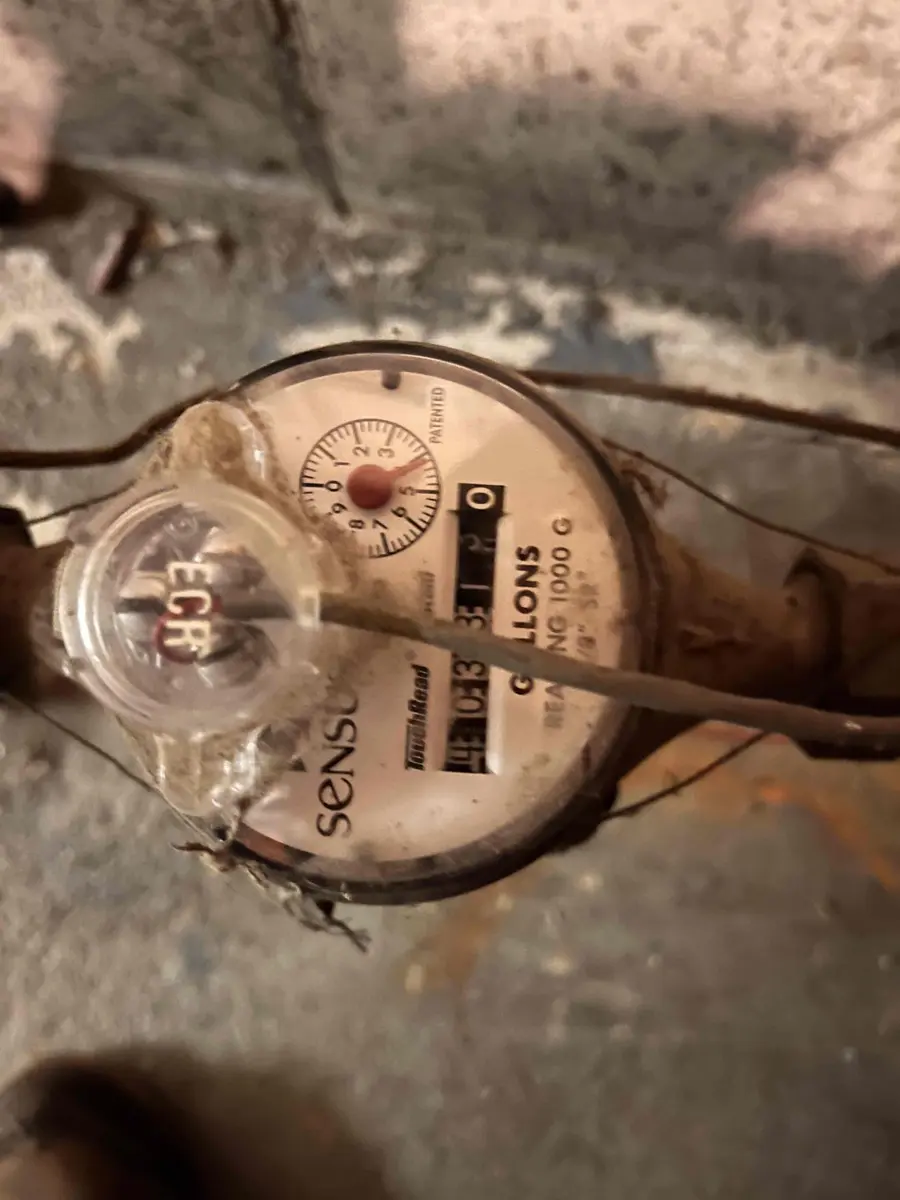
The small red dial on this meter is the one that matters. If it turns while every fixture is off, water is leaving the house somewhere. This is the meter from a rental where the tenant told us the meter kept running even when nobody was using water.
Step 3: Write down the reading and wait. Note the full number on the wheels, or take a phone photo of the dial. Wait at least 15 minutes. The EPA suggests a longer test of two hours with no water use if you can manage it, which catches very slow leaks (EPA Fix a Leak Week).
Step 4: Read it again. If the reading or the low flow dial has moved, you have a leak. If nothing moved, you most likely do not have a constant leak, and the bill is a usage or billing question for your water department.
Is the leak inside the house or outside?
Once the meter tells you there is a leak, the next question is which side of the house it is on. That one answer decides whether this is a quick repair or a dig.
Most homes have a main shutoff valve right next to the meter, on the house side. Turn that valve off, then watch the meter again.
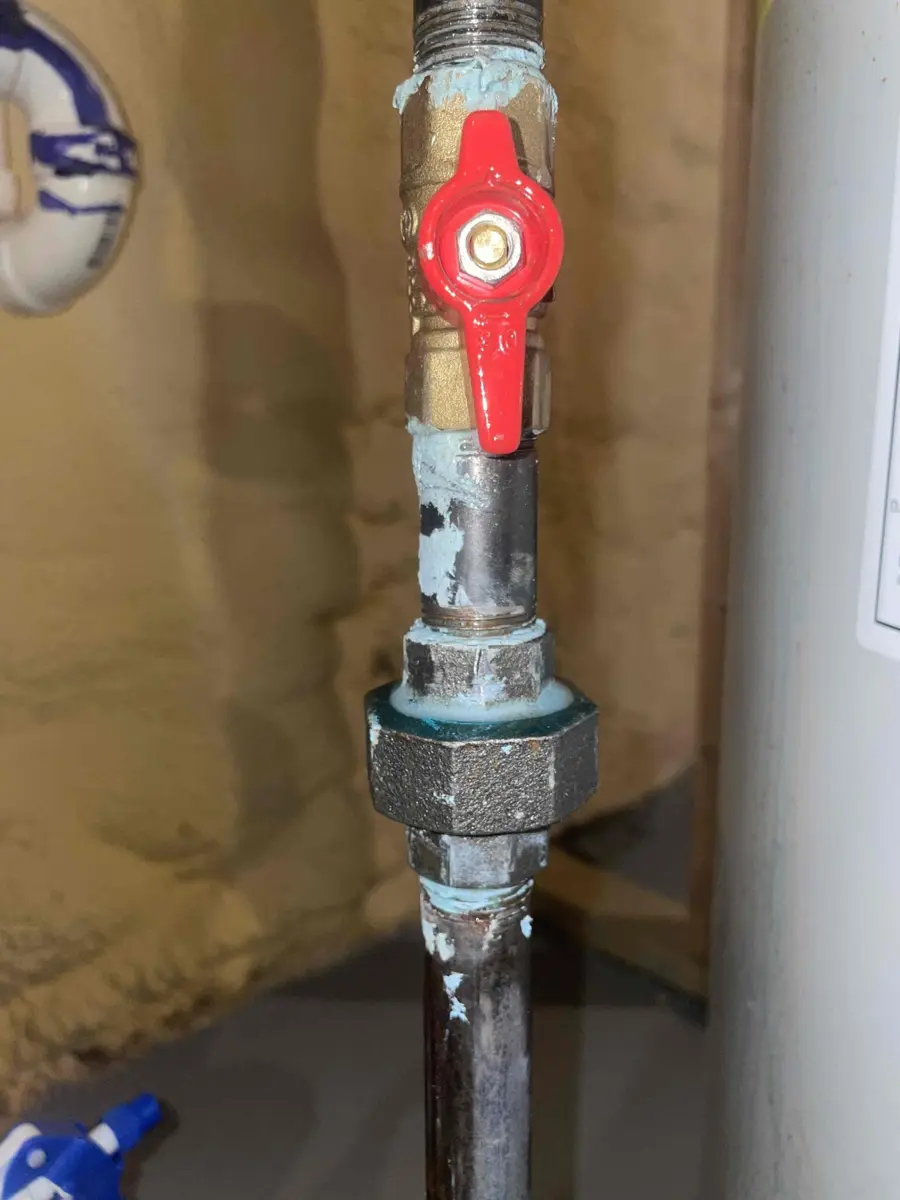
A shutoff like this red handled ball valve closes with a quarter turn. On the house side of the meter, it is how you tell an inside leak from an outside one. This one came from a vacant home where we were also asked to replace the old shutoff valve at the water meter.
If the meter stops once that valve is closed, the leak is inside the house: a toilet, a faucet, the water heater, a softener, or a pipe in a wall or ceiling. That is good news. Inside leaks are usually cheaper and faster to fix.
If the meter keeps moving with the house valve closed, water is escaping between the meter and the street, which usually means the underground line to your house. That one needs a professional, and we cover it further down.
One caution. Old gate valves, the kind with a round wheel handle, often do not close all the way after decades of sitting open. If the valve is stiff or the meter slows but does not stop, do not force it.
A valve that breaks in your hand turns a slow leak into a fast one. Call us and we will test the line without forcing anything.
Is my toilet the reason my water bill is high?
If we had to bet on one cause before walking in the door, it would be a toilet. It is the most common thing we find on high water bill calls, by a wide margin, and it is the easiest to miss because the water goes straight down the drain with no puddle.
A toilet tank holds water behind a rubber seal at the bottom called a flapper. When the flapper hardens, warps or gets stuck on its chain, water slowly seeps into the bowl.
The fill valve, the tall part on the left side of the tank that refills it, then turns on to top it back up. That cycle can run all day and night. The EPA notes a worn flapper can silently leak thousands of gallons a year (EPA Fix a Leak Week).
Do the dye test. Take the lid off the tank, wait for the toilet to finish filling and go quiet, and add a few drops of food coloring to the tank. Do not flush.
The City of Grand Rapids says that if color shows up in the bowl within 15 to 30 minutes, the toilet is leaking (City of Grand Rapids water leak detection). Flush when you are done so the dye does not stain the tank.
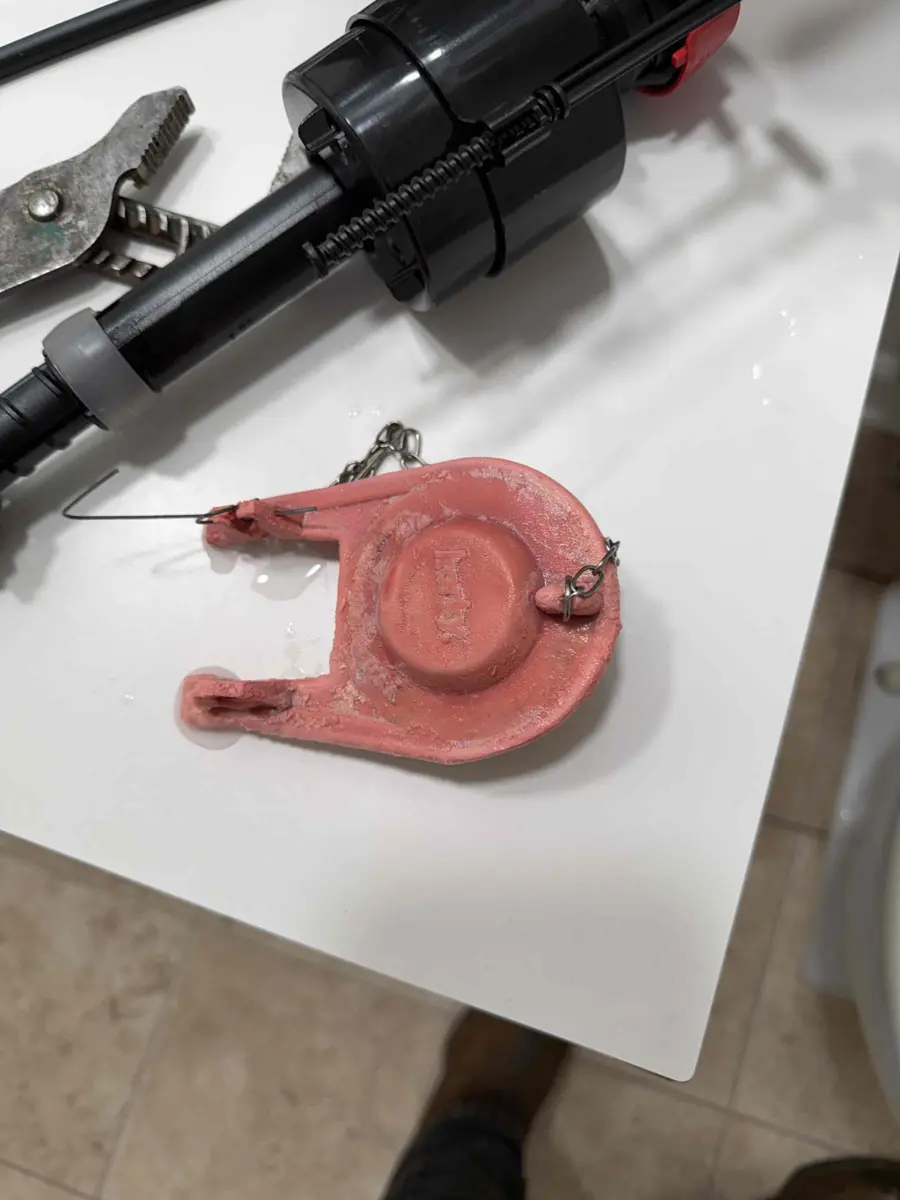
This flapper is done: the rubber has gone chalky and stiff, so it no longer seals against the bottom of the tank. On this job the flapper was the part going bad, and the customer chose to replace all the parts inside the tank at the same visit.
Do this test on every toilet in the house, including the one in the basement nobody uses. Rarely used toilets are often the worst offenders because nobody hears them run.
One homeowner who called us had already tried the food coloring test and found the dye showing up in the downstairs toilet before we arrived. That is exactly the kind of head start that shortens a service call.
What else inside the house can run up a water bill?
If every toilet passes the dye test but the meter still moves with all fixtures off, work through these next. Each one can waste water without leaving an obvious puddle.
The fill valve and overflow tube. Sometimes the flapper is fine but the fill valve does not shut off, so water trickles down the overflow tube, the open pipe in the middle of the tank. Look inside the tank.
If the water level is at or over the top of that tube, the fill valve needs adjustment or replacement. Our guide on why your toilet keeps running covers both fixes, and how a toilet works explains the parts.
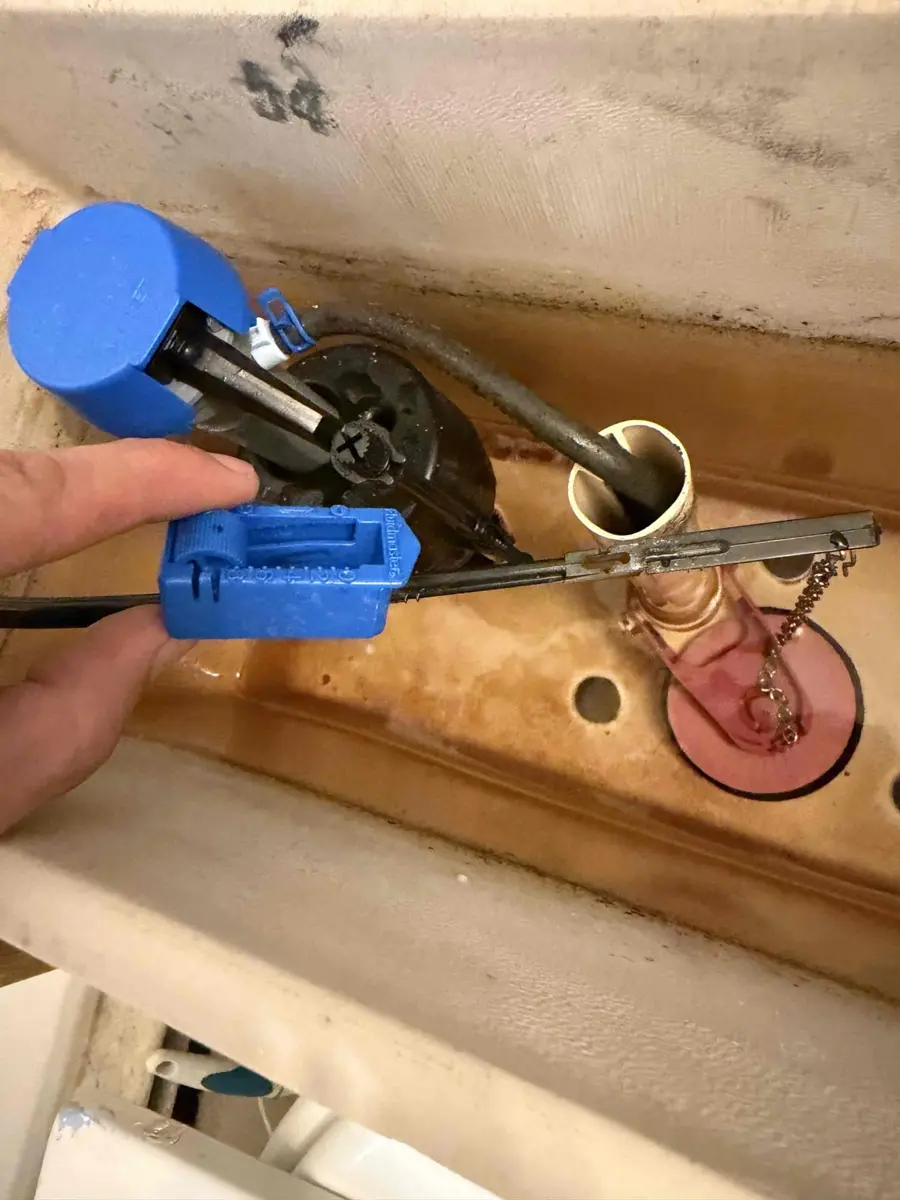
Inside a running toilet: the blue fill valve on the left, the overflow tube in the middle and the flapper at the bottom. If the water climbs over that tube, the fill valve is the problem, not the flapper. This homeowner told us their toilet kept running and would only flush if they took the lid off.
Faucets and tub spouts. A faucet dripping once a second wastes more than 3,000 gallons a year, according to the EPA (EPA Fix a Leak Week). We regularly see tub spouts that run a thin steady stream even with the handle off, which usually means the valve inside the wall has worn out.
The water heater relief valve. Every tank water heater has a safety valve near the top, called a temperature and pressure relief valve, that lets out water if the tank gets too hot or too pressurized. A pipe runs from it down toward the floor.
If that pipe drips or is wet at the end, the valve is opening when it should not, and that water is on your bill. Michigan's plumbing code requires that discharge pipe to end where you can see it (Michigan Plumbing Code, chapter 5) for exactly this reason.
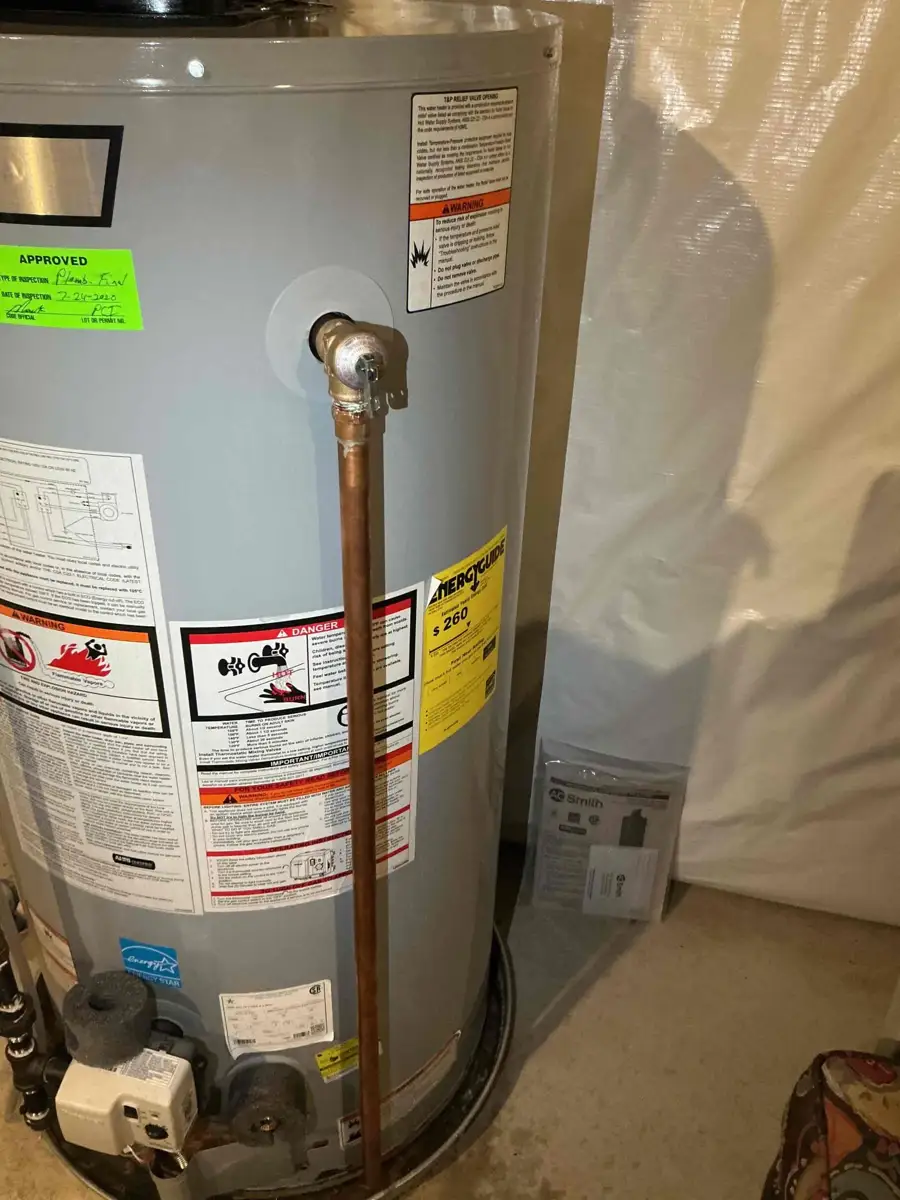
Check the bottom end of this copper pipe. Dry is normal. Dripping or a wet spot under it means the relief valve is letting water out and needs a plumber to find out why. This photo is from a water heater leaking into its pan on a visit across the Grand Rapids area.
Water softeners. A softener that is stuck in its rinse cycle can send water down the drain for hours. If the softener drain line is still running when nothing in the house is using water, have it looked at. If yours is undersized, it also regenerates more often than it should, which our water softener sizing guide explains.
Could a sprinkler system be raising my water bill?
In summer, yes, and it is easy to miss because the leak is outside and underground.
The EPA estimates an irrigation leak about the size of a dime's thickness can waste around 6,300 gallons a month, and a poorly maintained automatic system can waste up to 25,000 gallons a year (EPA WaterSense statistics and facts).
Common causes are a sprinkler head cracked by frost, a zone valve that does not fully close, and a controller whose schedule got reset after a power outage.
Signs your sprinkler system is the culprit:
- The bill jump lines up with when you turned the system on for the season.
- One patch of lawn stays greener or soggier than the rest.
- Water runs out of a head or down the driveway when the system is supposed to be off.
- The meter keeps moving with every indoor fixture off and the house valve open, but stops when you shut off the irrigation supply valve.
Sprinkler systems in our area connect to your drinking water through a backflow preventer, a device that keeps lawn water from being pulled back into the house supply. Those devices need periodic testing, and a leaking one can also run up a bill.
We handle backflow testing. Many homeowners with big lawns also ask their city about a separate irrigation meter so sprinkling water is measured on its own. That decision depends on your city's billing rules, so call your water department first.
How do I know if my underground water line is leaking?
If the meter keeps moving after you close the shutoff on the house side, the water is most likely leaving through the underground line between the street and your house. This is the leak homeowners fear most, and it is also the one people most often guess wrong about.
Signs that point to an underground water line leak:
- A wet or unusually green strip of lawn between the house and the street, even in dry weather.
- A soft or sunken spot in the yard along the path of the line.
- Lower water pressure than you used to have, everywhere in the house.
- The sound of running water near where the line enters the basement when nothing is on.
- Water seeping through the basement wall right where the water line comes in.
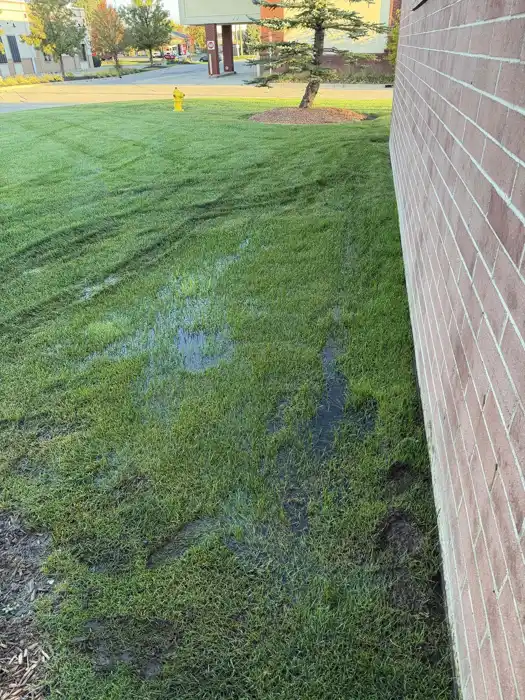
A patch of lawn that stays soggy when everything around it is dry is a strong sign of an underground water leak, not a drainage problem. This property owner called us after a high water bill and an area by the building that never seemed to dry out.
Older homes in Grand Rapids often still have galvanized steel water lines, steel pipe with a zinc coating that rusts from the inside over decades. Those lines tend to fail with pinholes rather than one big break, which is why the bill climbs slowly instead of all at once.
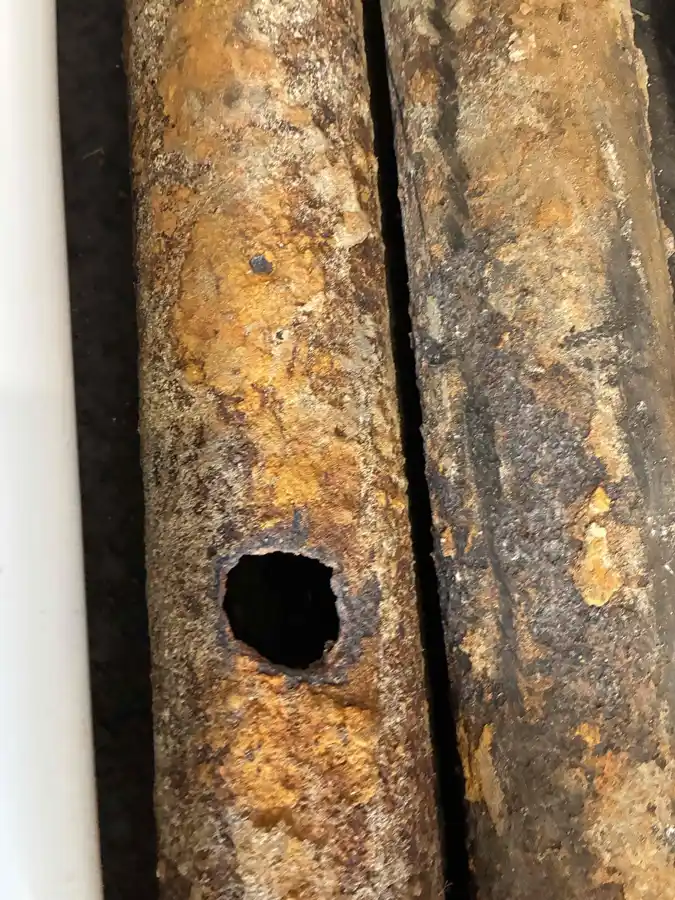
This is what a failed galvanized line looks like once it is out of the ground: rust ate a hole straight through the pipe wall. A line in this shape gets replaced, not patched. We pulled these sections out on an underground water line leak job.
Who pays for a leak on the water line to my house?
This depends on exactly where the leak is, and the line is split in a way most people do not expect.
In Grand Rapids, the city owns the line from the water main in the street up to the curb stop, which is a small shutoff valve buried near your property line.
The city also owns the meter itself and the couplings on either side of it. From the curb stop to your house, and everything inside the house, belongs to the property owner (City of Grand Rapids homeowner responsibility).
That means two things for your bill:
If the leak is at the meter or on the street side of the curb stop, call your water department first. In Grand Rapids that is 311 or 616 456 3000, and the city says it will replace a leaking lead service line at no cost to the owner (City of Grand Rapids water leak detection).
If the leak is between the curb stop and your house, it is yours to repair, and that is where we come in with water line repair.
Two more points worth knowing. Grand Rapids also offers a water leak credit in some cases, so once the leak is fixed, ask the city whether your bill qualifies (City of Grand Rapids water leak detection).
Keep your repair invoice for that request. And if you live in Wyoming, Kentwood or another nearby city, the split is similar but the details differ, so confirm with your own water department before assuming.
When should I call a plumber about a high water bill?
You can do the meter test and the dye test yourself, and you should. They cost nothing and they often find the answer. Call a plumber when:
- The meter moves with everything off but every toilet passes the dye test.
- The meter keeps moving after you close the main shutoff, which points underground.
- You see water stains on a ceiling or wall, or hear water running inside a wall.
- The water heater relief pipe is dripping.
- Your main shutoff valve will not close or is leaking itself.
- You own a rental or a multi unit building and need every unit checked at once.
On a high water bill visit, our technician starts with the same meter test you just read about, then works fixture by fixture through toilets, faucets, tub spouts, the water heater, any softener and the visible pipes.
On rental properties we often check every unit and the laundry in one trip. If everything inside passes, we move to the line between the house and the street and use leak detection tools to find the spot before anyone digs.
The goal is to find the leak before we fix anything. Most high bill calls end with a toilet repair, not a trench. If your meter stopped when you closed the house valve, you almost certainly do not need anyone digging up your yard.
Once it is fixed, an automatic water shutoff is worth a look if you travel or own a rental. It watches the flow and closes the main if water runs when it should not.
Why did my water bill double when nothing changed?
The most common cause is a toilet that runs silently because its flapper no longer seals. Do the meter test with every fixture off. If the meter moves, put food coloring in each toilet tank and watch the bowl for 15 to 30 minutes. Color in the bowl means that toilet is leaking.
How much water can a running toilet waste?
A lot more than people expect. The EPA says a worn flapper can silently leak thousands of gallons a year, and a toilet that runs constantly wastes far more than a slow seep. Because the water goes straight down the drain, there is no puddle to warn you.
How do I read my water meter to check for a leak?
Turn off every fixture and appliance, find the small triangle, star or dial on the meter face, and note the reading. Wait at least 15 minutes without using water. If the reading or the small dial moved, water is leaving the house somewhere.
Can a water heater cause a high water bill?
Yes. If the relief valve near the top of the tank keeps opening, water runs out of the discharge pipe that ends near the floor. Check the end of that pipe. Any steady drip or wet spot means the valve needs a plumber to find out why it is opening.
Is an underground water line leak my responsibility?
In Grand Rapids, the city owns the line from the main to the curb stop near your property line, plus the meter. From the curb stop to the house is the owner's responsibility. Other cities split it similarly, but confirm with your own water department.
Will the city credit my bill for a leak?
Grand Rapids says it can credit your account in some cases when a leak caused the higher bill. Fix the leak first, keep the repair invoice, and then request the credit from the city. Other cities have their own rules.
Can a sprinkler system leak raise my water bill?
Yes. The EPA estimates a small irrigation leak can waste around 6,300 gallons a month. If your bill jumped when the sprinklers started, look for soggy patches, heads that drip when the system is off, and a controller schedule that was reset.
NSP Plumbing finds the leak behind a high water bill
NSP Plumbing is a licensed Michigan plumbing contractor, license #8004990, based in Wyoming and serving homes and rental properties across Grand Rapids, Wyoming, Kentwood, Grandville, Jenison, Byron Center, Caledonia, Walker, Rockford and Hudsonville.
If your meter moves with everything off, we will track down where the water is going, starting with the toilets and fixtures and only moving outside when the inside checks out.
That includes toilet repair, water heater service, water line repair and leak detection. You get a written price before any work starts. You can also reach us through our contact page.
Water bill higher than it should be?
Tell us what your meter is doing and when the bill jumped. A licensed NSP plumber will check every toilet, faucet and the water heater, show you what is leaking, and give you a written price before any repair.