


Softeners are sold by grains, a number most people have never heard of. You can work out your own in a few minutes. A family of four on Grand Rapids city water uses about 19,000 grains of hardness a week, so the right size comes from your water test and your household.
What Size Water Softener Do I Need?
Softener size is not about the size of your house or your water heater. It is about how much hardness your family pushes through the pipes before the softener has to clean itself. That cleaning cycle is called regeneration: the softener rinses its tank with salty water to recharge, then goes back to work.
The formula Penn State Extension publishes is simple:
Hardness in grains per gallon x 75 gallons per person x number of people = grains used per day.
Multiply that by the number of days you want between regenerations, usually about 7, and you have the capacity your softener needs to deliver at the salt setting you plan to run.
Here is the math for a family of four on Grand Rapids city water. The city's 2025 tap water averaged 8.3 grains per gallon. Round up to 9 for safety, since the city's own range ran as high as 9.6.
- 9 grains x 75 gallons x 4 people = 2,700 grains a day
- 2,700 x 7 days = 18,900 grains a week
So that family needs a softener that can deliver roughly 19,000 to 20,000 grains between weekly regenerations.
A unit sold as 32,000 grains is usually the right fit, because the number on the box is measured at the heaviest salt setting. Run at a thriftier salt setting, it delivers less, which is fine as long as it still covers your weekly number.
Now the same family on a well that tests 20 grains hard, which is a real result we saw on a well this summer:
- 20 x 75 x 4 = 6,000 grains a day
- 6,000 x 7 = 42,000 grains a week
That house needs a much bigger softener, which is why the 45,000 grain high efficiency unit is a size we install regularly on well water. Same family, same house size, more than twice the softener. That gap is the whole reason a water test comes first.
If you take one thing from this guide, make it this: never size a softener from the number of bathrooms or a salesperson's guess. Size it from a hardness number you can see on paper.
What Is a Grain, and How Do I Find My Water Hardness?
Hardness is dissolved calcium and magnesium, the minerals that leave white crust on faucets, spots on glasses and scale inside your water heater. It gets measured two ways, and the two numbers confuse a lot of people.
Grains per gallon (gpg) is what softener makers use. One grain is a tiny amount of mineral, about the weight of a grain of wheat.
Parts per million (ppm), also written mg/L, is what city water reports and labs use. To convert, divide ppm by 17.1. So 142 ppm divided by 17.1 is about 8.3 grains per gallon.
Penn State's classification puts water from 7 to 10.5 grains per gallon in the "hard" category and anything above 10.5 in "very hard." By that scale, Grand Rapids city water sits solidly in "hard."
Where to get your number depends on your water source.
On city water, look up your utility's annual water report. Grand Rapids publishes an average water analysis every year with hardness listed in both mg/L and grains per gallon. Wyoming, Kentwood and other systems publish their own reports, and hardness can differ from one system to the next, so use your own utility's number, not a neighbor's.
On a private well, there is no report. You need a test, and wells around West Michigan vary a lot, even between houses on the same road. A well test should cover hardness and iron at minimum, because iron changes the sizing math (more on that below).
A quick pen meter is a useful first screen, but read it for what it is. The meter below measures total dissolved solids, which is everything dissolved in the water, not just hardness.
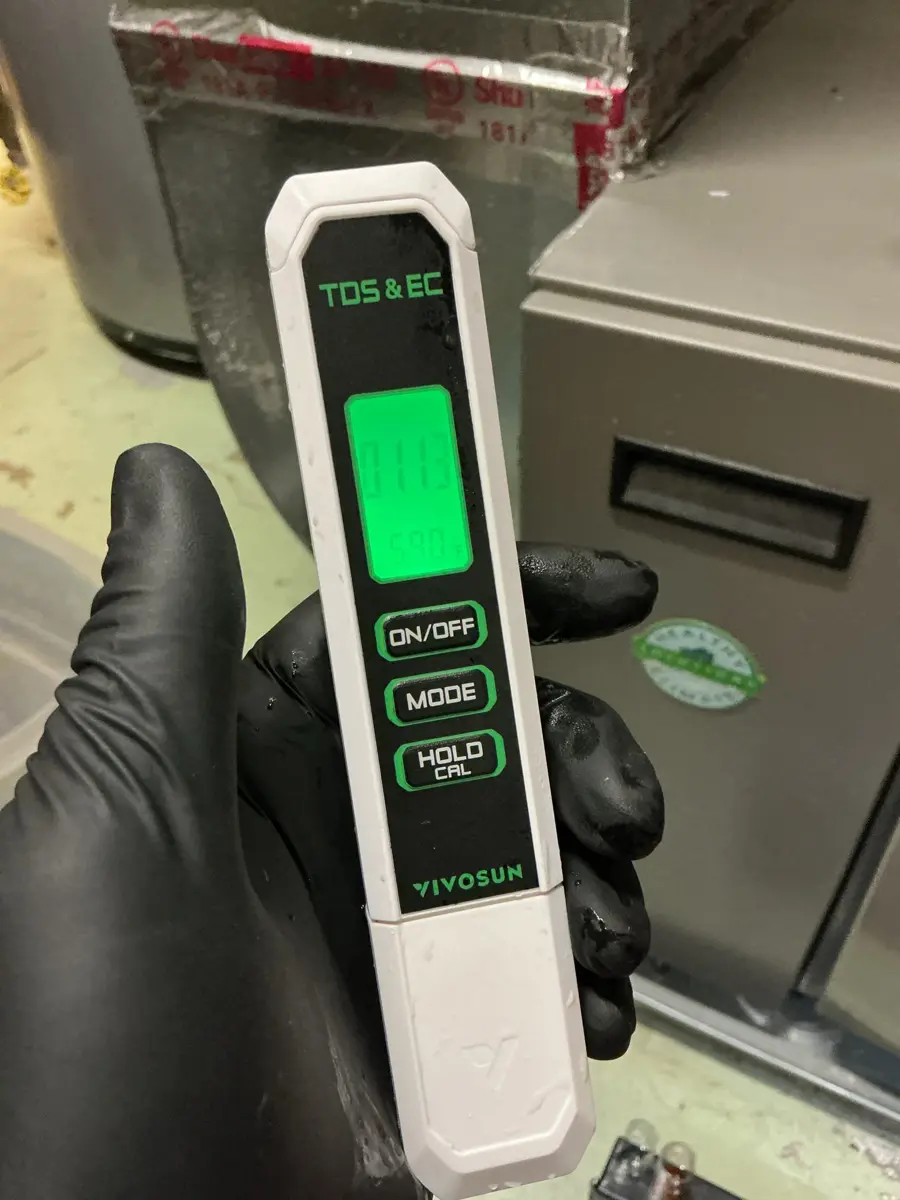
A total dissolved solids reading tells us the water is carrying a lot of minerals, but it is not a hardness number. We use it as a first look, then confirm hardness with a proper test before anyone picks a softener size.
Test strips from the hardware store work as a rough check too. If a strip reads high and you are about to spend real money on equipment, get a proper hardness test. A few grains of error, multiplied by 75 gallons and every person in the house, adds up fast.
What Are the Parts of a Water Softener?
Before you do the math, it helps to know what you are sizing. A standard home softener has three main parts, and the grain rating mostly describes the first one.
The resin tank is the tall tank. It is filled with resin, small plastic beads that grab calcium and magnesium out of the water and swap in sodium. More resin means more grains of capacity. Tank size is printed on a label as two numbers: diameter and height in inches.
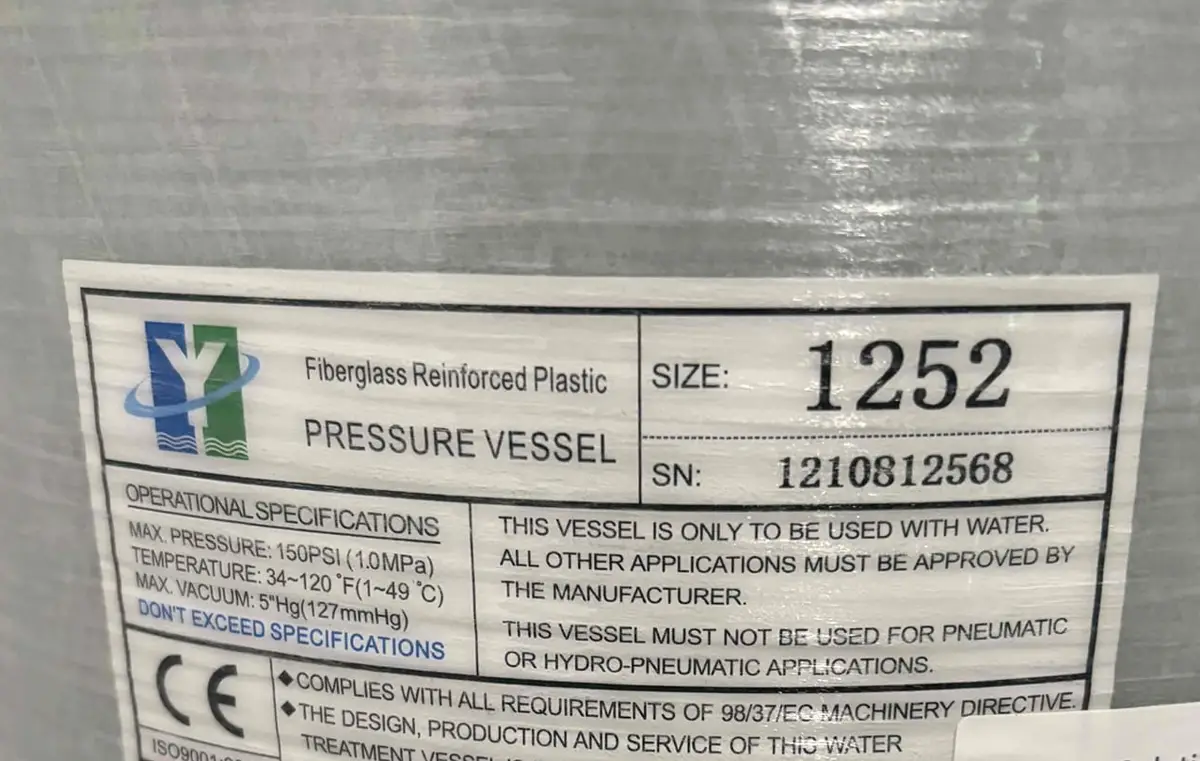
This label reads 1252, which means the tank is 12 inches across and 52 inches tall. Tank size tells you how much resin fits inside. The grain rating of the finished softener is on the manufacturer's spec sheet, so check that sheet rather than guessing from the tank.
The brine tank is the shorter tank that holds salt. During regeneration, the softener draws salty water from this tank and rinses it through the resin, which knocks the minerals off and recharges the beads.
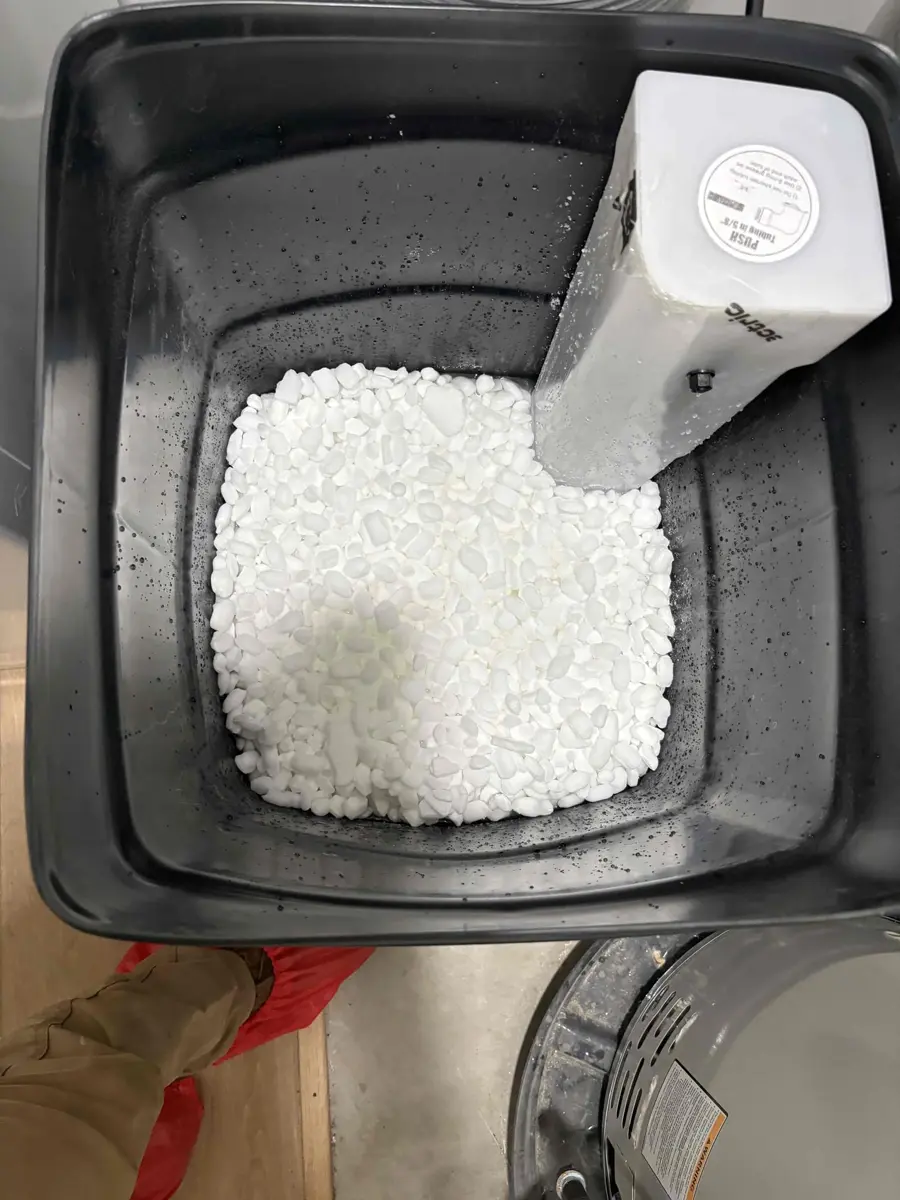
A brine tank filled to about half with clean salt is right where it should be. If the salt level never seems to drop, or the water sits above the salt, the softener is not regenerating properly and needs a look.
The control head sits on top of the resin tank. It is the brain: it stores your hardness setting, counts gallons and decides when to regenerate. A modern metered control head regenerates based on water actually used, which saves salt compared with an old timer that runs on a fixed schedule whether you used water or not.
Those three parts are why a softener has to be sized. Too little resin and it runs out before regeneration. Too much and you pay for capacity you never use. The rest of this guide gets the resin amount right.
How Do You Calculate Water Softener Size Step by Step?
Here is the full process, the same order we follow on a sizing visit. Grab your water report or test result and a calculator.
Step 1: Get your hardness in grains per gallon. Use your city report or a well test. If the result is in ppm or mg/L, divide by 17.1. If your result is a range, use the high end, not the average. Hardness drifts during the year, and a softener sized to the average runs short on the hard days.
Step 2: Add for iron if you have it. Softeners can remove a small amount of dissolved iron, but iron uses up capacity faster than plain hardness.
Each manufacturer publishes its own adjustment for iron, so use the figure on the spec sheet for the model you are considering. If your iron is high, the answer may be a separate iron filter rather than a bigger softener.
Step 3: Count the people, not the bathrooms. Multiply 75 gallons by everyone who lives in the house. Penn State uses 75 gallons per person per day as the planning average.
The EPA's WaterSense program says the average American family uses more than 300 gallons of water a day at home, which lines up with four people at 75 gallons each. If you have teenagers who take long showers, a large soaking tub, or frequent guests, round up.
Step 4: Multiply to get grains per day. Hardness from Step 1 (plus the iron adjustment from Step 2) times the gallons from Step 3.
Step 5: Multiply by days between regenerations. Seven days is the common target. Much more than that and the resin can sit too long between cleanings; much less and you burn salt and water regenerating constantly.
Step 6: Match the result to a model at the salt setting you will actually run. This is where most online calculators skip a beat.
The headline grain rating is usually the maximum, measured with the most salt per regeneration. Efficient settings use far less salt but deliver fewer grains. Pick a model whose capacity at an efficient setting still covers your weekly number.
Here is what a correctly installed system looks like when the sizing and the extras line up.
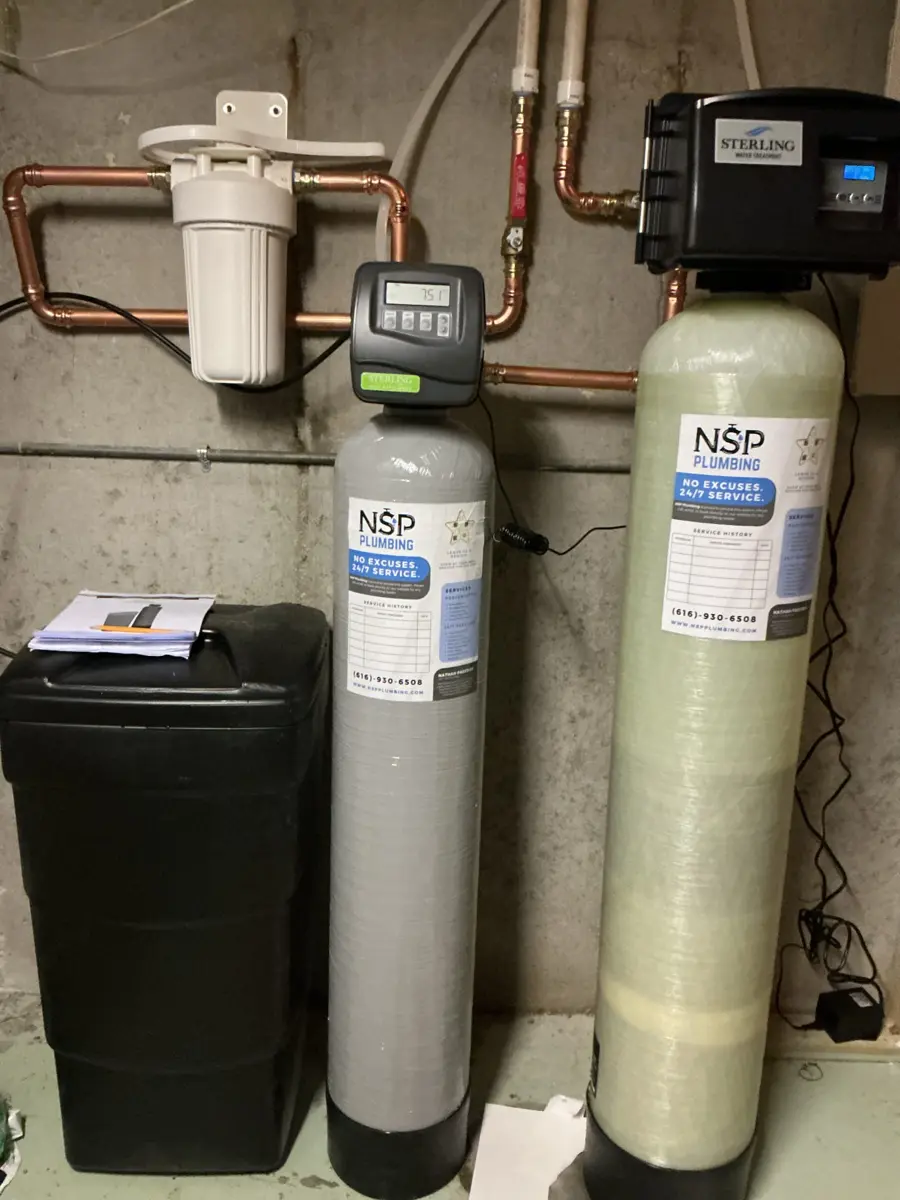
This home got two tanks, not one oversized one: a softener for hardness and a second treatment tank beside it. Splitting the work lets each tank be sized for its own job instead of asking the softener to do everything.
Quick Sizing Table by Household Size and Hardness
If you would rather skip the arithmetic, this table does it for you. It shows grains used per week, assuming 75 gallons per person per day and one regeneration every 7 days. Find your household size and your hardness, then shop for a softener that delivers at least that many grains at an efficient salt setting.
| People in the house | 5 gpg | 10 gpg | 15 gpg | 20 gpg |
|---|---|---|---|---|
| 2 | 5,250 | 10,500 | 15,750 | 21,000 |
| 3 | 7,875 | 15,750 | 23,625 | 31,500 |
| 4 | 10,500 | 21,000 | 31,500 | 42,000 |
| 5 | 13,125 | 26,250 | 39,375 | 52,500 |
| 6 | 15,750 | 31,500 | 47,250 | 63,000 |
A few ways to read it.
Most city water homes around Grand Rapids fall in the 10 gpg column or just under it. At 8 to 10 grains, a family of two to four is usually well served by a standard size softener. Bigger is not automatically better, as the next sections explain.
Well water is where the table gets wide. At 15 to 20 grains with five or six people, weekly use runs 40,000 to 60,000 grains. Those homes need a larger softener, a shorter regeneration cycle, or both.
If your number lands between sizes, round up one step. A softener that runs a little under capacity is fine. One that runs out on Saturday afternoon sends hard water through your pipes until the next regeneration.
Remember to adjust the hardness column for iron before you use the table. A well testing 15 grains of hardness plus iron may belong in the 20 column or higher, depending on how much iron and what the manufacturer says.
Does Iron in My Water Change the Softener Size?
Yes, and on West Michigan wells it is often the biggest factor. Iron is the reason a lot of softeners that were sized correctly for hardness still fail early.
Here is the short version. Clear, dissolved iron gets removed by a softener along with the hardness, using up capacity as it goes.
But once iron meets air or chlorine it turns into the rusty orange form, and Penn State notes that this oxidized iron clogs the resin. A softener with fouled resin loses capacity no matter how big it was.
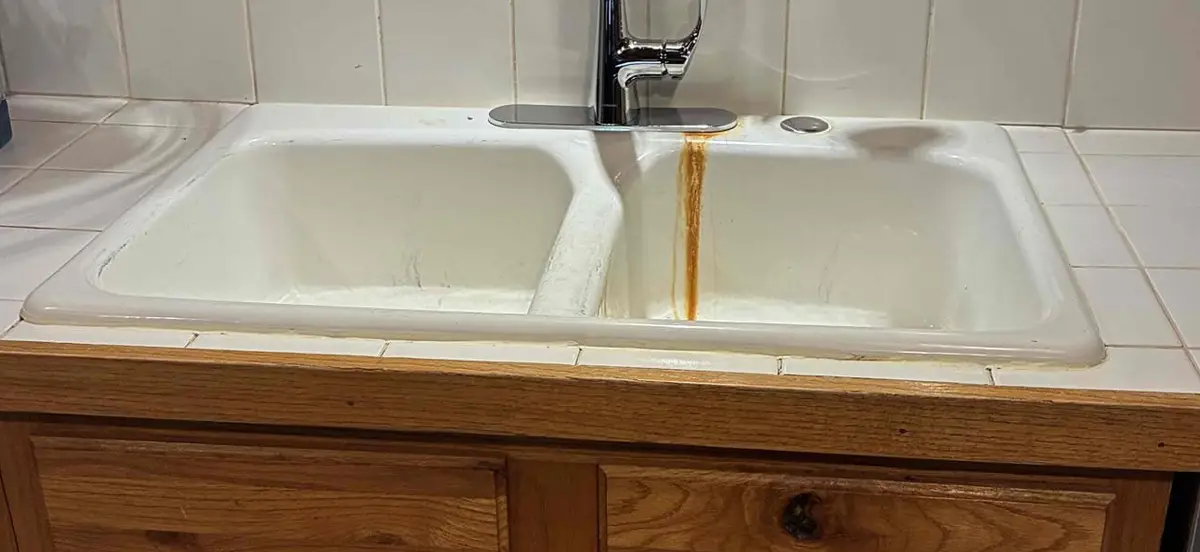
That orange streak under the faucet is iron, and a softener alone will not fix it. This home needed iron removed before the water reached the softener, or the new resin would have ended up the same color.
The orange you see on fixtures ends up inside your equipment too. The cartridge below came out of a whole home sediment filter at a home where we were installing a softener and an iron filter.
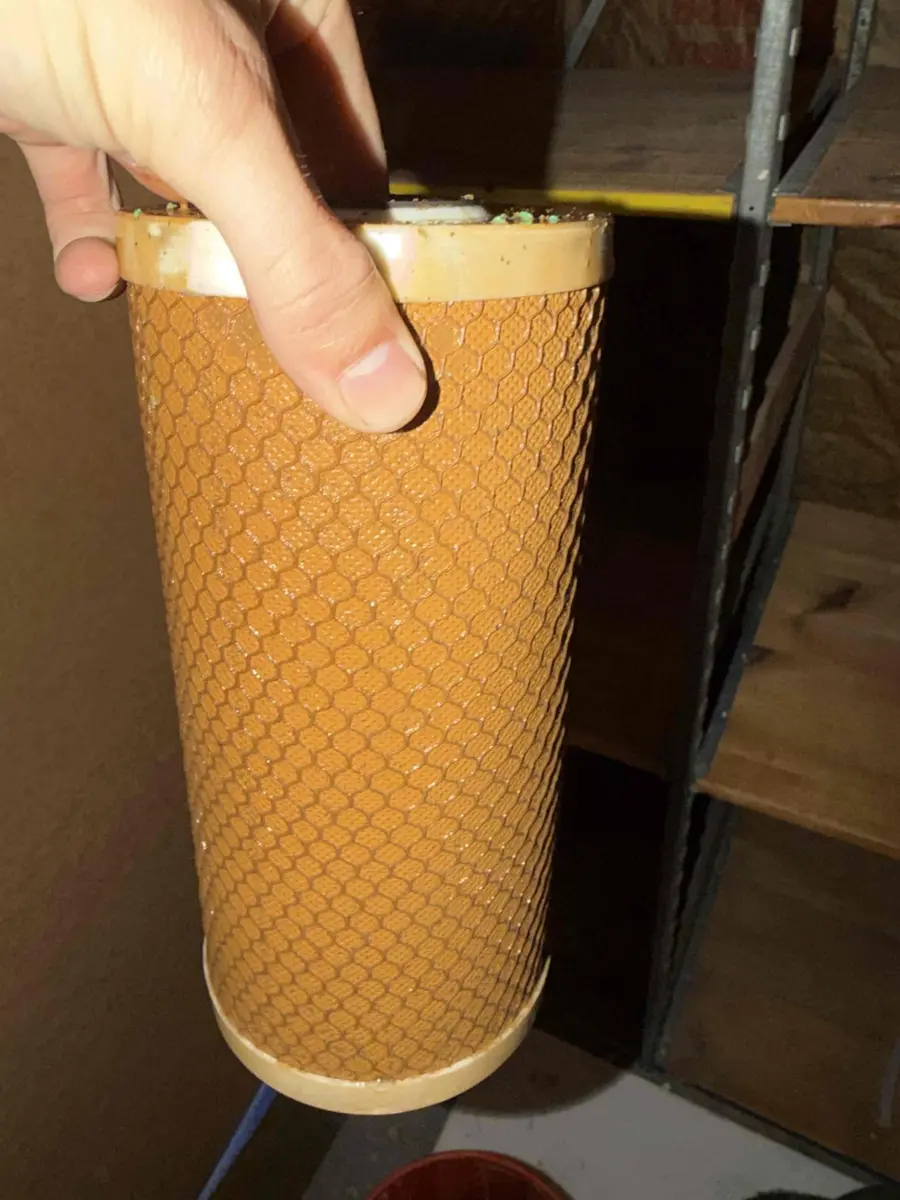
This filter was supposed to be white. When a cartridge looks like this between changes, the house has enough iron to plan treatment around it, not just a bigger softener.
What we do on iron water depends on the test:
- Low iron: a properly sized softener handles it, using the manufacturer's iron adjustment in the sizing math.
- Moderate to high iron: a dedicated iron filter goes in ahead of the softener, so the softener only has to handle hardness.
- Iron plus a rotten egg smell: the sulfur needs treatment too. Our guide on why your water smells like rotten eggs covers that side.
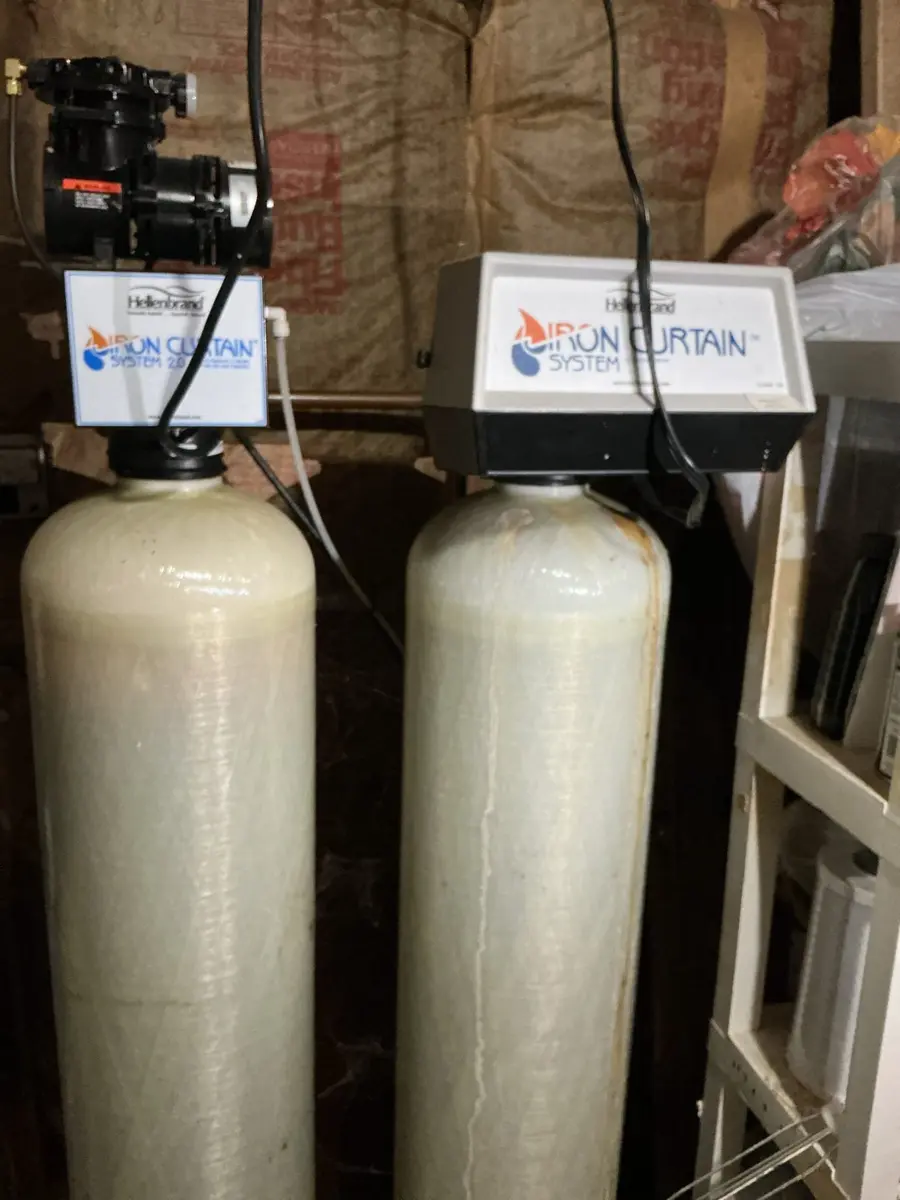
These two tanks are iron filters, the kind that belongs ahead of the softener so the resin never sees the rust. On a well with real iron, that order of equipment matters more than the softener's grain rating.
Settings matter after the install too. This summer we went back to a well system with a lingering sulfur smell and set the iron filter to clean itself daily instead of every three days, which addressed the smell without replacing anything.
Is a Bigger Water Softener Better?
Not automatically. Both mistakes cost you, just in different ways.
An undersized softener runs out. It regenerates too often, which wastes salt and water, and if usage spikes it can run out of capacity between cycles. You get hard water spots, scale in the water heater and that slippery or squeaky feel coming and going.
An oversized softener sits too long. If the resin goes weeks between regenerations, water sits still in the tank and the resin does not get the regular cleaning it needs. On iron water that is worse, because iron has more time to build up on the beads. Bigger units also cost more up front and take more floor space.
The sweet spot is a softener that regenerates roughly once a week at an efficient salt setting. That gives the resin a regular cleaning without burning salt every couple of days.
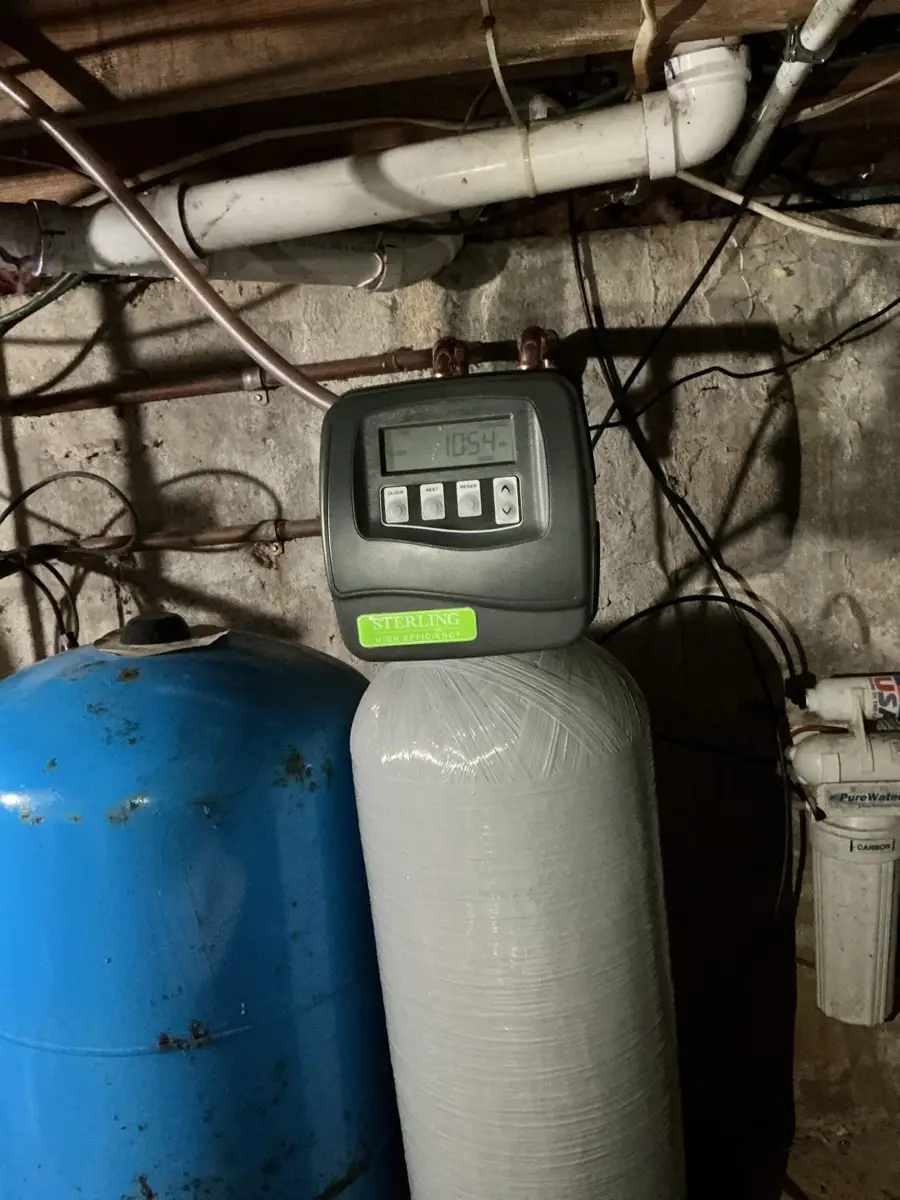
The control head is where sizing either works or does not. If the hardness setting in here is wrong, even a perfectly sized softener regenerates at the wrong time.
That last point is one we see on service calls. This spring a customer told us the water quality had not improved since the softener went in. The fix we checked first was the hardness setting and the regeneration schedule, not new equipment. A correctly sized softener with the wrong numbers programmed in acts like the wrong size.
Two more things that change the right size:
- Flow rate. Big houses with several bathrooms running at once need a softener that can pass enough water without a pressure drop. Grain capacity and flow are separate specs, so check both.
- Salt efficiency. High efficiency units deliver more grains per pound of salt. They often cost more up front but use less salt every month for as long as you own them.
When Should a Plumber Test and Size Your Softener?
Plenty of people on city water can do this math themselves with the city report and the table above. Call a plumber when one of these is true:
- You are on a well. Hardness and iron vary from house to house and you need a real test before buying anything.
- You see orange, brown or black staining. That points to iron or manganese, which changes the equipment, not just the size.
- Your water smells. Sulfur and iron bacteria need their own treatment plan.
- Your current softener is not keeping up. It may be undersized, fouled or simply programmed wrong. A service call can tell you which before you buy a new one.
- You are replacing a softener and adding filtration or reverse osmosis at the same time. The order of equipment and the plumbing connections matter.
Here is how a sizing visit goes with us. A technician tests the water at the house, checks your plumbing and talks through who lives there and how you use water. Then you get a written recommendation for the size and type of equipment, with no pressure to buy the biggest model.
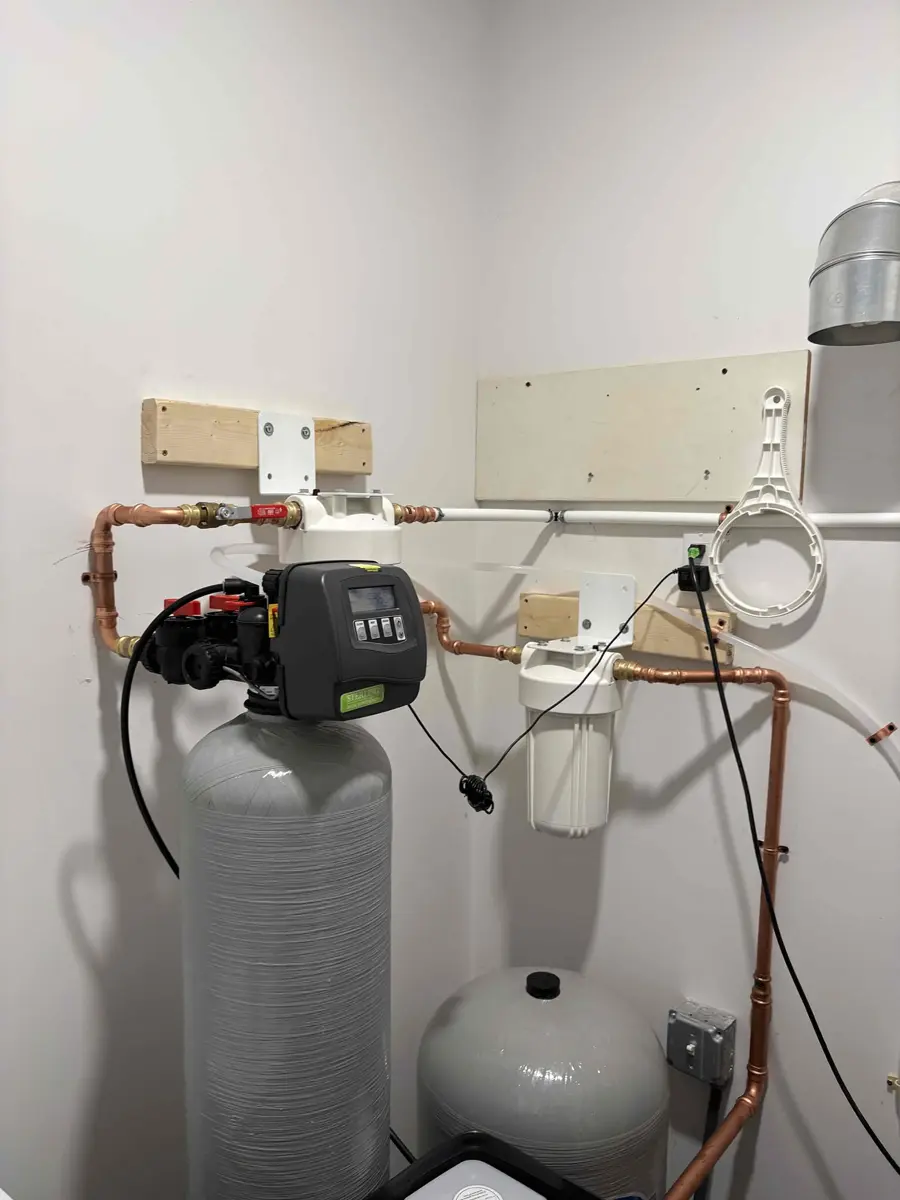
A good install includes a bypass valve, so the softener can be taken offline for service without shutting off water to the house. This one also got a whole home sediment filter to protect the resin from sand and grit.
We also come back to check. After an install, a follow up water test confirms the softener is doing its job, and if anything needs adjusting we set it then.
If you want broader context before you decide, our guide on whether reverse osmosis is worth it in Michigan covers drinking water treatment, and our water treatment services page lays out the full range of options.
What size water softener do I need for a family of 4?
On Grand Rapids city water at about 8 to 9 grains of hardness, a family of four uses roughly 19,000 grains a week, so a softener rated around 32,000 grains usually fits. On a well testing 20 grains hard, the same family uses about 42,000 grains a week and needs a larger unit.
How do I calculate how many grains my water softener needs?
Multiply your water hardness in grains per gallon by 75 gallons per person, then by the number of people in your home. That gives grains per day. Multiply by 7 for a weekly regeneration, and choose a softener that delivers that many grains at an efficient salt setting.
How do I convert ppm hardness to grains per gallon?
Divide parts per million (also written mg/L) by 17.1. For example, Grand Rapids tap water averaged 142 mg/L in 2025, which works out to about 8.3 grains per gallon. Softener controls are set in grains per gallon, so always convert before you program one.
Is it bad to have a water softener that is too big?
It can be. An oversized softener goes too long between regenerations, so the resin does not get cleaned often enough, which matters most on iron water. It also costs more up front. Aim for a size that regenerates about once a week at an efficient salt setting.
Does Grand Rapids have hard water?
Yes. The city's 2025 water analysis shows tap water averaged 142 mg/L of hardness, about 8.3 grains per gallon, with a range of roughly 7.4 to 9.6. Penn State Extension classifies 7 to 10.5 grains per gallon as hard water.
Do I need a bigger softener if I have iron in my water?
Sometimes. A small amount of dissolved iron can be handled by adding the manufacturer's iron adjustment to your sizing math. Higher iron, or the orange rusty kind, fouls softener resin, so it is usually better removed by a separate iron filter installed ahead of the softener.
How often should a water softener regenerate?
About once a week is a good target for most homes. Regenerating every couple of days usually means the softener is too small or set wrong, and going weeks between cycles means it is too large. A metered control head regenerates based on actual water use.
Get Your Water Tested and Your Softener Sized by a Licensed Plumber
NSP Plumbing is a licensed Michigan plumbing contractor, license #8004990, based in Wyoming, MI. We test water, size and install softeners and iron filters, and service the ones you already have across Grand Rapids, Wyoming, Kentwood, Ada, Rockford, Caledonia and the surrounding area.
Start with our water softener services, or see our whole home water filtration options if iron or sediment is part of the picture. If you are buying a house, a whole home plumbing inspection can include a look at existing water treatment equipment. You can also read our reviews or contact us with questions.
Not sure what size softener your home needs?
Book a visit and a licensed NSP Plumbing technician will test your water at the house, check your plumbing and give you a written softener recommendation sized to your hardness, your iron and your family.