
Lake Michigan city water meets federal standards but still carries chlorine taste, trace PFAS, and dissolved minerals a softener leaves behind. For most West Michigan homes, a reverse osmosis system is worth installing. An under-sink RO unit in the Grand Rapids area typically runs $450 to $650 installed, and NSP almost always sets one alongside a softener rather than instead of one.
What Does Reverse Osmosis Actually Remove?
A reverse osmosis system forces water through a membrane with pores so small that only water molecules pass through. Everything bigger gets flushed down the drain. In practical terms, an RO system at your kitchen sink removes the contaminants that matter most for drinking and cooking water.
What RO removes: dissolved solids (TDS), PFAS (the "forever chemicals" that have become a major concern in Michigan), chlorine and chloramine taste, lead, arsenic, nitrates, fluoride, and pharmaceutical traces. The EPA sets enforceable limits on over 90 contaminants in public water systems, and RO reduces most of them well below those limits at the point of use.
What RO does not do: it only treats the one faucet it is connected to. It will not soften your shower water, protect your water heater from scale, or keep iron stains off your laundry. That is what a water softener does. Most Michigan homes benefit from both systems working together: a softener for the whole house and an RO system for the kitchen tap.
The photo below shows what a typical under-sink RO system looks like after installation. The white tank on the left stores filtered water under pressure so you get instant flow at the faucet. The filter bank on the right holds the sediment filter, carbon filter, and the RO membrane itself.
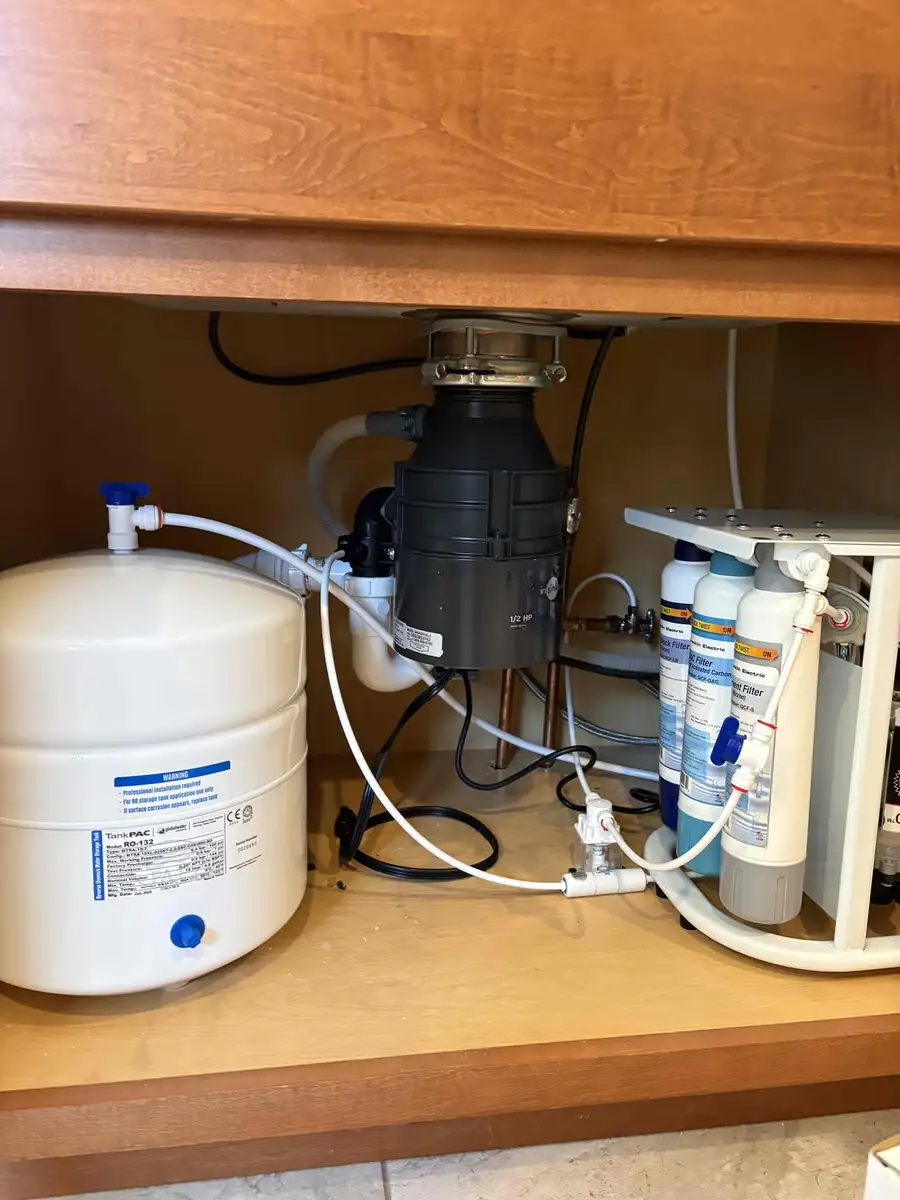
The storage tank is roughly the size of a basketball and the filter bank mounts to the cabinet wall. Together they take up about one third of the space under a standard kitchen sink.
What Is in West Michigan Tap Water?
Grand Rapids, Wyoming, Kentwood, and most surrounding cities draw their water from Lake Michigan. The water is treated at the Lake Michigan Filtration Plant and meets the EPA's National Primary Drinking Water Regulations. But "meets federal standards" does not mean "nothing in it."
Hardness. West Michigan tap water runs 120 to 180 parts per million (about 7 to 10 grains per gallon), which puts it in the moderately hard to hard range. On NSP water treatment calls, techs regularly test above 15 grains in homes on well water. At 20 grains, a homeowner's fixtures scale up fast, the water heater works harder, and soap barely lathers. Hardness is the problem a softener solves.
Chlorine and chloramines. The city adds these to disinfect the supply. They are safe at regulated levels but give the water a chemical taste and smell. A carbon filter or RO system removes them.
PFAS. Michigan has been at the forefront of PFAS regulation, with some of the strictest state limits in the country. PFAS are synthetic chemicals found in firefighting foam, nonstick coatings, and industrial runoff. They do not break down in the environment or in your body. The EPA has set enforceable PFAS limits for public water systems, and reverse osmosis is one of the most effective ways to reduce them at the tap.
Well water. Many homes outside city limits rely on private wells. Well water in West Michigan often carries iron (which causes orange staining), sulfur (the rotten egg smell), elevated hardness, and sometimes bacteria. A water filtration setup for well water usually includes an iron filter, a softener, and an RO system for drinking water.
The dedicated RO faucet below sits next to the main kitchen faucet. It dispenses filtered drinking water on demand from the storage tank under the sink.
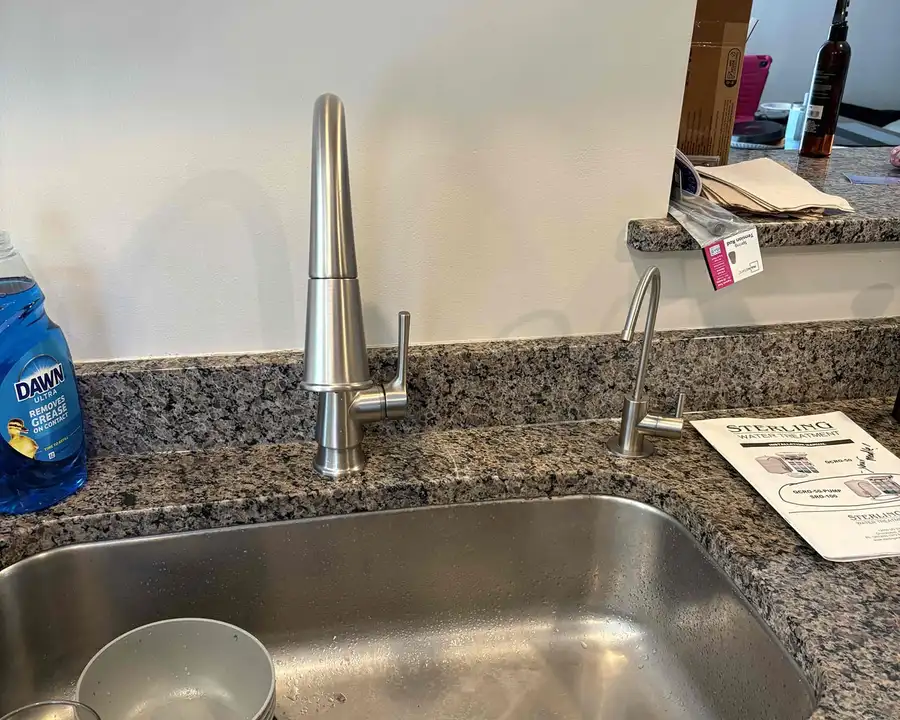
That smaller faucet is the only visible change in the kitchen. Everything else sits out of sight under the sink or in the basement.
Do You Need RO if You Already Have a Softener?
This is the most common question NSP's water treatment techs hear. The short answer: a softener and an RO system solve completely different problems.
| Problem | Softener fixes it? | RO fixes it? |
|---|---|---|
| Hard water scale on fixtures and pipes | Yes | Yes, but only at the RO tap |
| Chlorine taste and smell | No | Yes |
| PFAS and forever chemicals | No | Yes |
| Lead and heavy metals | No | Yes |
| Iron staining in sinks and laundry | Partially | Yes, at the RO tap |
| Protecting the water heater from scale | Yes | No |
| Whole-home coverage (showers, laundry, dishwasher) | Yes | No |
A softener uses an ion exchange process to swap calcium and magnesium (the minerals that make water "hard") for sodium. It treats every faucet, shower, and appliance in the house. That protects your plumbing, extends your water heater's life, and makes soap work the way it should. But a softener does nothing about PFAS, chlorine taste, lead, or dissolved chemicals.
An RO system handles the dissolved stuff the softener leaves behind. It produces clean drinking and cooking water at a single faucet, usually the kitchen sink. It does not treat the whole house because the flow rate is too slow and the waste water ratio would be impractical for showers and laundry.
The photo below shows both systems installed side by side in a Grand Rapids basement. The tall grey tank is a high-efficiency water softener with an NSP service sticker. The two white canisters on the wall are whole-home sediment filters that catch particles before the water reaches the softener. The black tank at the base is the salt brine tank.
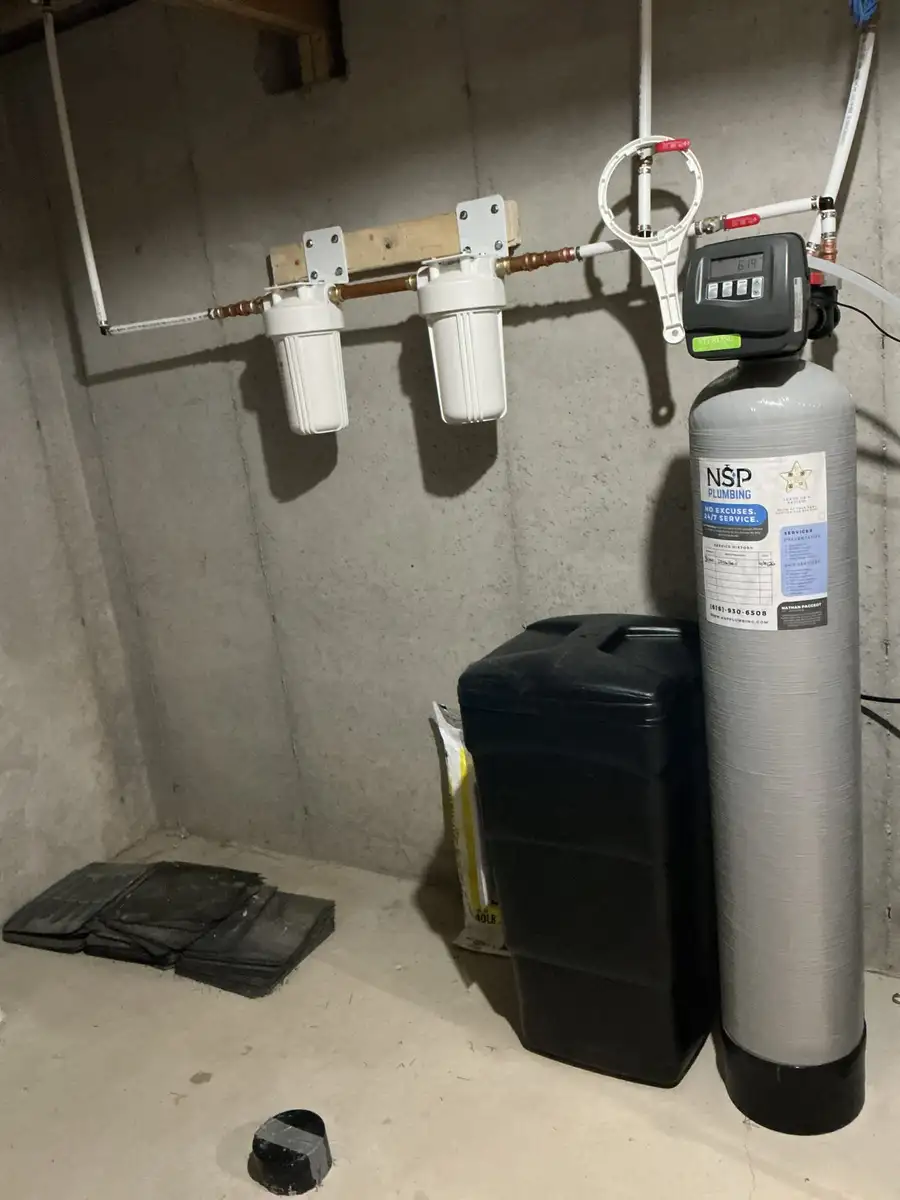
For most Michigan homes, the right answer is both. The softener protects the whole house. The RO system gives you clean drinking water at the kitchen tap.
How Much Does an RO System Cost Installed in Grand Rapids?
Based on water treatment work NSP Plumbing invoiced between September 2025 and August 2026:
| What you are buying | Typical installed cost |
|---|---|
| Under-sink RO system, installed | $450 to $650 |
| Under-sink RO added to a softener install (same visit) | $450 to $650 |
| Water softener installed | $2,000 to $4,700 |
| Full treatment package (softener + RO + sediment filter) | $3,000 to $5,500 |
| Softener repair or service call | $150 to $600 |
The reverse osmosis unit itself is the least expensive line on a water treatment invoice. The RO portion runs $450 to $650, equipment and labor together. The reason RO quotes often come back in the thousands is that the RO is usually bundled with a softener and a whole-home filter on the same visit, and those are the expensive pieces. If you already have a working softener, adding RO is a few hundred dollars, not a few thousand.
Sample note: NSP installs RO often enough to price it confidently, but the standalone figures above come from a small number of recent invoices rather than a large sample, so treat them as a typical range and not a guaranteed quote.
What drives the price up or down:
The equipment. A basic softener and RO combination costs less than a high-efficiency dual-tank softener with a multi-stage RO and iron curtain system. NSP carries equipment from Sterling Water Treatment and other manufacturers sized to your home's water chemistry and daily usage.
The plumbing. Running a new cold water supply line to the RO, adding a drain connection for the waste water, and drilling through a granite countertop for the dedicated faucet all add labor. If your home already has connections from an old system, the install goes faster.
Your water source. City water is straightforward. Well water with high iron or sulfur may need additional treatment stages (an iron curtain filter, a UV disinfection unit, or a chemical injection system) that add to the cost.
In spring 2026, NSP installed a complete system for a homeowner on the west side of Grand Rapids. The water tested at 20 grains hard with iron present. The package included a 45,000 grain high-efficiency water softener, a whole-home sediment filter, and an under-sink reverse osmosis system. Total cost: $3,527 installed. Of that, the reverse osmosis system accounted for $549. The softener and the whole-home filter made up the rest.
The photo below shows a similar full installation: sediment filter on the wall, water softener with brine tank, and a water heater, all in a single utility area.
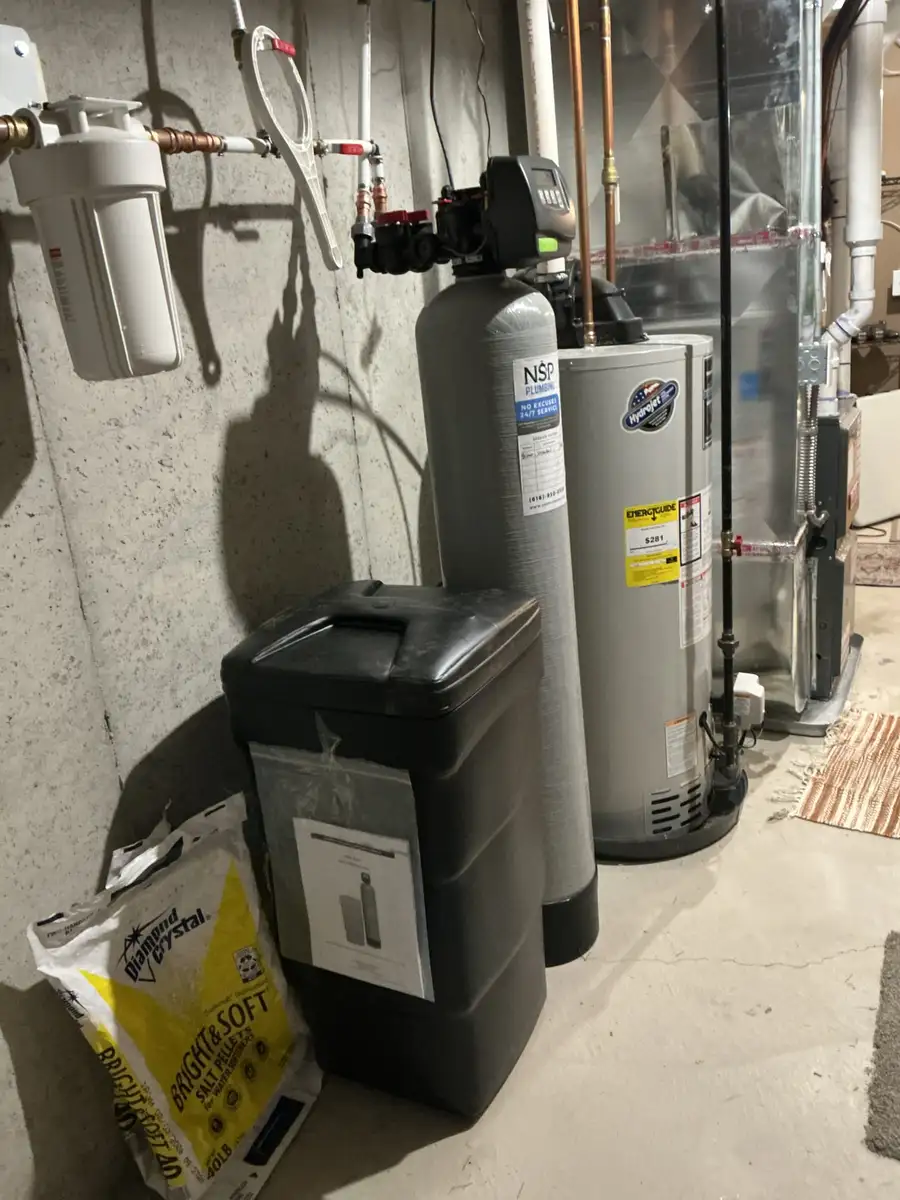
The water softener sits on the main supply line before the water heater, so every hot and cold fixture in the house gets softened water.
What Does RO Maintenance Look Like?
An RO system is not a one-time install. The filters need periodic replacement to keep performing. Here is what a typical schedule looks like:
| Component | Replacement interval | Approximate cost |
|---|---|---|
| Sediment pre-filter | Every 6 to 12 months | $20 to $40 |
| Carbon pre-filter | Every 6 to 12 months | $25 to $50 |
| RO membrane | Every 2 to 3 years | $60 to $150 |
| Post-carbon polishing filter | Every 12 months | $25 to $50 |
Total annual filter cost: roughly $100 to $200. Most homeowners handle filter swaps themselves. The filter housings twist off, you pull the old cartridge, and slide in the new one. If you would rather have a plumber do it, NSP offers maintenance visits.
A water softener requires salt. You check the brine tank every few weeks and top it off with pellet salt when it gets low. A 40-pound bag runs about $6 to $8 at a hardware store, and most households go through one bag every 4 to 8 weeks. The Water Quality Association recommends checking salt levels monthly.
The photo below shows the inside of a brine tank filled with softener salt pellets. You want the salt level to stay a few inches above the water line. If the water rises above the salt, the softener cannot regenerate properly and your water goes back to being hard.
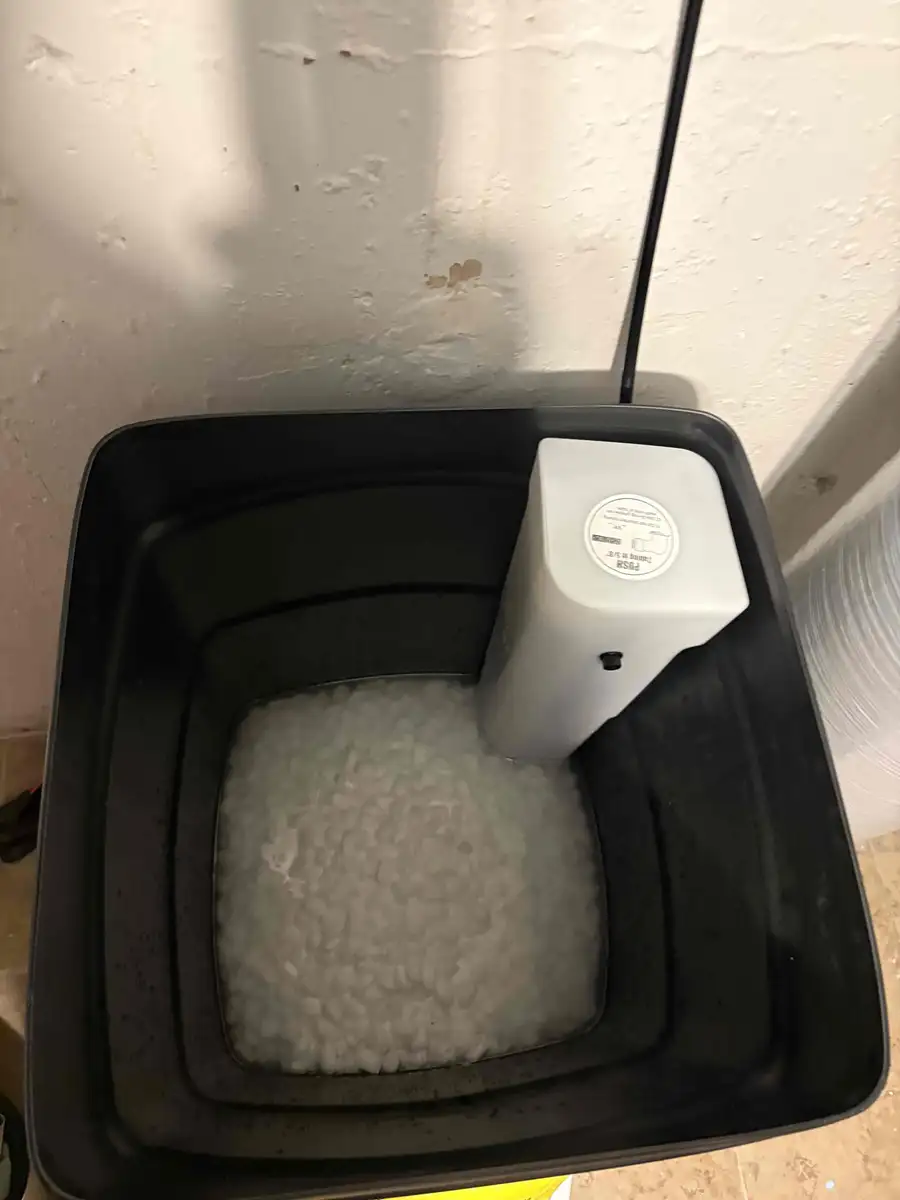
Beyond filters and salt, there is not much to do. Modern softeners regenerate automatically on a schedule. RO systems run silently with no moving parts. The main sign that something needs attention is a change in water taste or a drop in flow at the dedicated faucet.
When Reverse Osmosis Is Not the Answer
Not every home needs an RO system. Here are the situations where something simpler works:
Hard water is your only complaint. If your water tastes fine and you just want to stop the white scale on your shower doors and faucets, a water softener by itself handles that. No need for RO.
You want better-tasting water but your water tests clean. A countertop carbon filter or a refrigerator filter removes chlorine taste for a fraction of the cost. These do not remove PFAS or lead, but if your water tests show those are not present, a carbon filter may be enough.
Your budget is tight right now. A quality pitcher filter with NSF/ANSI 53 or 58 certification can reduce some contaminants at the kitchen tap for under $50. It is not as thorough as RO, but it is better than nothing while you save for a full system.
You are on city water with no specific contamination concerns. If Grand Rapids' annual water quality report shows your district is well within limits on everything that matters to you, a softener plus a simple carbon water filtration stage may be the right fit.
RO makes the most sense when:
Your water tests show elevated PFAS, lead, nitrates, or other dissolved contaminants. You are on well water with multiple issues (hardness plus iron plus bacteria plus high TDS). You have a family member with a compromised immune system who needs the cleanest possible drinking water. Or you simply want the peace of mind that comes from knowing your cooking and drinking water has been filtered down to the molecule.
A water test from NSP tells you which of these applies to your home, and the answer shapes the recommendation.
How much does a reverse osmosis system cost by itself?
An under-sink reverse osmosis system installed by a licensed plumber in the Grand Rapids area typically runs $450 to $650, equipment and labor together. That is the RO alone, not a package price.
Quotes in the thousands usually mean the RO is being bundled with a water softener and a whole-home filter on the same visit. Those are the expensive components. If your softener already works, adding RO is a few hundred dollars.
Does reverse osmosis waste a lot of water?
Traditional RO systems produce 3 to 4 gallons of waste water for every gallon of filtered water. Newer high-efficiency systems cut that to 1:1 or better. The waste water goes down the drain, similar to running an extra load of laundry every week or two.
For a household that filters drinking and cooking water only, the increase on a water bill is typically $3 to $5 per month.
Can I install a reverse osmosis system myself?
You can buy a DIY kit for $200 to $400. The challenge is the plumbing: you need a cold water supply tap, a drain line connection for the waste water, and often a hole drilled in the countertop for the dedicated faucet.
If any of those connections go wrong, you get leaks under the sink. A licensed plumber handles the install in 2 to 3 hours with tested connections and no guesswork.
How long does an RO membrane last?
Most manufacturers rate RO membranes for 2 to 3 years of residential use. Heavy well water with high sediment or iron can shorten that to 12 to 18 months.
If you notice your water flow dropping or taste changing, the membrane is likely due for replacement. Pre-filters protect the membrane by catching sediment and chlorine before they reach it, which is why changing those on schedule matters.
Does RO remove PFAS from drinking water?
Yes. The EPA and the Water Quality Association both confirm that reverse osmosis is one of the most effective residential methods for reducing PFAS. NSF/ANSI 58-certified RO systems are specifically tested for PFAS reduction.
Michigan has been tightening PFAS limits, and an RO system at your kitchen tap provides an extra layer of protection regardless of what the municipal supply carries.
Do I need a water test before installing RO?
A water test is not required, but it tells you what your water actually contains so you can size the right system. NSP tests for hardness, pH, iron, and TDS, and can arrange PFAS screening through a certified lab.
If your well water has bacteria, you may need UV disinfection in addition to RO. Testing prevents overspending on treatment you do not need.
Is RO water safe for pets, plants, and coffee?
Yes. RO water is safe for pets and aquariums (many fish owners prefer it because it removes chlorine and heavy metals). Most houseplants do fine with RO water. Coffee and tea taste cleaner because the minerals and chlorine that alter flavor are gone.
Will a softener alone protect my plumbing from Michigan water?
A softener handles the hardness that causes scale buildup on fixtures, inside pipes, and in your water heater. That is the most common plumbing damage from hard water. But a softener does not filter dissolved chemicals, metals, or biological contaminants. If your water test shows elevated levels of anything beyond hardness, you need filtration in addition to softening.
Licensed Water Treatment in West Michigan
NSP Plumbing is a licensed Michigan plumbing contractor (license #8004990) that installs water softeners, reverse osmosis systems, whole-home filtration, and complete water treatment packages. We serve Grand Rapids, Wyoming, Kentwood, and surrounding communities.
Every install starts with a water test so you know exactly what your water needs, and a written quote so you know exactly what it costs. Read what our customers have to say on our reviews page.