
White crust on the faucet, spots on every glass, a shower head that sputters. Those are hard water, and there are a lot of products promising to fix it.
The only whole house treatment that actually removes hardness is an ion exchange water softener. Test your water first, then match the fix: a softener for the whole house, reverse osmosis for drinking water, and a descaler for the crust you already have.
How Do You Treat Hard Water?
Treating hard water comes down to one decision: do you want the minerals out of the water, or do you just want fewer of the problems they cause? Those are two different products, and most of the confusion in this market comes from blurring them together.
Hard water is water carrying a lot of dissolved calcium and magnesium. Neither one is a health problem. Penn State Extension points out that both are essential nutrients. The trouble is what they do to your house. When hard water is heated or left to dry, the minerals come out of the water and stick to whatever they touch.
That is the white crust on a faucet, the ring in the toilet and the rock hard layer at the bottom of a water heater.
Here is the short version of your options, from biggest fix to smallest:
- Ion exchange water softener. Removes the calcium and magnesium from all the water entering the house. This is the only option on this list that makes hard water soft.
- Salt free conditioner. Leaves the minerals in the water but changes their form so they are less likely to stick. It reduces scale; it does not soften.
- Reverse osmosis at the kitchen sink. Strips minerals and many other things from the water you drink and cook with. Covers one faucet, not the house.
- Point of use filters and shower filters. Mostly improve taste and chlorine smell. Most do little for hardness.
- Vinegar and descaler. Clean off buildup you already have. They treat the symptom, not the water.
The right answer depends on two numbers you can get this week: how hard your water is, and whether it also carries iron. The rest of this guide walks through each option in plain terms, what we see in real West Michigan homes, and how to tell when a whole house system is worth it and when it is not.
How Do I Know If I Have Hard Water, and How Hard Is It?
You can usually see hard water before you test it. The common signs:
- White or chalky crust around faucet spouts, shower heads and drains
- Spots and film on glasses and dishes after the dishwasher
- Soap and shampoo that will not lather well
- A ring in the toilet bowl that comes back after cleaning
- A water heater that pops, rumbles or crackles while it heats
The toilet below is a good example. Look at the ring at the waterline, not the cleaning puck.
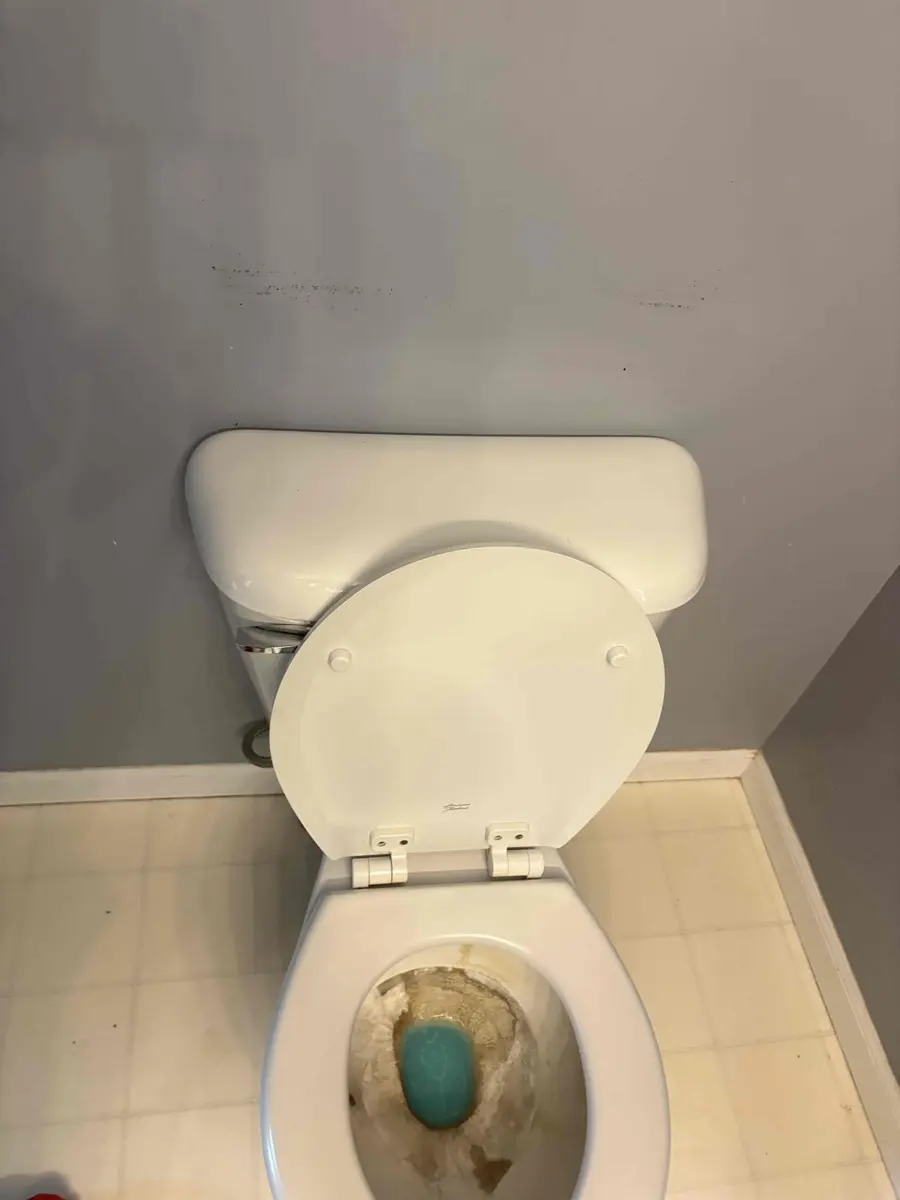
That stained ring is mineral buildup, not dirt, and scrubbing alone will not keep it away. It came from a house where we later installed a whole house softener because hardness was showing up on every fixture.
Seeing the signs tells you hardness is there. A number tells you what to do about it. Hardness is measured in grains per gallon (gpg) or milligrams per liter (mg/L), which is the same thing as parts per million. Divide mg/L by 17.1 to get grains.
Penn State's scale, which most of the industry uses:
| Hardness | Grains per gallon | mg/L (ppm) |
|---|---|---|
| Soft | under 1 | under 17 |
| Slightly hard | 1 to 3.5 | 17 to 60 |
| Moderately hard | 3.5 to 7 | 60 to 120 |
| Hard | 7 to 10.5 | 120 to 180 |
| Very hard | over 10.5 | over 180 |
On city water, your utility already tested it for you. Grand Rapids city water averaged about 8.3 grains per gallon in 2025, which lands in the hard range. Wyoming, Kentwood and other systems publish their own annual reports, and the number can differ, so look up yours.
On a private well, there is no report. Get a test that covers hardness and iron at a minimum. Wells around West Michigan vary a lot, including a well that tested 20 grains hard with iron present this past summer.
Penn State recommends an independent lab over a free test from someone selling equipment, and we agree. A third party number protects you from being oversold.
Does a Water Softener Really Fix Hard Water?
Yes. A water softener is the one treatment that pulls the hardness minerals out of every gallon coming into the house.
Here is how it works in plain words. The softener is a tall tank full of tiny plastic beads called resin. As water passes through, the beads grab the calcium and magnesium and let go of a little sodium (or potassium, if you use potassium pellets) in exchange.
That swap is why it is called ion exchange. The water that comes out the other side is soft.
The beads eventually fill up. When they do, the softener runs a cleaning cycle called regeneration: it rinses the beads with salty water from the second tank, the brine tank, which knocks the minerals loose and sends them down the drain.
Then it goes back to work. That is why softeners use salt and why they need a drain nearby.
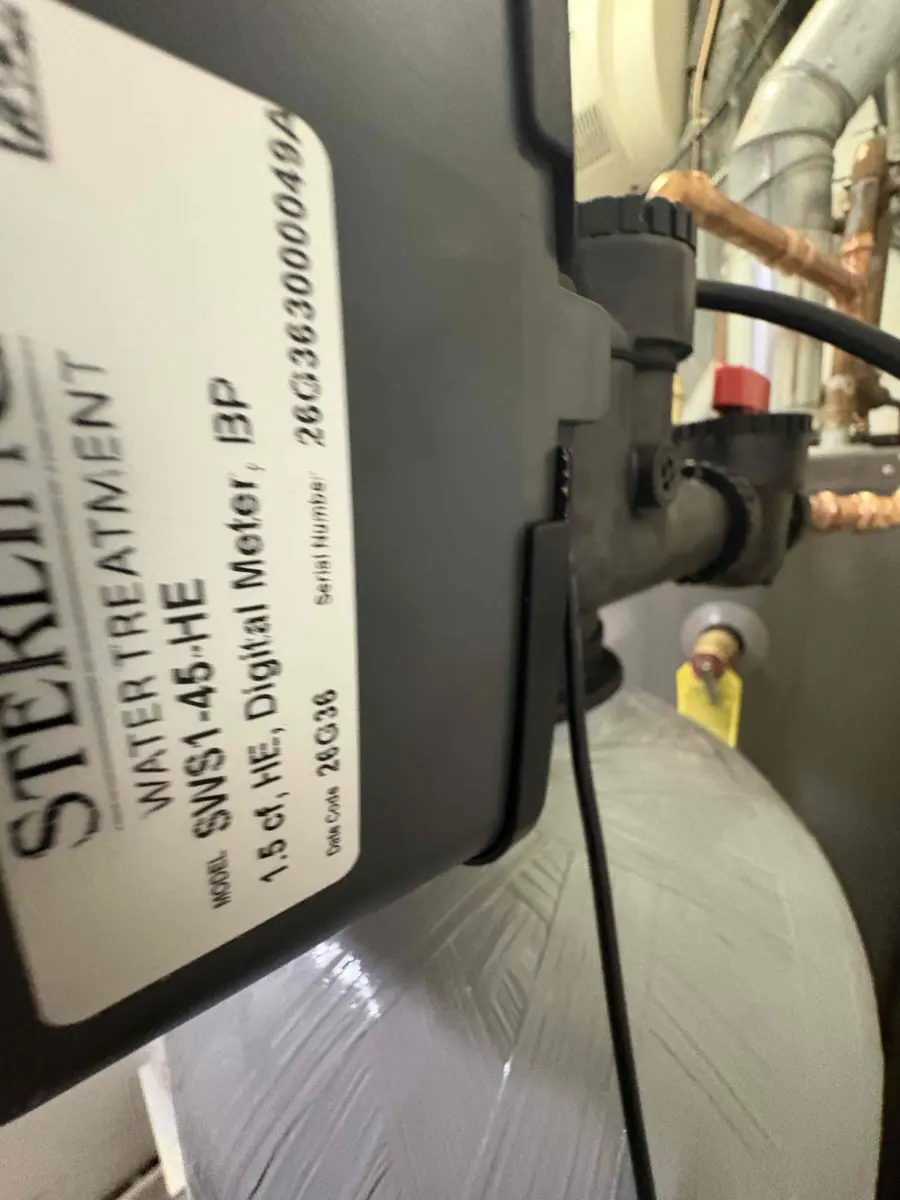
This label is what you want to see on a new softener: high efficiency, with a digital meter. A metered softener only cleans itself after a set number of gallons, instead of on a timer, so it wastes less salt and water. The EPA's WaterSense technical sheet on softeners recommends demand based regeneration for exactly that reason.
What a softener does well:
- Stops new scale in pipes, fixtures, the water heater and the dishwasher
- Makes soap and shampoo lather with less product
- Cuts down spots on glasses and shower glass
- Can handle small amounts of dissolved iron on some models
What it does not do:
- It is not a filter. It does not remove bacteria, lead, PFAS or most other contaminants. Penn State is blunt that softening "simply removes hardness minerals."
- It adds a small amount of sodium to the water. Penn State puts it at about 7.5 milligrams per quart for every grain removed. People on a low sodium diet can use potassium pellets or drink from a reverse osmosis tap.
The detail that decides whether a softener works for years or fights you is the size. A softener that is too small runs out between cleanings and lets hard water through. Our guide to what size water softener you need walks through the math with real Grand Rapids numbers.
Do Salt Free Water Conditioners Work?
This is the question we get most after "do I need a softener at all," so here is the straight answer: salt free conditioners do not remove hardness. They change it.
The most common type uses a process called template assisted crystallization. The water passes over special beads that turn dissolved calcium into microscopic crystals. Those crystals are less likely to stick to pipes and heating elements, so you get less scale. But the minerals are still in the water.
Nebraska Extension's guide puts it plainly: these devices "do not remove the hardness from the water, but instead change the form of the hardness to minimize scale build up," and calls them descalant devices.
That distinction matters for what you will notice at the tap:
- You may still get spots on glasses and shower doors, because the minerals are still there when the water dries.
- Soap will not lather any better, because lather depends on the minerals being gone.
- A water test after install will still read hard. That is not a defect. It is how the product works.
Where a conditioner can make sense:
- You mainly care about scale inside the water heater and pipes, not spots or soap
- You do not have a drain or outlet near where the water comes in
- You do not want salt in the house or in the wastewater
- Your hardness is in the moderate range rather than very hard
A few cautions. Nebraska Extension notes that results vary by product, so look for third party certification and read the claims carefully. Iron and manganese can foul these systems, so a well with iron usually needs a filter in front of them.
And magnetic devices that clamp on the outside of a pipe have a much weaker track record than either softeners or crystallization units. We do not recommend them.
We install both kinds. When a customer buys a salt free system on their own and asks us to plumb it in, we do that too. We just want you to know what you are paying for before you pay.
What About Filters, Reverse Osmosis and Vinegar?
Reverse osmosis (RO) is a drinking water system that sits under the kitchen sink. Water is pushed through a very fine membrane that removes most dissolved minerals and many contaminants, then stored in a small tank for its own faucet.
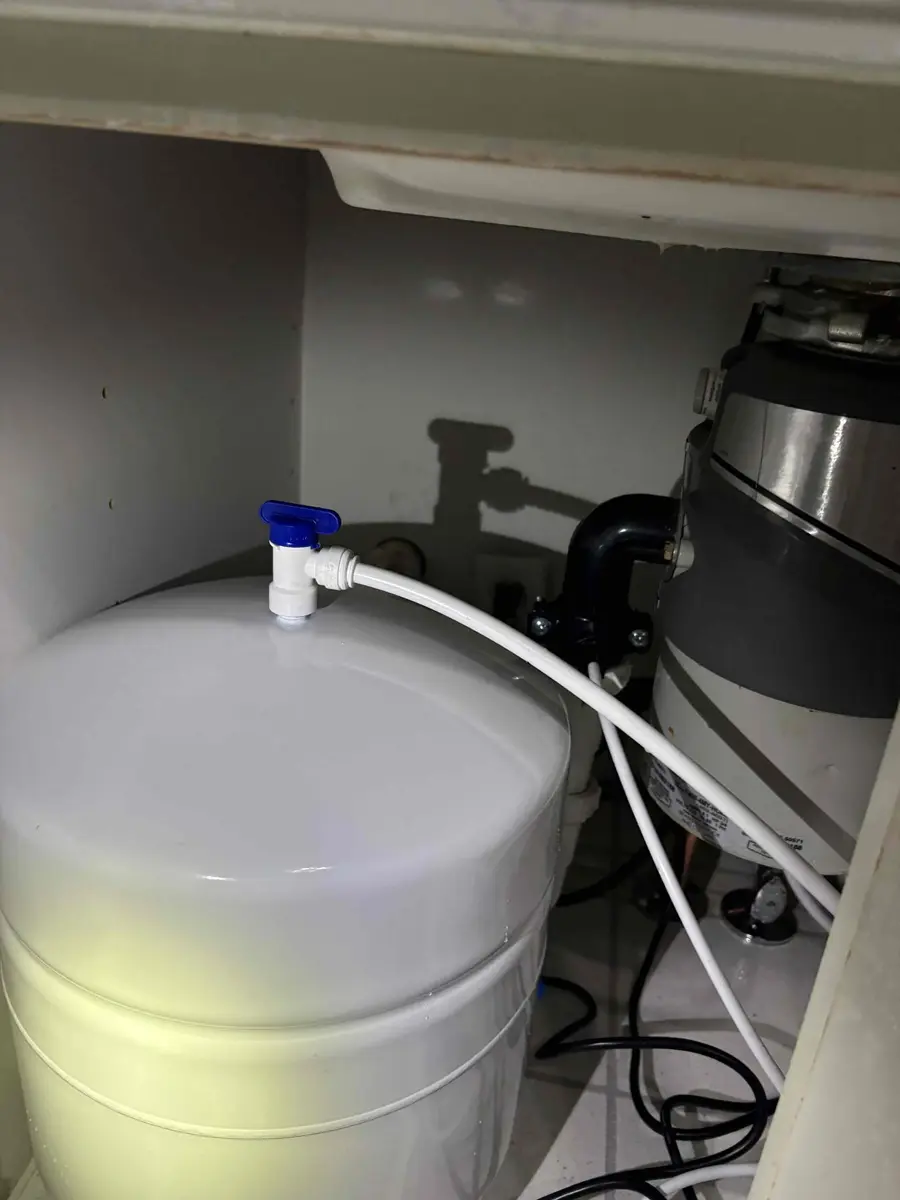
This tank holds filtered drinking water for one faucet, so it is not a hard water fix for the whole house. We installed it alongside a whole house softener: the softener protects the plumbing, and the RO handles what the family drinks.
That pairing is common, and it also answers the sodium question, since RO removes most of the sodium a softener adds. If you are weighing RO on its own, our post on whether reverse osmosis is worth it in Michigan covers it.
Pitcher filters, faucet filters and shower filters mainly use carbon. Carbon is good at chlorine taste and smell. It does little or nothing for calcium and magnesium. Some shower filters claim to soften; read the fine print before buying one for hardness.
Whole house filters catch sediment, and some target iron, sulfur smell or chlorine. They are often the right thing to put in front of a softener on well water, but by themselves they do not soften.
If your water smells like eggs too, our guide to why water smells like rotten eggs helps sort out what is going on.
Vinegar and store bought descalers dissolve buildup you already have. They are useful and cheap:
- Soak a shower head or faucet aerator (the little screen at the tip of the spout) in white vinegar for an hour, then rinse
- Run a dishwasher cycle with a cup of vinegar on the top rack
- Wipe glass shower doors with diluted vinegar after showering
None of these change the water. The crust comes back. They are maintenance, not treatment.
Boiling does knock some hardness out of a pot of water, which is why kettles scale up. It is not a practical way to treat a house.
What Does Hard Water Do to Your Plumbing?
Scale is the real cost of hard water, and most of it happens where you cannot see it. The EPA's WaterSense program notes that scale does not conduct heat well and can reduce the flow of water through pipes and fixtures.
Water heaters take the biggest hit. Minerals settle on the bottom of a tank style heater and coat the heating parts. The heater works harder to heat the same water, gets noisy, and wears out sooner. Penn State lists shorter water heater life as one of the main reasons to soften.
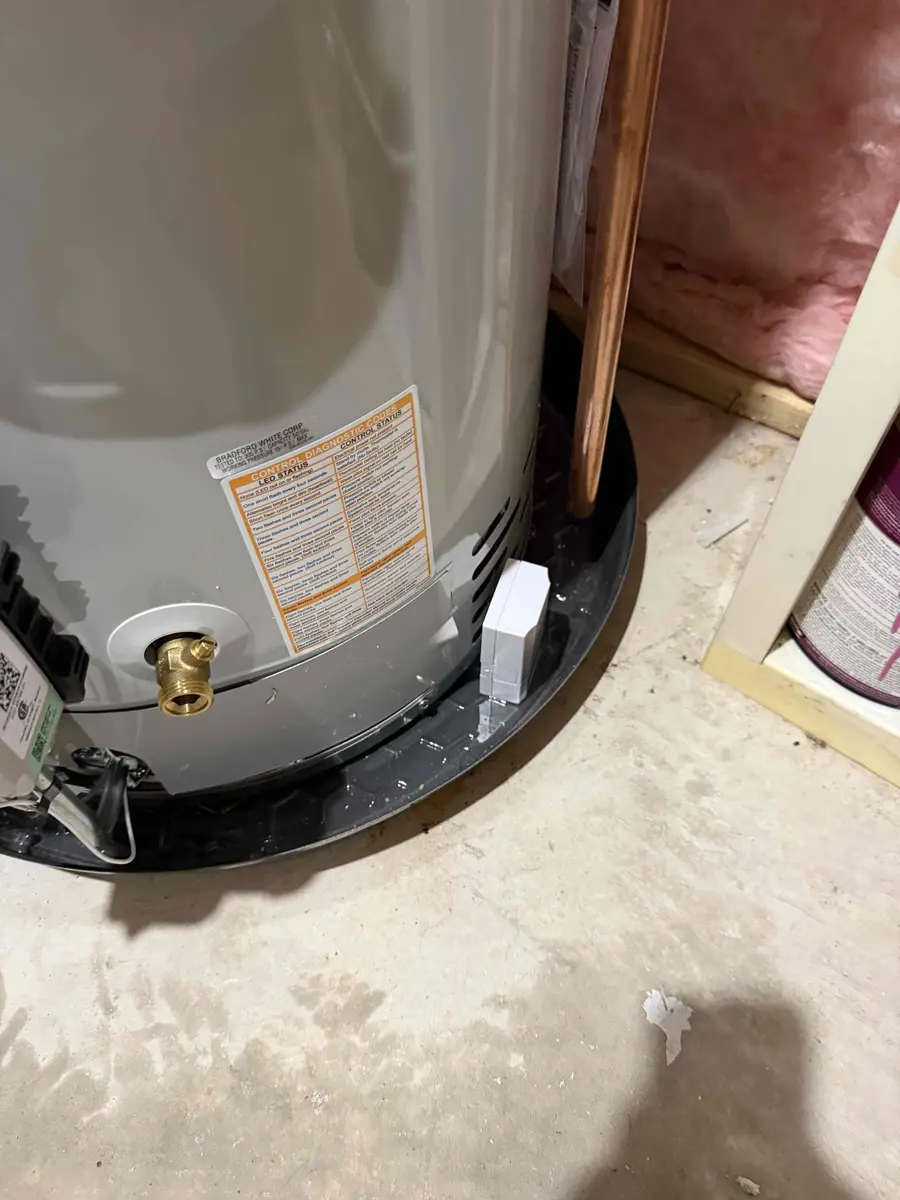
This replacement went in after the old tank, about 14 years old, was full of mineral buildup. Fourteen years is a decent run, but scale was a big part of why it was time.
A softener on the new one is the cheapest way to get a full life out of it. Our guide on how long a water heater lasts covers the other warning signs.
Faucets and valves stick and leak. The moving parts inside a faucet or shower valve are a small cartridge with rubber seals. Scale grinds on the seals and jams the parts.
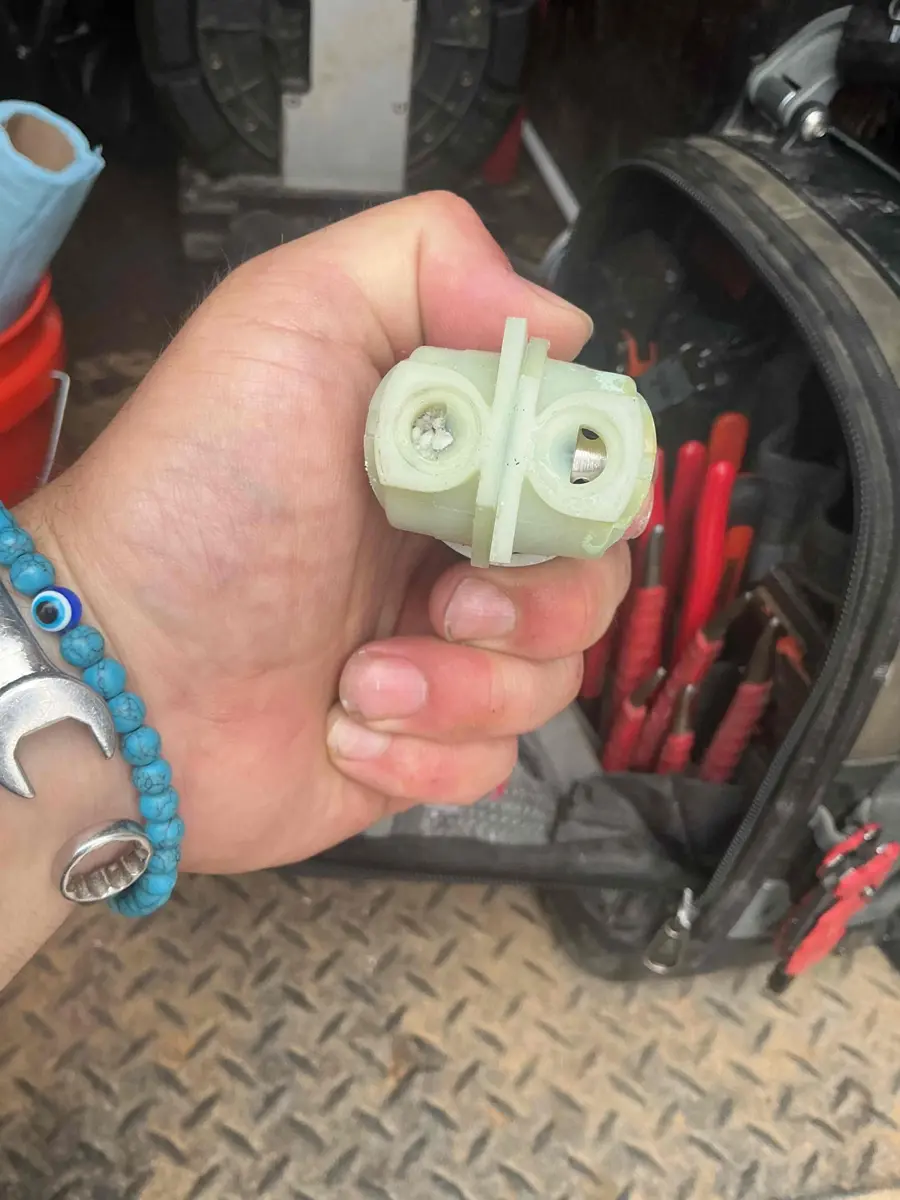
The grit lodged in this cartridge is the kind of debris that blocks hot water and makes a handle hard to turn. We pulled it from a house that had been fighting hard water for years.
Outside, it gets worse, because those faucets never see softened water in most homes.
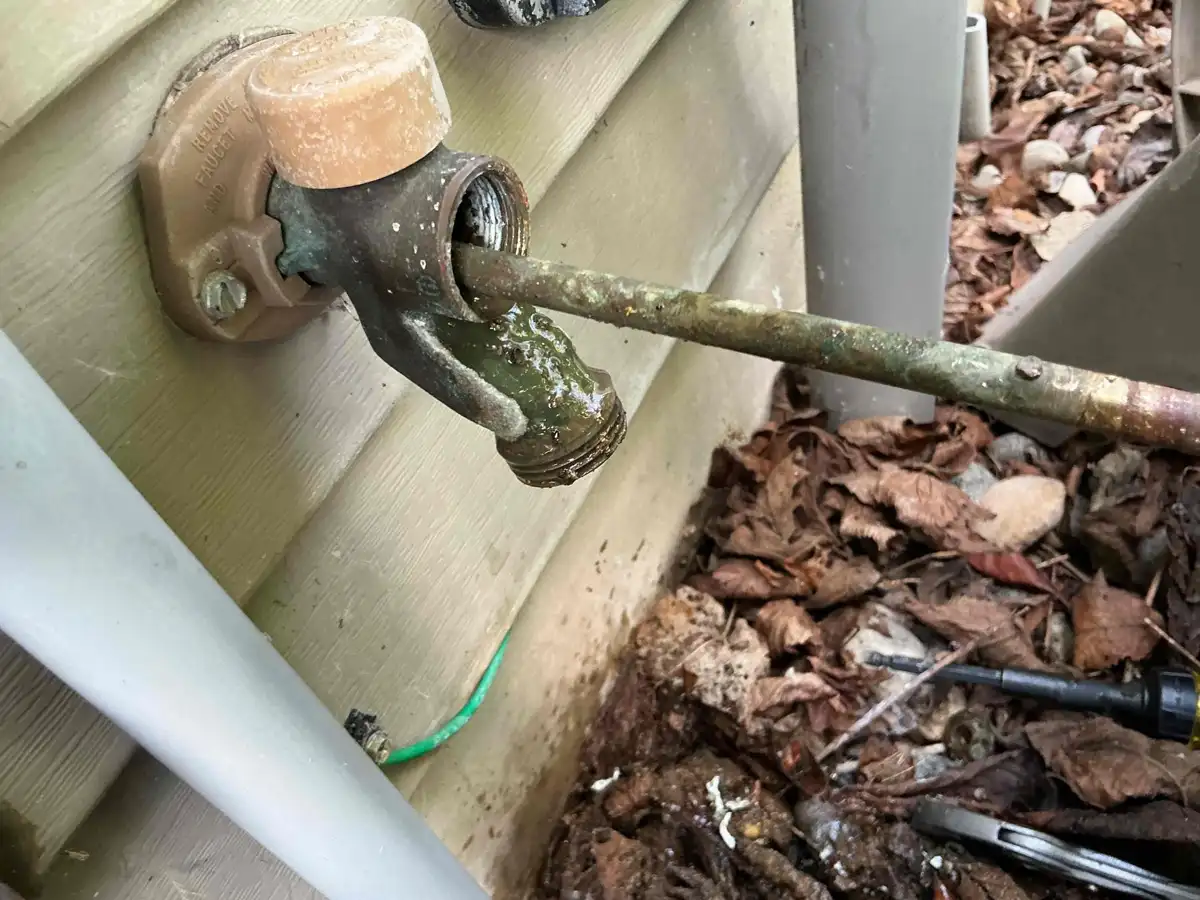
When an outdoor faucet looks like this, the inside usually looks worse, and replacing it beats repairing it. The homeowner told us hard water had made two of their outdoor spigots leak every time they were turned on.
Shower heads lose pressure as the tiny holes clog with scale. Before you blame your water pressure, clean the head. Our post on how to increase water pressure in a shower has the steps.
Dishwashers and washing machines collect scale on heating elements and valves, and you use more detergent to get the same clean.
When Is a Whole House Softener Worth It?
Not every house needs one. Penn State says water under about 7 grains per gallon will probably not cause major scaling and soap film, and Minnesota's health department says plainly there is no requirement to soften. The decision is yours.
Here is how we would think about it.
A softener is usually worth it if:
- Your water tests above about 7 grains per gallon, which covers Grand Rapids city water and many wells around here
- You see scale on fixtures, glass or the toilet within weeks of cleaning
- You just put in a new water heater, dishwasher or fixtures and want them to last
- You are on a well that tests very hard, especially with some iron
You might skip it or go smaller if:
- Your water tests soft or moderately hard
- Your utility already softens the water (Minnesota's health department warns that softening already soft water can make it corrosive)
- You mainly care about drinking water, in which case RO at the kitchen sink may be enough
- You are on a septic system and the extra regeneration water is a concern; talk it through with us first
A nice middle ground: you do not have to soften everything. Minnesota's health department notes that toilets, outdoor faucets and basement cold water taps usually do not need softened water. Many people soften only the hot side or the main living fixtures.
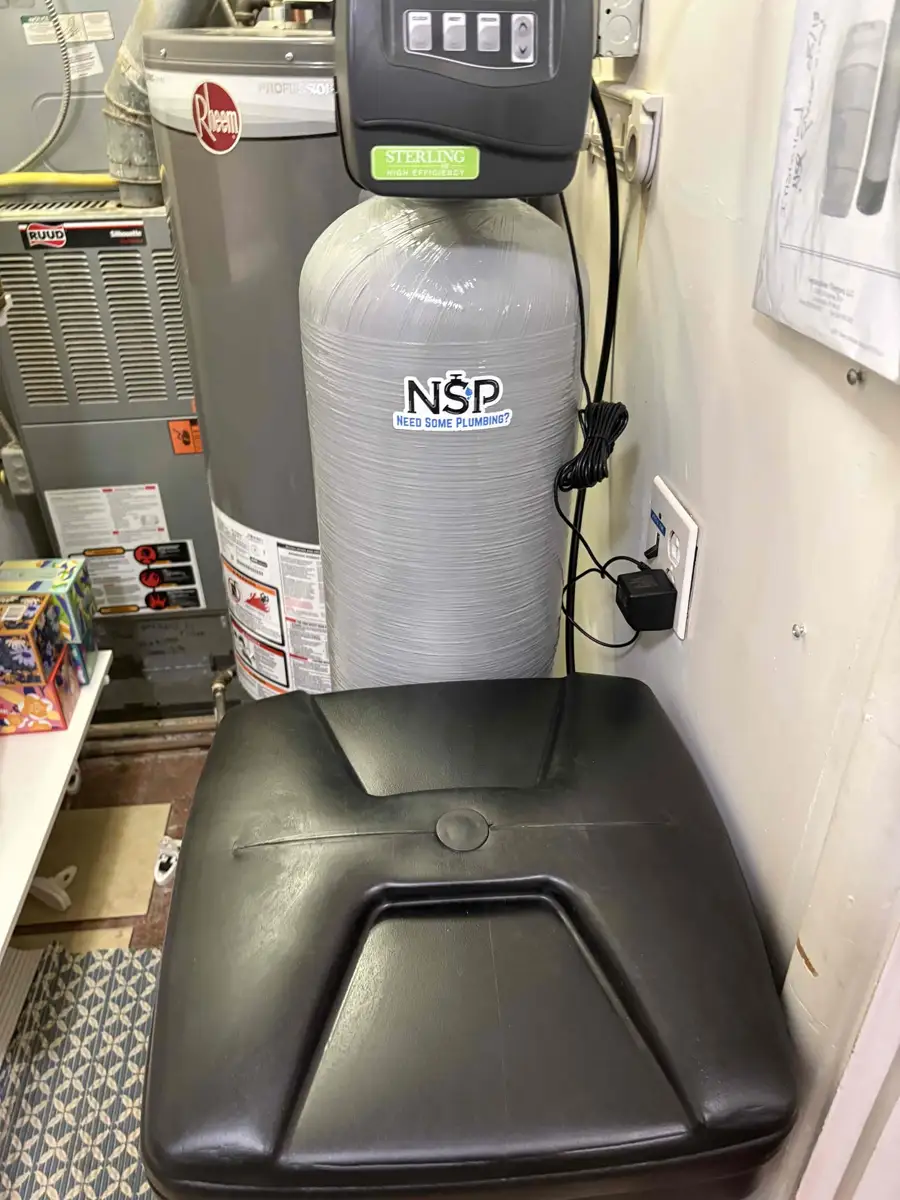
This is what a clean install looks like: softener and brine tank right next to the water heater, so heated water is softened water. It sits near a drain and an outlet, which every salt based softener needs.
What Does a Plumber Check Before Installing a Water Treatment System?
A good install starts with questions, not a sales pitch. When we come out for a water treatment visit, here is what we look at:
- Hardness and iron. We test, then compare against your city report or lab result. Iron above what the softener can handle means a filter goes in front of it.
- Your household. How many people and how much water you use drives the size.
- Flow. Big houses and multiple showers running at once need a unit that does not choke the water pressure.
- Location. A softener needs a drain for its cleaning cycle and an outlet for the control head. We look for the spot closest to where water enters, before the water heater.
- What to leave unsoftened. Outdoor faucets and sometimes the kitchen cold line can stay on hard water if you prefer.
- Your goals. If spots and soap matter, you need a softener. If you only want scale protection and no salt, a conditioner may fit. If drinking water matters, we will talk about RO.
A softener ties directly into the water supply for the whole house, so the connections have to be done right. We add a bypass valve so the house keeps running water when the unit is serviced.
If you want the detail, see the Michigan code chapter on water supply and distribution. We handle all of that as part of the install.
What is the best way to treat hard water?
For the whole house, an ion exchange water softener is the only option that removes hardness minerals. Test your water first. If you mainly want scale protection without salt, a salt free conditioner helps, and reverse osmosis covers drinking water at one tap.
Do salt free water softeners actually soften water?
No. Salt free conditioners leave the calcium and magnesium in the water and change their form so less scale sticks. You may still see spots and poor lather, and a hardness test will still read hard. They are descalers, not softeners.
How hard is Grand Rapids water?
Grand Rapids city water averaged about 8.3 grains per gallon in the city's 2025 water analysis, which falls in the hard range on the standard scale. Suburbs and private wells can be different, so check your own utility report or get a well test.
Is hard water bad for you?
No. Calcium and magnesium are not a health hazard and are part of a normal diet. Hard water is a nuisance and a cost for plumbing, water heaters, fixtures and appliances, which is why people treat it.
Can I just use vinegar instead of a softener?
Vinegar cleans off scale you already have on shower heads, faucets and glass. It does not change the water, so the buildup comes back. It is good maintenance but not a treatment.
Does a water softener make water salty?
No, it does not taste salty. It adds a small amount of sodium, roughly 7.5 milligrams per quart for each grain of hardness removed. People on a low sodium diet can use potassium pellets or drink from a reverse osmosis faucet.
Do I need to soften the water going to my outdoor faucets?
Usually not. Outdoor faucets, toilets and basement cold taps can stay on hard water, which saves salt and keeps softened water off your lawn. The tradeoff is that those fixtures will still collect scale.
Hard Water Treatment Around Grand Rapids from NSP Plumbing
NSP Plumbing is a licensed Michigan plumbing contractor (license #8004990) based in Wyoming, Michigan. We test water, size and install water softeners, whole house water treatment and water filtration systems, and we replace the fixtures and water heaters that hard water already wore out.
We work across Grand Rapids, Wyoming, Kentwood, Hudsonville, Rockford and the rest of West Michigan. If you are not sure what is in your water, start with a test. We will tell you if you do not need equipment at all. You can also contact us with your city water report or well test in hand.
Find out how hard your water really is
A licensed NSP plumber tests your hardness and iron, checks where a system would go, and tells you which fix fits your house, including when you do not need one. You get a written quote before any work starts.