
You fill a glass at the kitchen tap and it comes out white, like someone stirred milk into it. The cold side looks fine. Only the hot water does it, and now you are wondering whether you should be drinking it at all.
Cloudy hot water that clears from the bottom of the glass up within a minute or two is dissolved air, and it is harmless. If the cloudiness stays, settles as a white layer, or leaves grit and film behind, it is minerals or sediment from your water heater, and that one is worth fixing.
Why Is My Hot Water Cloudy?
There are really only three things that make tap water look cloudy, and you can tell them apart in your own kitchen.
Air. This is the most common cause by a wide margin. Water under pressure in your pipes holds more dissolved air than water sitting in an open glass.
When it leaves the faucet, the pressure drops and that air comes out as millions of tiny bubbles. Up close the water looks milky white. Give it a minute and it turns clear, starting at the bottom.
Minerals. Hard water carries a lot of dissolved calcium and magnesium. Heat pushes those minerals out of the water, which is why hot water shows them more than cold.
Mineral cloudiness does not clear on its own. It may settle into a faint white haze at the bottom of the glass and it leaves spots on dishes and faucets.
Sediment from the water heater. A tank water heater is a big pot that has been heating hard water for years. The minerals that drop out pile up on the bottom as a layer of scale and grit.
Some of it gets stirred up and carried out with the hot water, so you see specks, flakes or a cloudy tint that only shows up on the hot side.
Michigan EGLE sorts it the same way. Cloudy, milky, white or gray water that clears after it sits for a few minutes is likely tiny air bubbles. Cloudiness that does not settle and leaves a film on dishes and faucets is likely minerals. Sediment or sand that only shows up in hot water points at the water heater.
Here is the quick version:
| What you see | Most likely cause | Is it a problem? |
|---|---|---|
| Milky white, clears from the bottom up in a minute or two | Dissolved air | No |
| Stays hazy, leaves white spots and film | Hard water minerals | Not a health issue, but it costs you in scale |
| Specks, flakes or grit, hot side only | Sediment from the water heater tank | Yes, the tank needs attention |
| Cloudy on both hot and cold, started suddenly | City main work, a change in supply, or a well issue | Call your utility or test your well |
The rest of this guide walks through each one, how to test for it in about two minutes, and what actually fixes it.
How Do I Tell If Cloudy Water Is Air or Minerals?
This is the glass test, and it is the single most useful thing you can do before you call anyone.
Run the hot water for about 15 seconds, then fill a clear glass. Set it on the counter where you can see it against a dark background. Now watch the glass for two or three minutes.
If it clears from the bottom up, it is air. You will see the cloud lift toward the top as the bubbles rise and pop. The bottom of the glass goes clear first.
That pattern is the giveaway, because a mineral haze has no reason to move upward. The Washington State Department of Health describes exactly this: milky white water that starts to clear at the bottom of the glass is caused by tiny air bubbles.
If it stays cloudy, or a white layer settles to the bottom, it is minerals or sediment. Let the glass sit for 10 or 15 minutes. Then pour most of it out and look at what is left on the bottom. A fine white powder or a few gritty flakes tells you the water heater is shedding scale.
Do one more test while you are at it. Fill a second glass from the cold side and set it next to the first. Compare the two.
- Only the hot glass is cloudy. The water heater is involved, either because hot water releases more air or because the tank is full of sediment.
- Both glasses are cloudy. The cause is upstream of the water heater: the city supply, your well, or something at the main.
A third check takes ten seconds. Unscrew the aerator, the little screen at the tip of the faucet, and look inside. White crumbs or sandy grit caught in that screen is sediment that already made it through your pipes.
EGLE notes that the aerator itself adds air to the stream, so a faucet with a fine aerator can look cloudier than a tub spout on the same water.
Write down what you saw. If you end up calling a plumber, "hot only, white flakes in the aerator" gets you to the right fix much faster than "my water looks weird."
Why Is Hot Water Cloudier Than Cold Water?
Two reasons, and they stack on top of each other.
Warm water holds less air. Cold water can carry more dissolved gas than warm water. When your water heater warms the water, some of that air wants to come out, but the pressure in the pipes keeps it dissolved until you open the tap.
The moment it hits the open glass, it fizzes out as bubbles. That is why the same water can look clear from the cold tap and white from the hot one, with nothing wrong at all.
You see this more in winter, too. Water coming out of the ground in a West Michigan January is very cold and holds a lot of air.
When your water heater warms that water, the difference is bigger, so the milky look is more obvious. Plenty of homeowners notice cloudy hot water for the first time in December or January for exactly that reason.
Heat pulls minerals out of the water. Calcium carbonate, the main ingredient in scale, gets less soluble as water heats up. Inside your water heater, that means minerals drop out and settle on the bottom of the tank every single day. Over years, that layer gets thick.
Grand Rapids city water averaged about 8.3 grains per gallon of hardness in 2025, which falls in the hard range on the scale Penn State Extension uses.
Private wells are not covered by that report, and their hardness varies a lot from one well to the next. Hard water plus years of heating is how a tank ends up with inches of scale in the bottom.
When that sediment layer gets deep, two things happen. Hot water flowing out of the tank carries some of it along, so you see flakes and haze. And on a gas unit the burner has to heat through that layer, which causes the popping and rumbling noises a lot of people hear.
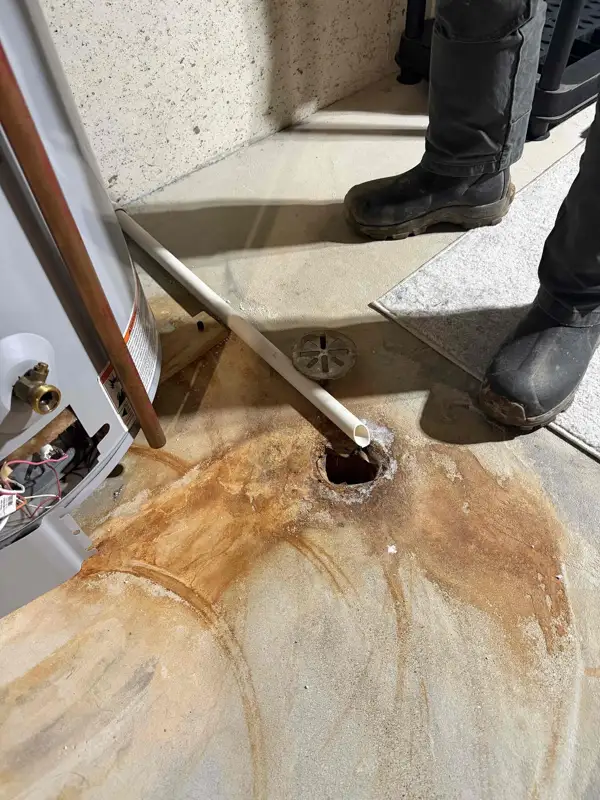
These rust stains around the floor drain mean the old tank was dumping sediment and rust for a long time before it was replaced. The homeowner had already drained it twice to quiet a knocking sound, and both times sediment came out.
Draining helped the noise, but by then the tank was too far gone and he was only getting a few minutes of hot water. A tank that rumbles and sheds grit is telling you something.
Is Cloudy Hot Water Safe to Drink?
If it passes the glass test and clears from the bottom up, yes. That is air, and air bubbles in tap water are not a health concern. Once it clears, it is the same water that comes out of your cold tap.
Mineral cloudiness from hard water is also not a health hazard. Penn State Extension points out that calcium and magnesium are essential nutrients. Hard water is a nuisance and a cost, not a danger.
That said, there are two good reasons not to drink or cook with hot tap water as a habit, cloudy or not.
Hot water sits in a tank. It has been sitting in a metal tank with years of sediment in the bottom. That is fine for showers and dishes. For drinking, cooking and baby formula, start with cold water and heat it on the stove.
Hot water picks up more from your pipes. Warm water dissolves more metal from older plumbing and fixtures than cold water does. That is a general rule, and it is one more reason to make cold water your drinking water.
Cloudiness becomes worth a closer look when it comes with something else:
- A smell. A rotten egg smell from the hot side only usually points at the anode rod inside the tank reacting with your water. We cover that in our guide on why water smells like rotten eggs.
- A color. Yellow, orange or brown water means rust or iron, from the tank, your pipes or the supply. Clear white does not.
- Grit you can feel. Sand or hard flakes in the aerator means sediment is moving through your plumbing, and it will eventually clog aerators, shower heads and valve cartridges.
- A sudden change on both hot and cold. If both sides went cloudy at the same time, call your water utility first. They will know if a main was flushed or repaired on your street.
If you are on a private well, the rules are different because nobody tests the water for you. The EPA's private well guidance recommends regular testing, and a sudden change in how your water looks is a good reason to test now.
What Does It Mean If the Cloudiness Only Shows Up at One Faucet?
This one points at the faucet, not the water.
Every modern faucet has an aerator at the tip. Its job is to mix air into the stream so it feels full while using less water.
A fine aerator, or one that is partly clogged, can whip a lot of air into the water. The result is a white, bubbly stream at the kitchen sink and a perfectly clear stream from the tub spout on the same hot water line.
Try this. Fill a glass from the cloudy faucet and another from a tub or laundry tub nearby. If only the faucet with the aerator looks milky, and it clears from the bottom up, you have found the cause. Nothing needs fixing.
If the aerator is crusted or full of white grit, clean it. Unscrew it by hand or with a rag over pliers, soak it in white vinegar for an hour, rinse it and screw it back on.
If it is cracked or the screen is torn, a new one is a few dollars at any hardware store. Take the old one with you so you get the right thread size.
A single fixture that keeps collecting grit, especially on the hot side, is still a clue about your water heater. The faucet is where the sediment shows up, but the tank is where it comes from. When you start pulling flakes out of aerators every few weeks, it is time to look at the tank.
One more pattern worth knowing: cloudy water right after a repair. If a plumber or the city shut your water off recently, air got into the lines.
For a day or two you may get sputtering faucets and milky water. That clears on its own as you use water. If it does not, our plumbing repair team can find where the air is getting in.
How Do You Fix Cloudy Hot Water?
Match the fix to the cause you found with the glass test. Here they are from cheapest to biggest.
If it is air: do nothing. Air bubbles are harmless and there is no product you need. If it bothers you, let the glass sit a minute before you drink, or drink from the cold tap.
If it is sediment: flush the water heater. Draining and flushing a tank once a year clears out loose sediment before it builds into a hard layer.
First the power or gas goes to off or pilot and the cold supply gets closed.
Then a hose on the drain valve at the bottom of the tank lets the dirty water run to a floor drain or outside. You open the cold supply in short bursts to stir up the bottom and keep going until the water runs clear.
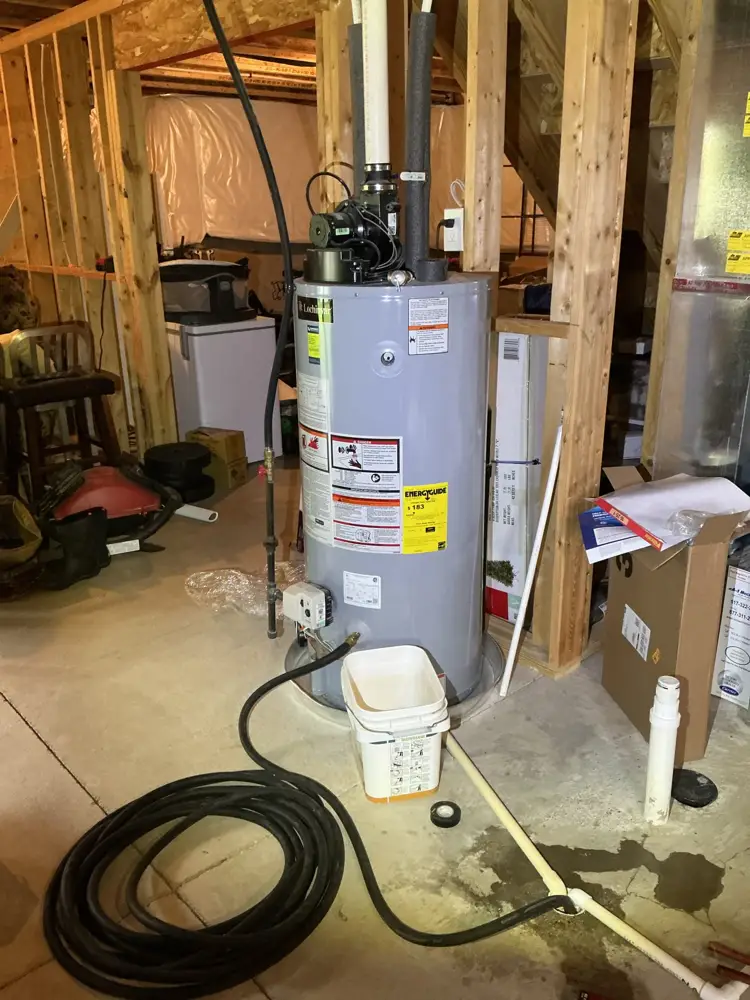
This is what a routine flush looks like: a hose on the drain valve and the tank emptying to a drain until the water runs clear. This homeowner booked it because the tank had started knocking. Caught early, a flush like this is maintenance, not a repair, and it is the cheapest way to stop sediment cloudiness.
Be honest with yourself about the age of the tank before you flush it yourself. On an older heater that has never been flushed, the drain valve can be crusted shut or start to drip once it is opened, and a heavy layer of scale may not come out through a small valve at all.
That is a good job to hand to a plumber, who can also check the anode and the relief valve while the tank is empty.
If it is the anode rod: replace it. The anode is a metal rod that hangs inside the tank and corrodes on purpose so the tank does not. As it wears away, it sheds bits of itself.
A magnesium rod can break down into a white, crumbly mess that shows up as flakes at your faucets. One West Michigan homeowner called us this summer because the magnesium rod in his tank was disintegrating and the pieces were clogging pipes.
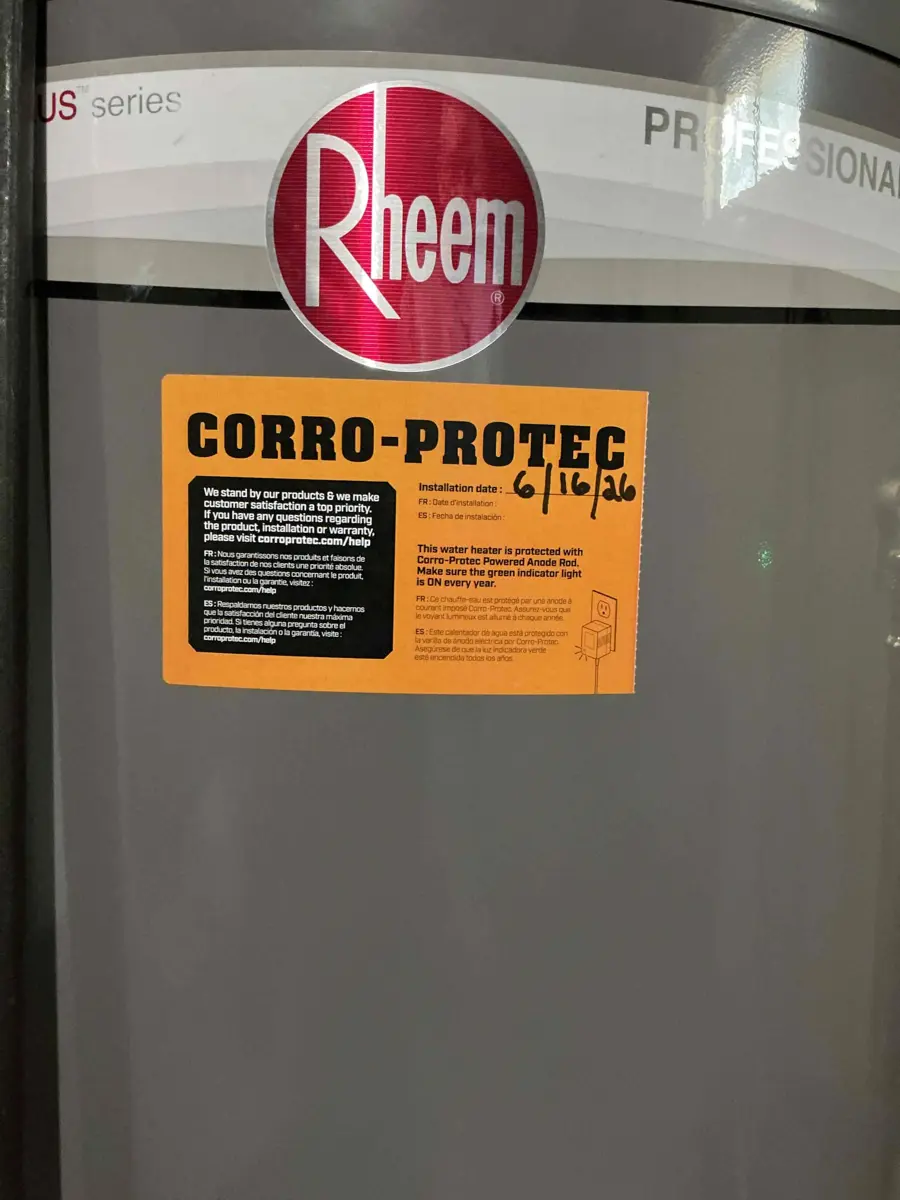
That orange tag means this tank now has a powered anode rod, which does not wear away and will not shed flakes or feed a hot water smell. A powered anode uses a tiny electric current instead of a sacrificial metal rod.
On this home the homeowner had a sulfur smell from the hot side only, which is a classic anode problem.
If it is minerals: treat the water. Flushing removes sediment that already formed. It does nothing to stop the next layer.
If hard water is the root cause, a water softener is the only thing that takes the hardness out before it reaches the tank. Our guide on how to treat hard water walks through softener versus conditioner versus filter.
If both hot and cold are cloudy: look upstream. On city water, call the utility. On a well, test the water and check the treatment equipment.
When Is Cloudy Water a Sign the Water Heater Is Done?
Sediment by itself does not mean you need a new water heater. A tank that gets flushed and has a healthy anode can live a long time on hard water. But cloudy, gritty hot water often shows up alongside other signs that the tank is near the end.
Look for these together:
- Rumbling, popping or knocking while the water heats. That is water boiling under a thick sediment layer.
- Less hot water than you used to get. Sediment takes up room in the tank, and on electric units it can bury the lower heating element.
- Rust colored hot water or rust on the outside of the tank and its fittings.
- Water on the floor around the base. Our post on a water heater leaking from the bottom covers what that means.
- Age. The InterNACHI life expectancy chart puts a conventional tank around 6 to 12 years.
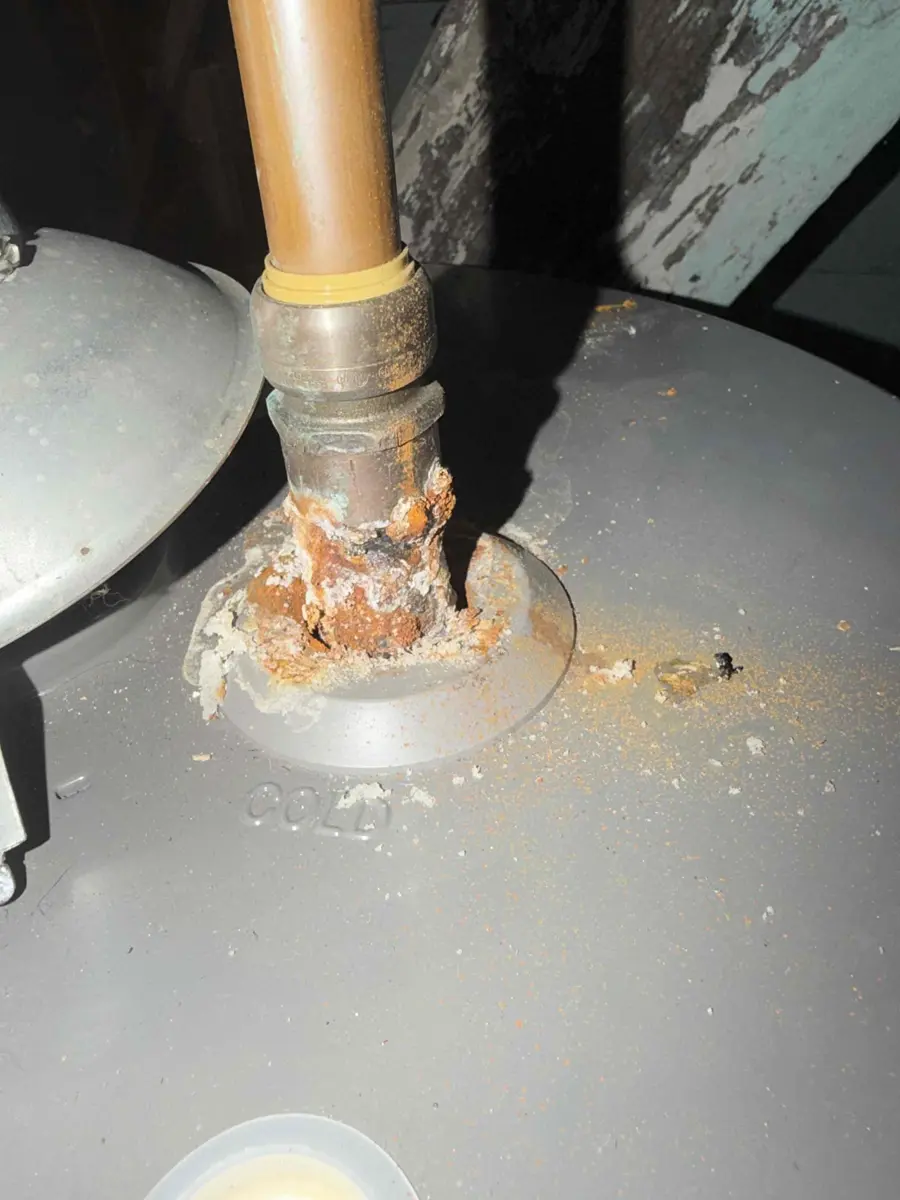
Corrosion like this on the fittings at the top of the tank means the water lines need to be replaced, and on an older tank it is usually a sign to start planning for a new heater. On this job the connections were corroded and leaking.
Rust and flakes from fittings like these end up in your hot water.
If your tank checks three or more of those boxes, flushing it is unlikely to buy much time. Our guide on how long a water heater lasts helps you decide between one more repair and a replacement, and our water heater service page covers both.
If you have no hot water at all, that is a different problem. Start with our no hot water checklist.
What About Cloudy Water on a Private Well?
Well water plays by its own rules. Nobody tests it for you, and the water can change with the seasons, after a heavy rain, or when equipment starts to fail.
On a well, cloudy water that passes the glass test is still usually air. Well systems use a pressure tank, and a waterlogged tank or a pump that cycles on and off a lot can pull extra air into the lines. That shows up as sputtering faucets along with milky water.
Cloudiness that does not clear means something else. It can be fine silt or sand from the well itself, iron that has not oxidized yet, or hardness that runs higher than what most city systems deliver. A sediment filter or softener that is overdue for service can also pass grit and haze through.
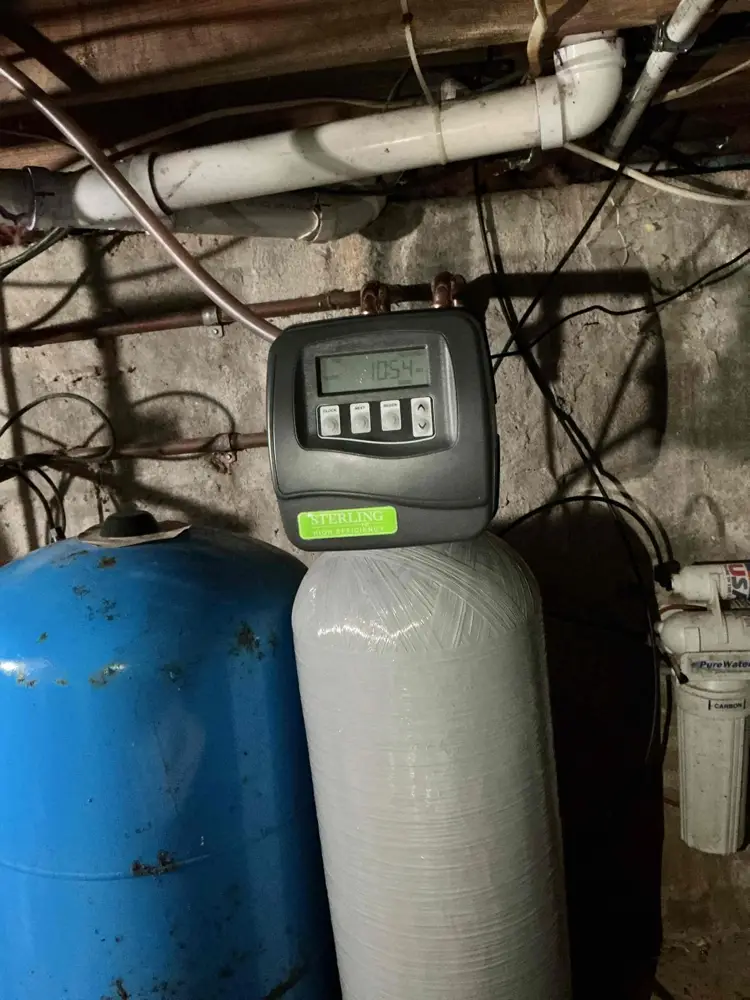
A softener sitting next to a well pressure tank, like this one, only keeps the water clear if it is set up for your water and serviced on schedule.
On this home the homeowner was still unhappy with the water after earlier work and asked for a water heater flush on the next visit, because sediment from the tank was part of the problem.
The fix on a well starts with a test, not a guess. Test for hardness and iron at a minimum. The EPA's consumer confidence report page explains what city systems report each year, and it is a useful reference for what a full test should cover.
With the numbers in hand, you can decide whether you need a sediment filter, a softener, whole house water treatment or nothing at all. If drinking water quality is the main worry, our post on whether reverse osmosis is worth it covers that option.
Why is my hot water cloudy but my cold water clear?
Warm water holds less dissolved air than cold water, so hot water fizzes out more tiny bubbles when it leaves the faucet. If the glass clears from the bottom up in a minute or two, it is air and it is harmless. If it stays cloudy or leaves grit, sediment in the water heater is the likely cause.
Is cloudy tap water safe to drink?
Cloudy water caused by air is safe once it clears, and mineral cloudiness from hard water is not a health hazard. For drinking and cooking, use cold water rather than hot. If the water also has a color, smell or grit, or both hot and cold changed suddenly, contact your utility or test your well.
How do I fix cloudy hot water?
Do the glass test first. Air needs no fix. Sediment calls for flushing the water heater, and flakes from a worn anode rod call for a new anode. If hard water keeps building scale in the tank, a water softener stops it at the source.
Can a water heater cause cloudy water?
Yes. A tank collects mineral sediment on its bottom over years of heating hard water, and some of it gets carried out with the hot water. A breaking down magnesium anode rod can also shed white flakes. Both show up on the hot side only.
How often should I flush my water heater?
Once a year is a sensible schedule for a tank on hard water, which includes most of West Michigan. Homes with very hard well water may benefit from more frequent flushing. An older tank that has never been flushed is a job for a plumber, because the drain valve can stick or leak once opened.
Why is my water cloudy after the water was shut off?
When water is shut off for a repair, air gets into the pipes. For a day or two you may see milky water and sputtering faucets. It clears as you use water. If it lasts longer than that, have the system checked.
Does a water softener fix cloudy water?
A softener fixes cloudiness caused by hardness minerals and slows new sediment from forming in your water heater. It does nothing for air bubbles, and it will not clear out sediment that is already in the tank, so a flush is still needed.
Cloudy Water Help Around Grand Rapids from NSP Plumbing
NSP Plumbing is a licensed Michigan plumbing contractor (license #8004990) based in Wyoming, Michigan. We flush and repair water heaters, replace anode rods, and install water softeners and water filtration systems for homes with hard water or well water.
We work across Grand Rapids, Wyoming, Kentwood, Grandville, Hudsonville, Rockford and the rest of West Michigan.
If your glass test turns up grit or flakes, we will tell you whether a flush, an anode or a new tank is the right call, including when you do not need any of them. You can also contact us with what you saw in the glass.
Find out what is making your hot water cloudy
A licensed NSP plumber checks your water heater, flushes out sediment, inspects the anode rod and tells you whether hard water is the real cause. You get a written quote before any work starts.