You walk into the basement and there is a puddle around the water heater. Maybe it is a damp ring on the concrete, maybe it is an inch of water in the pan. Either way, you want to know if this is a quick fix or a new tank.
Water pooling at the bottom of a water heater usually comes from one of three places: the drain valve, the relief valve pipe, or the tank itself. Shut off the power or gas and the cold water supply first. A leaking valve is often fixable. A leaking tank is not.
Why Is My Water Heater Leaking From the Bottom?
A tank water heater is a steel tank full of hot water under pressure, wrapped in insulation and a thin metal outer shell called the jacket.
Water at the base can start at the very bottom, or it can start higher up and run down the side until it puddles on the floor. That second case fools a lot of people.
These are the sources we find most often, roughly from easiest fix to worst:
| Where the water comes from | What it usually means | Fixable? |
|---|---|---|
| Drain valve at the bottom front | Valve not fully closed, worn washer, or cracked plastic valve | Usually yes |
| Relief valve pipe running down the side | The safety valve opened, or it is worn and dripping | Usually yes, but find out why it opened |
| Fittings on top of the tank | Corroded pipe connection dripping and running down the jacket | Usually yes |
| Condensation on a gas heater | Normal moisture when cold water fills a hot burner area | Nothing to fix if it stops |
| Water from under the jacket at the base | The steel tank has rusted through | No, the tank needs replacing |
The table matters because the answer to "can this be fixed" depends entirely on which row you are in. A drain valve drip and a rusted tank both leave a puddle in the same spot, but one is a small repair and the other is a new water heater.
On the leaking water heater calls we run, the first ten minutes are spent doing exactly this: drying everything off and watching where the water reappears. You can do a version of that yourself, and we walk through it below.
Here is what the "water running down from above" case looks like in real life.
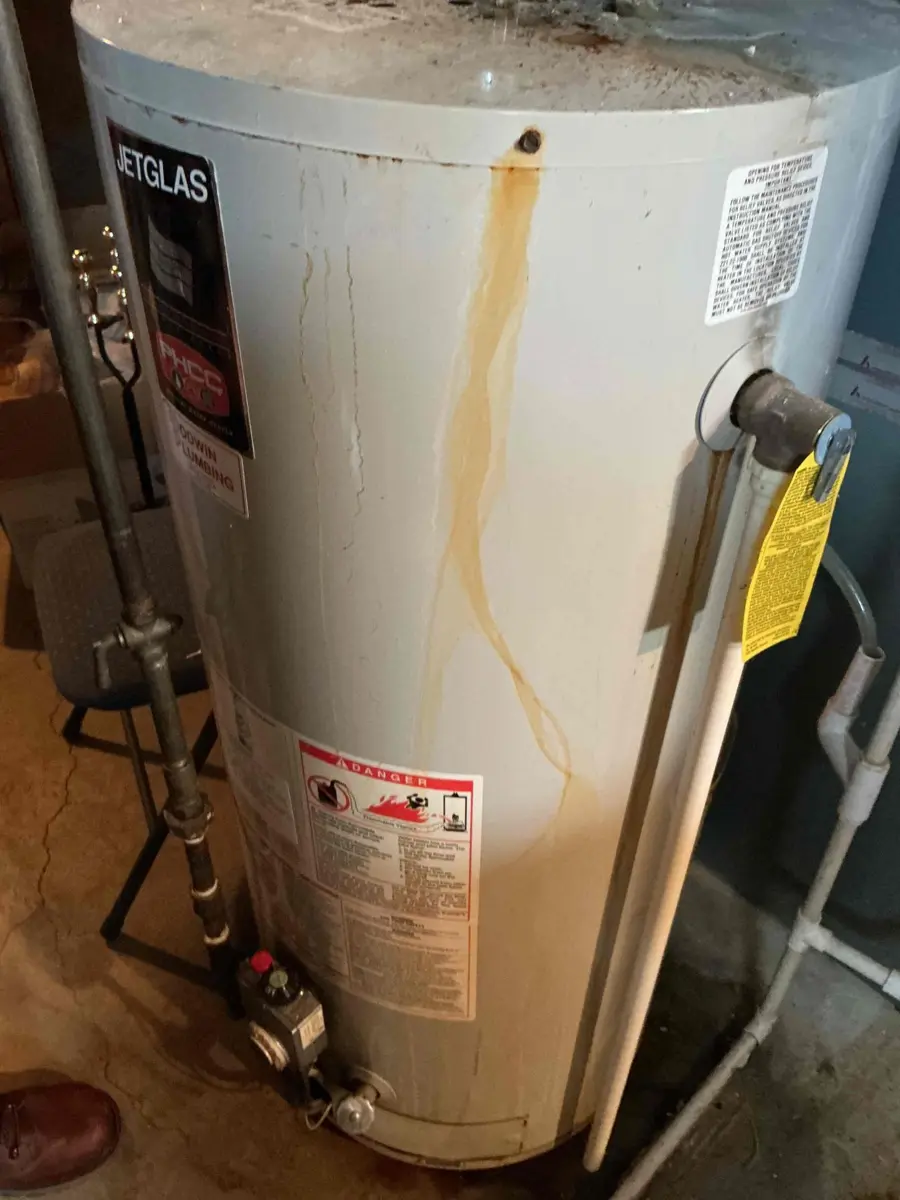
A rust streak from the top down: this leak started at the top, not the bottom. The homeowner saw water on the floor, but the stain traces it back to a fitting near the top of the tank. Always look up before you assume the tank is gone.
Is a Leaking Water Heater an Emergency?
Most of the time it is urgent, not an emergency. Here is a quick way to sort it out in about a minute.
Treat it as an emergency if:
- Water is spraying or running steadily, not dripping.
- The floor around it is flooding toward finished space, carpet, or electrical outlets.
- You smell gas near a gas water heater. Leave the house and call your gas company from outside.
- The relief valve pipe is blowing hot water or steam and will not stop.
It can usually wait for a scheduled visit if:
- It is a slow drip into a pan or onto bare concrete.
- You can shut off the water and power and the dripping stops.
- You still have hot water and the puddle is small.
A slow leak does not stay slow forever, though. On a summer job in Byron Center, the homeowner described "a very small, gradual leak" from the bottom and still had hot water. That is the right time to call, before the slow drip becomes a failed tank on a weekend.
The other thing that makes a small leak worse is where the heater sits.
A heater in an unfinished corner on bare concrete can drip for a while without much harm. A heater in a closet next to a finished basement, a furnace, or stored boxes can do real damage with the same amount of water, so be quicker to act there.
If you are in the "can wait" group, the next two sections help you find the source. If you are in the emergency group, skip ahead to shutting it down safely, then call us at our emergency plumbing service.
How Do I Find Where the Leak Is Coming From?
Start dry. Wipe down the outside of the tank, the pipes on top, the valve at the bottom and the floor around it with an old towel. Put a few dry paper towels on the floor under each spot. Then wait 15 to 30 minutes and see which one gets wet first.
Check these spots in this order:
1. The pipes on top. Look at the cold inlet and hot outlet where they screw into the tank. Older heaters often have steel fittings that rust where they meet a copper or flexible line. Any drip here runs down the jacket and lands at the base.
2. The relief valve and its pipe. On the side or top of the tank there is a brass valve with a lever and a pipe running down toward the floor. This is the temperature and pressure relief valve, a safety valve that opens if the tank gets too hot or too pressurized. If the end of that pipe is wet, the valve is releasing water.
3. The drain valve. Near the bottom front there is a small spigot, brass or plastic, that looks like an outdoor faucet. It is used to drain the tank. Check that it is fully closed and look for a drip at the tip or around the threads.
4. The base of the tank. If everything above is dry and water still appears at the very bottom, look under the jacket edge and behind the burner access cover on a gas unit. Water coming from inside the jacket, especially with rust, points to the tank.
Here is a fitting leak caught early, before it rusted all the way through.
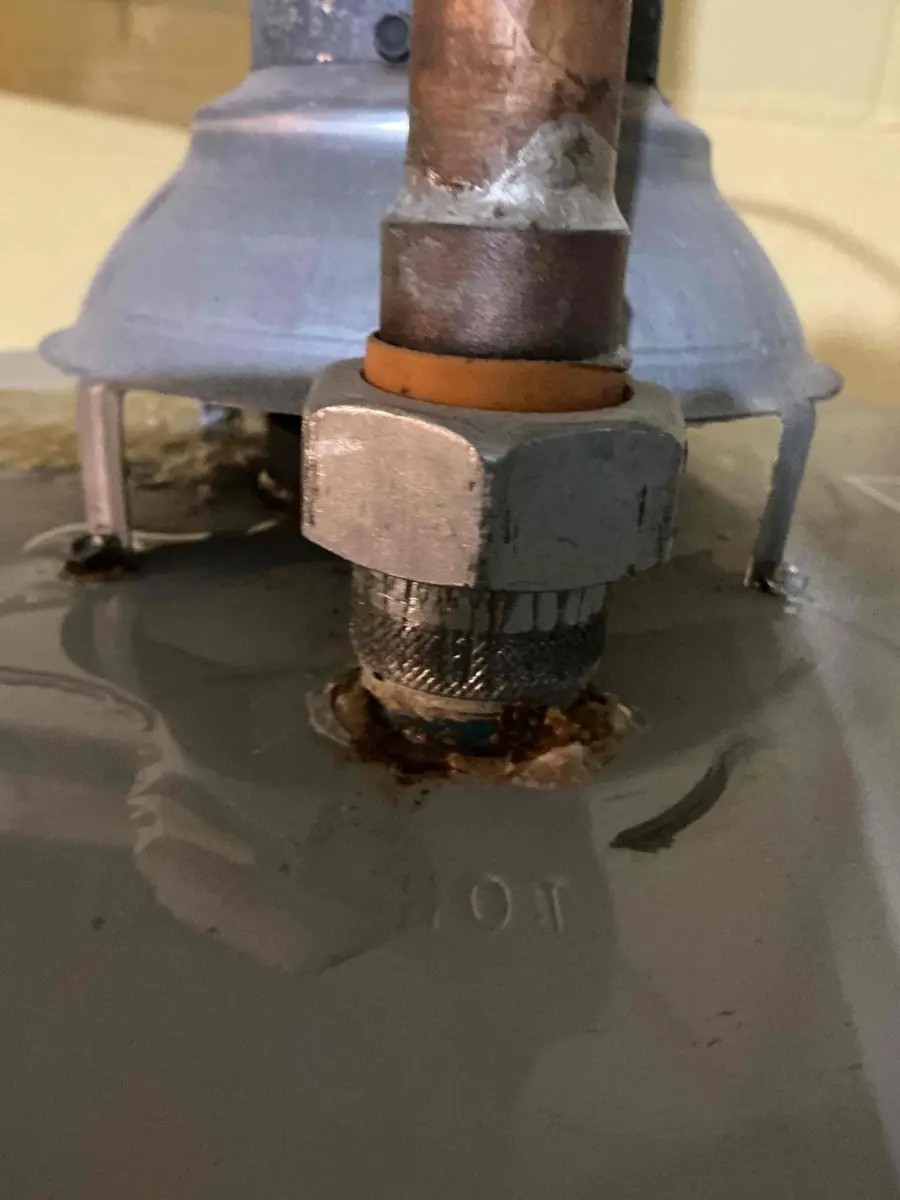
Rust packed around the top fitting: this is a connection problem, not a tank problem. A leak like this can be fixed by replacing the fitting and connector, as long as the tank itself is still sound and not near the end of its life.
Is It the Relief Valve Pipe?
The relief valve deserves its own section because it is the one people are most tempted to "fix" the wrong way.
That pipe running down the side of the tank is there on purpose.
When the valve opens, it sends hot water safely down toward the floor instead of letting pressure build inside the tank. The Michigan Plumbing Code (section 504.6) says this discharge pipe must end in open air no more than 4 inches from the floor, with no threads on the end, so nobody can screw a cap onto it.
If you see water at the end of that pipe, there are two possibilities:
- The valve is worn. After years of hard water and heat, the seal stops closing all the way and the valve drips. Replacing the valve is a common, reasonable repair.
- The valve is doing its job. The tank got too hot, or pressure in the house spiked when water heated up and had nowhere to expand. That can point to a thermostat problem or a missing or failed expansion tank, a small tank on the cold line that gives heated water room to grow.
Never cap, plug, or tie off the relief valve pipe. Stopping the drip that way removes the one part designed to keep an overheated tank from failing violently. If the valve keeps opening, have a licensed plumber find out why.
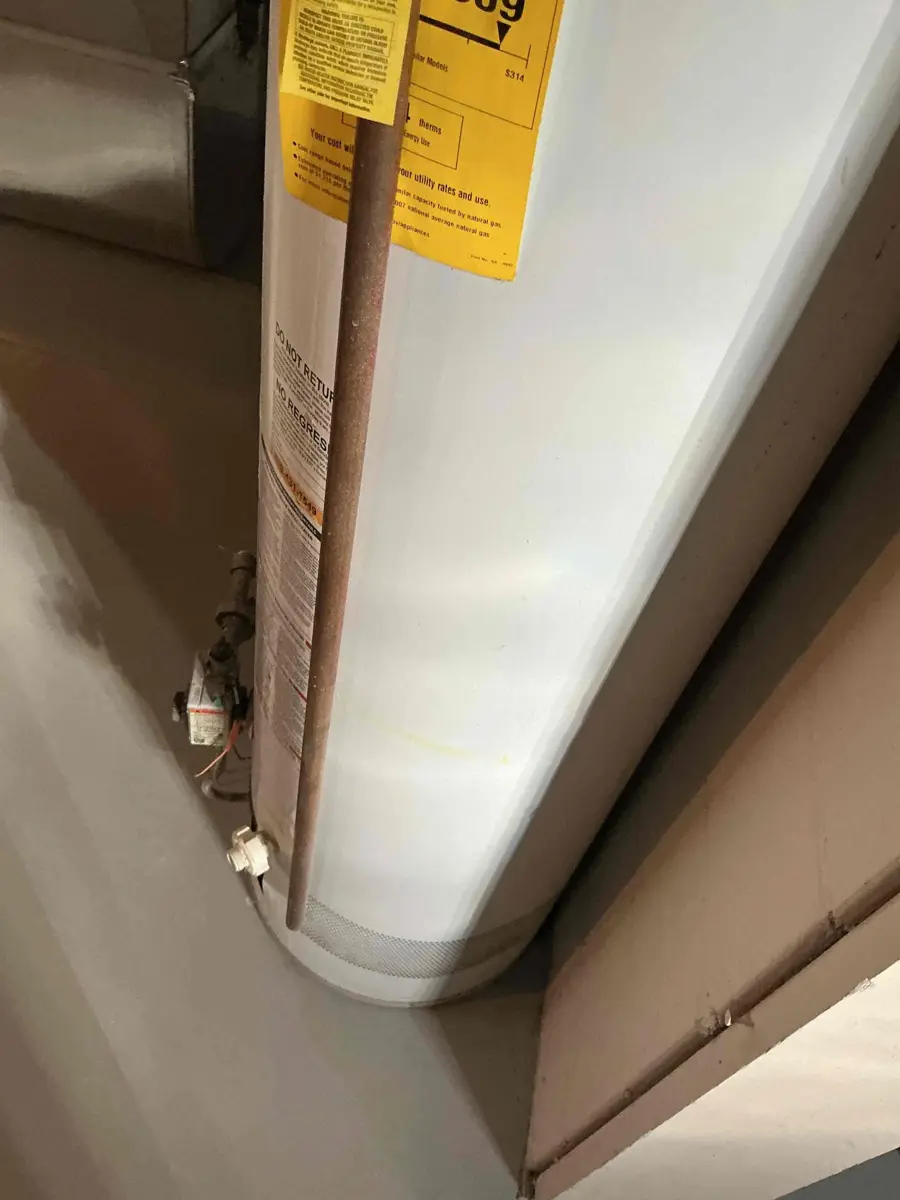
This pipe should end just above the floor and stay open: a wet end means the valve is releasing water. Find out whether it is worn or reacting to heat and pressure before you replace anything.
How Can I Tell if the Tank Itself Has Failed?
Water heaters fail from the inside out. Over years, the steel tank slowly corrodes, and minerals from hard water settle in the bottom as sediment. Eventually the steel rusts through, usually at the bottom where the sediment sits and the burner heats it hardest.
Grand Rapids water is moderately hard, around 8 grains per gallon according to the city's 2025 water quality analysis, so sediment buildup is common around here. A water softener and occasional flushing help, and our guide on how to treat hard water covers the options.
Signs the tank is the problem:
- Water seeps from under the jacket at the base with no drip from any valve or fitting above.
- Rust colored water in the drain pan, or rust flakes on the floor around the base.
- Heavy rust and scale inside the burner area on a gas heater (look through the access cover with a flashlight, but do not remove anything).
- Rusty hot water at the faucets, or popping and rumbling sounds while it heats.
- The heater is old. InterNACHI puts the typical life of a conventional tank heater at 6 to 12 years.
To check age, look at the label on the side. The serial number usually encodes the year of manufacture, and most brands publish how to read it. If your heater is past 10 years and leaking from the base, replacement is almost always the smarter money.
Here is what a failed tank bottom looks like from inside the burner area on a leaking gas unit we were called to.
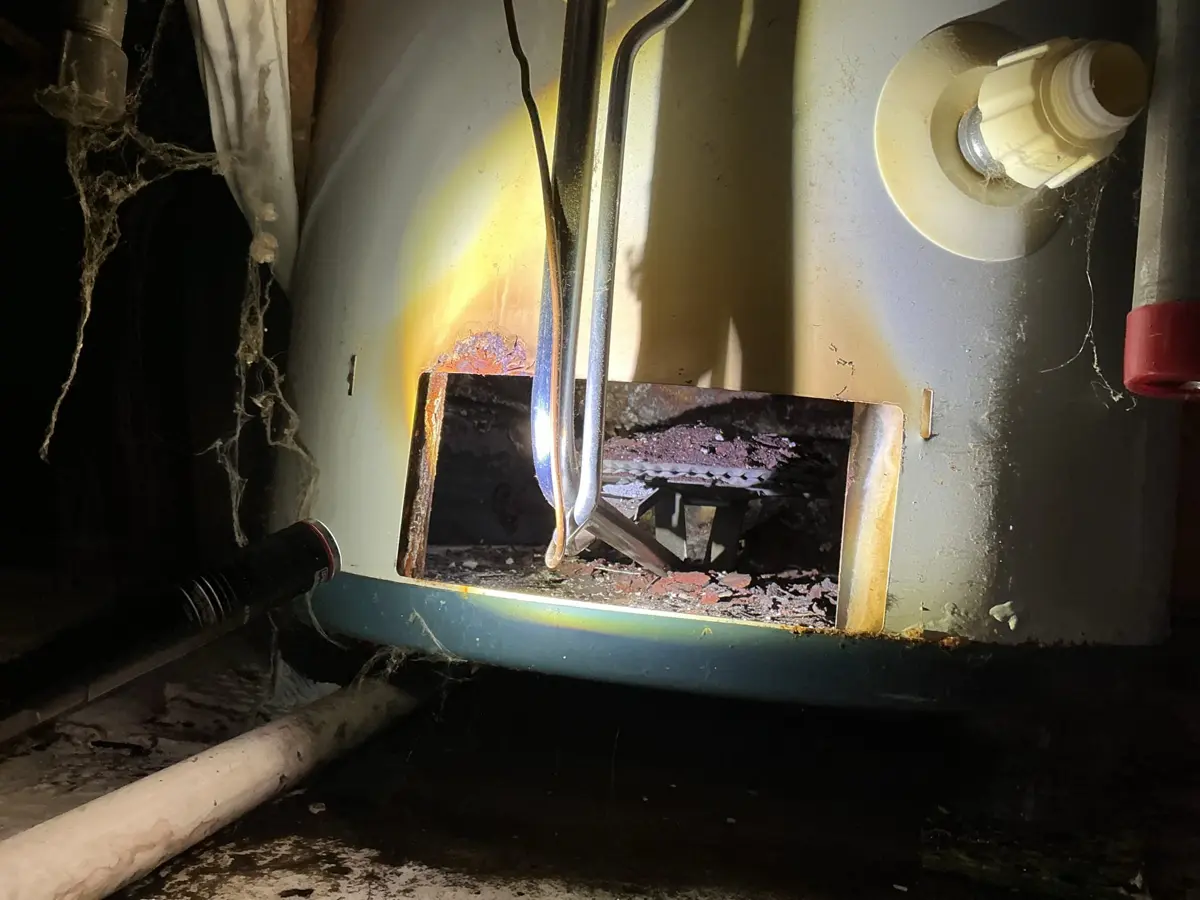
Heavy rust and flaking under the tank: rust like this means the tank is failing and needs to be replaced. No valve or fitting repair stops a leak coming from the steel itself.
And here is the pan under a different heater, on a December call where the owner suspected it was finished.
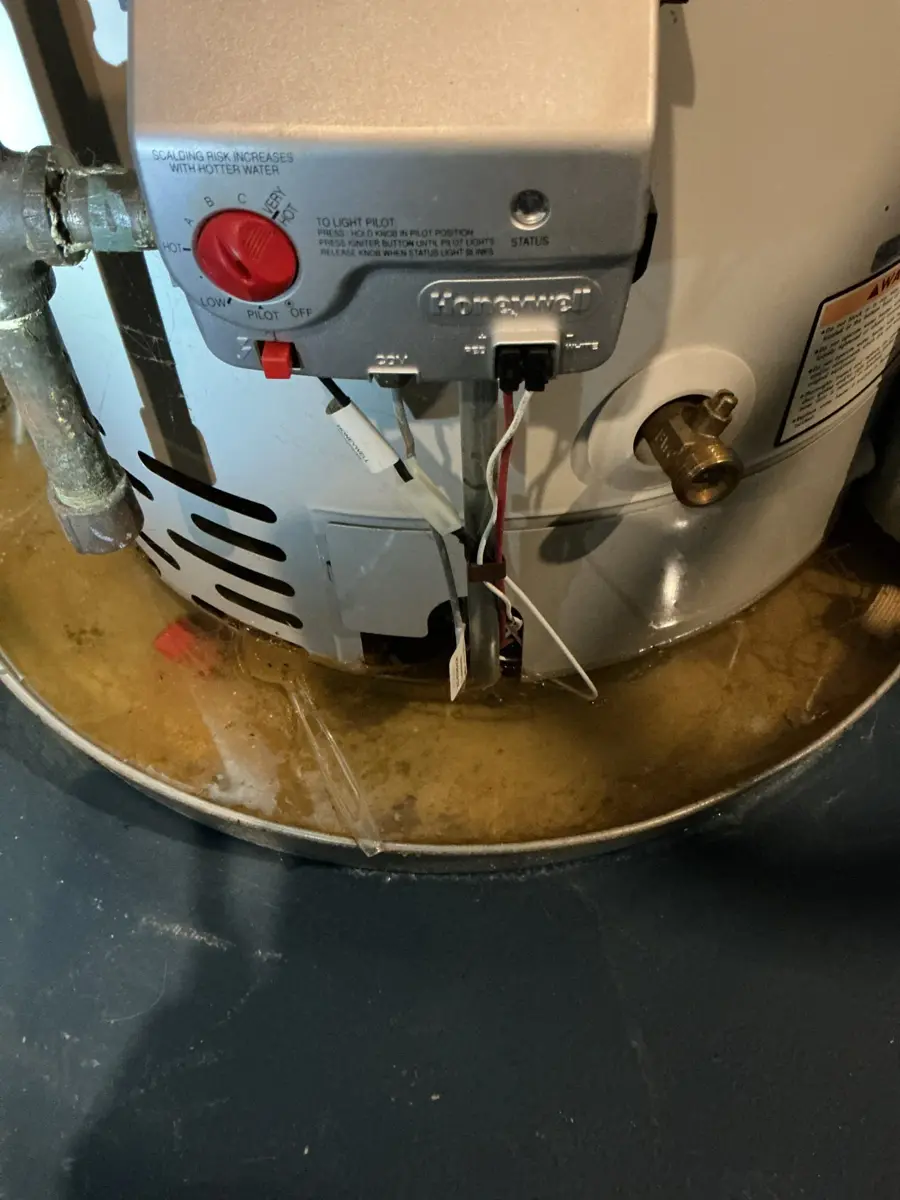
Rusty water sitting in the pan: a strong sign the tank is failing. Clear water in the pan can come from a valve or condensation. Brown water usually means rust from inside the tank.
How Do I Shut Off a Leaking Water Heater Safely?
Do this before anything else if the leak is more than a slow drip. The steps differ slightly for gas and electric.
Step 1: Turn off the heat source. On a gas heater, turn the knob on the gas control valve to "Off" or "Pilot." On an electric heater, switch off its breaker at the electrical panel; it is usually a double breaker labeled "water heater." Never run an electric heater with the tank empty, because the heating elements burn out in seconds without water around them.
Step 2: Close the cold water supply. Find the cold line coming into the top of the tank and close the shutoff valve on it. A lever handle turns a quarter turn so it sits across the pipe. A round handle turns clockwise until it stops. If there is no valve on the heater line, or it will not close, use your main water shutoff.
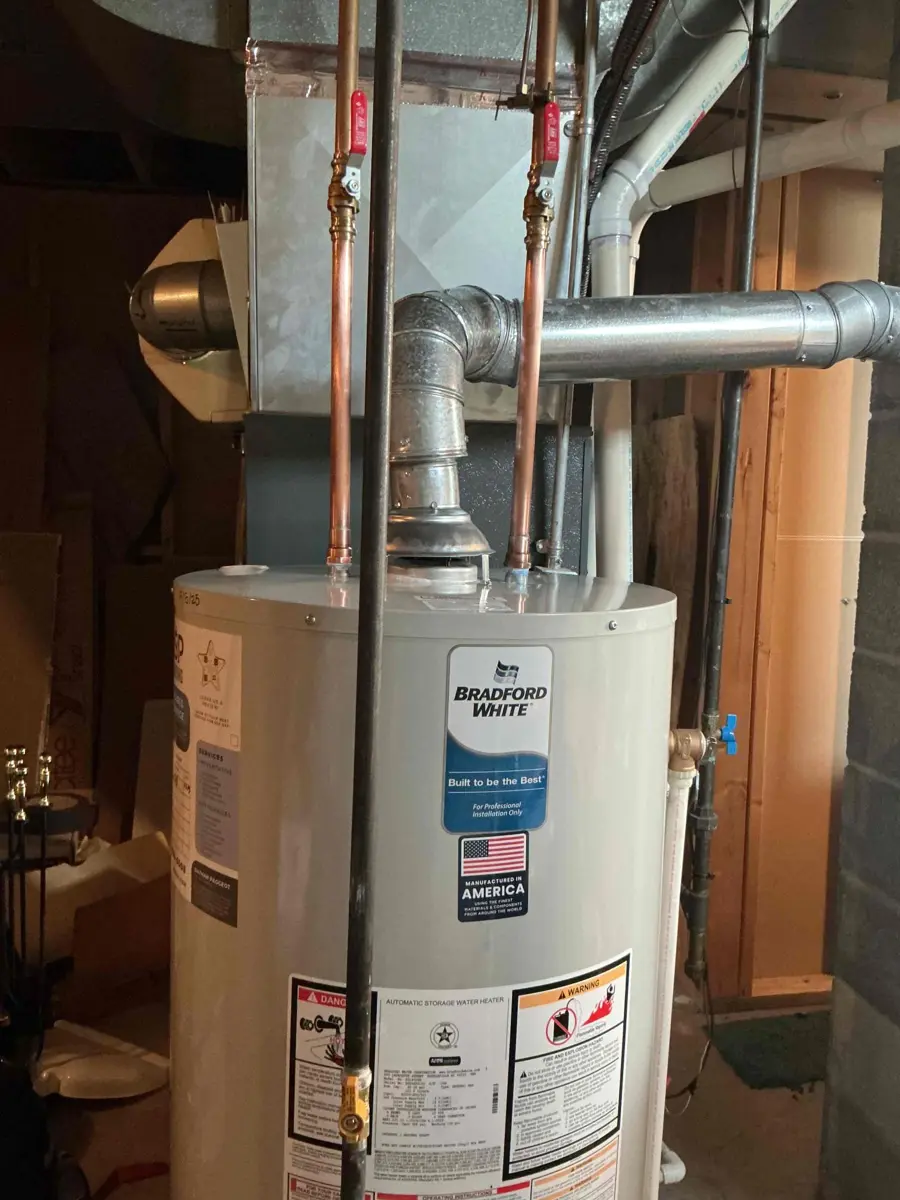
The red handled valve on the cold line is your first shutoff: close it and the tank stops refilling. A working valve here makes the next leak easy to stop, so if yours is missing or seized, ask us to add one.
Step 3: Relieve the pressure. Open a hot water faucet somewhere in the house, like a laundry tub or bathtub. This lets air in and stops water from pushing out of the leak.
Step 4: Drain it if water is still coming out. Connect a garden hose to the drain valve at the bottom and run the other end to a floor drain, a sump, or outside below the level of the tank. Open the drain valve. The water is hot, so keep hands and pets clear of the hose end.
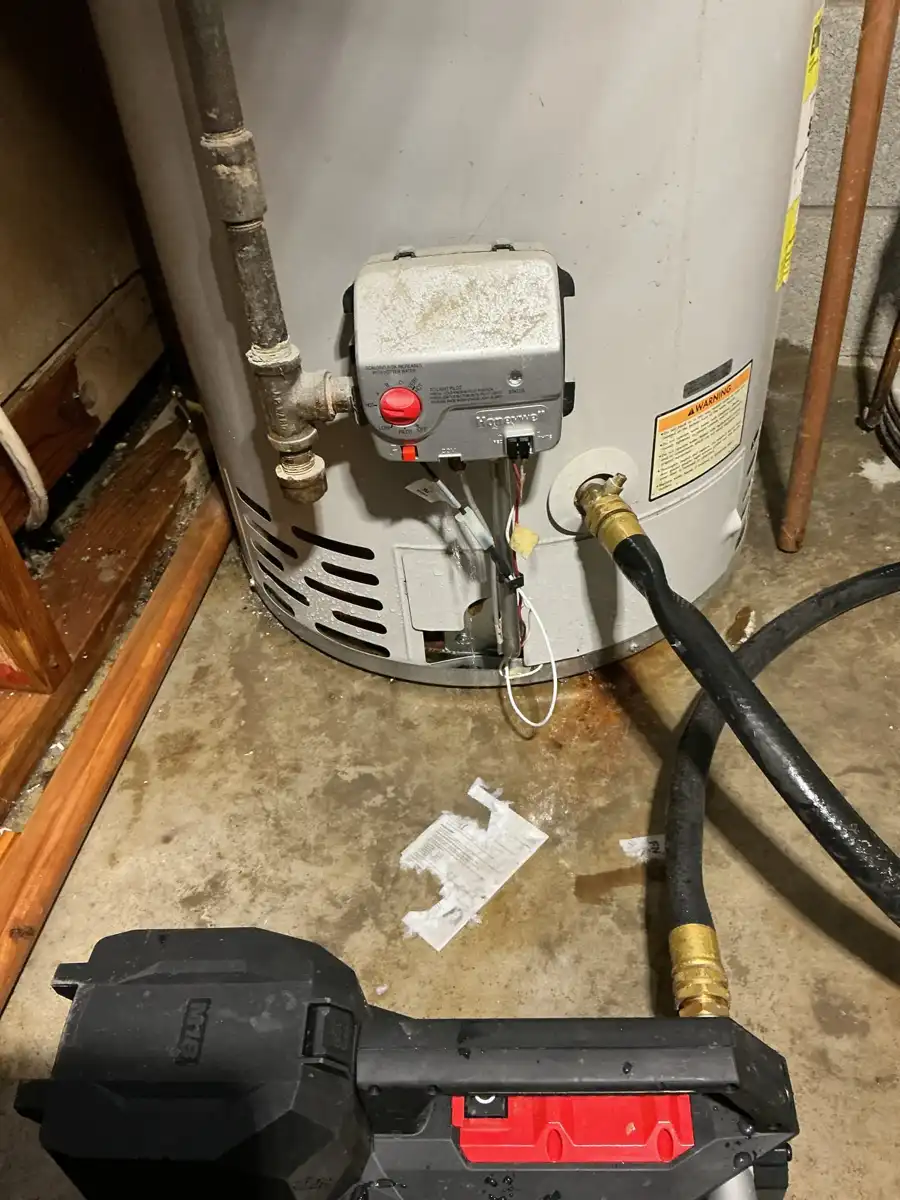
A hose on the drain valve empties the tank so the leak stops: this is how we drain a leaking heater before the swap. If the drain valve itself is the leak, or it is clogged with sediment, leave the draining to us.
Step 5: Contain what is left. Move boxes and anything valuable away from the heater, put towels down, and if you have a wet vacuum, pick up standing water. Then call to get it looked at.
Should I Repair or Replace a Leaking Water Heater?
This is the decision that matters, and it usually comes down to two questions: where is the leak, and how old is the heater?
Repair usually makes sense when:
- The leak is at a fitting, a connector, the drain valve, or a worn relief valve.
- The heater is under about 8 years old.
- The water in the pan is clear, not rusty.
Replacement usually makes sense when:
- Water is coming from the tank itself, from under the jacket or out the bottom.
- The heater is 10 years or older, even if the leak is at a valve, because the tank is near the end of its life anyway.
- There is heavy rust in the burner area or rusty hot water at the taps.
We tell people when they do not need a new heater. A corroded fitting on a six year old tank is a repair. But we will also be straight with you when the tank is done, because patching a valve on a rusted out 14 year old heater just means paying twice.
If you do replace it, two things are worth knowing.
Michigan requires a permit for a water heater replacement, and the Michigan Plumbing Code (section 504.7) requires a drain pan under a tank heater wherever a leak would cause damage. We pull the permit, add the pan where it is needed, and meet the inspector, all as part of the job.
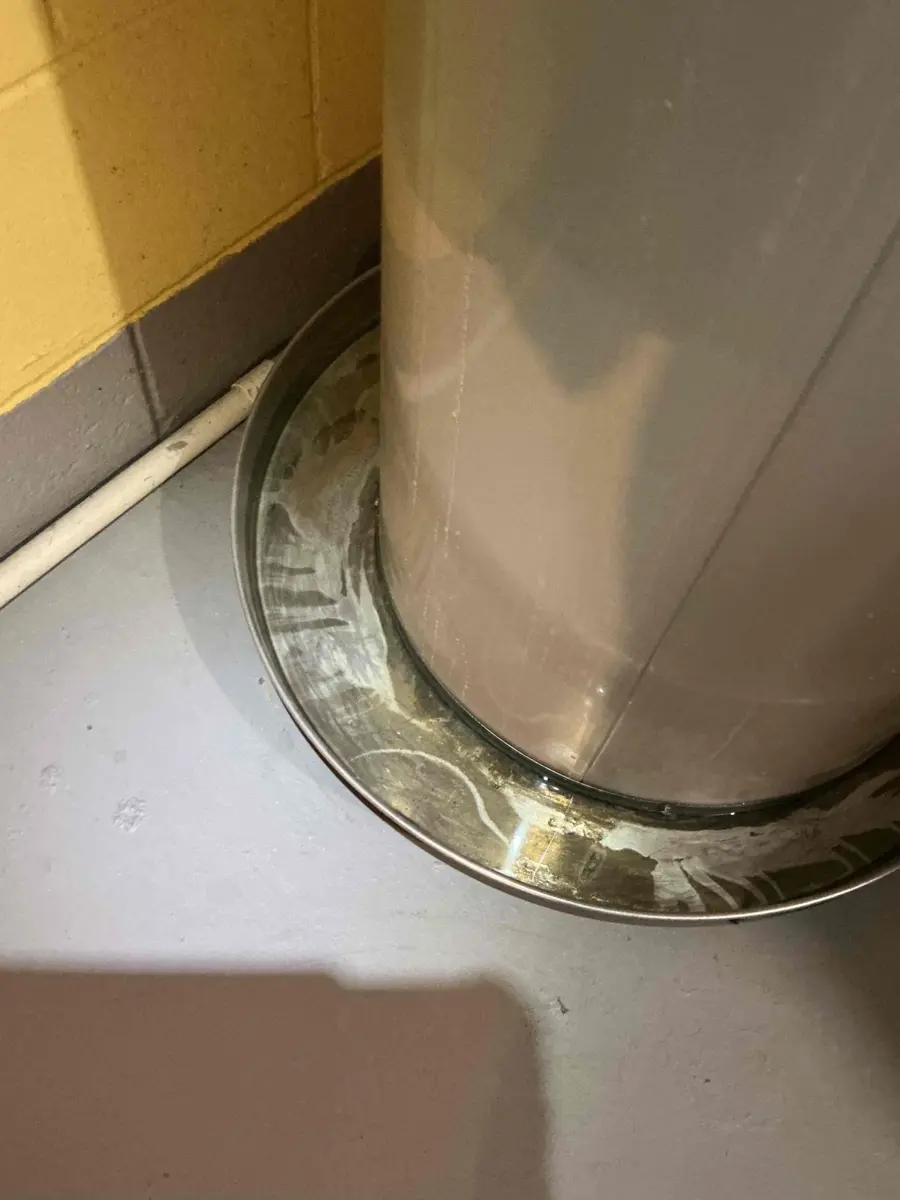
A metal pan under the tank: this catches the next slow leak before it reaches your floor. It does not stop a leak, but it buys you time and keeps a small drip from turning into a soaked basement.
Some homeowners take the chance to switch to tankless, which has no storage tank to rust through.
It costs more up front but lasts longer; see our tankless water heater installation page. For more on timing a replacement, read how long does a water heater last, and if the heater is still running but not keeping up, try no hot water: what to check.
Can a water heater leaking from the bottom be fixed?
Sometimes. If the water comes from the drain valve, the relief valve pipe, or a fitting on top that drips down the side, it can usually be repaired. If water is coming out of the steel tank itself, under the jacket at the base, the tank has rusted through and the heater needs to be replaced.
How do I turn off a water heater that is leaking?
Turn the gas control to Off or Pilot, or switch off the breaker for an electric heater.
Then close the shutoff valve on the cold water line at the top of the tank and open a hot faucet in the house to relieve pressure. If it still leaks, drain the tank with a garden hose from the drain valve.
How long can a water heater leak before it fails?
There is no safe timeline. A worn drain valve can drip for months, but a leak from the tank itself only gets worse as the steel rusts, and it can go from a drip to a steady flow without warning. Shut it down and get it looked at within a day or two.
Is it safe to use a leaking water heater?
A slow drip from a valve is not dangerous by itself, but water near a gas burner or electrical parts is a problem, and a leaking relief valve can mean the tank is overheating. The safest move is to shut off the heat source and cold supply until a plumber checks it.
Why is there water under my water heater but no visible leak?
On a gas heater, the most common cause is condensation. When cold water refills a hot tank, moisture can form and drip onto the burner area or floor, and it stops once the tank warms back up. If the water keeps appearing after an hour of steady heating, it is a real leak.
Should I replace my water heater if the relief valve is leaking?
Not necessarily. A worn relief valve can be replaced on its own. But a relief valve that opens repeatedly may be reacting to high temperature or pressure, so the cause, often a thermostat or a missing expansion tank, needs to be fixed too. Never cap the discharge pipe.
Does homeowners insurance cover a leaking water heater?
Policies vary. Many cover sudden water damage to the home but not the worn out water heater itself. Check your policy and take photos of the leak and any damage before cleanup. We can document what failed for your claim.
Get a Leaking Water Heater Checked by NSP Plumbing
NSP Plumbing is a licensed Michigan plumbing contractor (license #8004990) based in Wyoming, Michigan. We find the source of the leak first and tell you plainly whether it is a repair or a replacement. When it is a new heater, we handle the permit, the drain pan where code calls for one, and the inspection.
We serve homeowners across Grand Rapids, Wyoming, Kentwood and the surrounding West Michigan communities. Learn more about our water heater service, or if water is spreading right now, call our emergency plumbing line. If it might be a hidden leak somewhere else, see our leak detection service, or reach us through our contact page.
Water under your water heater?
Book a visit and a licensed NSP plumber will find where the water is coming from, show you what failed, and tell you plainly whether it is a repair or a replacement before any work starts.