
You fill a glass, hold it up to the window, and it looks like weak tea. That gets your attention. Yellow water almost always comes from iron or rust: stirred up city mains, corroding pipes, a rusting water heater tank, or iron in well water. Which one you have depends on whether it shows up in hot, cold or both.
Why is my water yellow?
Water turns yellow, orange or tea colored when tiny particles of iron get into it. Iron is the most common reason by a wide margin.
The EPA lists iron above 0.3 milligrams per liter as causing "rusty color; sediment; metallic taste; reddish or orange staining" in its secondary drinking water standards. Those are nuisance limits about looks and taste, not health limits.
The iron has to come from somewhere. In our service calls it comes from one of four places:
- The city water main. Hydrant flushing, a main break or a fire crew drawing heavy water can stir up rust that settles inside old street mains. The color usually shows up in cold water at every faucet and clears within hours.
- Your own pipes. Older homes with galvanized steel pipe (gray steel pipe with threaded joints, common before the 1960s) rust from the inside. Water that sits overnight picks up that rust.
- The water heater. A tank water heater is a steel tank with a glass lining. When the lining fails and the tank starts to rust, the rust comes out only on the hot side.
- Iron in well water. Many West Michigan wells pull water with dissolved iron in it. It looks clear when it comes out, then turns yellow or orange as it meets air.
A less common cause is tannins, which are natural compounds from decaying leaves and peat that tint some shallow well water a light yellow, a bit like weak tea. Tannins look like iron but are treated differently, which is one more reason a water test beats guessing.
The fix for each of those is completely different. A flushed city main needs nothing from you but patience. A rusting tank means a water heater decision. Iron in a well needs treatment. So the first job is to figure out which one you have, and that starts with two glasses.
Is the yellow in hot water, cold water or both?
This is the single most useful test you can do, and it takes about five minutes. Do it before you call anyone, because it tells a plumber where to look.
Here is how to run it:
Step 1: Grab two clear glasses. Plain drinking glasses work. Clear is what matters, because a colored or frosted glass hides the tint.
Step 2: At the kitchen sink, run only the cold side for about a minute, then fill the first glass.
Step 3: Run only the hot side until it is fully hot, then fill the second glass.
Step 4: Set both on a white paper towel or countertop next to a window and compare them.
Now read the result:
| What you see | What it usually means | What to do next |
|---|---|---|
| Cold is yellow, hot is clear | City main disturbance, or rust in the cold pipes | Check for a utility notice, run cold water |
| Hot is yellow, cold is clear | Rust or sediment inside the water heater | Have the tank inspected |
| Both are yellow | City main, house piping, or iron in well water | Check neighbors and utility notices first |
| Yellow at first, clears after a minute | Rust from pipes water sat in overnight | Test again; consider pipe condition |
Hot only is the clearest signal in the whole test. Your hot water passes through the water heater and your cold water does not, so color that appears only on the hot side is coming from that tank or the short pipes right next to it.
Keep in mind this narrows the source. It does not diagnose it for certain. Hot water pulls more out of older pipes than cold water does, so a home with rusty galvanized pipe can look worse on the hot side even with a healthy tank. That is where a plumber's eyes on the heater and the pipes settles it.
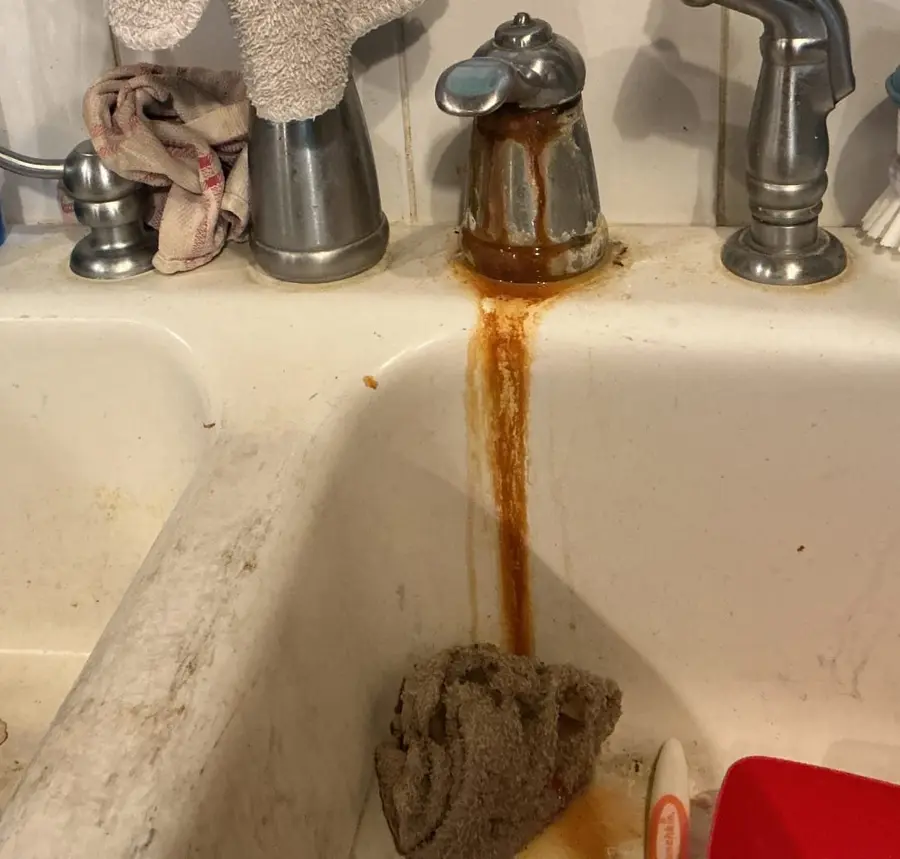
Orange water from every tap with the treatment system down: this is iron in the water supply, not a broken faucet. This home's softener and iron removal system had stopped working, and the iron went straight to the kitchen faucet. The faucet and the lines to the dishwasher ended up needing replacement because of the buildup.
Is it one faucet, the whole house or the whole street?
After hot versus cold, the next question is how far the problem reaches. Walk the house and check a few taps, then look outside the house.
One faucet only. If the kitchen runs clear but one bathroom tub runs brown, the problem is usually in the pipe or valve feeding that one fixture.
On one rental tub we were called to, the tenant reported discolored water only at the tub, and the same tub had a shower valve that would not shut off. A worn valve, a short run of old steel pipe, or a fixture that rarely gets used can all do this.
The whole house, and you are on city water. Check your neighbors next. Text the people next door or check a neighborhood group. If they have it too, the cause is almost certainly in the street.
The Grand Rapids water system and other West Michigan utilities flush hydrants and repair mains on a schedule, and those jobs stir up rust that has settled in the main. Michigan EGLE's guide to common drinking water quality concerns tells homeowners on public water to contact their water supply officials when this happens.
The whole house, and you have a well. Your neighbors will not help you here, because each well is its own source.
Iron in well water tends to be steady rather than sudden. It shows up as a slow build of orange stains in toilets, tubs and laundry. Your water is your responsibility on a private well, and the EPA's private well page is clear that testing is on the owner.
Only your house, and nothing in the street. That points at your own pipes.
Homes built before the 1960s often still have galvanized steel pipe somewhere, sometimes hidden behind a newer section of copper. Well homes can have the same problem: we quoted a repipe on one 1940s home on a well where the owner described discolored water from rust, and the plumbing was galvanized steel.
What should I do right now if my water turns yellow?
If the color showed up suddenly, here is the order that works in practice:
- Check for a utility notice first. Look at your city's website, social media, or any door hanger. If there is a boil water notice or a do not use notice, follow it. That overrides everything else here.
- Run cold water only. Open the cold tap on the lowest faucet in the house, often a basement laundry sink or an outdoor spigot in warm weather, for a few minutes. If the water clears, the rust has moved through.
- Stay off the hot side. If you run hot water while rusty water is coming in, you pull that rust into your water heater, where it settles in the bottom of the tank.
- Skip the laundry. Iron stains white clothes and the stains are hard to get out. Wait until the water runs clear before you wash anything.
- Try again in a few hours. Most main disturbances clear the same day.
Two things not to assume. Do not assume boiling makes discolored water safe, because boiling kills germs but does nothing to metals or chemicals, and it can concentrate them. And do not assume yellow water is fine to drink just because it is "only iron." Your utility, not the color in your glass, decides whether the water is safe.
If the water stays yellow for more than a day on city water, call your utility. They can tell you whether there is work in your area and can often test at your tap. If they say the street is fine, the next stop is your own plumbing.
What causes yellow hot water but clear cold water?
When only the hot side runs yellow, the water heater is the first suspect. A standard tank water heater is a steel tank with a glass lining on the inside. A metal rod called an anode rod hangs inside the tank and corrodes on purpose so the tank wall does not.
Once that rod is used up, the water starts eating the tank itself. Rust flakes off the inside and comes out of your hot taps as yellow or orange water. You may also notice a metallic taste or a rumbling sound from the tank as sediment builds up on the bottom.
In our service calls, rusty hot water usually shows up on tanks ten years old or older. One homeowner who called us for a water heater quote described exactly that: a unit more than ten years old producing rusty water. The InterNACHI home component life expectancy chart puts typical tank water heater life in that same range.
Rusty hot water does not always mean a new water heater. A few things to rule out first:
- Sediment, not rust. Sand and minerals that settle in the bottom of the tank can tint hot water. A flush (draining water out of the tank to clear the bottom) often fixes it. Michigan EGLE recommends following the maker's guidance on flushing every one to five years.
- The pipes next to the tank. Old steel nipples (short threaded connector pipes) on top of the tank rust too. Swapping those is a small repair.
- A recent city disturbance. If rusty water came in from the street and you ran hot water during it, the rust may be sitting in your tank. A flush clears it.
When the tank itself is rusting through, though, it is near the end. A tank that is rusting inside will eventually leak, and a leak from the bottom is the classic last stage. Our guide to a water heater leaking from the bottom covers what that looks like, and how long a water heater lasts covers when replacement makes sense.
What does iron in well water look like?
Iron in a well behaves differently from rust out of a pipe. Penn State Extension explains in its guide to iron and manganese in private water systems that well water with iron can look clear when it first comes out, then turn orange brown as it meets air.
Penn State recommends no more than 0.3 milligrams per liter of iron in household water.
That is why well owners often first notice it in fixtures rather than glasses. Water sits in a toilet tank or a tub drain, the iron reacts with air, and it leaves an orange or yellow ring behind.
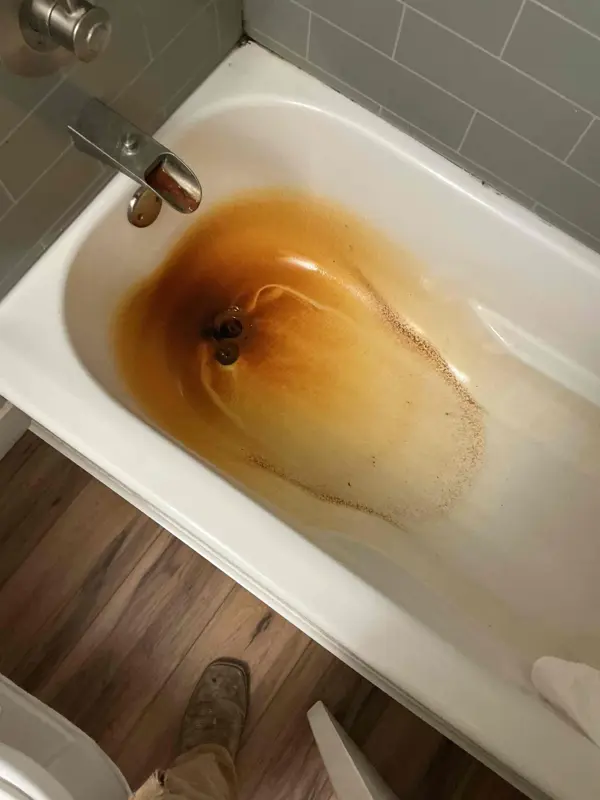
A tub full of orange water on a well home: iron at this level needs treatment, not a better cleaner. This homeowner was dealing with iron staining, a sulfur smell and low pressure all at once. We installed a water softener with an iron removal system, replaced a worn shower cartridge and flushed the water heater on the same project.
The same home showed the pattern in other fixtures too, which is how you can tell iron in the supply from a single bad pipe.
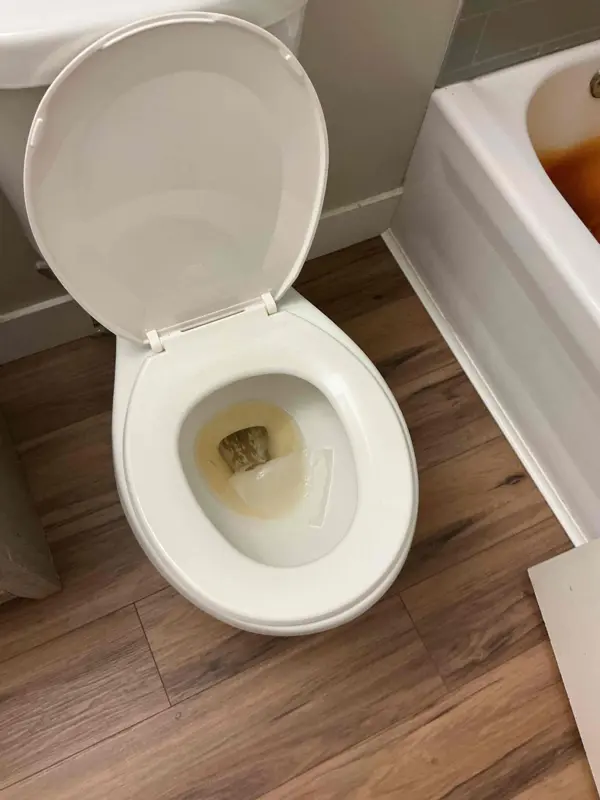
Yellow ring in the toilet bowl: iron is in the water, so it will keep coming back after you scrub it. Toilets show iron first because water sits still in the bowl and tank between flushes.
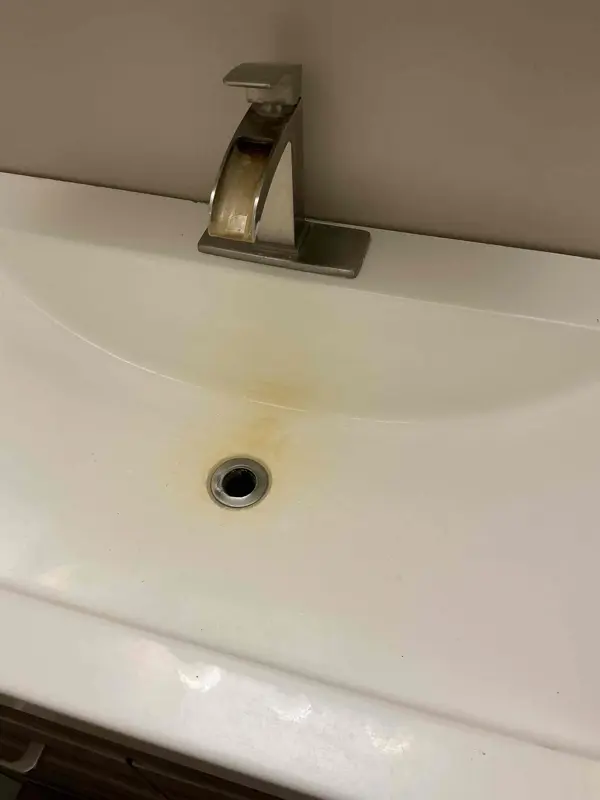
Faint yellow streak toward the sink drain: the early stage of iron staining. If you see this one, you are ahead of the problem. A water test now tells you what you are dealing with before the stains set in.
Iron also feeds iron bacteria, which are harmless microbes that live on iron in wells and leave slimy orange buildup and sometimes a swampy or rotten egg smell. One well owner who called us had a lab test showing iron bacteria. If the yellow water also smells, read our guide to water that smells like rotten eggs.
How do you fix yellow water for good?
The fix depends on the source, so match it to what your two glass test and your walk around the house told you.
City main disturbance. No fix needed on your end. Run cold water until it clears, and flush your water heater if rusty water got pulled into it.
Rusting water heater. If the tank is young and the problem is sediment, a flush and a new anode rod can buy years. If the tank is old and rusting inside, replacement is the honest answer. Our water heater service team will tell you which one you have.
Old galvanized pipes. Rust from inside steel pipes does not stop. Filters can catch some of it, but the pipe keeps narrowing and rusting. The lasting fix is replacing the steel with copper or PEX (flexible plastic water pipe). Our repipe page explains how that works, often one section at a time.
Iron in well water. This needs treatment at the point where water enters the house. Depending on the test, that can be an iron filter, a softener sized to handle some iron, a sediment filter in front of both, or a combination.
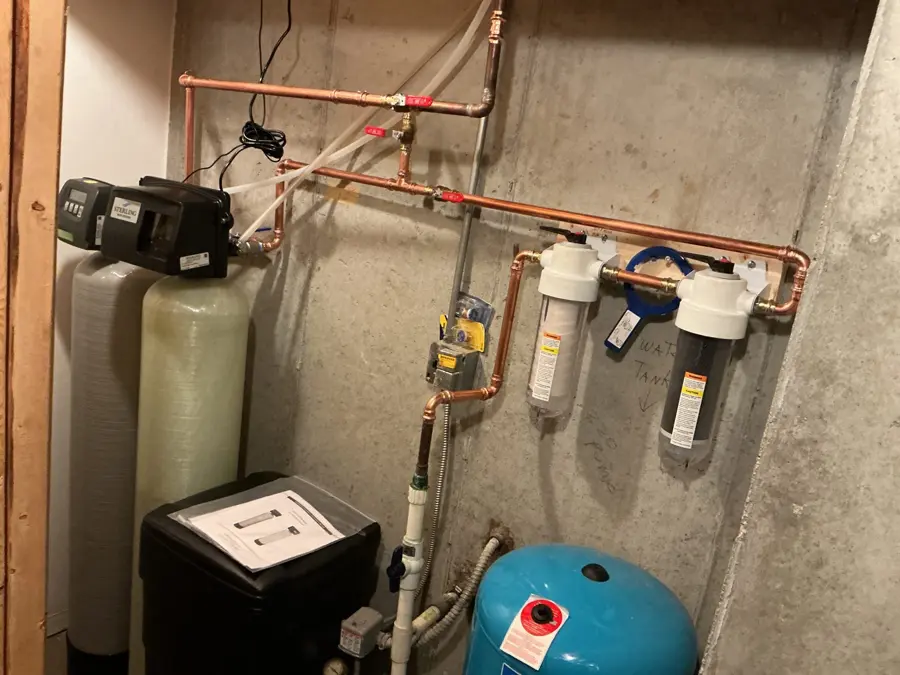
A softener with an iron filter and two sediment filters: this is what fixing iron at the source looks like. We installed this setup for a homeowner who wanted the iron and hardness handled before water reached any fixture. The filters in front catch sand and rust so the tanks do not have to.
Treatment only works if it is maintained. Filter cartridges in an iron home fill fast, and a cartridge that is past due will start passing color through again.
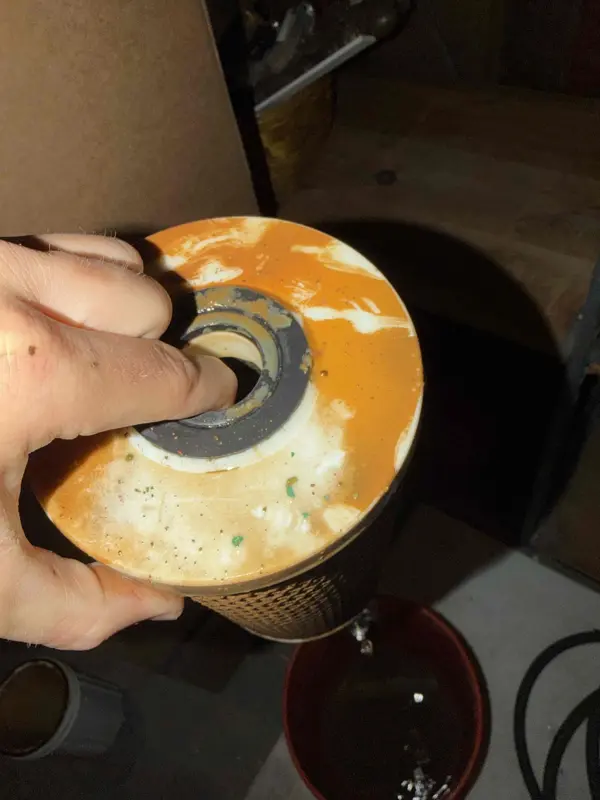
An orange coated filter cartridge: this filter did its job and is overdue for a change. This came out of a home where we installed a softener and iron removal system after a water test. If your cartridges look like this between changes, the system is working, and the schedule needs to be tighter.
Get the water tested before buying anything. A treatment system sized for the wrong problem is money spent on yellow water you still have. Our water treatment team starts with a test, and if hardness is part of it, our guide on how to treat hard water covers the options.
When should I call the utility, a plumber or a lab?
Each one answers a different question, and calling the right one first saves you time.
Call your water utility when the color is sudden, it is at every cold tap, neighbors have it too, or it lasts more than a day. They know about mains work and can tell you whether the water is safe to use. Utilities also publish a yearly consumer confidence report on what is in your water.
Call a plumber when the color is hot side only, it is one fixture only, it keeps coming back on city water with nothing going on in the street, or your treatment system stopped working. Those all point at something inside your house.
Call a certified lab when you are on a well, the water also smells or tastes odd, or anyone in the house is pregnant, an infant or has a weak immune system. A lab can tell you the iron level and screen for things you cannot see. Your local health department can point you to a certified lab.
Do not wait if the water turned color right after nearby construction, it comes with a strong chemical smell, or you have any reason to think the water is unsafe. Stop drinking it and call the utility or health department first.
Most yellow water is a nuisance, not an emergency. But "most" is not a guarantee, and that is the point of testing instead of guessing.
Is yellow water safe to drink?
Color alone cannot tell you. Most yellow water comes from iron, which the EPA treats as a taste and staining issue rather than a health limit, but the color can also come with other things. Follow your utility's guidance on city water, and test a well before drinking discolored water.
Why is my tap water yellow all of a sudden?
Sudden yellow water on city water usually means hydrant flushing, a main break or other work that stirred up rust in the street. Run cold water at the lowest tap for a few minutes, avoid hot water and laundry, and check with your utility if it does not clear within a day.
Why is only my hot water yellow?
When cold water is clear and hot water is yellow, the color is usually coming from rust or sediment inside the water heater tank. A flush may fix sediment, but an older tank that is rusting inside is close to the end of its life and should be inspected.
Why does my water turn yellow after sitting in a glass?
That is a classic sign of dissolved iron, especially in well water. The iron is invisible when the water first comes out, then reacts with air and turns yellow or orange. A water test shows how much iron you have and what treatment fits.
Can old pipes make my water yellow?
Yes. Galvanized steel pipe, common in homes built before the 1960s, rusts from the inside. The first water of the morning often looks worst because it sat in the pipe overnight. The lasting fix is replacing the steel pipe.
Will a water filter fix yellow water?
A sediment filter catches rust particles, but it will not stop dissolved iron or a rusting tank. Iron in well water usually needs an iron filter or a properly sized softener, and filters in an iron home need frequent changes to keep working.
Should I flush my water heater if my water is yellow?
If rusty water came in from the street and you ran hot water during it, a flush helps clear what settled in the tank. If the hot water stays yellow after a flush, the tank itself may be rusting.
Need help with yellow water in West Michigan?
Yellow water has a source you can find, and in most homes it is one of four things. The two glass test tells you where to start, and a plumber or a water test tells you the rest.
NSP Plumbing is a licensed Michigan plumbing contractor (#8004990) based in Wyoming, MI. We test water, service and replace water heaters, install iron filters and softeners, and replace old steel pipe across Grand Rapids, Wyoming, Kentwood, Grandville, Jenison, Byron Center and nearby towns.
We will tell you plainly when the fix is on the city's side and you do not need us. If you want to talk it through first, see our water filtration options or contact us.
Yellow water at your taps?
A licensed NSP plumber will check your water heater, your pipes and your water supply, tell you where the color is coming from and give you a written quote for the fix before any work starts. Pick a time and we will confirm by phone.