

Most burst pipes do not announce themselves with a geyser. More often it starts as a sound you cannot place, a ceiling stain that was not there last week, or a water bill that makes no sense. By the time water is dripping through drywall, it has usually been running for a while. You can tell a pipe burst by water where it should not be, a hissing or running sound with every tap closed, a sudden drop in water pressure, or a water meter that keeps spinning while nothing is on. If you see any of those, shut off the main water valve first and ask questions second.
What should you do first if a pipe bursts?
Stop the water. Everything else can wait a few minutes. A broken supply pipe is under constant pressure, so the water does not stop on its own. It keeps coming until someone closes a valve.
Here is the order that does the most good in the least time:
- Close the main water shutoff valve.
- Turn off power to any area where water is near outlets, lights or appliances, if you can reach the breaker panel without standing in water.
- Open the lowest faucet in the house, usually a basement laundry tub or an outdoor faucet, to drain the water still sitting in the pipes.
- Move belongings out of the wet area and start photographing everything.
- Call a plumber.
Step 1: Close the main shutoff. In most West Michigan homes the main shutoff sits in the basement where the water line comes through the foundation wall, right next to the water meter. Older homes often have a round wheel handle like the red one below. Turn it clockwise until it stops. Newer homes usually have a lever handle that turns a quarter of a circle.
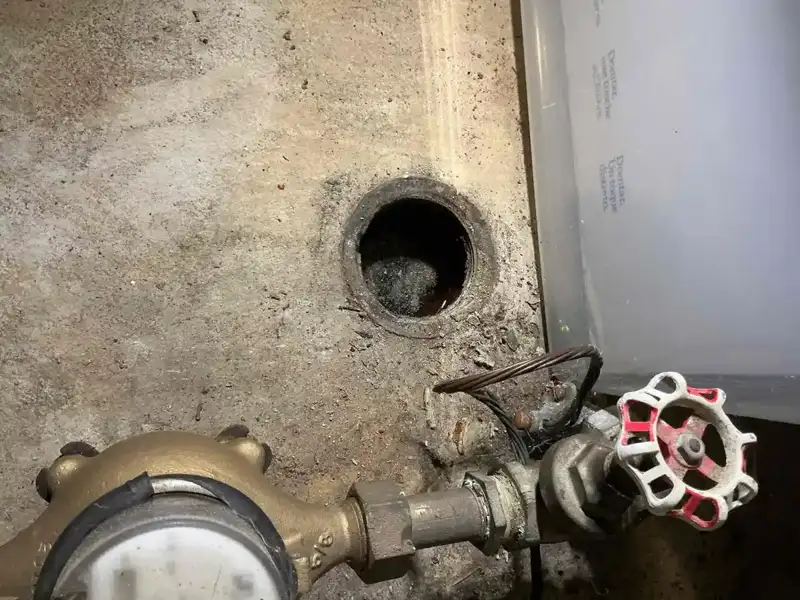
This red wheel next to the meter is the main shutoff. Closing it stops water to the whole house. If you have never found yours, our guide on how to find your main water shutoff valve walks through the common spots. Find it before you need it.
Step 2: Make the area safe. Water and electricity together are the real danger in a burst pipe. If water is coming through a ceiling near a light fixture, or pooling around a furnace or a plugged in appliance, shut off that circuit at the panel. If the panel is in the wet area, do not walk through standing water to reach it. Wait for help.
Step 3: Drain the lines. Even with the main closed, the pipes are still full. Opening the lowest faucet lets that water leave through a drain instead of through the break. Open an upstairs faucet too, so air can get in and the lines empty faster.
Step 4 and 5: Document, then call. Take photos and video before you move or throw anything away. Then call a plumber. A licensed plumber can find the break, repair it and get water back on for the rest of the house, often by capping the damaged section so you are not without water for days.
How can you tell if a pipe burst when you cannot see it?
Many breaks happen inside a wall, above a finished ceiling or under a floor. The water goes somewhere you cannot see, and the first clues are small. These are the signs that send homeowners to the phone in our service area.
You hear water running with everything off. A hiss, a trickle or a steady rushing sound inside a wall, when no faucet, toilet, dishwasher or washer is running, is one of the clearest signs of a broken supply pipe. Listen near the main shutoff and along walls that hold plumbing.
Your water pressure suddenly drops. If a shower that was fine yesterday is a weak dribble today, and it is weak at every faucet, water may be escaping before it gets there.
A stain shows up on the ceiling or wall. A small brown or yellow ring on a ceiling, especially under a bathroom or kitchen, often means water has been soaking into the drywall from above.
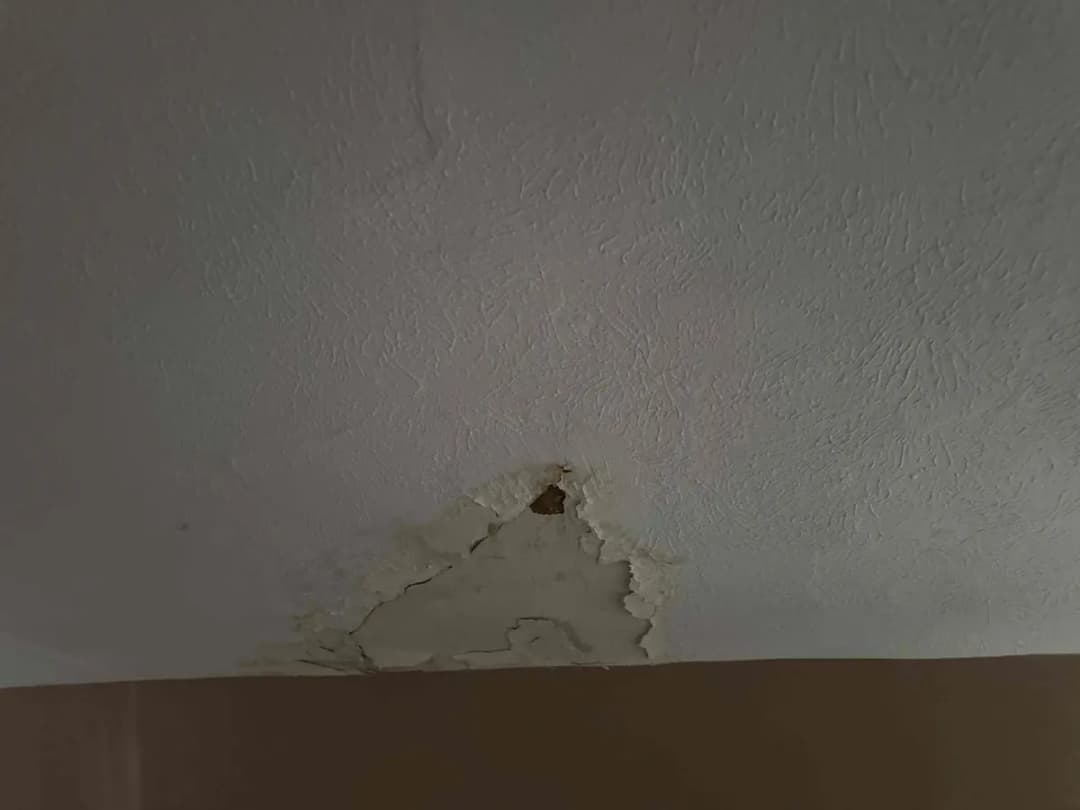
A stain this small can still mean a pipe is leaking every day. On the call behind this photo, the property owner had not seen any water at all. The City of Grand Rapids water department called them about unusually high water use at the house, and this stain was one of the first visible clues.
Your water bill jumps. A sudden spike with no change in habits is a real signal. The EPA WaterSense program suggests comparing your winter water use month to month, because a big change usually points to a leak.
The floor feels soft, warm or damp. Warped flooring, a musty smell, or carpet that stays damp near a wall can all come from a slow leak underneath.
How do you use the water meter to check for a burst pipe?
The water meter is the most reliable test you can do yourself, and it takes about fifteen minutes. It works because the meter only moves when water is flowing somewhere in the house.
Step 1: Turn off every water fixture. Make sure no faucets are running, the dishwasher and washer are off, the ice maker is not filling, and no toilet is refilling. If you have a water softener, make sure it is not in a regeneration cycle (the cleaning cycle it runs, usually overnight).
Step 2: Read the meter. Most meters have a small triangle or star shaped dial called a leak indicator. If that dial is turning while every fixture is off, water is leaving the pipes somewhere. If your meter has no leak dial, write down the full reading.
Step 3: Wait and read it again. Wait fifteen to thirty minutes without using any water, then check again. A higher reading means water is escaping.
Step 4: Narrow it down. Close the main shutoff and watch the meter. If the meter stops, the leak is inside the house. If it keeps moving with the main closed, the leak may be on the line between the meter and the street, or the meter valve itself may be leaking. That second case needs a plumber and sometimes the city water department.
A running toilet can fool this test, because a toilet with a worn flapper leaks silently into the bowl. If the meter moves, put a few drops of food coloring in each toilet tank first. Color showing up in the bowl within fifteen minutes means you found a toilet leak, not a burst pipe. Our guide on why your toilet keeps running covers that fix.
What does a burst pipe actually look like?
When a pipe breaks above a finished ceiling, the ceiling usually gives first. Drywall soaks up water like a sponge, sags, and then lets go. That is what happened in a shared laundry room on a December call. A tenant reported standing water above the ankle, a flickering light and a ceiling that was starting to come down.
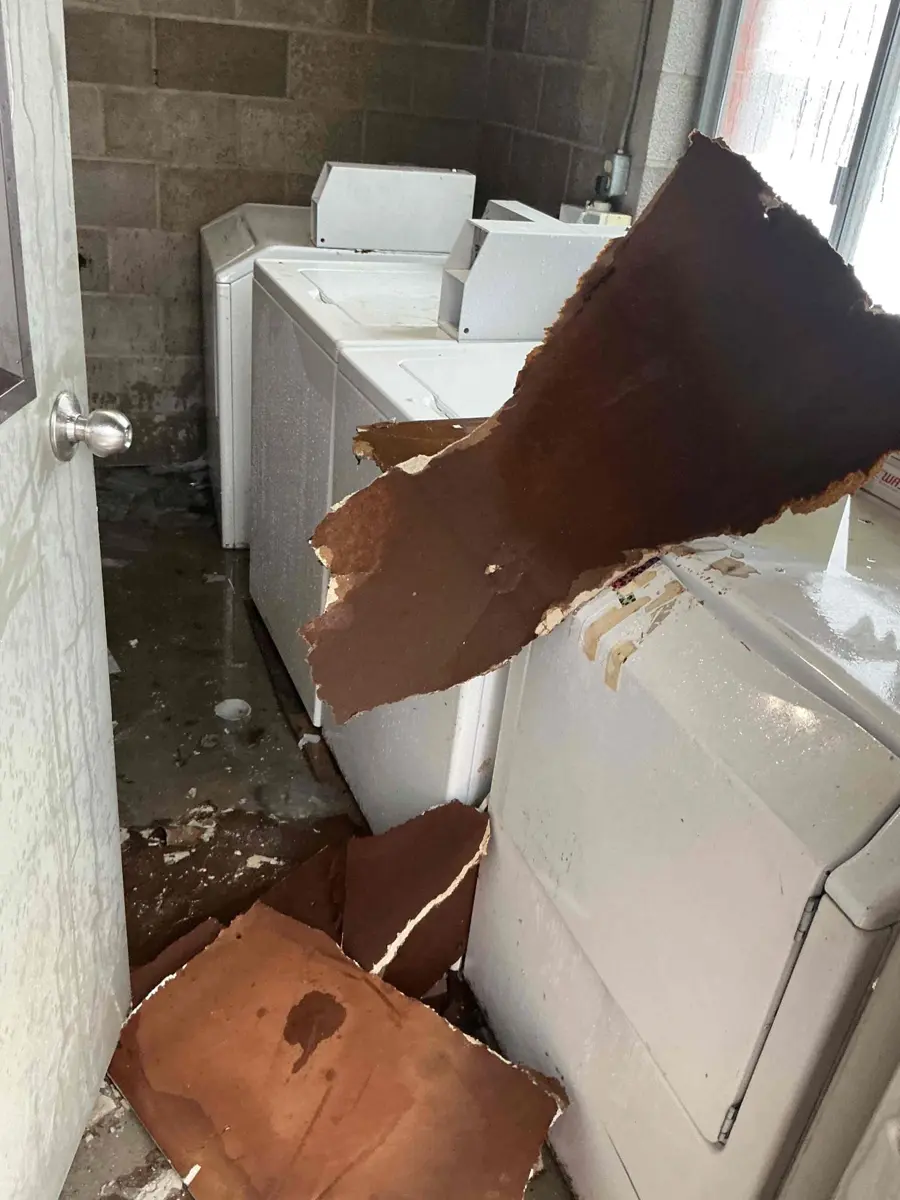
This is what an unnoticed burst pipe does to a ceiling: the drywall soaked through and fell. The first job on a call like this is to shut off the water and make the area safe. Repair and drying come after.
Once part of the ceiling is open, the water has a direct path. In the same room, water was still raining down from above when our technician arrived.
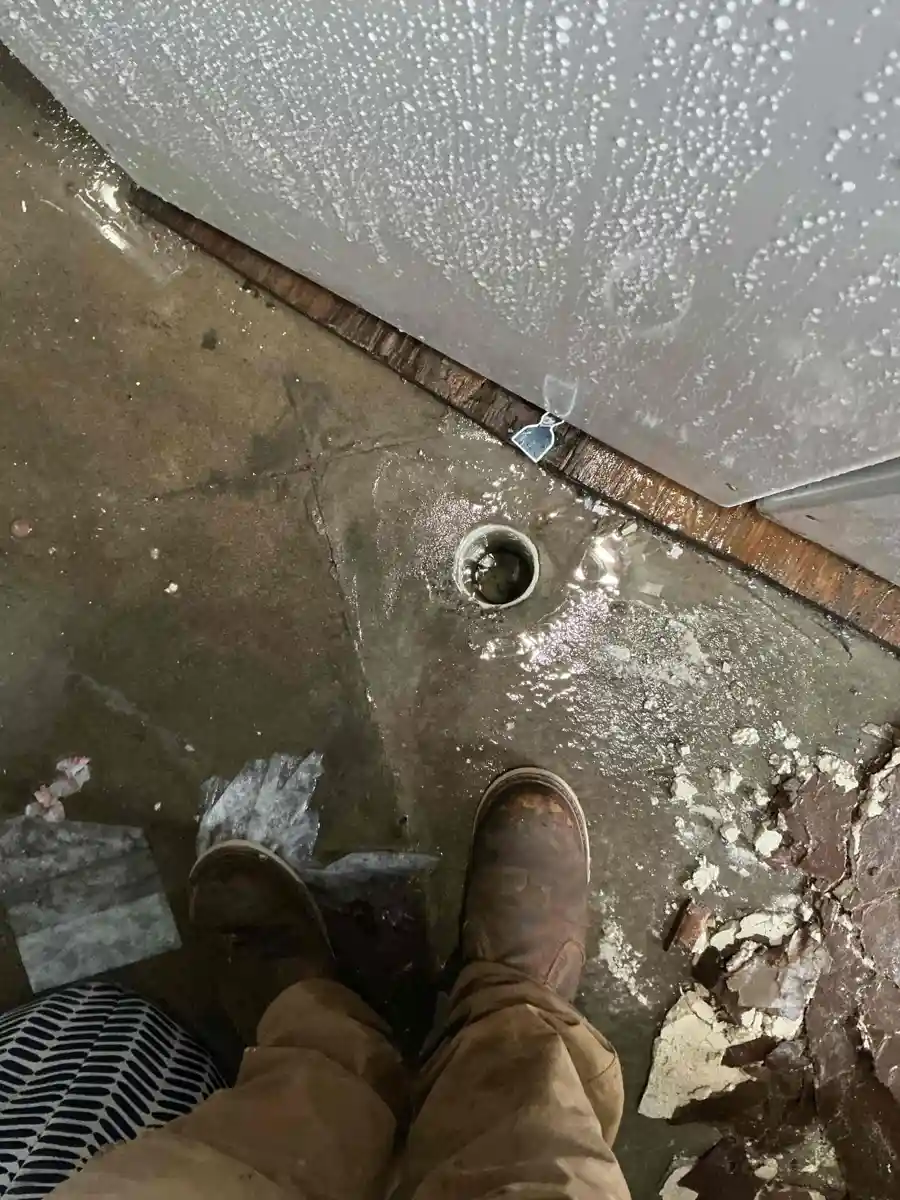
Water falling from the ceiling like rain means the pipe is still under pressure. Shut the main now. Every minute it runs adds to the cleanup. On this call the fix started at the shutoff valve, not at the ceiling.
Not every burst looks this dramatic. On a January call in an apartment, the first sign was a bathroom ceiling tile that kept getting darker, dripping from the unit above.
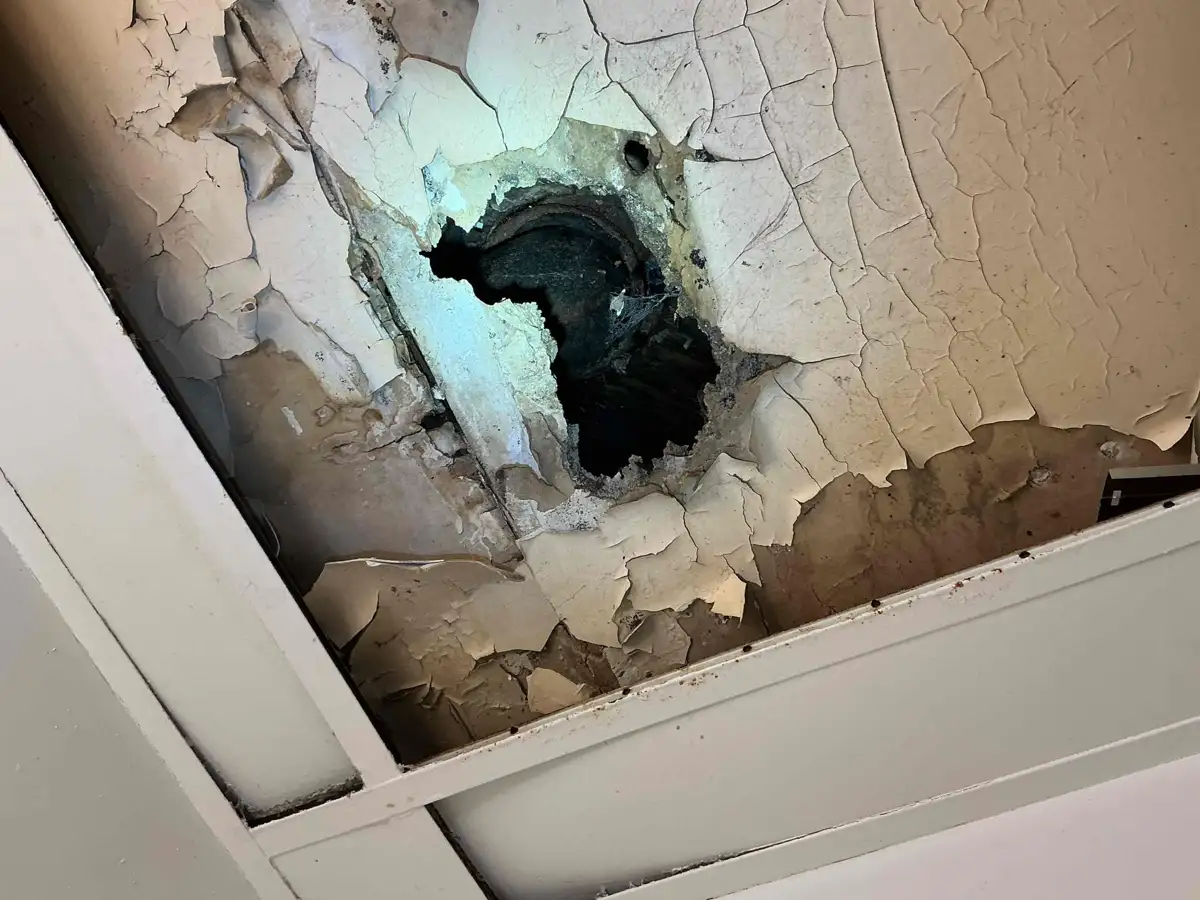
A ceiling that keeps getting darker means the leak above it is active, not old. Spots that grow over hours or days point to a supply pipe, which is under constant pressure. A stain that only shows up after a shower more often points to a drain or a shower seal.
What causes pipes to burst?
In West Michigan the biggest single cause is freezing. Our burst and frozen pipe calls over the past year peaked hard in January, and December through February brought far more of them than the rest of the fall combined. When water freezes it expands, and the pressure builds in the pipe between the ice and the closed faucet until something gives. The split often happens away from the frozen spot.
Pipes freeze where cold air reaches them: outside walls, crawl spaces, garages, and the band of wood where the house sits on the foundation. A pipe running along a cold block wall near the meter is a classic spot.
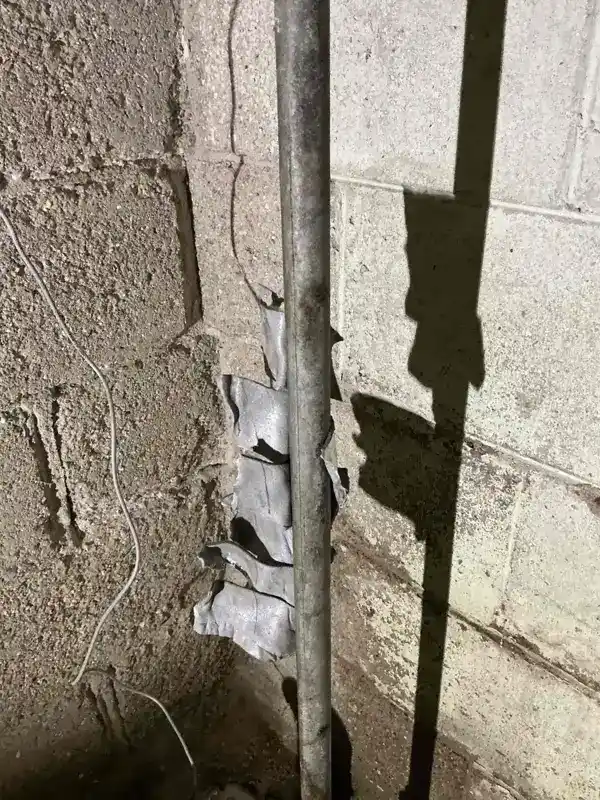
A pipe tight against a cold foundation wall is one of the first to freeze. This one did, right above the meter. Keeping the area warm and insulating the pipe makes a big difference. Our guide on how to prevent frozen pipes covers the simple fixes.
Freezing is not the only cause. We see a second wave of broken pipe calls from May through August, and those come from other places:
- Outdoor faucets that froze over winter. The pipe splits inside the wall in January, but nobody knows until the faucet gets turned on in spring and water pours into the basement. Our guide on how to winterize an outdoor faucet explains how to stop that.
- Sprinkler lines. A cracked line where the irrigation system leaves the house often shows up at spring startup.
- Washer and fixture supply lines. A bumped or worn hose behind a washing machine can let go and spray.
- Old pipe giving out. Corroded galvanized steel pipe (gray threaded pipe found in older homes) rusts from the inside and eventually leaks or splits.
- High water pressure. Pressure far above normal strains every joint in the house.
The National Weather Service cold weather safety page and the American Red Cross winter storm guide both list protecting pipes as part of getting a home ready for winter.
How can you tell if a frozen pipe burst?
A frozen pipe and a burst pipe often go together, but they are not the same thing. A frozen pipe is blocked with ice. A burst pipe is cracked open. The tricky part is that a frozen pipe usually does not leak until it thaws, because the ice plugs the crack.
Signs it is frozen but probably not broken: no water, or only a trickle, from one or more faucets on a very cold day, with nothing wet anywhere in the house.
Signs it froze and burst: water appears as the weather warms up, a hissing sound inside a wall after the faucet starts flowing again, or a sudden wet spot on a ceiling below the frozen run.
If you suspect a frozen pipe, close the main shutoff before you start warming anything. That way, if the pipe split, it cannot flood the house the moment the ice melts. Then open the faucet that pipe feeds. Our guide on how to unfreeze pipes explains safe ways to warm a pipe. Never use an open flame.
Basement ceilings are a common place for this to show up. On a December call, a homeowner found water dripping from a supply pipe running through the insulated space between basement floor joists, right above an outside wall.
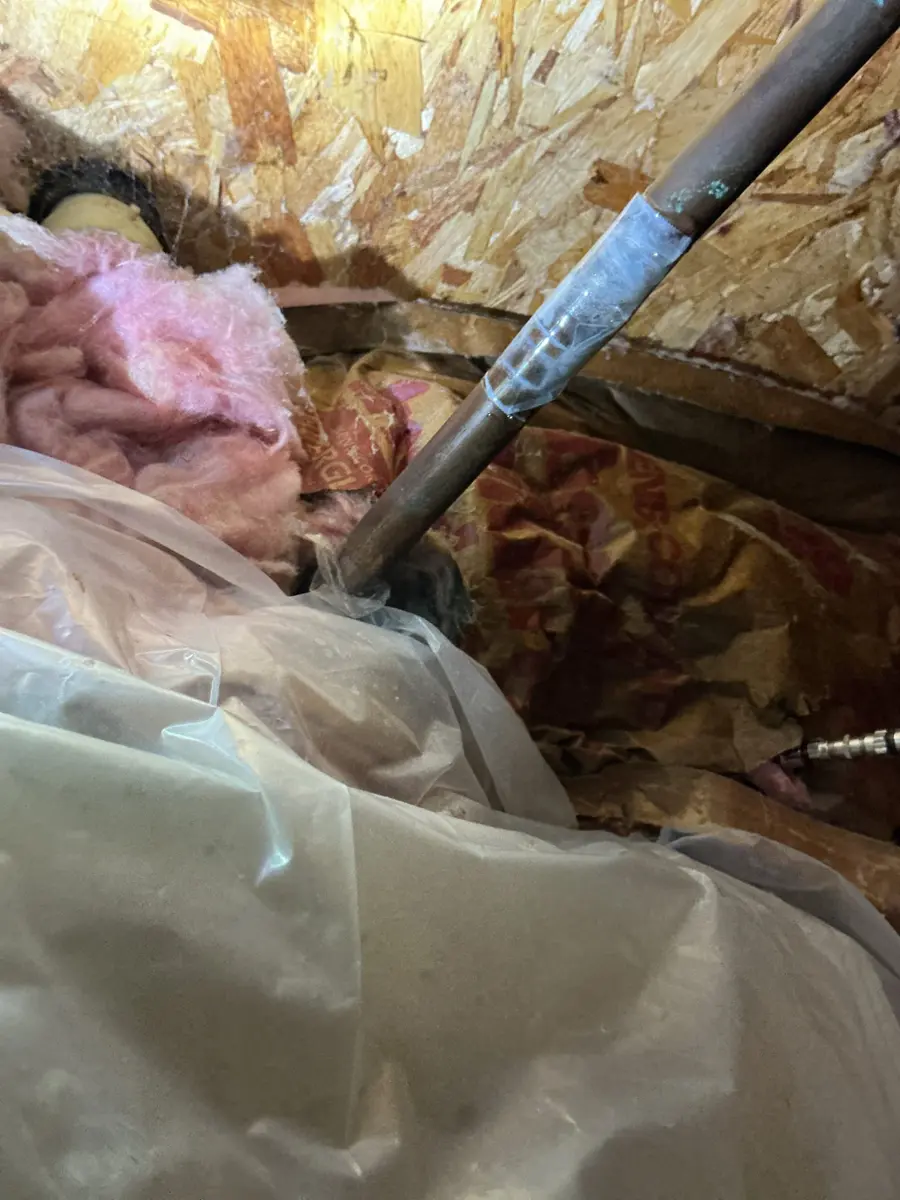
Pipes tucked into the ceiling near an outside wall freeze first and leak where you cannot see them. If a wet spot shows up below a spot like this after a cold night, assume the pipe split and shut off the water.
Can you patch a burst pipe until a plumber gets there?
Sometimes, and only after the water is off. A patch is a stopgap to get you through a few hours or a night, not a repair.
Shutting the water off is the patch. For most homeowners, closing the main and draining the lines is the best temporary fix there is. It stops the damage completely.
If you need water back on for the rest of the house, a few hardware store options can hold a small crack for a short time:
- A pipe repair clamp. A metal clamp with a rubber pad that bolts around the crack. This is the most reliable short term option on copper or steel pipe.
- Rubber and hose clamps. A piece of rubber wrapped over the crack and held tight with two or three hose clamps. Rough, but it can slow a pinhole.
- Pipe repair tape or epoxy putty. Works on a small pinhole in a dry pipe. It will not hold a real split.
What not to do: do not leave the main on overnight trusting a patch, do not use an open flame to dry or thaw pipe, and do not cut into a ceiling that is sagging with water. A sagging ceiling can come down all at once. Poke a small hole at the lowest point with a screwdriver, with a bucket underneath, only if you can do it without standing directly under it.
For a break you cannot locate, our leak detection service can pinpoint it before anything gets opened up.
What should you do about water damage after a pipe bursts?
Water damage gets worse with time. Drywall, insulation and wood flooring keep soaking, and mold can start growing on wet materials within a day or two. The EPA guide to mold and moisture recommends drying wet building materials within 24 to 48 hours.
Hidden water travels farther than most people expect. On a January call, the visible problem was a wet floor, but once the basement ceiling was opened, the joists showed how far the water had spread.
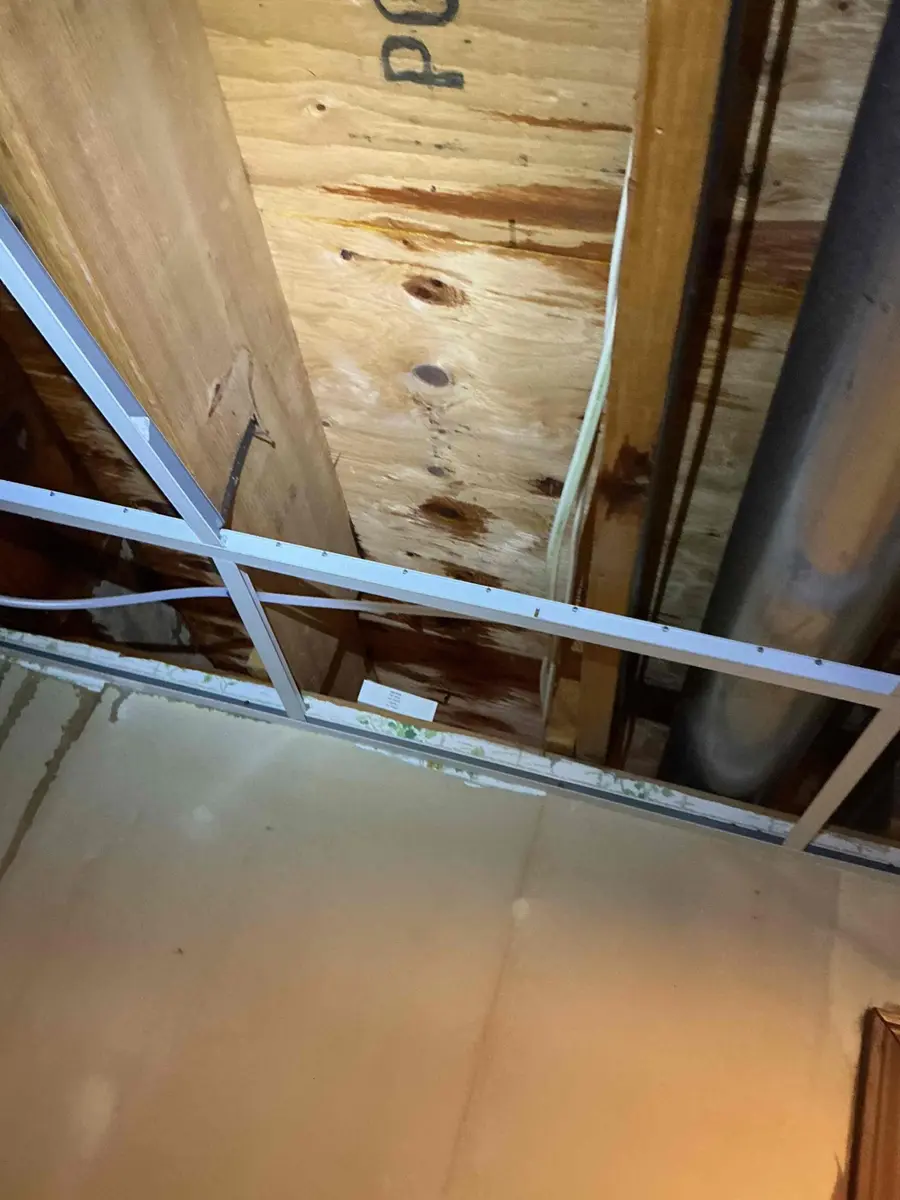
Dark streaks on joists show the path the water took. Wood that wet needs to be dried, not just wiped. That is why opening a ceiling or wall is sometimes part of the job, even when the leak itself is small.
What to do while you wait:
- Photograph everything before moving it: the water, the ceiling, the damaged items, and the pipe if you can see it. Insurance adjusters want to see it as it was.
- Move belongings to a dry room and lift furniture off wet carpet.
- Run fans and a dehumidifier if the area is safe and the power is on.
- Call your insurance company early. Many policies treat a sudden burst pipe differently from a slow leak, so note when you first noticed it.
- Call a restoration company if water soaked a ceiling, a wall, or more than a small area of floor. On larger calls, our technicians often work alongside a restoration crew: we stop the water and repair the pipe, they dry the structure.
What does fixing a burst pipe involve?
The repair depends on where the break is and what the pipe is made of. Most calls follow the same path.
First, the plumber confirms the water is off and finds the break. Sometimes that is obvious. Sometimes it means listening, checking the meter, and opening a small section of drywall where the stain is worst. Next, the damaged section is cut out and replaced, and the new pipe is tested under pressure before anything is closed back up.
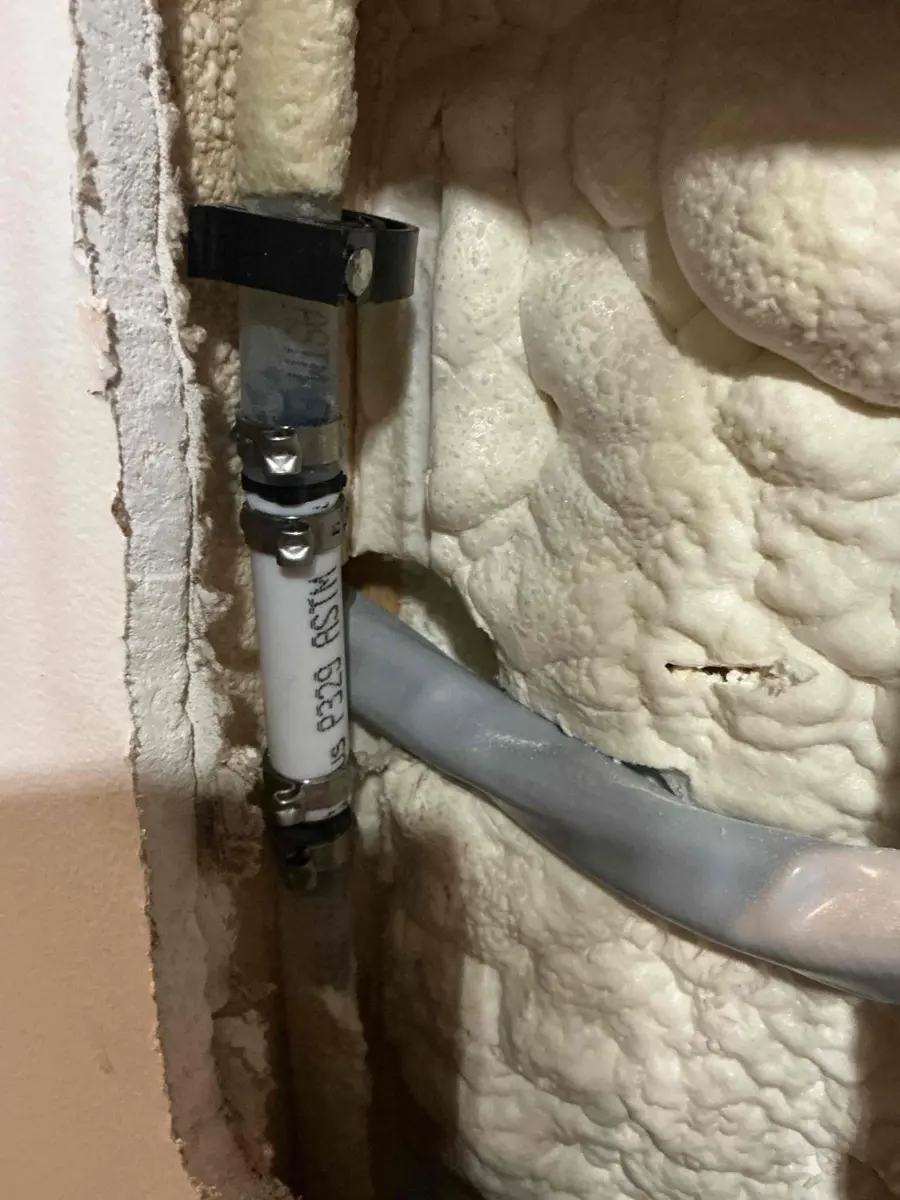
This is a repaired pipe inside an outside wall. The opening is small, and the wall can be patched once the repair is tested. On this December burst pipe call, the break was in a wall that faces outdoors, which is exactly where pipes freeze.
The plumber should also tell you why it broke. If it froze, the fix may include moving the pipe away from the outside wall, adding insulation, or replacing a standard outdoor faucet with a frost free one. If it was old galvanized pipe, one break often means more are coming, and it is worth talking about replacing that section. If it was high pressure, a pressure reducing valve (a valve that lowers the pressure coming in from the street) protects the rest of the plumbing.
If your home sits empty for days at a time in winter, an automatic shutoff valve can close the main on its own when it senses a leak. Our post on why you need an automatic water shutoff explains how they work.
How do I know if a pipe burst in my wall?
Listen for running or hissing water with every fixture off, look for stains or bubbling paint on the wall, and feel for damp or soft drywall. Then check the water meter. If the leak dial moves with everything off, water is escaping somewhere. Close the main and call a plumber.
What is the first thing to do when a pipe bursts?
Close the main water shutoff valve. In most Michigan homes it is in the basement where the water line enters, next to the meter. Then turn off power to any wet area if you can reach the panel safely, and open the lowest faucet to drain the lines.
Can a frozen pipe burst without leaking right away?
Yes. Ice can plug the crack while the pipe is frozen, so the leak often starts only when it thaws. Close the main shutoff before warming a frozen pipe so a split cannot flood the house when the ice melts.
What are the signs of a burst pipe under the floor?
Warped or soft flooring, a damp or musty smell, carpet that stays wet near a wall, a sudden pressure drop, and a water meter that keeps moving with all fixtures off. A floor that feels warm in one spot can point to a hot water line leaking underneath.
Will a burst pipe stop leaking on its own?
No. A supply pipe is always under pressure, so water keeps coming until a valve is closed. Even if the visible drip slows, water may still be running inside a wall or ceiling. Close the main shutoff and have the pipe repaired.
Can I use the water while waiting for a plumber?
Only if the broken section can be isolated with its own valve, or a plumber has capped it. With the main closed, you can still use water already in a toilet tank for one flush. Turning the main back on with an open break will restart the leak.
What time of year do pipes burst most in Michigan?
January and February are the peak, when hard cold freezes pipes in outside walls, crawl spaces and garages. Many people discover winter damage in spring, when an outdoor faucet or sprinkler line is turned back on and water shows up inside the house.
Burst pipe help from NSP Plumbing
NSP Plumbing is a licensed Michigan plumbing contractor (license #8004990) based in Wyoming, Michigan. Our technicians shut off, find and repair burst and frozen pipes across Grand Rapids, Wyoming, Kentwood, Grandville, Jenison, Byron Center, Hudsonville, Caledonia and the rest of West Michigan.
If water is coming through a ceiling right now, our emergency plumbing team answers around the clock. If a pipe froze and split, our frozen pipe repair team can repair it and help you keep it from happening again. For a leak that will not show itself, everyday plumbing repair and leak detection are what we do. You can read what customers say on our reviews page.
Think a pipe burst?
Close the main valve, then reach out. A licensed NSP plumber will find the break, repair it, and tell you why it happened so it does not happen again. Pick a time that works for you and we will confirm by text.