
The first hard cold snap hits and the kitchen faucet gives you a trickle, or nothing, while the bathroom sink works fine. One pipe has frozen, usually on an outside wall. Most thaw safely with gentle heat and an open faucet. When a pipe is hidden in a wall or has already split, that is when to call a plumber.
How do I unfreeze pipes?
Work in this order. It keeps you safe, protects the pipe, and tells you fast whether you can handle it yourself or need help.
- Open the faucet the frozen pipe feeds. Open both the hot and cold sides. Moving water melts ice faster, and an open faucet gives the pressure somewhere to go as the ice lets go.
- Find the frozen section. Start at the faucet and follow the pipe back toward where it enters the house. The frozen spot is usually on an outside wall, in a crawl space, near a garage, or where a pipe runs through the floor joists above the foundation.
- Check for a split before you heat anything. Look and feel along the pipe for a bulge, a crack, frost on the outside of the pipe, or wet drywall. If you find one, go straight to the shutoff valve step below.
- Apply gentle heat. Use a hair dryer, a heating pad, towels soaked in hot water, or a space heater set a safe distance away. Start near the faucet and work back toward the frozen section.
- Keep heating until full flow returns. A trickle is not a win. Keep going until the faucet runs at normal pressure, then leave it dripping for the rest of the cold night.
- Check every other faucet in the house. If one pipe froze, another on the same wall might be close behind.
The American Red Cross frozen pipe guidance lists the same safe methods: a hair dryer, a portable space heater kept away from anything that burns, or towels soaked in hot water. It also names what never to use, which we cover in the next section.
What is the safest way to thaw a frozen pipe?
The safest methods are slow ones. Pipes crack when they heat unevenly or when ice melts in the middle and the water has nowhere to go. That is why the open faucet matters so much.
Hair dryer. This is our first choice for an exposed pipe. Keep it moving and keep it a few inches away. Never use it near standing water, and plug it into an outlet you know is safe.
Heating pad or electric blanket. Wrap it around the frozen section and let it work. This is slow, but it is gentle and you do not need to stand there holding it.
Towels soaked in hot water. Wrap the pipe and replace the towels as they cool. It works well on short frozen sections and costs nothing.
Space heater. Point it at the wall or cabinet where the pipe runs. The U.S. Fire Administration says to keep anything that can burn at least 3 feet from a space heater, and never to leave one running when you leave the room or go to sleep.
Open the cabinet doors. For a frozen kitchen or bathroom sink line, open the cabinet under the sink so room heat can reach the pipes. Pair it with a space heater aimed into the cabinet from a safe distance.
What never belongs on a frozen pipe: any open flame. The Red Cross specifically rules out a blowtorch, kerosene or propane heater, charcoal stove, or any other open flame device. We agree.
A torch can crack copper, melt plastic pipe in seconds, and set fire to the wood framing and paper faced insulation that almost always sits right next to a frozen pipe.
The tub below shows the other half of a safe thaw. The faucet is open and the heat is working from the floor below, so the water had a place to go the moment the ice gave way.
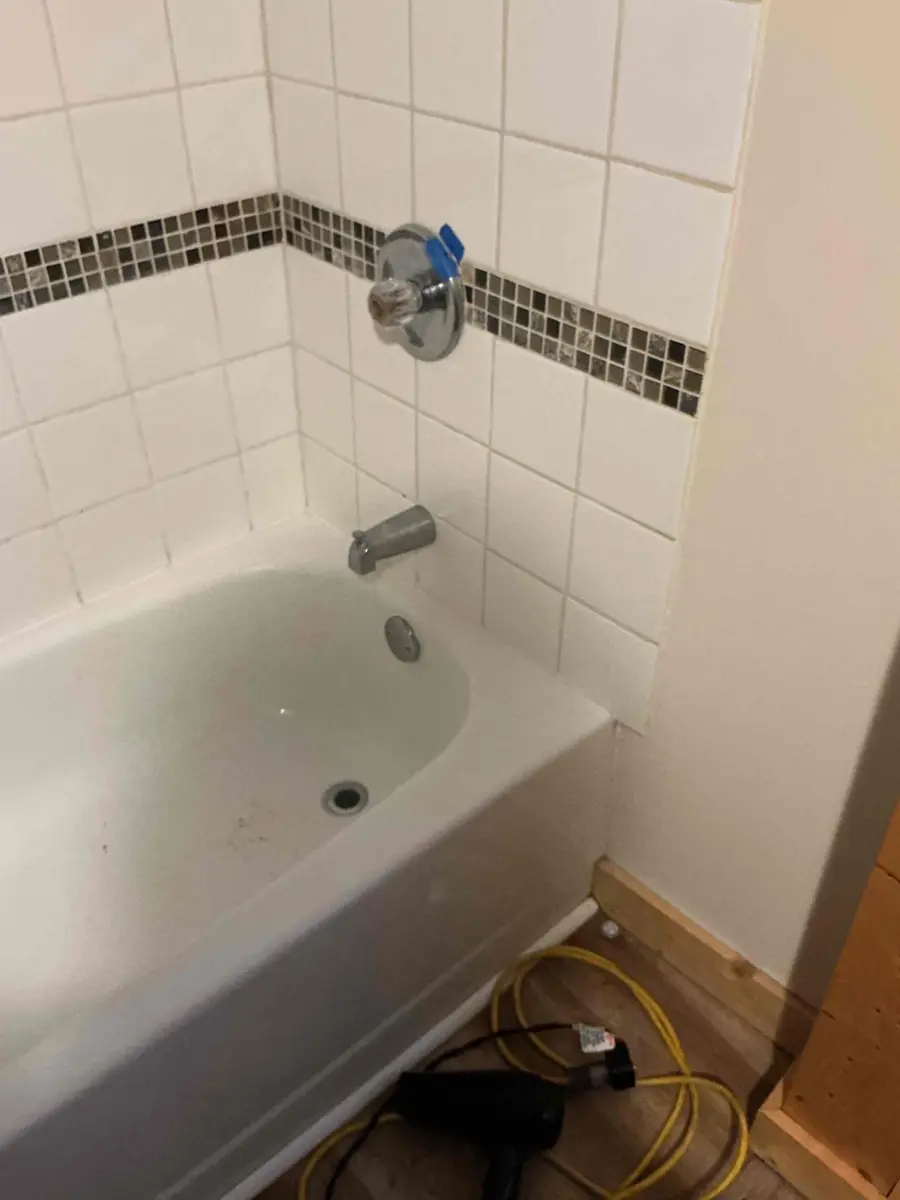
Open faucet plus gentle heat is the safe setup. If the faucet were closed, melting ice could build pressure in the pipe with nowhere to go. With it open, the first flow you see means the thaw is working.
How can I tell if a frozen pipe already burst?
This is the most important check, and most people skip it. A pipe can split while frozen and not leak at all, because the ice plugs the crack. The leak starts the moment the ice melts, which is exactly when you are standing there with a hair dryer.
Look for these signs before you heat anything:
- A bulge or visible split. Copper pipe swells before it splits. Plastic pipe can crack along its length.
- Frost on the outside of the pipe. Heavy frost on one section often marks the frozen spot, and sometimes a crack.
- Water stains or wet drywall. Look at ceilings below bathrooms and walls behind kitchen sinks.
- Water running from the ceiling or wall after heat is applied. Stop heating immediately and shut off the main.
- A sudden jump in the water meter. If everything is closed and the meter is spinning, water is going somewhere.
If you are not sure, find your main shutoff before you start thawing. Our guide to finding your main water shutoff valve shows where it hides in most West Michigan basements. Knowing where it is turns a flood into a puddle.
This is what a freeze split looks like once it is cut out. It came out of a wall behind a sink.
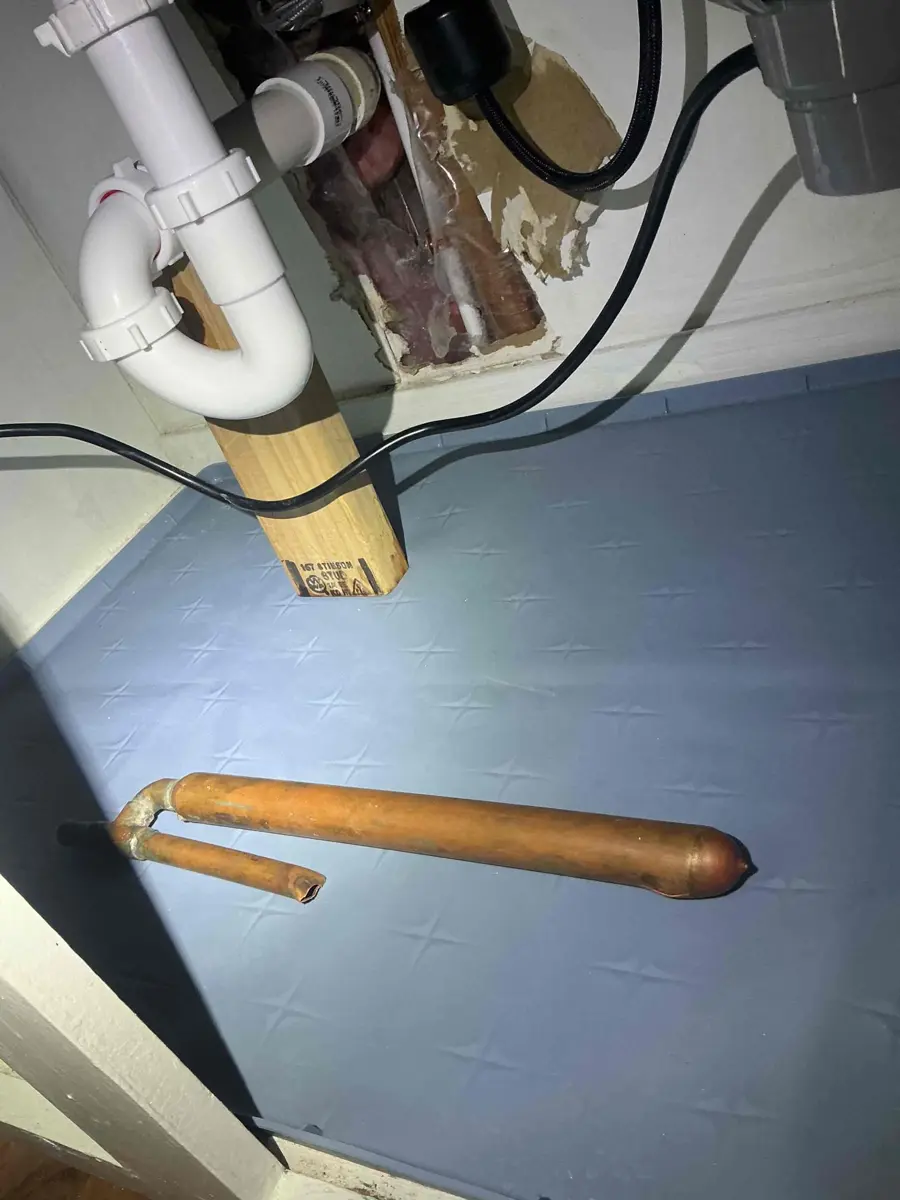
This pipe split from the inside and had to be replaced. The ice expanded, the copper gave way along its length, and no amount of thawing could have saved it. Once a pipe looks like this, the fix is cutting out the bad section and putting in new pipe.
What should I do if my frozen pipe bursts?
Move fast, in this order:
- Shut off the main water valve. This stops the damage. Turn it clockwise until it stops.
- Open a faucet on the lowest floor. This drains the water still sitting in the pipes, so less of it ends up on your floor.
- Turn off power to wet areas. If water is near outlets, the electrical panel, or appliances, shut off those circuits at the breaker box, and only if you can reach the panel while standing somewhere dry.
- Move belongings and start cleanup. Towels and a wet vacuum limit the damage to drywall and flooring.
- Take photos. Photos of the damage before cleanup help with any insurance claim.
- Call a licensed plumber. A burst pipe needs a proper repair. Tape and clamps are a stopgap, not a fix.
Our emergency plumbing service runs through the night for exactly this call. You get the price before we start. If the split is hidden in a wall, leak detection finds it without opening up more drywall than needed.
A good repair looks like the photo below. The damaged section is gone, a new piece is joined in with press fittings (a crimped joint that needs no torch), and the line is ready for the wall to close back up.
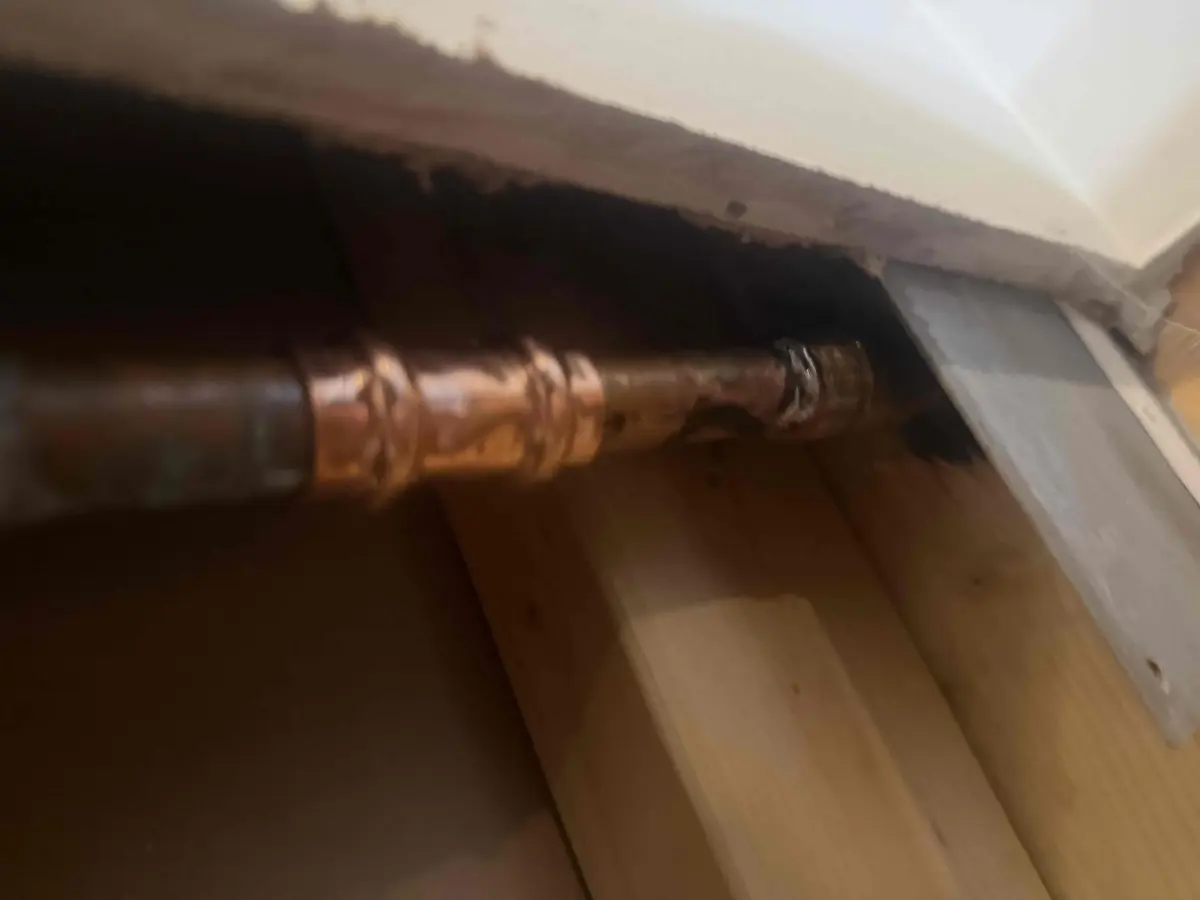
This burst is fixed for good. The split section was cut out and replaced, with no torch used near the wood framing. The open ceiling gets patched once the new joint holds pressure.
Which pipes freeze first in a West Michigan house?
Across our winter calls, the same spots show up again and again. January was our busiest month for frozen pipe work, with February close behind.
Pipes on outside walls. Kitchen sinks on an exterior wall are the classic case. The cabinet traps cold air against the pipe.
The rim joist area. This is the band of wood on top of the foundation wall where the floor sits. Pipes running along it sit inches from the outside air, and it is often poorly insulated in older Grand Rapids homes.
Crawl spaces. Vents, gaps and missing insulation let cold air flow right over the pipes.
Garages and pipes near garage walls. Laundry rooms and bathrooms that share a wall with an unheated garage freeze often.
Outdoor faucets and the pipe feeding them. A hose left connected keeps water trapped in the faucet, and that water freezes back into the wall.
Irrigation lines and outdoor backflow devices. A backflow device keeps sprinkler water from flowing back into your drinking water. If it is not drained in the fall, it can split on the first hard freeze.
The Michigan Plumbing Code agrees with this list.
Section 305.4 of the Michigan Plumbing Code says water pipes should not be run in attics, crawl spaces, outside walls or any other place that freezes unless they are protected by insulation, heat or both. Many older homes were built before anyone held to that, which is why the same spots keep freezing.
This outdoor backflow device was not drained before winter. The ice below it tells you it has been leaking for a while.
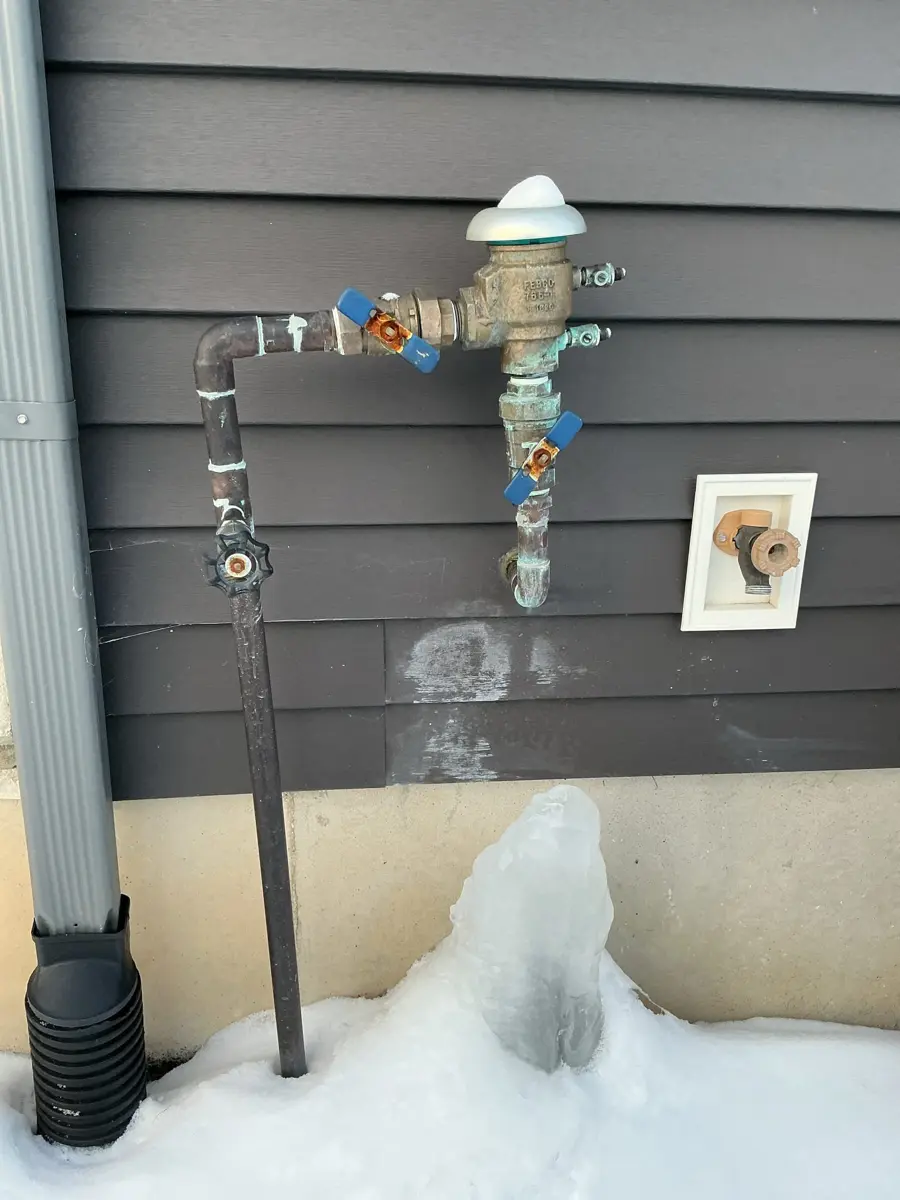
Ice under an outdoor device means it froze and is now leaking. It usually needs new parts or a replacement before spring. Draining it every fall prevents this entirely.
How long does it take to thaw a frozen pipe?
A short, exposed section usually thaws in 30 minutes to an hour with a hair dryer. A pipe inside a wall or under a floor can take several hours, and some never thaw from the outside until the weather breaks.
A few rules of thumb from our winter calls:
- If you can see and reach the pipe, give it an hour of steady gentle heat before calling.
- If the pipe is inside a finished wall or ceiling, aim a space heater at the wall from a safe distance and open cabinets and doors. Give it a couple of hours.
- If nothing changes after that, or you cannot find the frozen section, call. Every hour a pipe stays frozen is another hour it could split.
- If more than one faucet is dead, the freeze may be where the water line enters the house. That line from the street is harder to reach and often needs a plumber.
The National Weather Service cold weather safety page is a good place to check how long a cold snap will last. A pipe that froze at 5 degrees will likely freeze again the next night unless you fix the reason it froze.
What makes a frozen pipe job bigger?
Access is the biggest factor. A frozen pipe we can reach in an unfinished basement is a quick job. A pipe inside a finished wall or ceiling takes longer to find and thaw, and a burst adds cutting in, the repair and, sometimes, a second visit.
Two real jobs from last winter.
A slab home in Ada, January. Water lines inside the outside walls froze. We thawed them, confirmed nothing had split, and added a shutoff valve so that section can be closed off if it ever freezes again.
The west side of Wyoming, February. The outdoor faucet on the back of the house froze. We replaced it with a 14 inch freeze resistant faucet, so the shutoff now sits inside the heated basement.
The worst case is rare. When a split pipe runs for hours behind a finished wall, the damage moves into drywall and flooring, which is outside the plumbing repair. That is the whole reason to find your shutoff valve today. More on our winter work is on the frozen pipe repair service page.
How do I keep my pipes from freezing again?
A pipe that froze once will freeze again at the same temperature unless something changes. The quick fixes you can do tonight:
- Let the faucet drip on nights below about 20 degrees. Moving water rarely freezes.
- Open cabinet doors under sinks on outside walls.
- Keep the heat at 55 degrees or higher, even when you are away.
- Disconnect garden hoses and close the indoor shutoff to outdoor faucets in the fall.
- Seal cold air leaks near pipes with foam or caulk, especially around the rim joist.
The longer term fixes are about the pipe itself. Our guide to preventing frozen pipes walks through insulation, and heat tape for frozen pipes covers the spots insulation alone cannot protect. Leaving for a trip this winter? Use our vacation winterizing checklist.
The upgrade we install most after a freeze is a freeze resistant outdoor faucet. Its shutoff sits inside the heated part of the house, so the water never sits in the cold part of the wall.
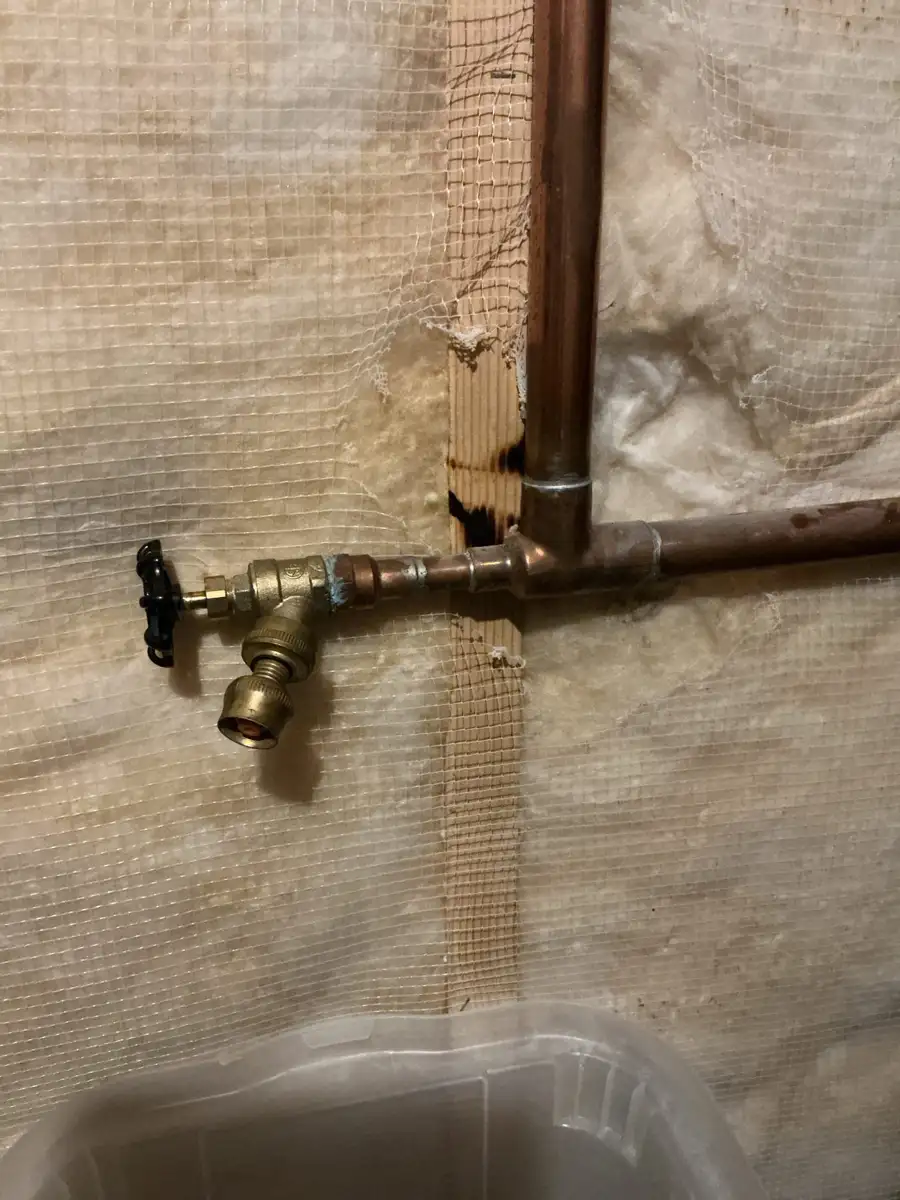
This outdoor faucet will not freeze the same way again. The valve seals inside the warm basement, so the pipe in the cold wall drains dry every time you shut it off. It is the fix we recommend after an outdoor faucet splits.
If a pipe keeps freezing in the same place, the real answer may be moving it. We can reroute a line away from an outside wall as part of a repipe, or fix the incoming line with a water line repair.
How do I unfreeze pipes fast?
Open the faucet the pipe feeds, then warm the frozen section with a hair dryer, heating pad or towels soaked in hot water. Start near the faucet and work back. Check the pipe for a split before you heat it. Never use an open flame. Most exposed pipes thaw in under an hour this way.
Will frozen pipes thaw on their own?
Sometimes, once the weather warms up, but waiting is risky. The longer a pipe stays frozen, the more likely it is to split, and the leak starts as soon as it thaws. It is better to thaw it under control with the faucet open and the main shutoff within reach.
Should I turn off the water if my pipes are frozen?
If you see a bulge, crack or leak, yes, shut off the main right away. If the pipe looks intact, leave the water on and the faucet open while you thaw it. The open faucet lets water flow as the ice melts, which speeds the thaw and relieves pressure.
When should I call a plumber for a frozen pipe?
Call if you cannot find the frozen section, if it is inside a finished wall or ceiling, if gentle heat has not worked within about an hour, or if you see any bulge, crack or leak. A plumber can thaw it safely, check it for splits and repair it the same visit when access allows.
Can I use a space heater to thaw pipes?
Yes, if it is used safely. Aim it at the wall or open cabinet where the pipe runs. Keep anything that burns at least 3 feet away, and never leave it running when you leave the room or go to sleep. Never use a kerosene or propane heater indoors.
Does homeowners insurance cover frozen pipes?
Many policies cover sudden water damage from a burst pipe, but coverage can depend on whether the home was heated and maintained. Check your own policy and call your agent. Take photos of the damage before cleanup, and keep the plumber's invoice for the claim.
What temperature do pipes freeze in Michigan?
Pipes in unheated spaces can start to freeze when it drops below about 20 degrees outside, especially overnight or with wind. Pipes on outside walls, in crawl spaces and near garages freeze first. In our records, January is the busiest month for frozen pipe calls, followed by February.
Who to call for frozen pipes in Grand Rapids
NSP Plumbing is a licensed Michigan plumbing contractor (license #8004990) serving Grand Rapids, Wyoming, Walker, Grandville, East Grand Rapids, Byron Center and the surrounding West Michigan area. We thaw frozen lines, fix split pipes and install freeze resistant outdoor faucets all winter, day and night.
When you call, we ask where the dead faucet is and whether you see any water. That tells us whether to bring thaw gear, repair parts or both.
You get the price in writing before we start. If the pipe split, we fix it the same visit whenever access allows, and we show you what froze and why, so it does not happen again next week.
Frozen pipe? We can thaw it tonight.
Tell us which faucet stopped working. A licensed NSP plumber comes out, finds the frozen section, thaws it safely and checks it for splits. You get a written price before any work starts, and emergency visits run day and night.