

You pull the knob up for a shower and half the water keeps pouring out of the tub spout. Or the shower will not shut off when you push it back down. Both point to the same part.
To fix a shower diverter, first identify which kind you have: a lift knob on the tub spout means a new spout, a middle handle means a new stem, and a lever on the valve means a new cartridge.
How do I repair the diverter in a shower?
A diverter is the part that sends water to the shower head instead of the tub spout. When it wears out, water splits between the two, or it gets stuck on one. Here is the kind of call we get most: the knob is up, the shower is supposed to be on, and the tub is still filling.
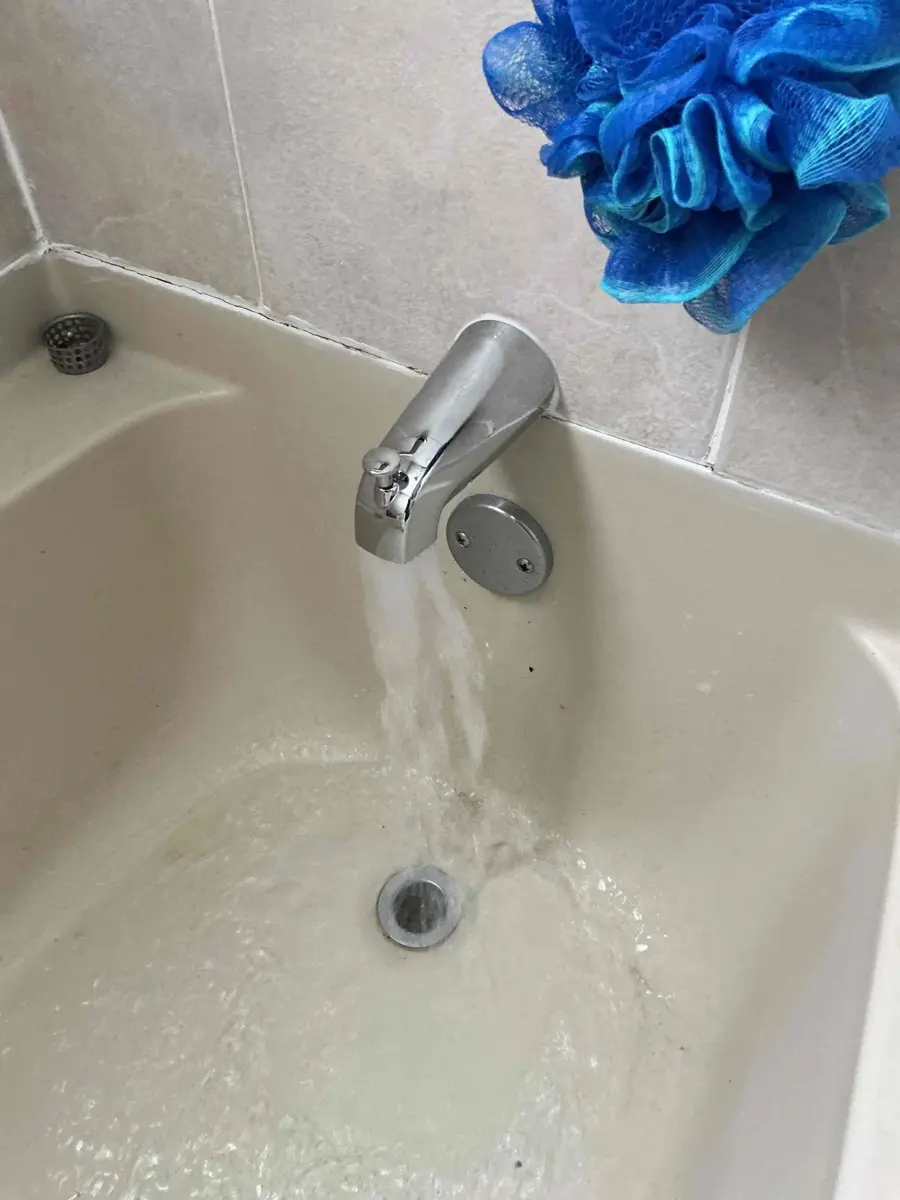
A full stream from the spout with the shower selected means the diverter is not sealing. On this job the homeowner could not get water to the shower head at all. The fix depended entirely on what kind of diverter the tub had.
Repairing a diverter comes down to three steps:
- Figure out which of the three diverter types you have.
- Replace the part that matches: the spout, the stem, or the cartridge.
- Test it with full water pressure and look for leaks.
The good news is that the most common type, the lift knob on the tub spout, is also the easiest fix. It almost never needs a plumber.
The stem type is a moderate job with the water shut off. The valve type is the one where we usually recommend a professional, because a mistake there can leave you with no working shower at all.
Before you buy anything, read the next section. Most wasted trips to the hardware store come from buying the wrong spout or the wrong stem.
What is a shower diverter, and which kind do I have?
There are three designs in West Michigan homes, and you can tell them apart in about ten seconds by looking at the wall.
Type 1: Tub spout diverter. A small knob or pull tab sits on top of the tub spout. You lift it to send water up to the shower. This is the most common setup in homes with one handle on the wall.
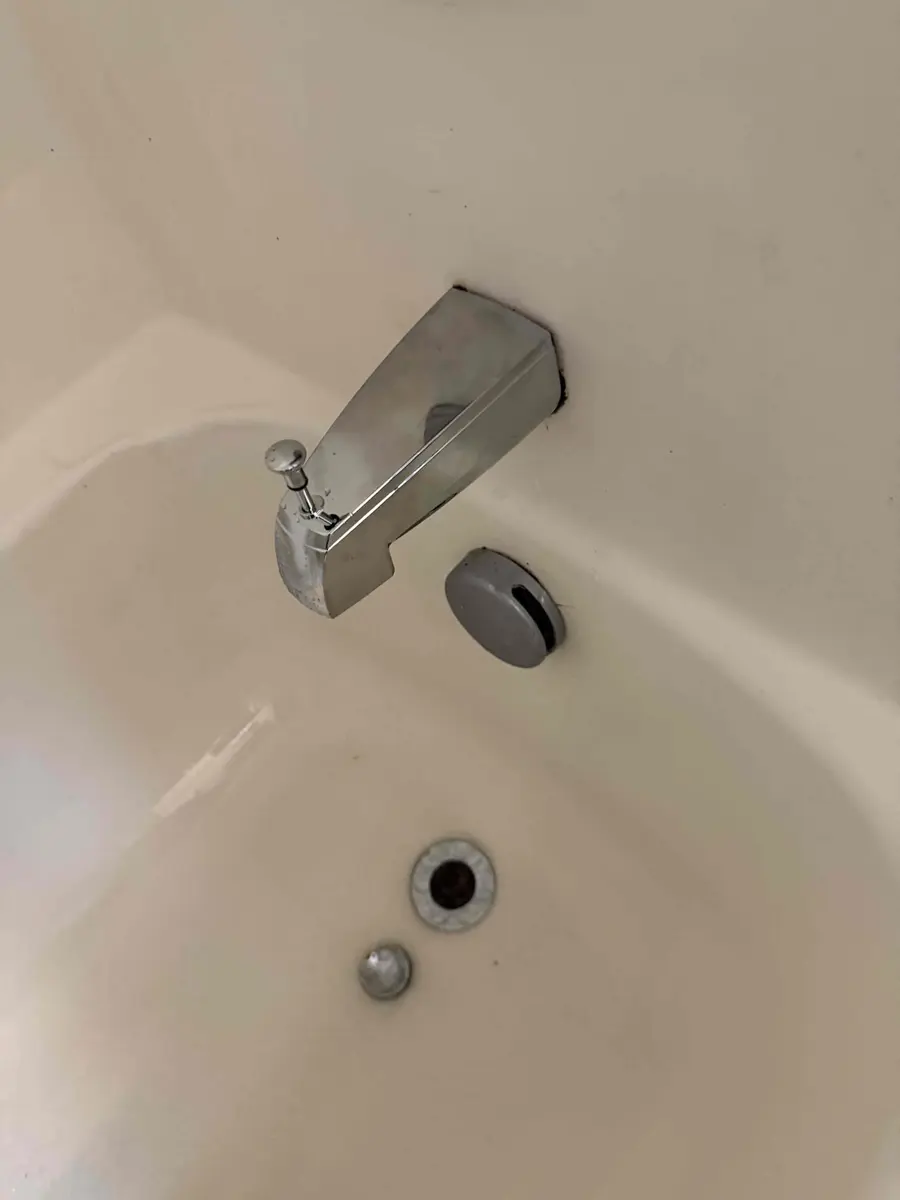
The knob on top of this spout is the whole diverter. If it fails, you replace the spout, not anything in the wall. Inside the spout is a small gate that slides up to block the opening.
Type 2: Stem diverter. Older homes often have three handles: hot, cold, and a middle handle that switches the water between tub and shower. That middle handle turns a stem, a threaded rod with a rubber washer on the end that presses against a seat inside the wall.
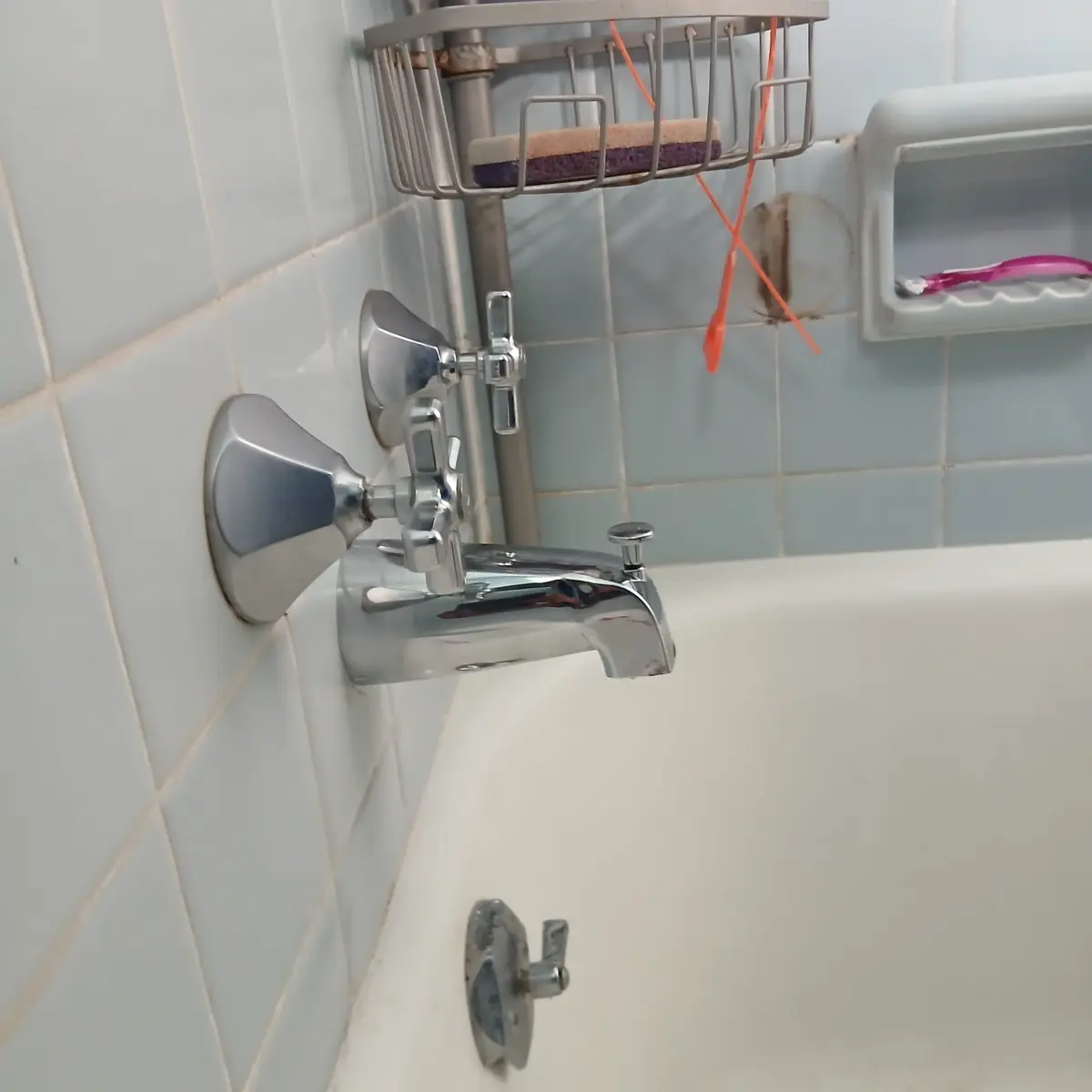
Two or three cross handles on old tile usually means a stem style valve. This home also had a lift knob on the spout, which is common when someone has updated the spout but left the old handles in place.
Type 3: Valve diverter. Some single handle valves have a built in diverter or a separate dial on the trim plate. Here the diverter is part of the valve body or its cartridge, the replaceable insert that controls the water.
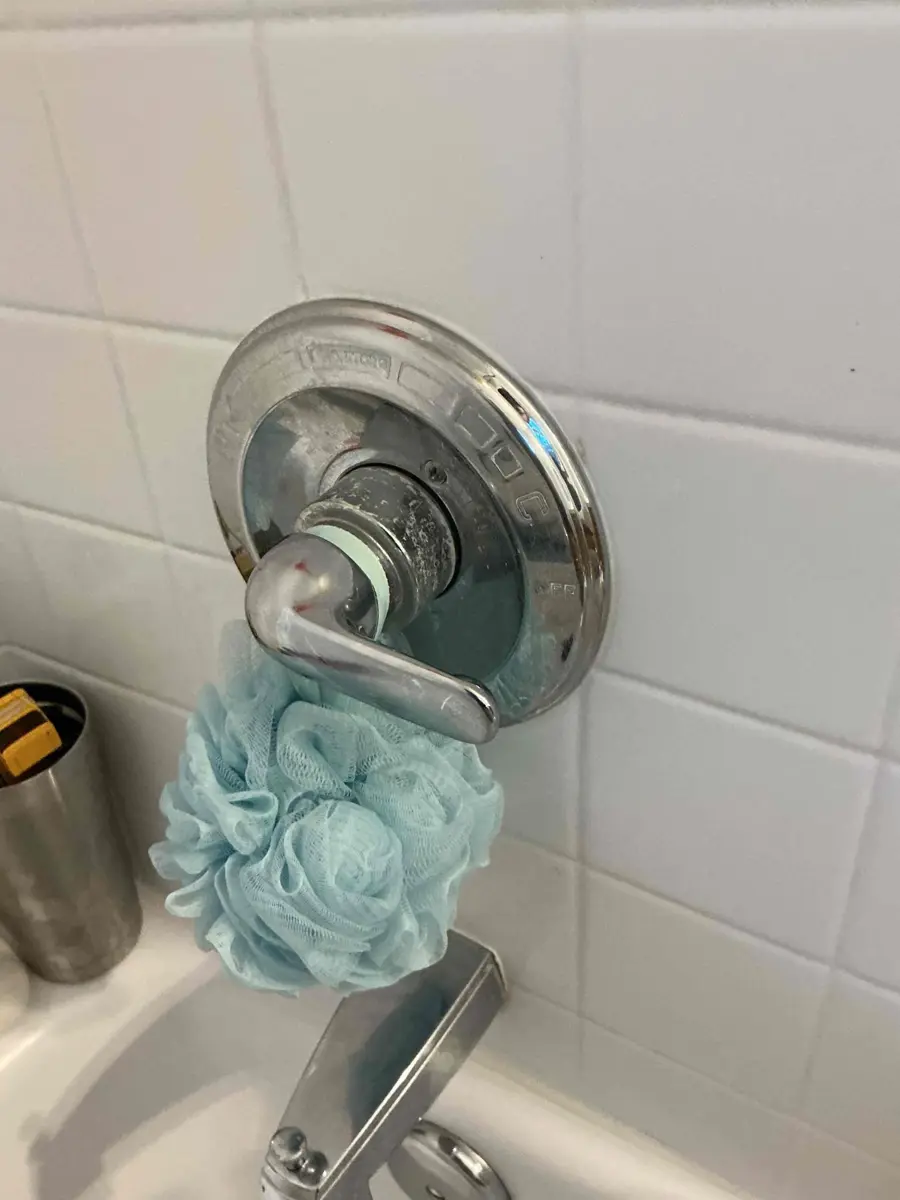
One lever with no knob on the spout? Then the diverter is in the valve, and a cartridge is the likely fix. On this job the spout also dripped with the handle off, a classic sign of a worn cartridge.
Why does a shower diverter stop working?
Diverters fail for a short list of reasons, and in Grand Rapids one of them stands out. Our water is moderately hard. The City of Grand Rapids 2025 water quality analysis lists average hardness at about 8 grains per gallon, which means dissolved minerals that leave white crust on anything wet.
That crust, called scale, builds up on the little gate inside a tub spout and on the washer and seat of a stem diverter. Once it builds up, the gate cannot close tight and water leaks past it. Here is what that looks like inside a spout we removed.
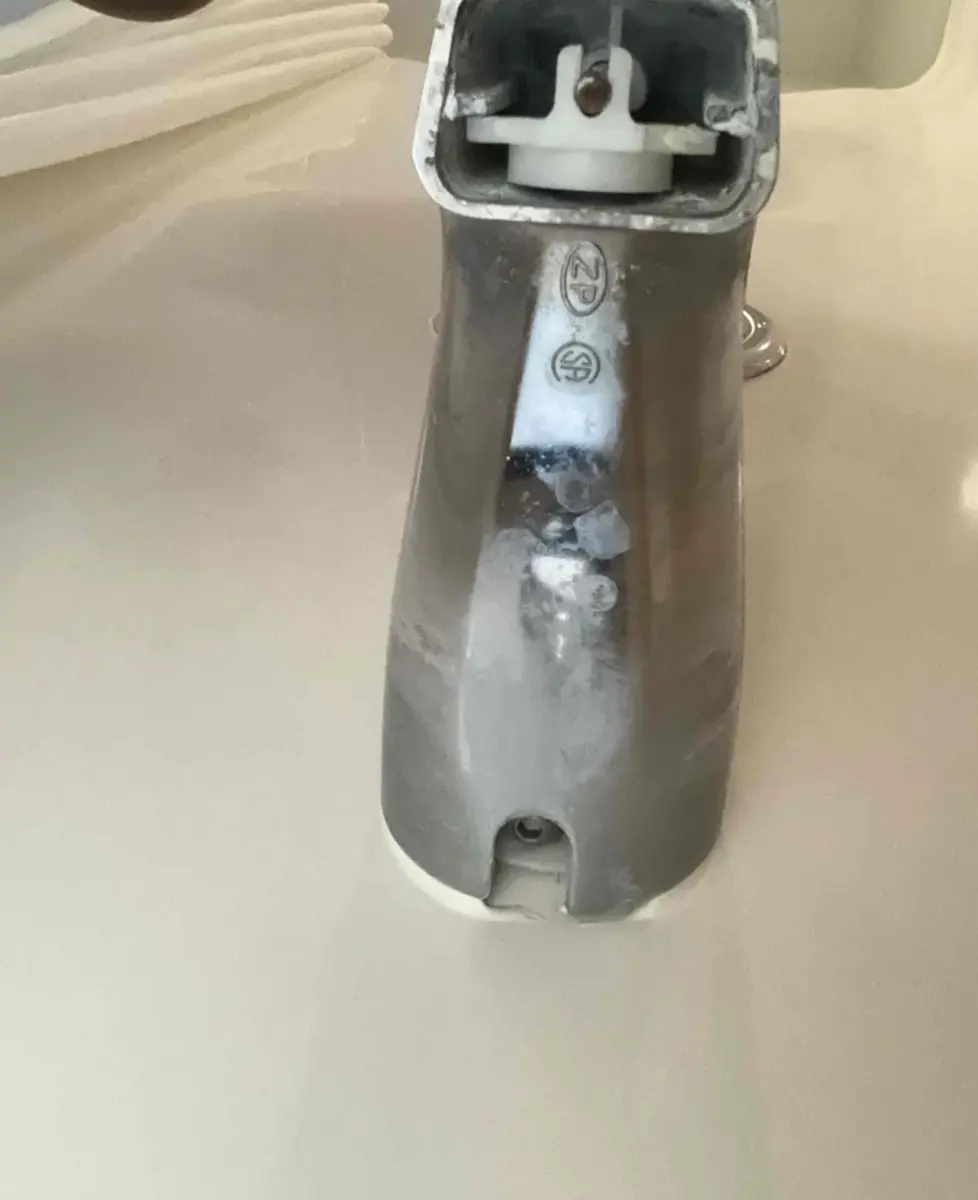
White scale on the gate and walls is why this spout would not divert. Cleaning helps for a while, but a new spout is the real fix. The homeowner had described this one as "difficult to use," which is how scale usually shows up first.
The other common causes:
- Worn rubber. Gates, washers and O rings (rubber rings that seal moving parts) harden and crack with age.
- A broken gate or stem. Plastic parts snap, especially if someone forced a stuck knob.
- A worn cartridge. In single handle valves, the diverter and the cartridge wear together.
- Low water pressure. A spout gate needs pressure to hold itself up. If the knob drops as soon as you let go, check your pressure too. Our guide on how to increase water pressure in your shower walks through it.
If your home has hard water and you keep replacing parts, a softener slows the cycle. Penn State Extension's guide to water softening explains how hardness forms scale, and we cover our water softener service for the Grand Rapids area.
How do you fix a tub spout diverter?
This is the most common repair and the easiest. You are replacing the whole spout, because the gate inside is not sold separately for most models. You do not need to shut off the water, since the spout sits past the valve. Just make sure the valve is off.
Step 1: Find out how the spout is attached. Look under the spout, right where it meets the wall. A small hole with a set screw inside means a slip on spout. No screw means it is threaded onto a pipe and you unscrew the whole thing.
Step 2: Remove the old spout. For a slip on spout, loosen the set screw with a hex key and pull the spout straight off. For a threaded spout, turn it counterclockwise by hand. Wrap a rag around it if you need more grip so you do not scratch the finish.
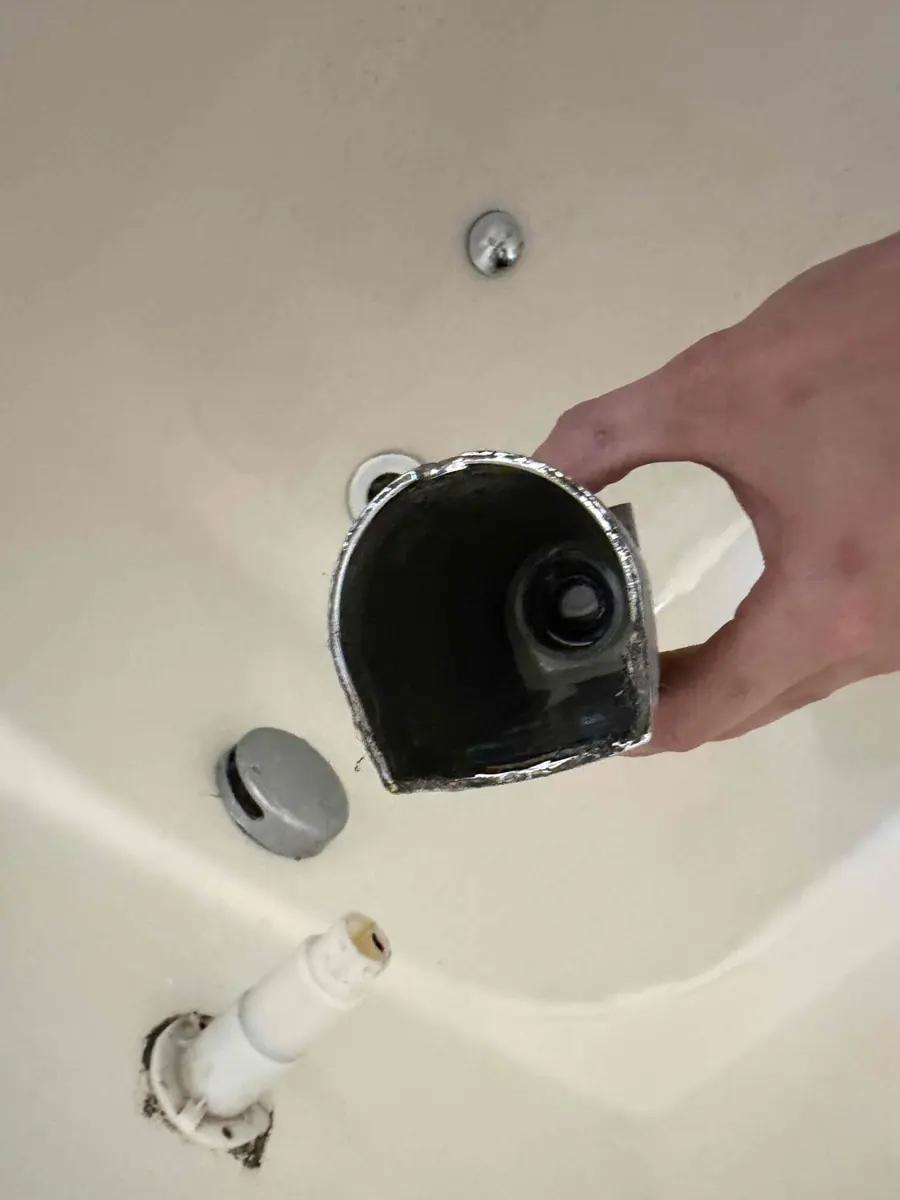
This spout slid off once the set screw was loose. The inside shows the opening where the diverter gate sat. If it fights you, mineral buildup is usually the reason. A gentle twist while pulling breaks it free.
Step 3: Look at the pipe sticking out of the wall. This tells you what to buy. A plain smooth pipe means you need a slip on spout. A pipe with threads on the end means you need a threaded spout. Some homes have a plastic adapter, like this one.
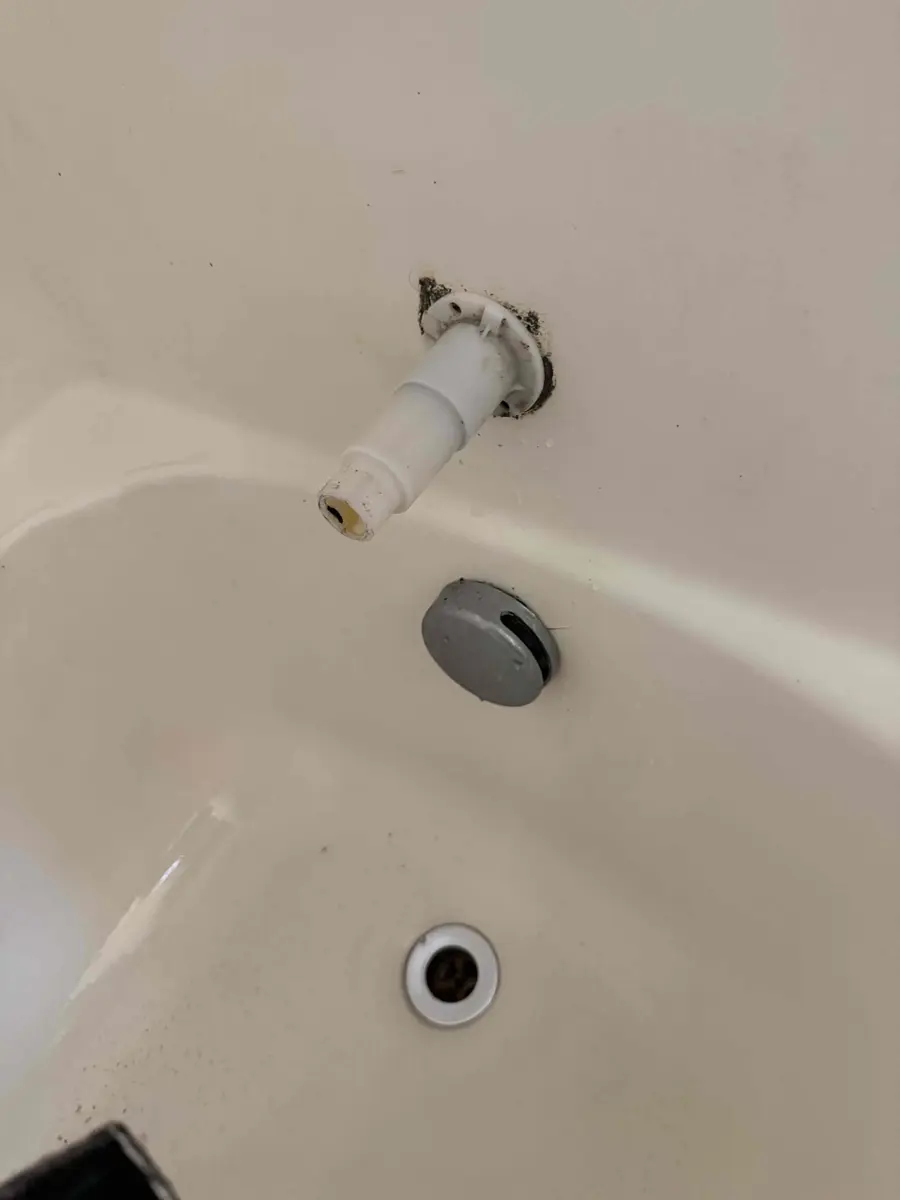
Adapters like this one are usually brand specific. Match the brand of spout, or replace the adapter too. Bring a photo to the store.
Here is a threaded pipe, also called a nipple, on an older three handle tub.
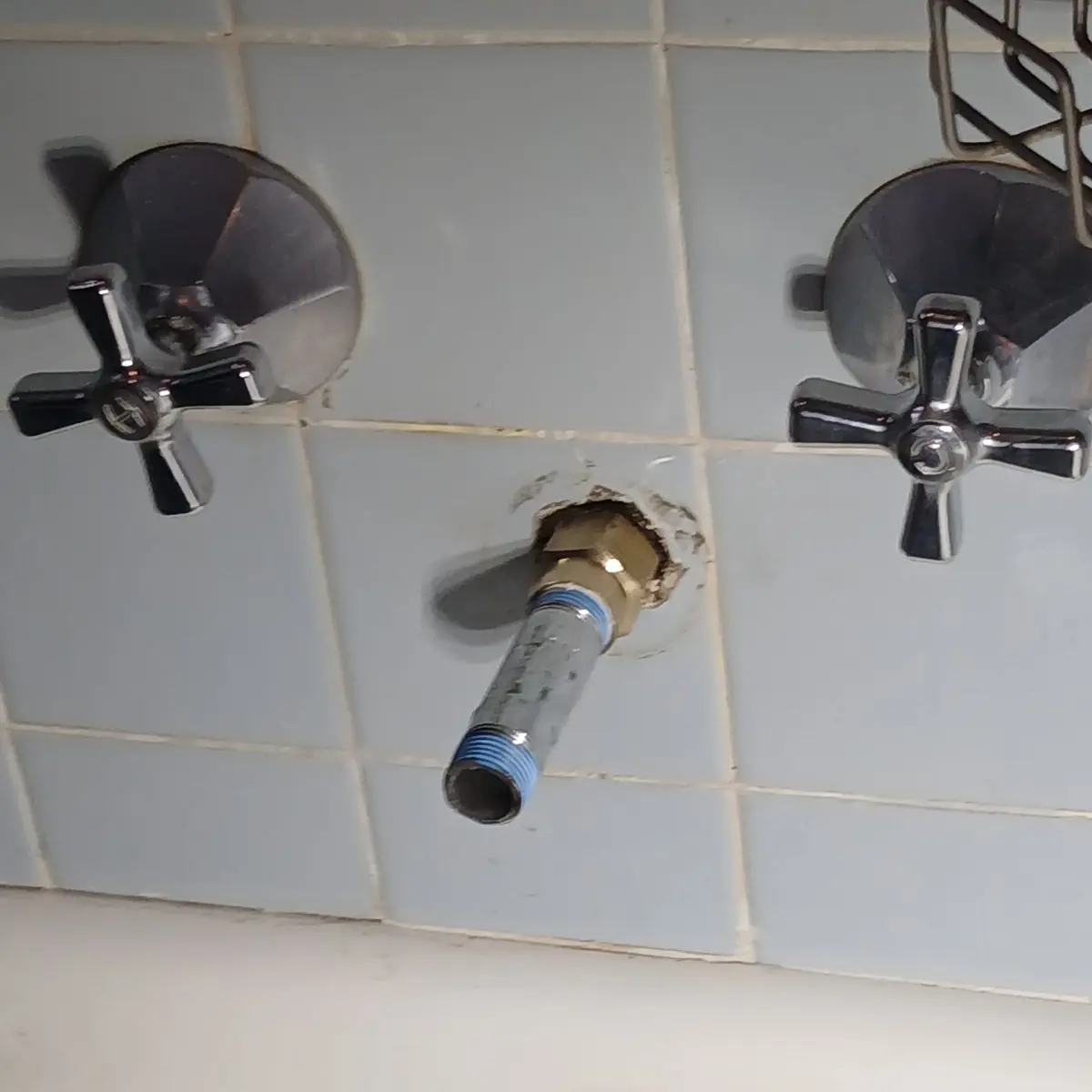
Threads on the end of the pipe mean you need a threaded spout. Measure how far the pipe sticks out from the wall. Most threaded spouts fit a certain range, and the box will list it.
And here is a smooth copper pipe, the kind a slip on spout grips.
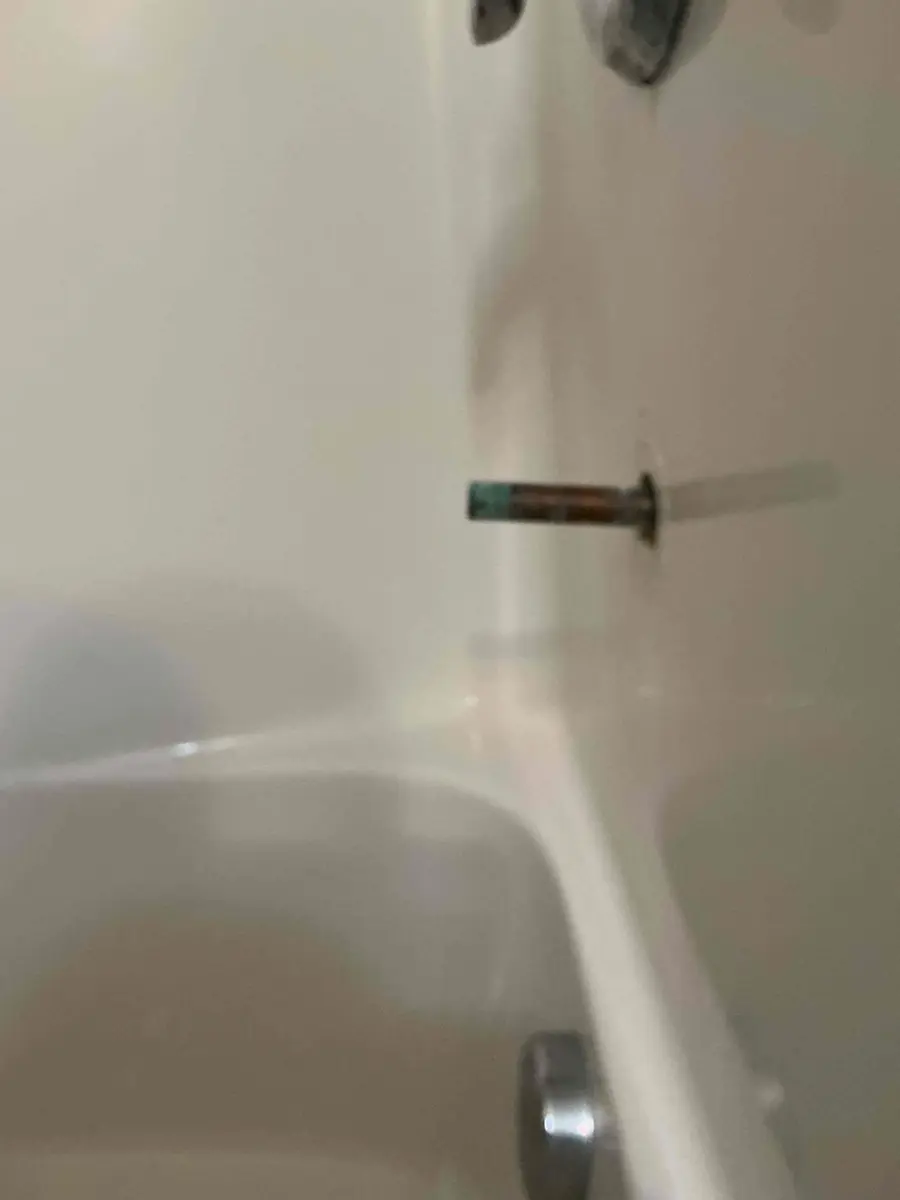
Smooth copper with no threads takes a slip on spout. Check that the end is round and not crushed, or the new spout will not seal.
Step 4: Install the new spout. For threaded spouts, wrap the threads clockwise with plumber's tape (thin white Teflon tape that seals threads) and screw the spout on until it points straight down. For slip on spouts, push it fully onto the pipe and tighten the set screw.
Step 5: Test it. Turn on the water, pull the knob, and watch the spout. A small drip from the spout during a shower is normal on most designs. A steady stream is not.
How do you fix a diverter stem in the wall?
If your tub has a middle handle between hot and cold, the diverter is a stem inside the wall. Fixing it means replacing the stem or the washer on its end. This job needs the water off.
Step 1: Shut off the water. Some homes have access panels behind the tub with small shutoff valves. If yours does not, shut off the main. Our guide on how to replace a shower valve covers how to find and use the shutoffs.
Step 2: Remove the handle and trim. Pry off the cap in the center of the handle, remove the screw, and pull the handle off. Then unscrew the decorative sleeve and flange, the round plate against the wall.
Step 3: Unscrew the stem. You will see a large nut. A deep socket wrench called a tub stem socket fits over it. Turn counterclockwise and pull the stem out.
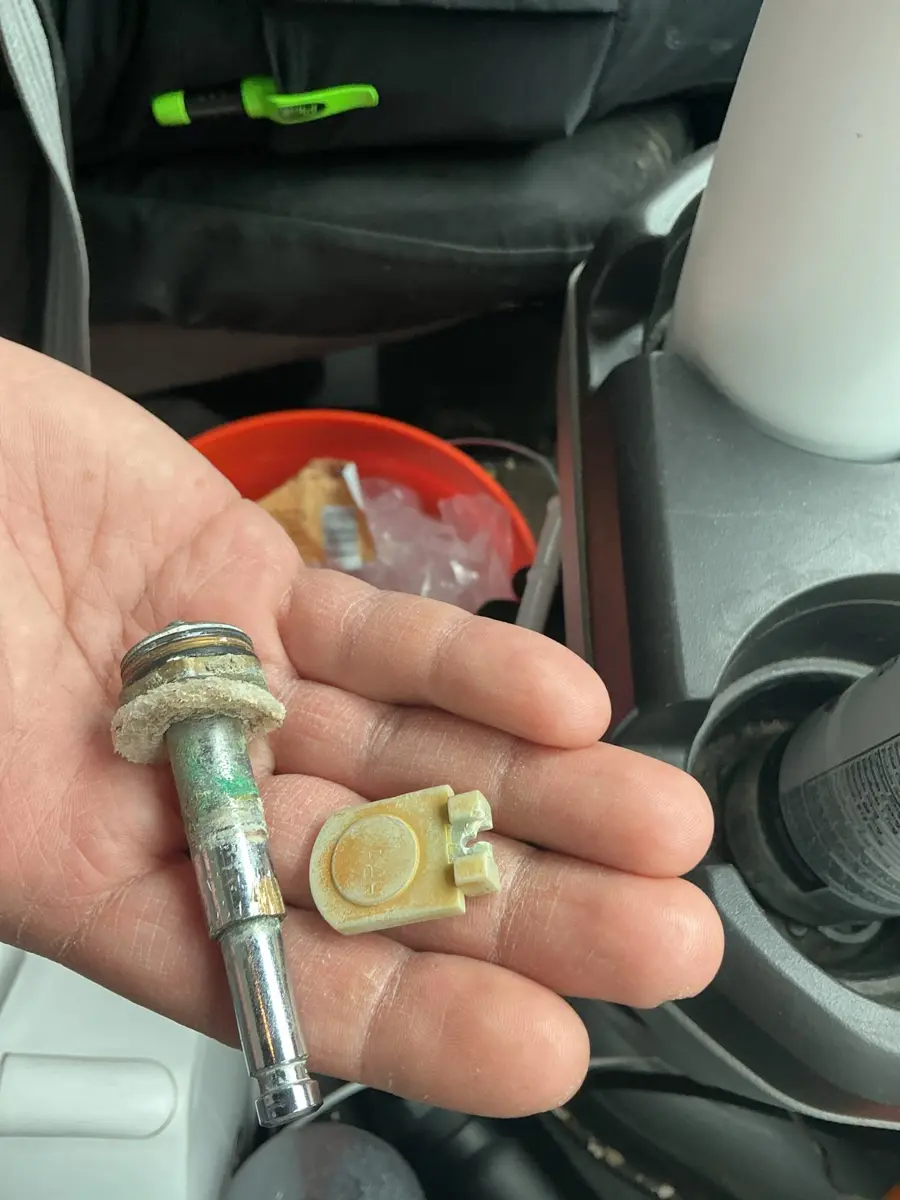
This worn stem and its broken part are why the diverter was leaking. The washer on the end is what seals, and once it hardens, water slips past. Take the old stem to the store. There are hundreds of sizes, and the only reliable match is a side by side comparison.
Step 4: Replace the washer or the whole stem. If the stem threads are good, a new washer and screw may be enough. If the threads are worn or the stem is corroded, replace the whole stem.
Step 5: Check the seat. The seat is the brass ring deep inside the wall that the washer presses against. If it is rough or pitted, a new washer will wear out quickly. Seats can be replaced with a seat wrench, but on very old valves they can be seized. That is where we usually come in.
Step 6: Reassemble and test. Put the stem back, tighten it snug, add the trim and handle, and turn the water on slowly.
What if the diverter is built into the shower valve?
If you have a single lever and no knob on the spout, the diverter is inside the valve. In most of these setups, the fix is a new cartridge, the insert that controls flow. When the cartridge wears, it can leak, stick, or split water between the spout and the head.
Here is what a valve looks like with the handle and trim plate removed.
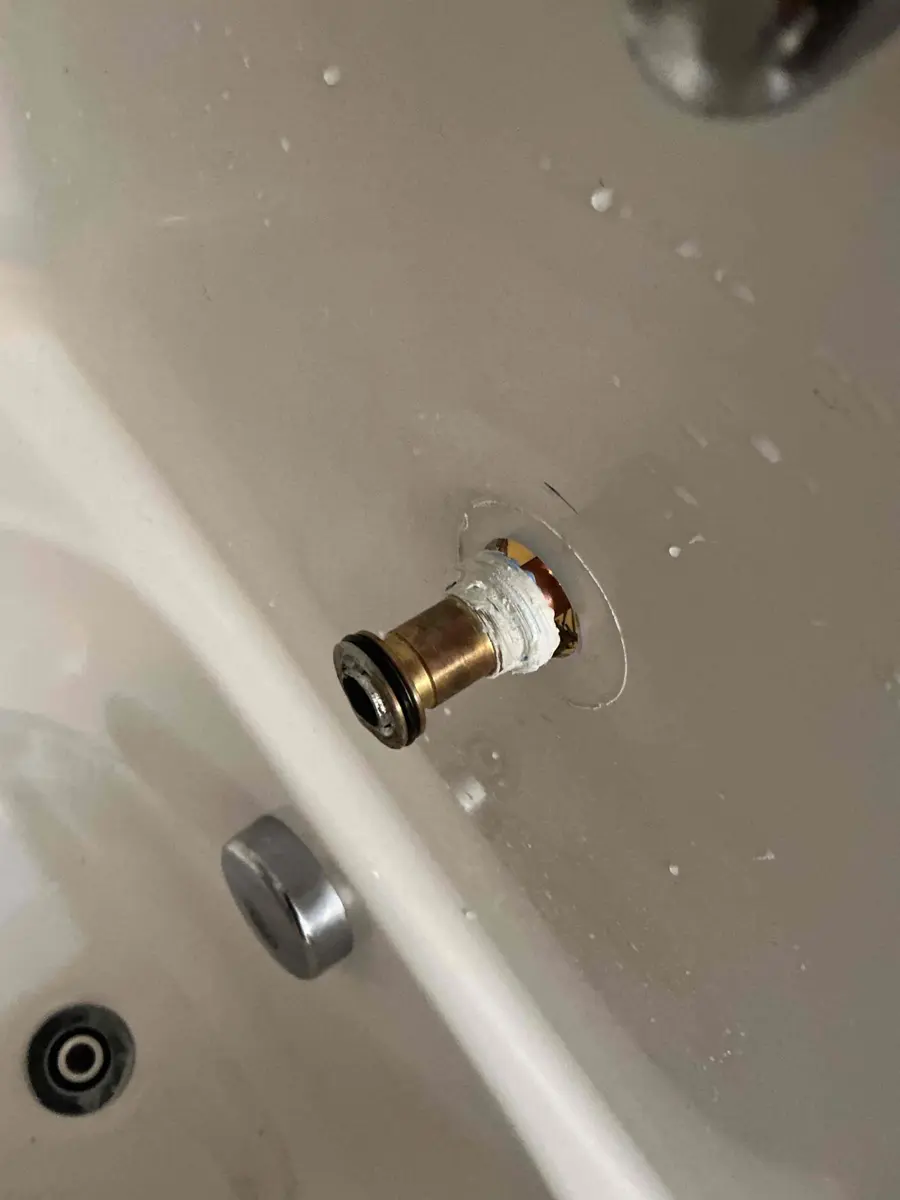
With the trim off, you can see the end of the cartridge. On this job the leak was going behind the wall, so the valve had to be opened up. If you see water staining near the valve, call a plumber rather than waiting.
Pulling a cartridge sounds simple, but it is where most DIY repairs go wrong. Cartridges are brand specific and often stuck in place with scale. A cartridge puller is usually needed. Forcing it out can damage the valve body inside the wall.
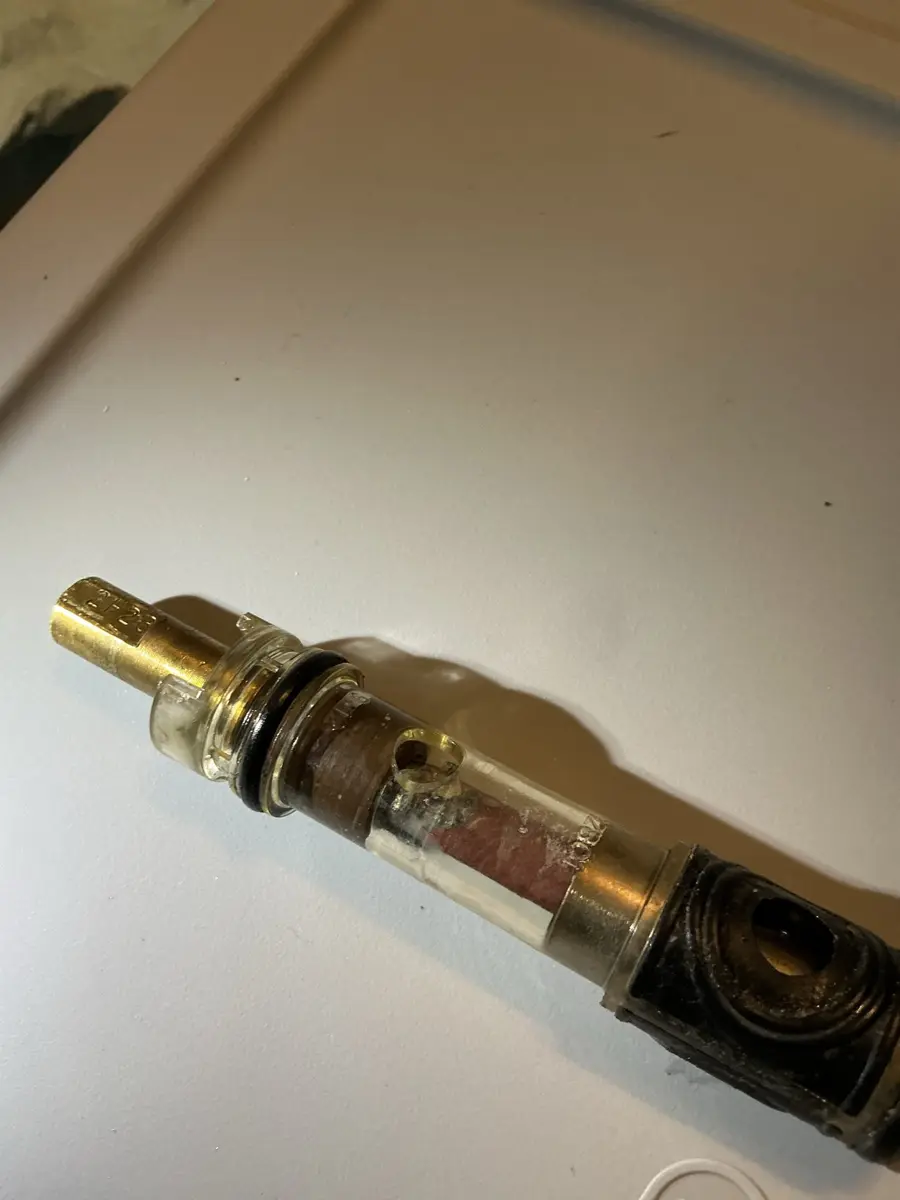
This cartridge came out of a valve where both the head and the spout were leaking. A new cartridge fixed both at once. Note the brand and model on the trim plate before you start so you buy the exact replacement.
If the valve itself is cracked or corroded, or parts are no longer made for it, replacing the valve is the right call. That is a bigger job, and our shower valve replacement guide walks through it.
When should you call a plumber for a shower diverter?
Most tub spout repairs are fine for a homeowner. These are the signs that it is time to call:
- Water is leaking behind the wall. Staining on the ceiling below, or water in the next room, means the problem is inside the wall. We have seen leaks at a diverter run into a laundry room behind the tub.
- The stem or cartridge will not come out. Forcing it can crack the valve body.
- The seat is pitted or stuck. Replacing a seized seat takes special tools.
- The pipe behind the spout is damaged. A cracked, crushed or loose pipe means opening the wall.
- You have replaced parts and it still will not divert. That points to a deeper problem in the valve.
- You cannot shut off the water to the tub. Old shutoffs often fail when turned for the first time in years.
The Michigan plumbing code has specific rules for tub and shower valves. Showers need a valve that guards against sudden temperature swings, as set out in the Michigan plumbing code chapter on fixtures. If a diverter repair turns into a valve replacement, the new valve needs to meet that standard.
The EPA's WaterSense showerhead page also notes that showering is one of the leading uses of water in a home. A diverter leaking during every shower adds up over a year.
Can you clean a shower diverter instead of replacing it?
Sometimes. If your tub spout diverter is sticky but still sealing, soaking the spout in white vinegar can dissolve scale and buy time. Remove the spout, soak it for a few hours, rinse, and reinstall. Stem diverters can be cleaned the same way, and a fresh washer often does more than cleaning alone.
Cleaning rarely works for long when the parts themselves are worn. Here is how we decide:
- Sticky knob, no leaks: clean first.
- Water split between spout and head: replace the spout or stem.
- Stuck in one position: the gate or stem is probably broken, so replace.
- Leak inside the wall: call a plumber.
If you clean the spout and the problem returns within a few months, the gate has worn and a new spout is the fix. In hard water areas like Grand Rapids, we find scale is usually a sign the parts are near the end of their life.
Scale on the shower head can also hide a diverter problem by lowering flow to the head. If the head is crusted, soak it too. Then test whether the diverter is really the issue.
What does a shower diverter do?
A shower diverter sends water from the tub spout up to the shower head. It can be a knob on the tub spout, a middle handle between hot and cold, or part of a single handle shower valve. When it wears out, water keeps coming out of the spout during a shower.
Why is water still coming out of my tub spout when the shower is on?
The diverter is not sealing. On a tub spout diverter, scale or a worn gate is the usual cause, and a new spout fixes it. On a stem diverter, the washer or seat is worn. On a single handle valve, the cartridge is usually the problem.
Can I replace a tub spout diverter myself?
Yes, in most cases. Check under the spout for a set screw. If there is one, loosen it and pull the spout off. If not, unscrew it. Buy a matching spout, slip on or threaded, install it, and test it. You do not need to shut off the main water.
How do I know if my tub spout is slip on or threaded?
Look underneath the spout where it meets the wall. A small hole with a set screw inside means slip on. No screw means threaded. Once it is off, the pipe confirms it: smooth means slip on, threads on the end mean threaded.
Is a little water from the spout during a shower normal?
A small drip or trickle from the tub spout during a shower is normal on most diverters. A steady stream or a large share of the water coming out of the spout means the diverter is failing and should be replaced.
Why will my shower diverter not stay up?
Low water pressure or a worn gate. A tub spout diverter relies on water pressure to hold the gate up. If the knob drops as soon as you let go, check your water pressure first. If pressure is fine, the spout needs to be replaced.
When should I call a plumber for a shower diverter?
Call if water is leaking behind the wall, if a stem or cartridge will not come out, if the valve seat is damaged, or if new parts did not fix the problem. Those point to the valve inside the wall, which is a bigger and riskier job.
Need help with a shower diverter in Grand Rapids?
NSP Plumbing is a licensed Michigan plumbing contractor, license #8004990, based in Wyoming, MI. We repair tub spouts, diverter stems, cartridges and full shower valves for homes across Grand Rapids, Wyoming, Kentwood and the surrounding area.
If you have tried a new spout and the shower still will not divert, or you see water staining near the valve, we can find the cause and fix it in one visit when parts are available. We handle shower and tub work, fixture installation and general plumbing repair.
Our technicians carry common cartridges and stems for the major brands, and we will tell you plainly whether a part or a full valve is the better fix. If you are dealing with a slow shower drain too, our guide on how to unclog a shower drain can help. Questions first? Contact us.
Shower stuck on the tub spout?
A licensed NSP plumber will find which diverter you have, tell you whether it needs a part or a new valve, and fix it with your approval. Book online and we will confirm your time.