

Most homeowners never touch the sump pump until the basement is already wet. You can settle the question in about five minutes with a bucket of water. Pour water into the pit until the float rises, and a healthy pump should switch on within a few seconds, clear the pit, and shut itself off. If it hums, stalls, or never starts, it needs attention now.
How Do You Check If a Sump Pump Is Working?
The test is called the bucket test, and it is the only check that proves the whole system works together. Everything else tells you about one part.
Start by finding the pit. It is a round hole in the lowest part of the basement or crawlspace floor, usually 18 inches or more across, with a lid on it and a white pipe running up out of the lid. The Michigan Plumbing Code sets that pit size in Section 1113.1.2, so almost every pit you find here follows the same pattern.
Then work through the test in order.
- Lift the lid off and look in. You want to see the pump sitting flat on the bottom of the pit, a power cord going up to an outlet, and water in the bottom, not sludge.
- Confirm the pump is plugged in and the outlet has power. Push the reset button on the outlet if it has one. A pump unplugged during a basement project is one of the most common reasons a pump is dead when the rain comes.
- Fill a five gallon bucket with water and pour it slowly into the pit. Do not pour it on the pump itself, pour it into the open water.
- Watch the float. The float is the plastic bulb or ball on the side of the pump, and it is the switch that turns the pump on when the water rises.
- The pump should start within a few seconds of the float rising, the water level should drop steadily, and the pump should shut off on its own before the pit runs dry.
- Listen for the water going out. You should hear it move up the pipe and, if the discharge point is close, hear it leave the house.
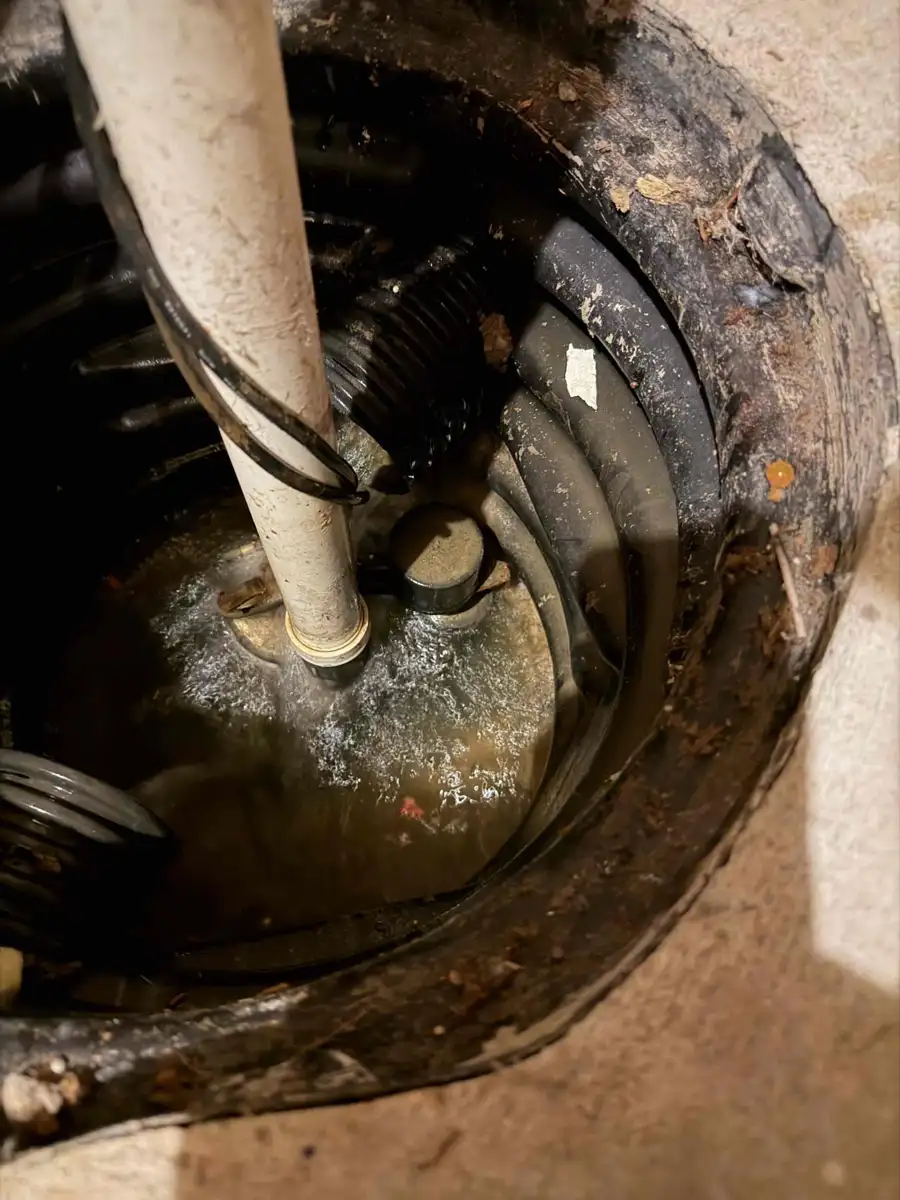
Sludge in the pit and a float pinned against the pipe: this pump was going to fail on the next heavy rain. Grit like this jams the float and wears the pump out early, and it is the kind of thing you only see by taking the lid off.
Run the test twice in a row. A pump that works on the first bucket and refuses on the second usually has a switch that is sticking, which is a repair, not a replacement.
What Should a Working Sump Pump Sound and Look Like?
A healthy pump is boring. It starts with a low hum that turns into the sound of moving water, it runs for ten to thirty seconds, and it stops. Those numbers vary with how deep your pit is, but the pattern should be the same every time.
Here is what each symptom usually means in the field.
| What you hear or see | What it usually means |
|---|---|
| Hums but no water moves | Impeller jammed or the pump is airlocked |
| Runs and never shuts off | Float stuck up, or the pit is fed faster than the pump can clear |
| Starts and stops every minute | Float set too low, or water returning down the pipe |
| Loud rattle or grinding | Pump loose in the pit, or debris hitting the impeller |
| Total silence, no power | Tripped outlet, unplugged cord, or a dead motor |
| Water sits high and never drops | Pump failed, or the outside discharge is blocked |
Short, repeated cycling deserves attention even when the pump seems fine. Every start is wear, and a pump that cycles four times an hour in dry weather is aging itself out fast.
Smell matters too. A sump pit should smell like damp earth. If it smells like sewage, the pit may be tied into something it should not be, and that is worth a call. We cover that in more detail in why a basement backs up during heavy rain.
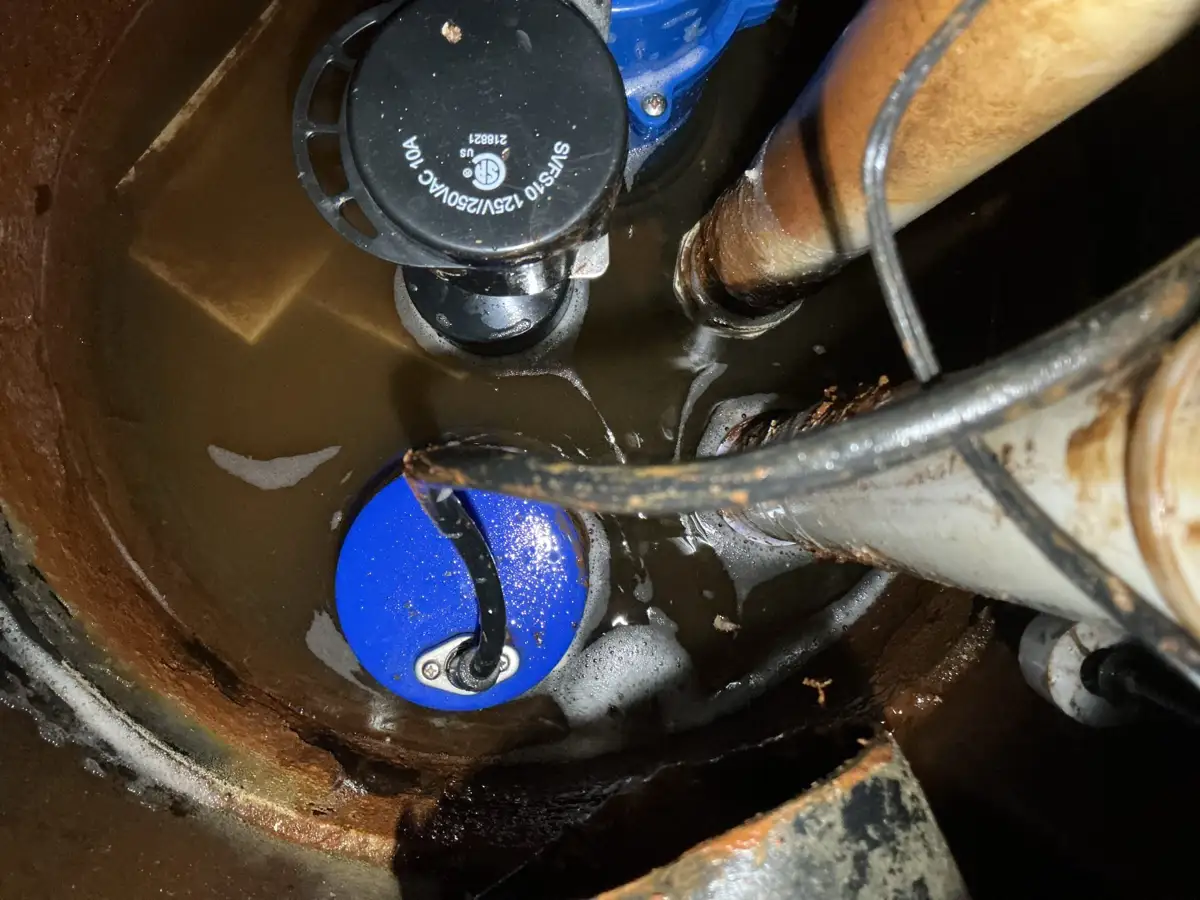
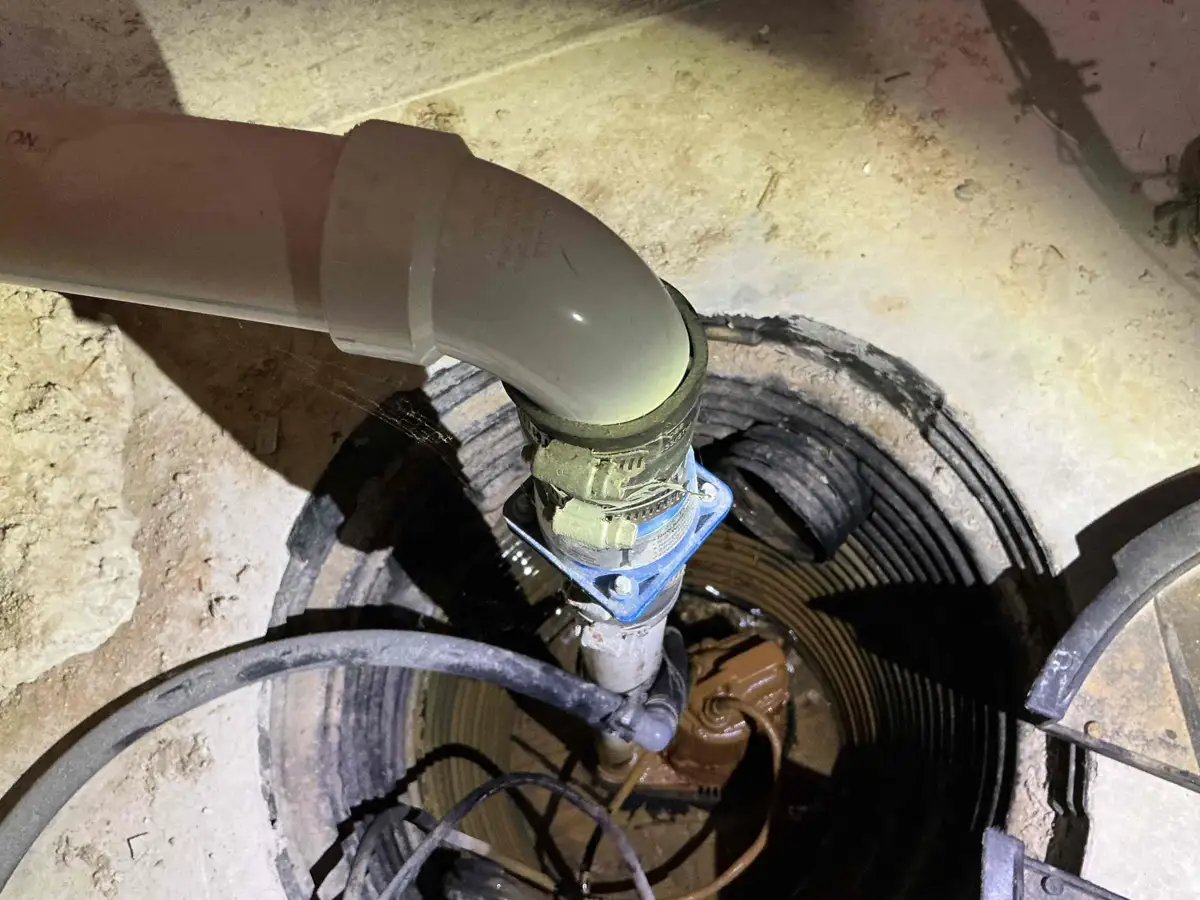
The blue disc is the float switch, and this is the part that usually fails first, not the motor. A switch replacement is a fraction of the cost of a new pump, which is why it is worth having someone confirm what actually failed before you buy anything.
Why Won't My Sump Pump Turn On?
Work from the cheapest cause to the most expensive. In the order we find them on service calls:
Power first. The pump has to be plugged into its own outlet, and that outlet is often a ground fault type with a reset button that trips quietly. Reset it, then test again with a bucket.
The float second. Floats get wedged against the pit wall, against the pipe, or against the extra cord looped in the pit. Free it by hand and the pump often starts immediately.
Debris third. Gravel, drywall dust and construction grit settle into the bottom of the pit and pack around the intake. The pump will run and move almost nothing.
The pump itself last. A motor that is truly dead gives you a click or a hum and no water movement, and it usually smells hot.
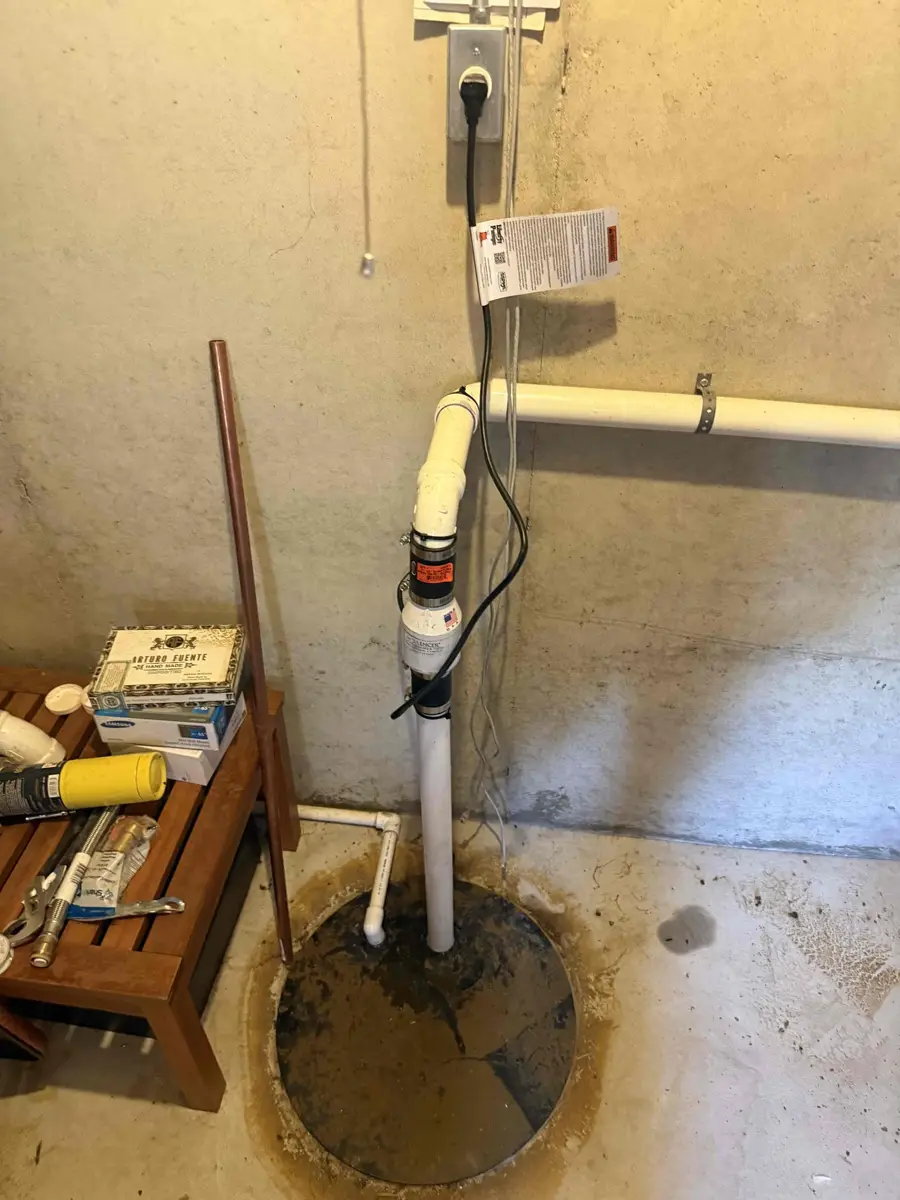
Its own outlet, above the water line, nothing else sharing it: this is what a correct power setup looks like. The Michigan Plumbing Code addresses sump electrical service in Section 1113.1.3, and a pump sharing a circuit with a freezer or a shop vac is the kind of thing that leaves you dry until the day you need it.
One warning about a shortcut people try. Unplugging the pump and plugging it back in makes the motor run, but it tells you nothing about the float, which is the part that actually failed most of the time. Always test by adding water, not by cutting power.
If the pump runs but the basement still takes on water, the problem is usually downstream in the pipe, not in the pit. That is the next check.
How Do You Check the Check Valve and the Discharge Line?
The discharge line is the pipe that carries water from the pump out of the house. A pump can be perfect and still leave you with a wet floor if that pipe is blocked, frozen, or missing its one required valve.
Find the check valve. It is a short fitting on the vertical pipe just above the pit, and its job is to stop the water in the pipe from draining back into the pit every time the pump shuts off. In one and two family homes, the Michigan Plumbing Code requires a check valve on that discharge piping in Section 1113.1.4.
Listen for the thunk. When the pump shuts off you should hear one solid clunk as the valve closes. A long gurgle and then the pump restarting a few seconds later means the valve is leaking by, and the pump is pumping the same water twice.
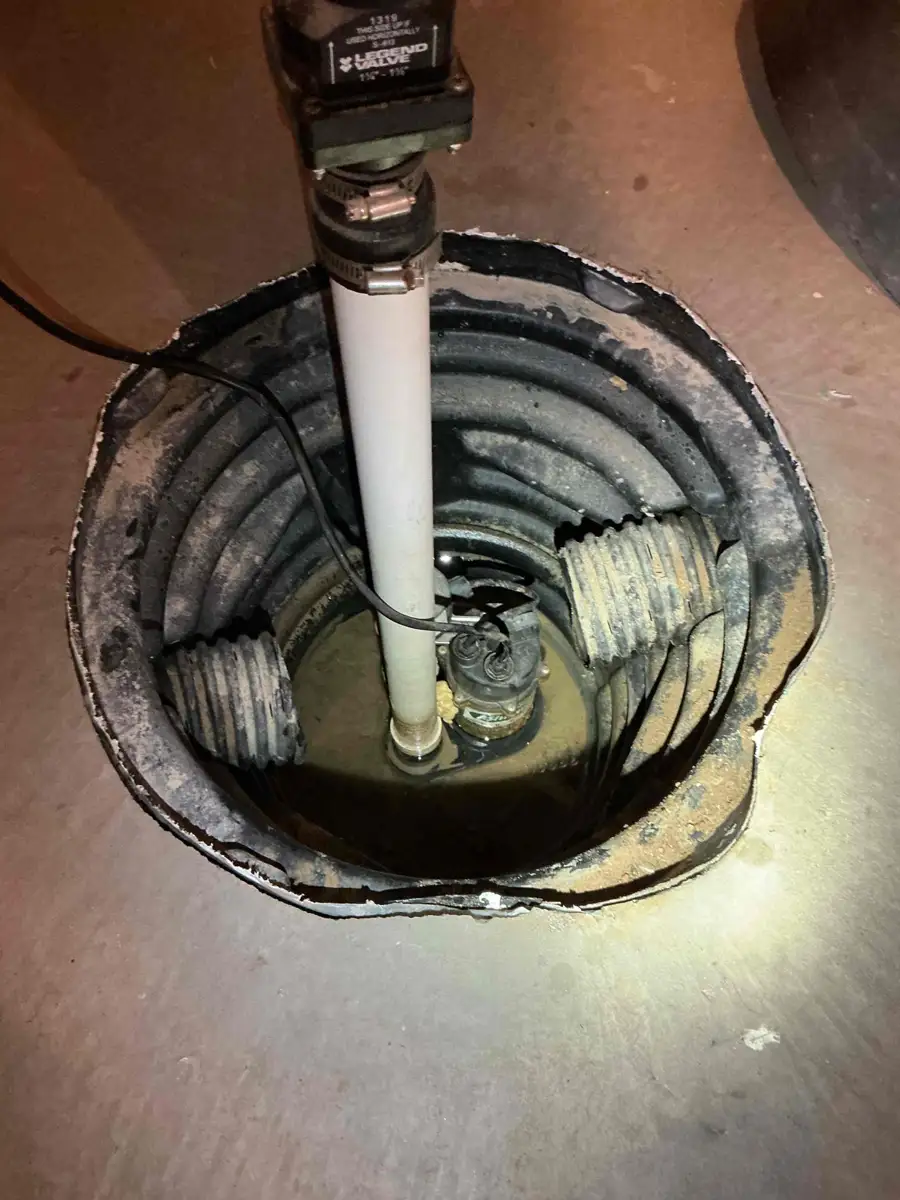
Valve mounted above the pit with a union underneath it: this setup can be serviced without cutting pipe. A check valve glued into solid pipe means the next repair costs more in labor than the part.
Then go outside. Find where the pipe leaves the house and look at the opening. It should be clear, aimed away from the foundation, and discharging where the water runs off rather than soaking straight back down to the pit.
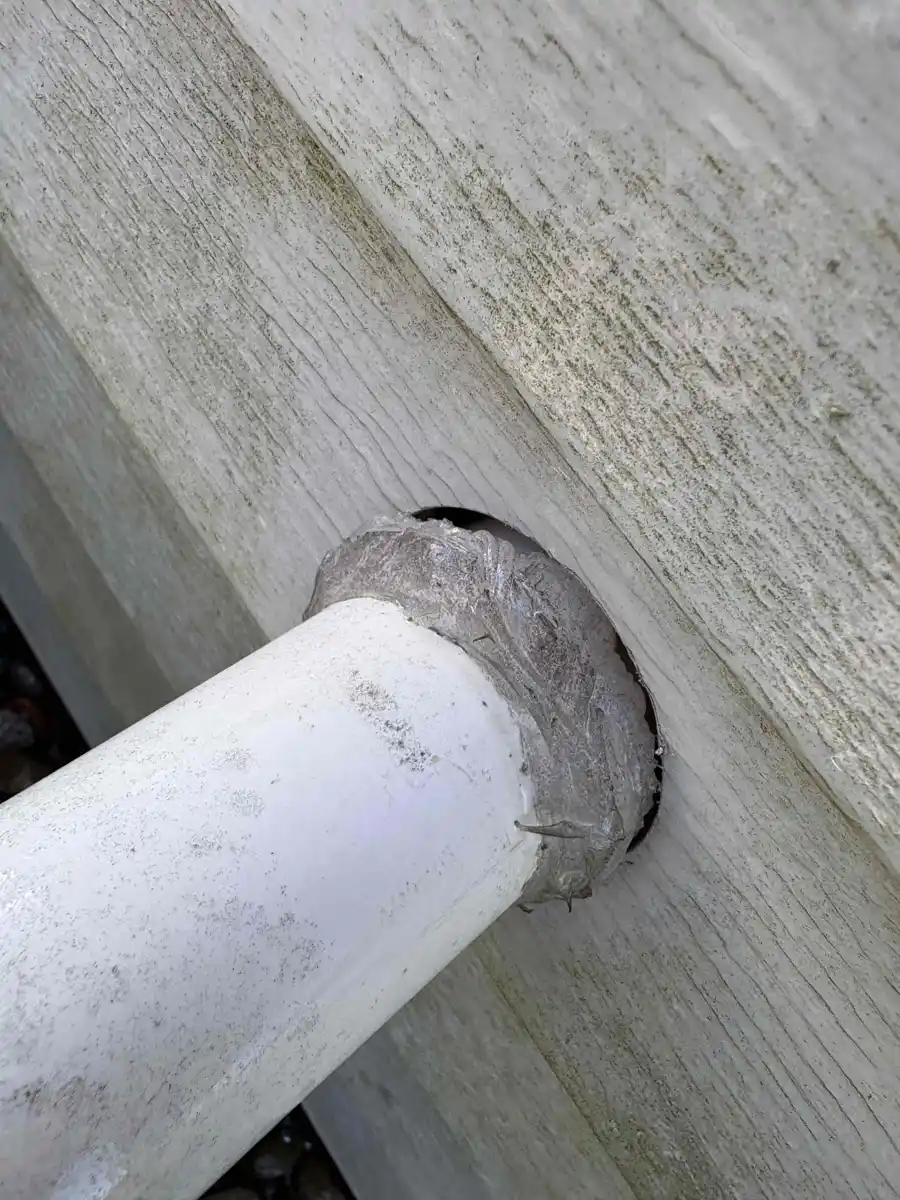
Open, clear and pointed away from the wall: this discharge is doing its job. Mulch, a kinked flexible extension or a mouse nest in that opening will back water up into the basement even though the pump is running perfectly.
While you are outside, check the grade. If the ground slopes toward the house at that corner, the pump is pushing water out and gravity is bringing it right back. Fixing the grade is landscaping, not plumbing, but it is often the cheapest fix available on the whole list.
How Often Should You Test a Sump Pump in Michigan?
Twice a year is the honest answer, and the two months that matter here are different from the national advice.
West Michigan sump calls cluster in March and April, when frozen ground thaws and spring rain arrives at the same time. That is when a pump that has been idle all winter gets asked to run for days without a break. So test it in late February before the thaw, and again in the fall when you turn attention to getting the house ready for winter.
Add three checks to the same visit.
Clear the pit. Scoop out gravel and grit so the float swings freely and the intake stays open.
Check the outside discharge for ice. A discharge line that freezes shut in January leaves the pump running against a closed pipe.
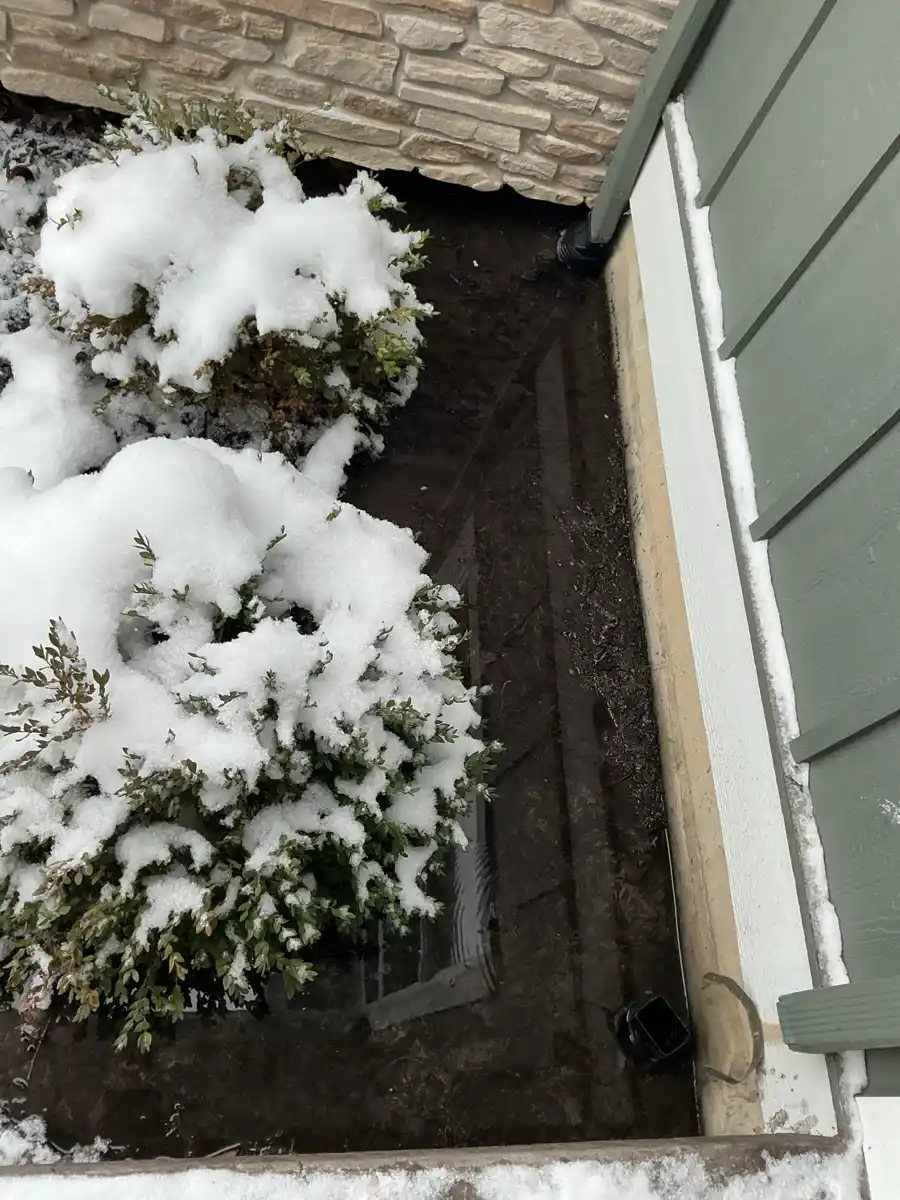
Standing water and snow right at the discharge point: this line is one cold night from freezing shut. If the outlet sits in a spot that drifts or puddles, the fix is to move the discharge point, not to wait for spring.
Test the backup, if you have one. Battery backups fail silently. Unplug the main pump, pour water in, and confirm the backup runs and the alarm sounds. Then plug the main pump back in. Batteries are usually good for three to five years, and many homeowners find out theirs is dead during the exact storm it was bought for.
If your basement is finished, an automatic water shutoff and a water alarm are worth reading about too, since a sump failure and a supply leak both end the same way. We walk through that in why a home needs an automatic water shutoff.
When Is a Sump Pump Worth Repairing Instead of Replacing?
Repair is often the right call, and a good technician will tell you when it is.
Repair territory. A stuck or failed float switch, a leaking check valve, a loose discharge connection, a pit full of grit, or a pump that has drifted off the bottom of the basin. On NSP invoices from the last year, sump repairs of this kind generally landed between $350 and $750, and a diagnostic visit runs $49, credited into the work if you move forward that day.
Replacement territory. The motor is dead, the pump is more than about ten years old, it has already been repaired once, or the basin itself is corroded through. Full pump replacements in the same period typically ran $600 to $1,400 depending on the pump, the piping and whether a backup goes in with it.
Rare, and worth naming so the numbers are not a surprise. One job in that period came to $11,779, and that was a full system build with concrete work and new basins, not a pump swap. It is the exception, not the range, and nothing about a normal failed pump looks like that.
Water standing above the pump with the float down: this pit was not clearing, and the cause was the switch rather than the motor. That is the difference between a repair and a replacement, and it takes five minutes on site to tell them apart.
Two things worth knowing before anyone quotes you. Ask whether the price includes a new check valve and new unions, because reusing old fittings is how a fresh pump ends up leaking. And ask what pump is going in, by brand and horsepower. Manufacturers such as Liberty Pumps, which builds in Bergen, New York, publish their pumping capacity so you can see what you are getting.
You do not need a backup system on every house. If your pump has never run more than a few times a year and the basement is unfinished storage, a good primary pump and a yearly test is a reasonable plan. If the pump runs constantly or the basement is finished, a backup earns its keep.
How do I test my sump pump without a bucket?
You can pour water in with anything that holds a few gallons, including a watering can or a hose run into the pit. What matters is raising the water level so the float switches the pump on. Do not test by unplugging and replugging the pump, because that skips the float, and the float is the part that fails most often.
How much water do I need to test a sump pump?
About five gallons is usually enough to lift the float in a standard pit. If five gallons does not raise the level, the pit is deeper than average or water is draining away, so add more until the float rises. Watch the shut off as closely as the start up, since a pump that will not shut off is as much of a problem as one that will not run.
Why is my sump pump running but not pumping water?
The most likely causes are a jammed impeller, an airlock in the pump, or a blocked discharge line outside. Check the outside opening first, since that costs nothing. If the pipe is clear and the pump still moves no water, it needs service.
Should there always be water in my sump pit?
A few inches of water in the bottom is normal and healthy. A pit that is bone dry year round may mean the drain tile around the foundation is not feeding it, and a pit where water sits high without the pump starting means the float or the pump has failed.
How long does a sump pump last?
Most residential pumps run eight to ten years, and the ones that cycle constantly reach the end sooner. Age alone is not a reason to replace a working pump, but past ten years it is fair to plan for the expense rather than be surprised by it.
Do I need a licensed plumber to replace a sump pump?
Michigan requires plumbing permits to be pulled by a licensed plumbing contractor or by the homeowner doing work on their own home, as the state explains on its plumbing permit information page. A straight pump swap is within reach of a confident homeowner. New piping, a new basin, or any electrical work is where a licensed plumber belongs.
My sump pump alarm went off. What should I do first?
Look in the pit. If the water is high and the pump is silent, check the outlet and the reset button, then free the float by hand. If the pump still does not run and water is rising, call for emergency service rather than waiting, because a pit that is already high has no margin left.
Does a sump pump need its own outlet?
Yes. It should have a dedicated outlet above the water line, not an extension cord and not a circuit shared with appliances. Sharing a circuit is how a pump ends up off at the worst possible moment.
Get a Sump Pump Checked by a Licensed Grand Rapids Plumber
NSP Plumbing is a licensed Michigan plumbing contractor, license #8004990, and we test, repair and replace sump pumps across Grand Rapids, Wyoming, Kentwood and Grandville. If the bucket test told you something is wrong, or you simply want it verified before spring, a technician can confirm what failed and what it costs to fix.
A sump visit covers the pump, the float, the check valve, the pit and the outside discharge as one system, because that is how it fails. See what the visit includes on our sump pump service page, or pair it with a full plumbing inspection if the house is new to you. If the pit is filling because a drain is backing up rather than groundwater rising, that is a drain cleaning conversation instead, and we will tell you which one you have. For water already on the floor, we run emergency service around the clock.
You can read what neighbors say on our reviews page, learn who works here on the about page, or contact us to get on the schedule. Prices quoted here are typical ranges from past work, not a guaranteed quote, and every job is confirmed in writing before it starts.
Not sure your sump pump will survive the spring thaw?
A technician tests the pump, the float, the check valve and the outside discharge, tells you whether you need a repair or a replacement, and puts the price in writing. The visit is $49 and it is credited toward the work if you move forward the same day.